


Jaw clicking in a child or teenager is usually harmless on its own, but clicking that comes with pain, locking, or a jaw that will not open fully should be checked by a dentist. Jaw clicking or jaw pain in children and teenagers is more common than most parents expect: a systematic review and meta-analysis of more than 17,000 children and adolescents reported that around one in six had clinical signs of a jaw joint disorder, with clicking the most frequent sign at about 10 percent and locking far rarer at around 2 percent. Most needed an explanation and a few habit changes rather than treatment, which matches what I see at the chair.
Written by Dr James Tran, BDent (University of Sydney), MICOI, GradDip (Oral Implants), general dentist at Lumi Dental in Melrose Park.
The short version
- The click is usually the cartilage disc inside the joint slipping and returning; our guide to jaw clicking and popping explains the mechanism.
- Painless clicking with full opening generally needs reassurance and a watchful eye, not treatment.
- Pain on chewing, locking, limited opening, swelling, or a changed bite are the reasons to book.
- Clenching and grinding, chin knocks, gum chewing and exam stress are the usual contributors at this age.
- Girls are affected more often than boys, and symptoms become more common through the teenage years.
- Conservative care comes first; splints are used carefully in a growing jaw, and surgery is very rarely considered.
What is actually clicking
The temporomandibular joint, or TMJ, sits just in front of each ear and connects the lower jaw to the skull. healthdirect describes it as a joint that moves in several directions for speaking, eating and swallowing. Between the two bones is a small cartilage disc that glides with the jaw.
In many people the disc slips slightly forward and pops back as the mouth opens or closes; that return is the click. The clinical term is disc displacement with reduction: the disc is still going back where it belongs. The American Academy of Pediatric Dentistry (AAPD) notes that pain-free clicking of this kind generally needs no treatment aside from reassurance. TMJ dysfunction, or TMD, is the broader label: healthdirect defines it as a problem with the joint, the muscles around it, or both.
How common it is in children and teens
The AAPD's best practice document on TMD in children and adolescents says reported prevalence varies widely with the population studied and the diagnostic criteria used. Within that caution, a few findings are consistent.
- A systematic review using standardised criteria found TMD in around 7 to 30 percent of 10 to 19 year olds, and a meta-analysis cited by the AAPD reported joint-related TMD in about 11 percent of children and adolescents.
- Another review found a higher prevalence in females (around 45 percent) than males (around 30 percent), and the AAPD notes that symptomatic TMD and headache have been correlated with the onset of puberty in girls.
A painless click in a healthy teenager is common; a girl in her early teens with jaw pain and frequent headaches deserves a proper look.
Why it happens at this age
The AAPD is clear that no single cause of TMD has been identified. In children and teenagers these contributors keep coming up.
| Contributor | What parents usually notice | What helps |
|---|---|---|
| Clenching and grinding (bruxism) | Grinding noises at night, sore jaw or headache on waking, flattened tooth edges | Sleep routine, habit awareness, dental review; see our guide to teeth grinding in children |
| Stress and exam periods | Symptoms flare around assessments | Relaxation and sleep; healthdirect notes symptoms are often worse when stressed |
| A knock to the chin | Pain or a new click after a fall or sporting collision | Soft food for a few days and a dental check; a mouthguard for contact sport |
| Chewing habits | Constant gum, nail biting, chewing pen lids | Cut food small, stop the gum, keep hands away from the mouth |
| Joint disease | Jaw symptoms alongside swollen or painful joints elsewhere | GP review; juvenile idiopathic arthritis can involve the jaw joints |
| Orthodontic treatment | Tightness for a few days after an adjustment | Usually temporary; the AAPD reports that data do not support orthodontics causing or improving TMD |
Raising Children Network notes that many children grind their teeth at some stage, that it rarely causes damage, and that most grow out of it. A child who grinds and also snores loudly or gasps during sleep should see a GP so sleep apnoea can be ruled out. In my experience the grinding and the jaw ache often settle together once sleep improves.
Parents sometimes worry that braces started the clicking; the AAPD finds only a weak association between bite factors and TMD, and our article on whether orthodontic treatment causes or fixes TMJ problems has the detail.
The single rule: painless clicking is watched, pain or locking is booked
If the jaw clicks but opens fully, chews without pain and has never locked, the plan is an explanation, a few habit changes and a mention at the next check-up. Book if any of these are present:
- pain on chewing, yawning or waking that lasts more than a week or two
- the jaw catching or locking, open or closed; our guide to jaw locking explains what to do in the moment
- reduced opening, which the AAPD defines as under about 36 mm between the front teeth for adolescents and 32 mm for children
- swelling over the joint, a bite that suddenly feels different, a new click after a chin knock, or jaw symptoms alongside painful joints elsewhere
healthdirect adds that urgent care is needed if TMJ symptoms come with vision problems, difficulty eating or drinking, or frequent severe headaches. A jaw that will not close after a wide yawn is a dislocation, not a click, and belongs in an emergency department.
What happens at the examination
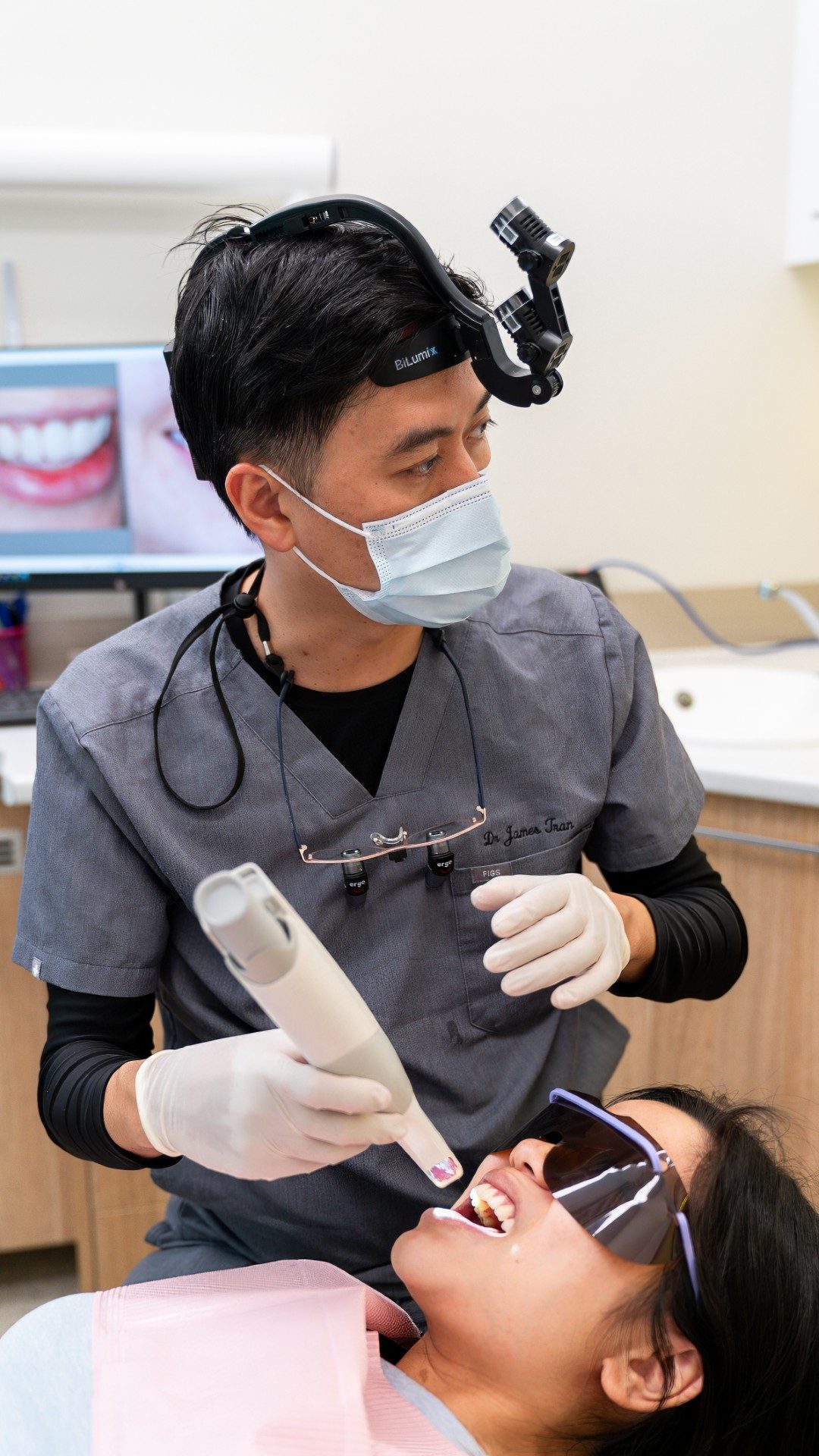
There is no single test for TMD in a child, so the diagnosis comes from a careful history and a hands-on examination. I usually start by asking the young person, not only the parent, what the jaw does and when, because teenagers often leave out the clenching during gaming or the gum at school. The examination records joint sounds, how wide the mouth opens and whether it deviates, and tenderness when the jaw muscles and joints are gently pressed.
Inside the mouth there are clues to clenching: scalloped tongue edges, a ridge along the cheek lining and worn tooth edges, along with any decayed or erupting tooth that could mimic jaw pain. Imaging is not routine; a panoramic X-ray shows the bony joint, and MRI is reserved for cases where seeing the disc would change management.
Treatment: conservative first, and usually enough
The AAPD divides TMD care into reversible and irreversible therapies and is direct: with limited evidence for irreversible options such as bite adjustment, orthodontics purely for TMD, or surgery, those should be avoided in children.
At home
healthdirect's self-care advice applies well to teenagers: eat soft foods for a few days, cut food into small pieces, avoid chewing gum, avoid opening wide and avoid clenching. A warm compress can ease muscle ache, and the pharmacist or GP can advise on pain relief suited to a child's age and weight. Adequate sleep, habit awareness and relaxation round out the list.
From the dentist
Gentle jaw exercises, which a physiotherapist can show, may improve movement and reduce discomfort. A night splint is sometimes used for a teenager who clenches hard; the AAPD reports lower pain in adolescents treated with splints than with relaxation alone, but notes that erupting teeth make splints harder to use, so any appliance in a growing jaw is reviewed often. For contact sport, a fitted mouthguard protects the teeth; see our article on wearing a mouthguard with braces.
Where pain persists, joint disease is suspected, or opening stays limited, referral to a paediatric dentist, an oral and maxillofacial surgeon, or through the GP to a paediatric rheumatologist is appropriate. Surgery, in the AAPD's words, should be limited to severe degeneration or destruction after trauma or tumour resection.
How we approach this at Lumi Dental
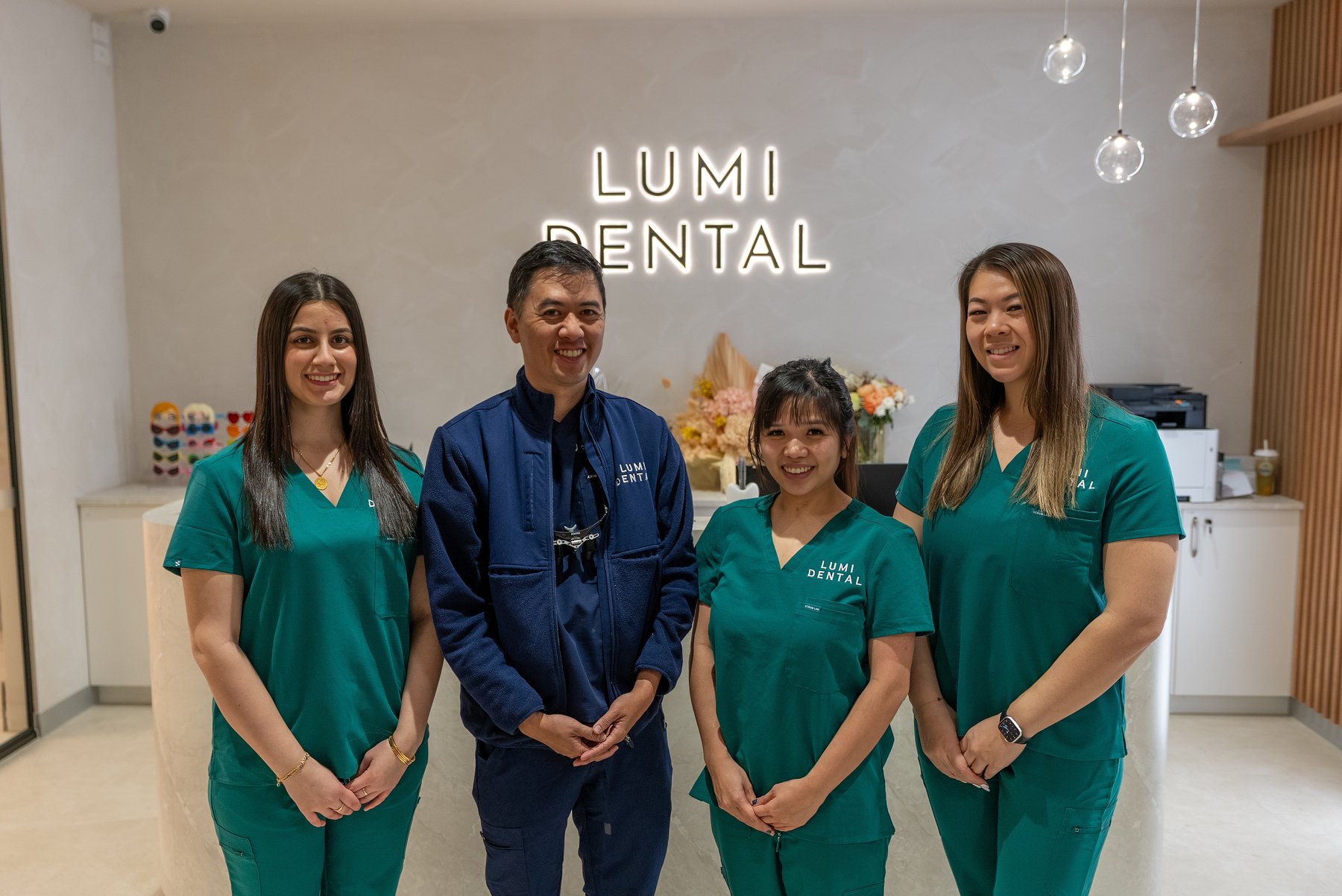
At Lumi Dental in Melrose Park a jaw complaint in a child or teenager is assessed by the dentist as part of a full examination, including the muscles, joints, range of opening and any dental cause that can masquerade as joint pain. An OPG or 3D X-ray is available in-house if the bony joint needs to be seen, and the intraoral 3D scanner records the bite for comparison over time. The practice accepts the Child Dental Benefits Schedule (CDBS) for eligible children, and where a paediatric dentist, surgeon or rheumatologist is needed, the team refers. Details are on our children's dentist page.
Questions patients ask
Is it normal for a child's jaw to click?
Yes, a painless click is common. Research has reported clicking in about one in ten children and adolescents, and most never need treatment. It needs its own appointment only if pain, locking or limited opening appear.
Why does my teenager's jaw hurt in the morning?
Morning jaw ache usually points to night-time clenching or grinding, especially with a headache on waking or flattened tooth edges. Stress, poor sleep and snoring can all drive it, and an examination can confirm the pattern.
Can braces cause jaw clicking or TMJ problems?
The research summarised by the AAPD does not support orthodontic treatment causing or curing TMD; tightness after an adjustment settles. Children due for their first orthodontic check can have the jaw joints assessed at the same visit.
Does my child need a night guard for jaw clicking?
Not for clicking alone. A splint is considered for a teenager with pain from heavy clenching, chosen carefully because the jaw is still developing. Younger children with mixed baby and adult teeth are usually managed with habit changes and monitoring.
When is jaw pain in a child an emergency?
A jaw stuck open after a yawn, swelling with fever, or jaw pain after a significant injury all need same-day care, and a dislocated jaw belongs in an emergency department. For urgent dental pain, Lumi Dental keeps emergency appointments.
Jaw concerns in a child or teen? Children's dentist in Melrose Park, CDBS accepted
If your child's jaw clicks, aches or has started to catch, the team at Lumi Dental in Melrose Park can examine the joints and muscles and set out a conservative plan. Book through our children's dentistry page or contact the practice; eligible children can use the CDBS, and offers are listed on the current deals page. Families visit from Ryde, Parramatta, Ermington and Rydalmere.
Sources
- healthdirect: Temporomandibular joint dysfunction
- American Academy of Pediatric Dentistry: Best Practices, Temporomandibular Disorders in Children and Adolescents
- PubMed (Journal of the American Dental Association): Prevalence of clinical signs of intra-articular temporomandibular disorders in children and adolescents, a systematic review and meta-analysis
- Raising Children Network: Teeth-grinding (bruxism) in children, why it happens and what to do
About the author

Dr James Tran is a general dentist at Lumi Dental in Melrose Park. He holds a BDent from the University of Sydney and a Graduate Diploma in Oral Implants, and is a Member of the International Congress of Oral Implantologists (MICOI).
This article is general information only and is not a substitute for an examination and individual advice from a registered dental practitioner. Suitability for any treatment varies from person to person.








