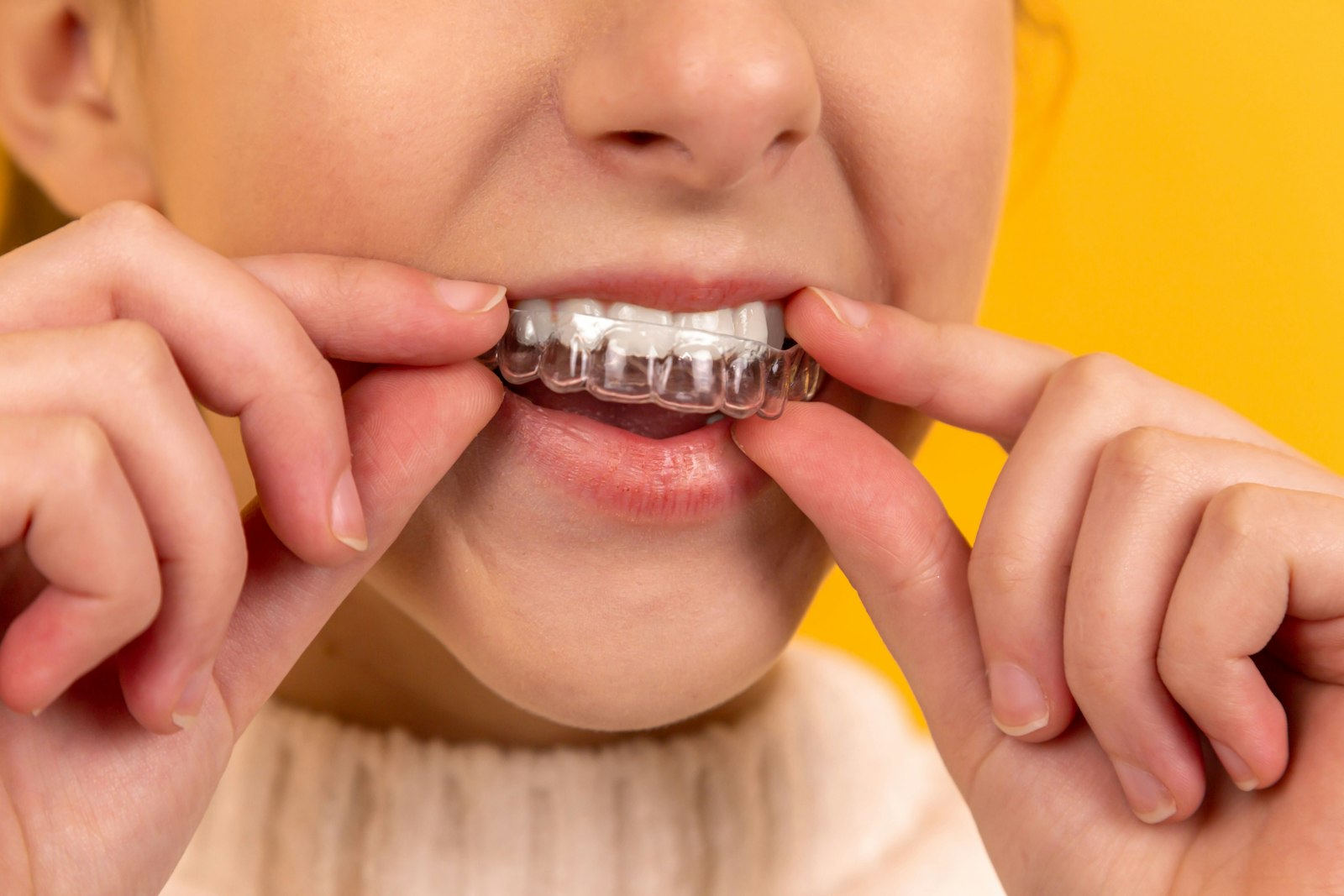

Lumi Home is professional take-home whitening. A dentist or oral health therapist checks your teeth and gums, a 3D scan is used to make custom trays, and you wear a prescription whitening gel in those trays at home for about 10 to 14 days. There are two gels to choose from: an overnight gel for people with sensitive teeth, and a daytime gel for people without sensitivity who would rather not sleep in trays.
This article explains how the two gels differ, what the first two weeks usually look like, and how to tell whether take-home whitening on its own suits you.
What Lumi Home includes
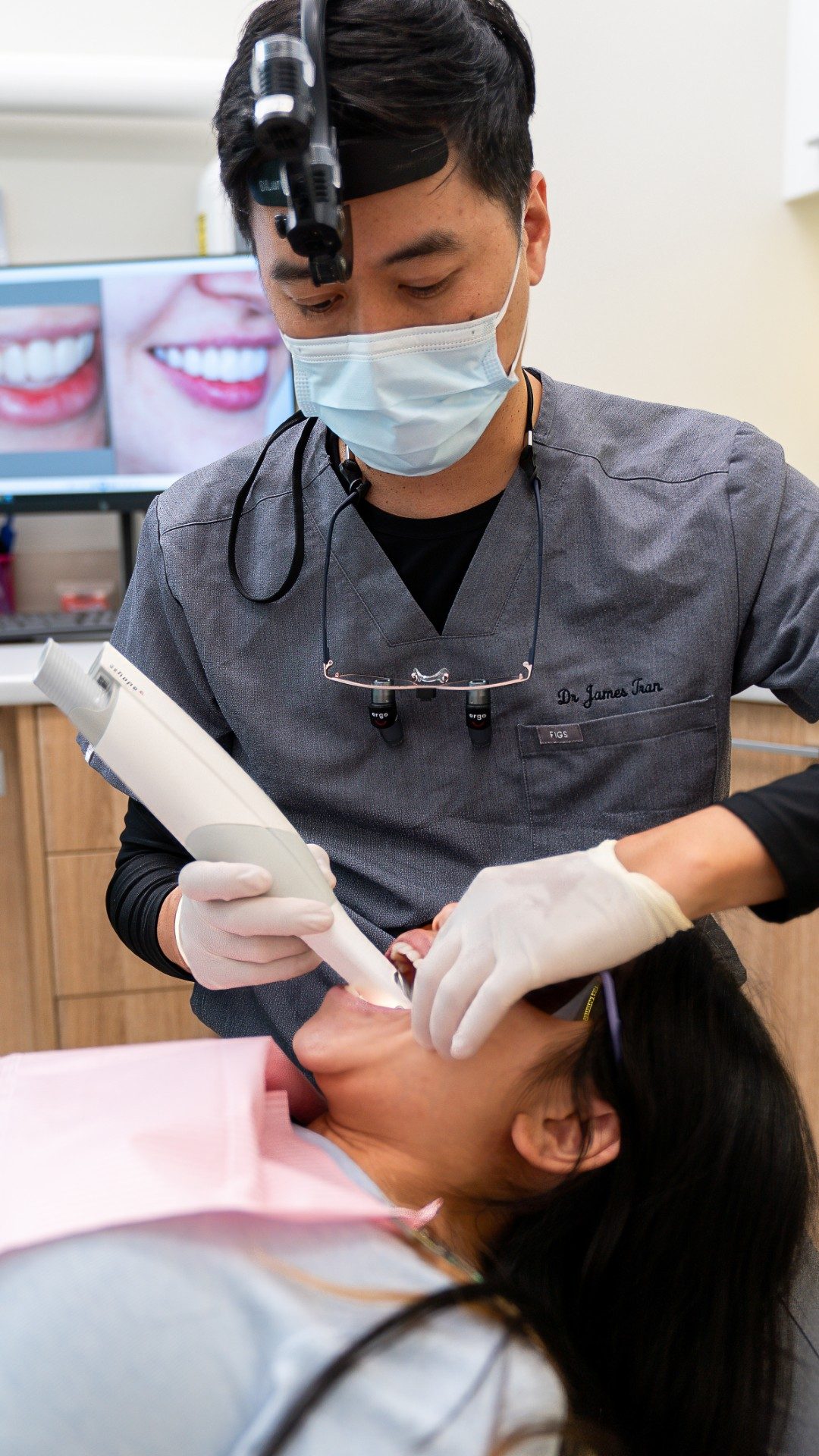
Lumi Home has four parts. There is an examination first, because whitening gel on an untreated cavity, a cracked tooth or inflamed gums can be painful. There is a 3D scan of your teeth, which replaces the putty impressions many people remember. There are the custom trays themselves, made from that scan so they sit closely over each tooth and stop short of the gum. And there is the gel, along with two weeks of desensitising toothpaste to use while you whiten.
You keep the trays afterwards. That matters later, because a few nights of gel every so often can hold the colour without starting again. Our article on how custom whitening trays work covers fit, reservoirs and tray care in more detail.
Overnight gel or daytime gel
Both gels whiten the same way. Peroxide passes through the enamel into the dentine underneath, where most of a tooth's colour sits, and breaks large stain molecules into smaller ones that reflect more light. What differs is the strength of the gel and how long it stays on the teeth.
The overnight gel
Overnight gels are usually based on carbamide peroxide. Carbamide peroxide releases hydrogen peroxide slowly, at roughly a third of its labelled strength, so the reaction is gentle and steady over several hours of sleep. Because the gel is weaker and works slowly, it tends to cause less sensitivity. That is why it is the usual choice for people whose teeth already react to cold drinks, or who have found whitening uncomfortable in the past.
The trade-off is that you need to be comfortable sleeping with trays in. Most people adjust within two or three nights. A tray that rubs or a gum that stings in the morning usually means a little too much gel or an edge that needs smoothing, both of which are easy to fix.
The daytime gel
Daytime gels are usually based on hydrogen peroxide at a higher working strength, worn for a much shorter session each day. They suit people without sensitivity who would rather whiten while reading, cooking or watching television than overnight. The daily session is shorter, but it needs to be done consistently at a set time, and the stronger gel is more likely to cause a few days of mild sensitivity.
The differences between the two peroxides are explained further in our guide to carbamide peroxide and hydrogen peroxide.
| Overnight gel | Daytime gel | |
|---|---|---|
| Usual active ingredient | Carbamide peroxide | Hydrogen peroxide |
| Wear time | Several hours while asleep | A shorter session each day |
| Sensitivity | Usually lower | Usually a little higher |
| Often suits | Sensitive teeth, previous discomfort with whitening | No sensitivity, prefers not to sleep in trays |
The first two weeks, day by day
Days one to three
The first few sessions are mostly about routine. Brush and floss, place a small drop of gel in the front of each tooth space in the tray, seat it, and wipe off anything that squeezes onto the gum. Change is often hard to see at this stage, partly because the teeth are lightening from the inside and partly because you look at them every day. Taking a photo in the same light on day one helps.
A mild, short zing in one or two teeth is common in this window. It usually passes within minutes or hours. Keep using the desensitising toothpaste, and brush with it before each session rather than straight after.
Days four to ten
This is where most of the visible change happens. Yellow and brown tones usually fade first. The edges of the front teeth, which are thinner, can look slightly translucent or bluish for a while. That is normal and evens out as the rest of the tooth catches up.
If sensitivity builds rather than settles, skip a session. Missing one does not undo progress. It simply slows it, and the result at the end is usually the same.
Days eleven to fourteen
The change slows down as teeth approach the lightest shade their natural colour allows. Some people stop at ten days because they are happy. Others continue to the full course. Going well past the planned course rarely adds much colour and tends to add sensitivity.
After the course
Teeth keep settling for about a week after the last session. A colour check at this point, compared against the starting shade and photos, gives a fair picture of the result. For the first couple of days after each session, and for a day or two after the course ends, it helps to go easy on strongly coloured food and drink. Our list of what to eat and drink after whitening has the details.
Is take-home whitening on its own enough?
For many people it is. Home whitening in well-fitting trays can reach a similar overall colour to whitening that starts with an in-chair session. It simply gets there more slowly. The in-chair session adds speed, not a different end point.
That is also why every in-chair option at Lumi Dental still includes take-home whitening. The chair gives a fast start, but part of what you see on the day comes from the teeth drying out, and it settles back over a few days. The home trays are what deepen and hold the colour. Our article on why in-chair whitening alone will not get you all the way explains this in full.
Lumi Home tends to suit people who are happy to see the change build over a week or two, who have no event coming up, or who want the gentlest approach for sensitive teeth. If you want to see a change within a day, Lumi Refresh or Lumi Radiance adds an in-chair session before the trays. Our comparison of Lumi Home, Refresh and Radiance sets out who each one usually suits.
What Lumi Home will not change
Fillings, crowns, veneers and bonding do not respond to whitening gel. If a front tooth has a tooth-coloured filling, it will keep its colour while the teeth around it lighten, and it may need replacing afterwards to match. Grey staining and staining from certain antibiotics taken in childhood also respond more slowly, and a longer home course may be suggested. No whitening treatment can promise a particular shade.
If you are planning bonding or veneers, whitening usually comes first so the new work can be matched to your lighter teeth. The teeth whitening page explains what each appointment involves, and current pricing for Lumi Home is on the current deals page. A free consult can confirm whether take-home whitening suits your teeth before you decide.
Questions we are often asked
How long do I wear the trays each day?
It depends on the gel. The overnight gel is worn while you sleep. The daytime gel is worn for a shorter session each day. You will be given a wear time that suits the gel and your teeth at the fitting, and it is worth following that rather than a schedule from a different product.
Is overnight whitening in trays safe?
Overnight whitening in custom trays has been used since the late 1980s, when Haywood and Heymann first described nightguard vital bleaching (Quintessence International, 1989). Side effects are usually limited to temporary sensitivity and mild gum irritation. In Australia, whitening products above 6% hydrogen peroxide or 18% carbamide peroxide may only be supplied or used by registered dental practitioners (Dental Board of Australia), which is why a check-up comes first.
Can I switch from the daytime gel to the overnight gel?
Yes. If the daytime gel causes more sensitivity than you are comfortable with, the overnight gel can be used in the same trays. Let the team know so the plan can be adjusted.
What if I miss a few nights?
Pick up where you left off. A break of a few days does not reverse the change, and some people take planned rest days to keep sensitivity down.
How do I keep the result once the course is finished?
Results usually last two to three years before people whiten again, depending on coffee, tea, red wine, smoking or vaping. Using your trays for a short top-up every so often helps. Our guide to topping up whitening at home explains how often and how much gel to use.