
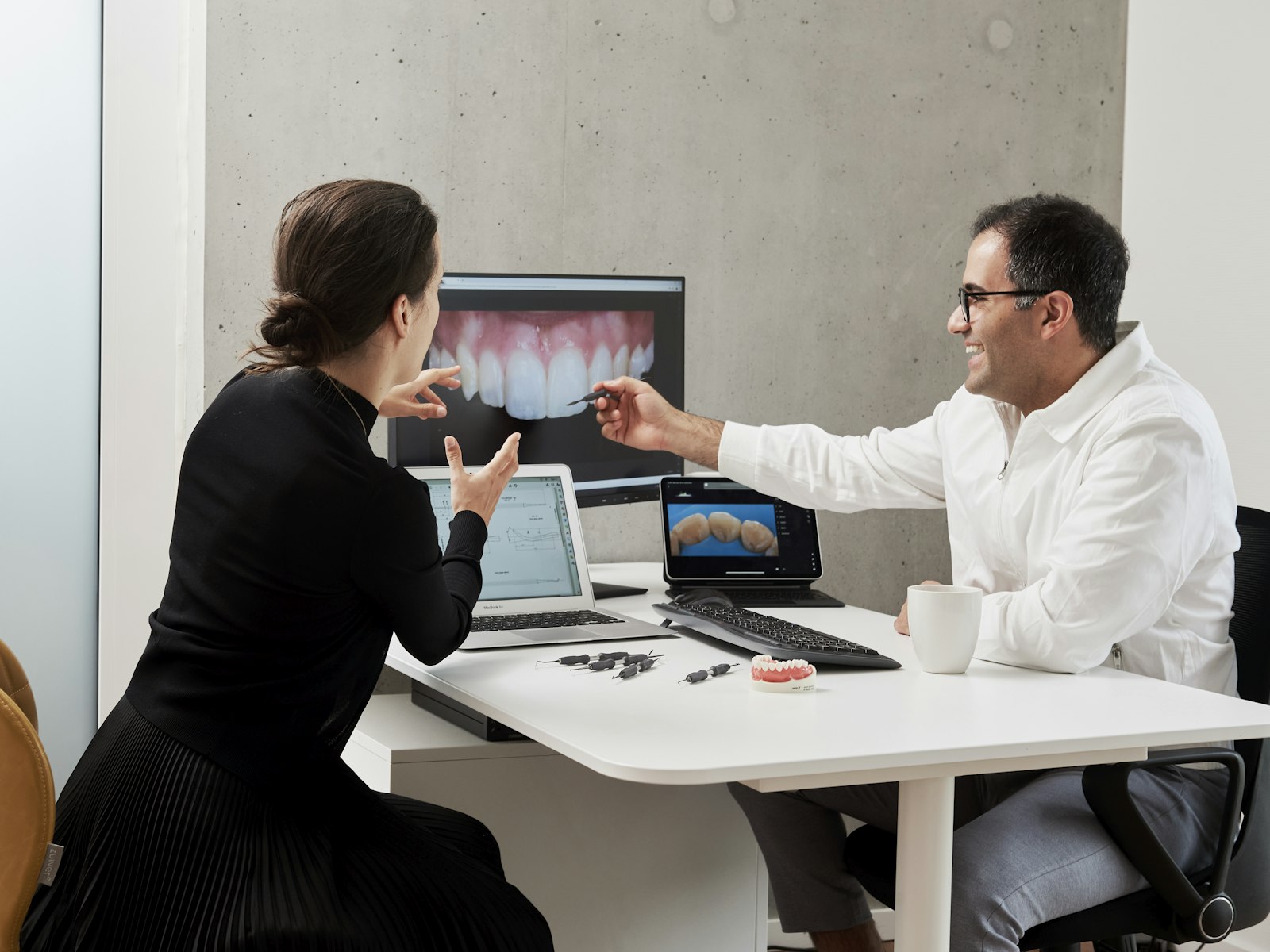

Lumi Dental offers three whitening options. Lumi Home is take-home whitening in custom trays. Lumi Refresh adds a gentler in-chair session, suited to people who found whitening sensitive in the past. Lumi Radiance adds the in-chair session that gives the fastest start. All three include take-home whitening, because that is the part that finishes and holds the result.
The right choice depends mostly on how quickly you want to see a change and how your teeth have reacted to whitening before. The final shade depends far more on your starting colour and the type of staining than on which option you pick.
The three options side by side
| Lumi Home | Lumi Refresh | Lumi Radiance | |
|---|---|---|---|
| In-chair session | None | Yes, gentler | Yes, fastest start |
| Custom take-home trays and gel | Yes | Yes | Yes |
| Desensitising toothpaste for two weeks | Yes | Yes | Yes |
| When a change usually shows | Gradually over the first week or two | From the day of the session | From the day of the session, most visibly |
| Often suits | People happy to whiten gradually, or with no event coming up | People who found previous whitening sensitive | People who want a visible change quickly |
Prices for each option are listed on the current deals page.
Lumi Home: whitening at your own pace
Lumi Home starts with a 3D scan of your teeth, which is used to make thin trays that fit closely over them. You wear the trays with a professional whitening gel at home. There are two formulations. The overnight gel is lower strength and worn while you sleep, which suits people with sensitive teeth. The daytime gel is stronger and worn for a shorter time each day, which suits people without sensitivity who would rather not sleep in trays.
Most of the change shows over the first one to two weeks. You also receive two weeks of desensitising toothpaste, and you keep the trays for top-ups later. Our article on how custom whitening trays work covers fit, wear time and care.
Lumi Refresh: when whitening has been uncomfortable before
Some people have tried whitening and stopped because their teeth ached or felt sharp with cold drinks. Lumi Refresh is a gentler in-chair session designed with them in mind, followed by take-home whitening at a strength and wear time that suits their teeth. The in-chair part still gives a visible start, without pushing as hard.
Sensitivity during whitening is usually short-lived and is more likely if teeth already react to cold, if gums have receded, or if enamel is worn. Our guide to whitening with sensitive teeth explains why it happens and what helps.
Lumi Radiance: the fastest start in the chair
Lumi Radiance is the option patients ask about most. The in-chair session uses a professional-strength gel over about an hour and gives the most visible change on the day, which suits people who want to see a difference quickly.
Take-home whitening is still part of Radiance. Straight after any in-chair session, teeth are slightly dehydrated and look lighter than their true colour, and some of that settles back over the next few days. The home trays deepen the result and hold it. We explain this in more detail in why in-chair whitening alone will not get you all the way.
Some patients aiming for a very light shade choose an add-on pack of higher-concentration gel. It can take teeth further for some people, but it is also more likely to cause sensitivity, and no gel can promise a particular shade.
How to choose between them
A few questions usually settle it:
- Have you had whitening before, and how did your teeth feel? If it was uncomfortable, Refresh or Home with the overnight gel is usually the better starting point.
- Do you have an event coming up? Radiance gives the quickest visible change. Even so, starting at least three to four weeks ahead allows time for the home phase and for the colour to settle.
- Do you have fillings, bonding or crowns on your front teeth? These do not whiten, so they may need replacing afterwards to match. That affects planning more than the choice of option.
- Are you happy to wear trays at night? If so, the overnight gel is gentle and convenient. If not, the daytime gel suits better.
Before any option, a dentist or oral health therapist checks your teeth and gums. Decay, gum inflammation and exposed roots should be treated or protected first. If you are planning bonding or veneers, whitening usually comes first so the new work can be matched to your lighter shade. Our article on whitening with fillings or bonding explains the order, and the composite bonding page covers what bonding involves.
What all three have in common
Whichever option you choose, the results usually last two to three years before people whiten again to get back to the same level, depending on coffee, tea, red wine, smoking or vaping, and how often they top up. You keep your trays, so a few nights of gel every so often can maintain the colour between full treatments. The teeth whitening page has more on what each appointment involves.
Questions we are often asked
Which Lumi whitening option gives the whitest result?
The final shade depends mainly on your starting colour, the type of staining and how consistently the home trays are worn, rather than on the option itself. Radiance gives the fastest start in the chair, but all three finish with take-home whitening. No option can promise a particular shade.
Can I upgrade from Lumi Home to an in-chair option later?
Yes. The custom trays made for Lumi Home can still be used afterwards, so adding an in-chair session later does not mean starting again from scratch.
Is the overnight gel weaker than the daytime gel?
Yes. Overnight gels use a lower concentration worn for longer, which tends to be gentler on sensitive teeth. Daytime gels are stronger and worn for a shorter time. In Australia, whitening products above 6% hydrogen peroxide or 18% carbamide peroxide may only be supplied or used by registered dental practitioners (Dental Board of Australia).
Do I need a check-up before whitening?
Yes. Whitening gel can irritate untreated decay, cracked teeth or inflamed gums, so an examination comes first. If you are due for a scale and clean, it is usually best done before whitening so the gel reaches clean enamel.







