


A left ventricular assist device, or LVAD, changes how a dental team needs to plan even routine treatment, from the timing of antibiotics to the angle of the dental chair. LVADs are mechanical pumps implanted to support heart function in people with advanced heart failure, and the number of Australians living with one continues to grow as the technology becomes more established as a bridge to transplant or as longer-term therapy. For dentists, treating a patient with an LVAD is not routine, and it should never be treated as routine. This article is general patient education, not medical advice, and every LVAD patient should coordinate dental care directly with their cardiology or VAD team before treatment.
Key takeaways
- LVAD patients are usually on long-term anticoagulation, which affects bleeding risk during dental procedures.
- Antibiotic prophylaxis before certain dental treatment may be considered for some LVAD patients, but this decision sits with the patient's cardiology or VAD team, not the dental team alone.
- Positioning in the dental chair may need adjustment, since some LVAD patients cannot lie fully flat comfortably or safely.
- Coordination between the dental practice and the patient's medical team before any treatment, especially anything beyond a simple check-up, is essential.
- This article does not replace medical advice. Always discuss planned dental treatment with your cardiology or VAD coordination team first.
What an LVAD is and why it matters at the dentist
An LVAD is a surgically implanted mechanical pump that helps the heart's left ventricle move blood around the body when the heart alone cannot do this effectively. It is connected to an external controller and power source, usually worn on a belt or in a small bag, with a driveline exiting through the skin. People living with an LVAD are typically under close, ongoing specialist cardiology care and follow a strict medication regimen, most notably anticoagulation therapy to prevent clot formation within the device.
For a dental team, an LVAD is one of the more complex medical conditions to plan around, precisely because it combines several risk factors at once: significant underlying heart disease, mandatory blood-thinning medication, a device that can be sensitive to electrical interference, and a driveline exit site that carries its own infection-control considerations. None of this means dental care is unsafe for LVAD patients. It means dental care needs to be planned carefully and in coordination with the patient's broader medical team.


Anticoagulation and bleeding risk
Almost all LVAD patients take anticoagulant medication, commonly warfarin, sometimes alongside antiplatelet agents such as aspirin, to reduce the risk of clot formation in the pump and its connecting vessels. This has a direct and predictable effect on dental treatment: procedures that involve any bleeding, including extractions, deep cleaning, gum surgery or even some fillings near the gumline, carry a higher bleeding risk than they would for a patient not on anticoagulation.
Dentists managing anticoagulated patients generally do not stop or adjust anticoagulant medication themselves. That decision belongs to the prescribing cardiology or VAD team, since interrupting anticoagulation in an LVAD patient carries its own serious risk of clot formation within the device. Instead, the dental team typically plans around the existing medication using local measures to control bleeding, and may request a recent blood test result such as an INR reading for patients on warfarin before more invasive procedures. This is a topic the dental practice should raise explicitly with the patient and, where appropriate, directly with the medical team managing the LVAD.
Antibiotic prophylaxis: a decision for the medical team
Some patients with implanted cardiac devices or a history of certain heart conditions are prescribed a single dose of antibiotic before specific dental procedures, as a precaution against a rare but serious infection risk. Guidance on antibiotic prophylaxis has narrowed considerably over recent years and now applies to a smaller group of cardiac conditions than it once did. Whether an LVAD patient needs antibiotic cover before dental treatment is not something a dental team can determine alone. It depends on the individual's specific cardiac history, the type of procedure planned, and current guidance from bodies such as the Dental Board of Australia and relevant cardiology societies.
The safest and most reliable approach is for the dental practice to contact the patient's cardiologist or VAD coordinator ahead of any treatment beyond a straightforward check-up and clean, to confirm whether prophylaxis is recommended in that specific case. Patients can help this process by bringing a current letter or summary from their cardiology team to dental appointments.
Positioning and appointment logistics
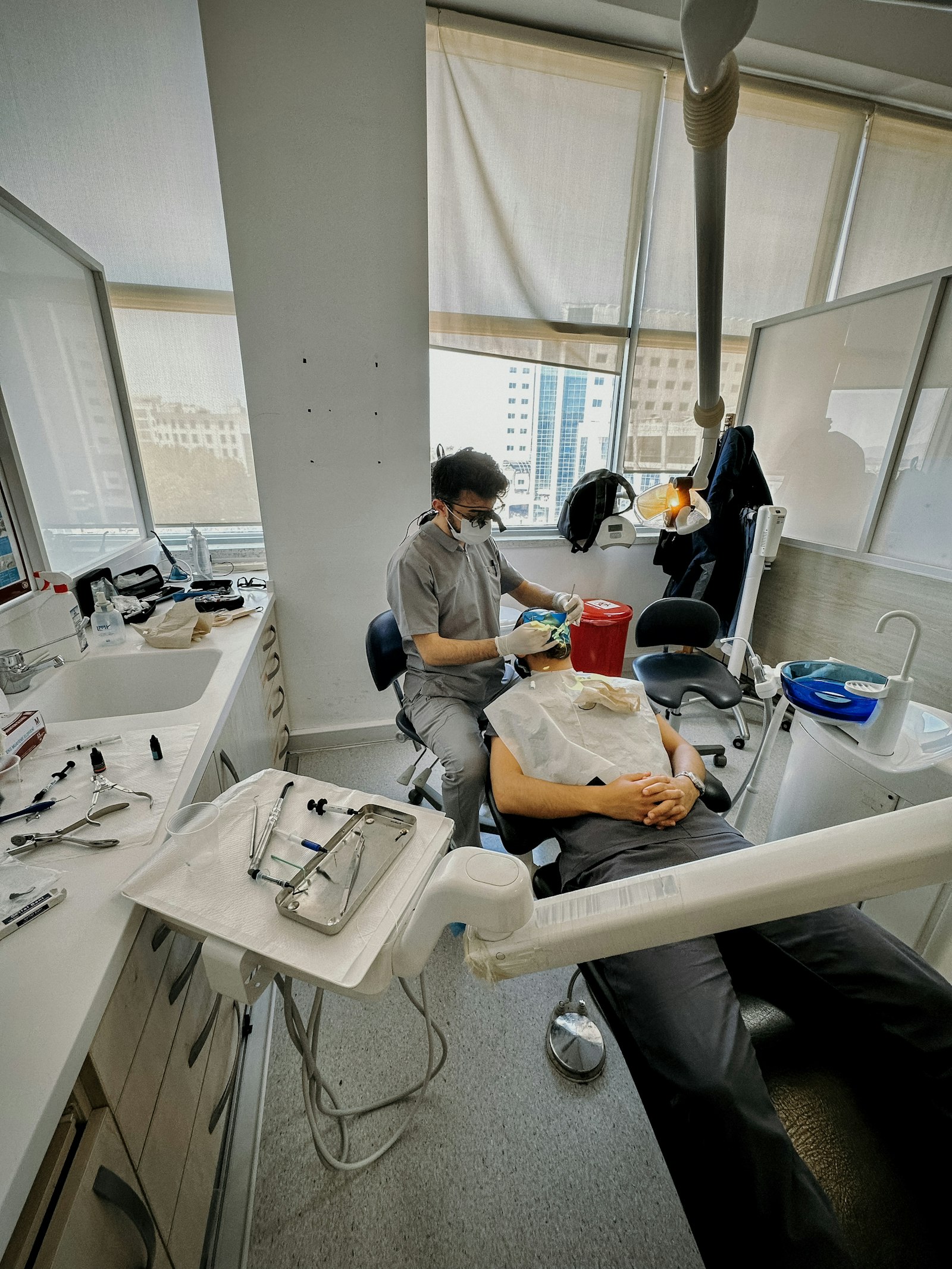
Many LVAD patients cannot lie completely flat for extended periods without discomfort or reduced device function, since the position of the body can affect how the pump interacts with blood flow. Dental chairs can usually be adjusted to a more reclined-but-not-flat position, and appointments can be kept shorter to reduce time spent in any one position. It is worth mentioning chair position preferences to the practice when booking, so the team can plan the appointment length and chair angle in advance rather than adjusting mid-treatment.
The external controller, batteries and driveline also need practical consideration during a visit. Patients should let the practice know if they need extra space for equipment, access to a power point for charging, or a companion present during the appointment. None of this is unusual for a well-run general dental practice to accommodate with a little advance notice.
Electrical equipment and device interference
Modern dental equipment, including ultrasonic scalers and electric handpieces, is generally considered low risk for interference with LVADs, but this is another area where individual guidance from the patient's cardiology or device manufacturer is more reliable than a general rule. Patients are encouraged to ask their VAD team directly whether any dental equipment requires specific precautions for their particular device model, and to pass this information on to their dental practice before treatment.
Working with your dental team and your medical team together
The most important practical step for an LVAD patient is communication in both directions. Tell your dental practice about your LVAD, your anticoagulation medication, and your VAD coordinator's contact details when you book an appointment, not after you arrive. Equally, keep your cardiology or VAD team informed if you have upcoming dental treatment planned, particularly anything more involved than a routine check-up, so they can advise on anticoagulation management and antibiotic prophylaxis if relevant.
A general dentist can usually manage routine preventive care, such as check-ups, cleans and simple fillings, for a well-coordinated LVAD patient. More complex procedures may be better suited to a hospital-based dental service with direct access to the patient's cardiology team, particularly in the period soon after implantation. Your GP, cardiologist or VAD coordinator is best placed to advise which setting suits your specific situation.
Frequently asked questions
Can someone with an LVAD have routine dental check-ups?
Yes, in most cases a well-coordinated LVAD patient can have routine check-ups and preventive care with a general dentist, provided the practice is informed of the LVAD, current medications and any specific precautions from the cardiology team in advance.
Do LVAD patients always need antibiotics before dental treatment?
Not necessarily. This depends on individual cardiac history and current clinical guidance, and should be confirmed with the patient's cardiologist or VAD coordinator rather than assumed.
Is it safe to have a tooth extraction with an LVAD?
Extractions and other bleeding-prone procedures need careful planning around anticoagulation and are typically coordinated closely with the patient's medical team. Many LVAD patients can safely have extractions with the right planning, local bleeding control measures and, where needed, hospital-based support.
Can LVAD patients lie back fully in a dental chair?
Some can and some cannot, depending on individual device function and comfort. Letting the practice know about positioning needs in advance allows the chair angle and appointment length to be planned accordingly.
Should I bring information from my cardiology team to my dental appointment?
Yes. A current letter or summary noting your LVAD model, anticoagulation regimen and any specific precautions helps the dental team plan safely and reduces the need for delays while information is confirmed.
What should I do in a dental emergency if I have an LVAD?
Contact your dental practice and explain that you have an LVAD so they can prepare appropriately, and where the situation is serious or the practice is not confident managing your case, seek care at a hospital with access to your cardiology team.
If you have an LVAD or another complex medical device and need dental care, the team at Lumi Dental can discuss what coordination looks like for your situation and provide a written quote before any treatment. Explore current deals or visit the general dentist page to get in touch and share your medical history ahead of your visit.
Related reading: Pacemakers, ICDs and dental treatment, Insulin pumps and dental treatment, Continuous glucose monitors and dental visits, and dental sedation options for anxious adults.

