
A missing premolar tooth can be replaced with a dental implant, a bridge or a partial denture, and in some cases the gap can simply be left and monitored. Adults have eight premolars, two in each quarter of the mouth between the canine and the first molar, and because they often show when you smile, a gap here can be visible. The right choice depends on why the tooth is missing, the health of the teeth on either side and how your bite works. This guide sets out each option, including the braces and congenitally missing tooth situations that are often left out of general advice.
Key Takeaways
- Premolars sit between the canine and first molar and are often visible in a smile, so a gap can affect appearance as well as chewing.
- If a premolar was removed for braces and the space was closed, there is nothing to replace.
- Lower second premolars are among the most commonly congenitally missing teeth after wisdom teeth, and a baby molar may sit in their place for years.
- A single implant does not involve the neighbouring teeth, which is why it is often preferred when those teeth are healthy. See our implant vs bridge vs denture comparison.
- A resin-bonded bridge is a conservative fixed option for lower bite loads.
- Leaving the gap can be reasonable for some people after assessment, with monitoring for tipping and over-eruption.
Why Premolars Go Missing
Premolars are lost for different reasons than most other teeth, and the reason shapes the treatment.
Extraction for braces
Premolars are the teeth most often removed to create space for orthodontic treatment. If you had braces as a teenager, there is a good chance one or more premolars were taken out and the remaining teeth were moved to close the space. In that case, you are not missing anything that needs replacing. Our article on why teeth are removed before braces covers this in more detail. Problems arise only when a space reopens, or when it was never fully closed.
Decay or fracture
A premolar with a large filling or root canal treatment can split, especially in people who grind. Some fractures run down the root and the tooth cannot be saved.
Congenitally missing teeth
Some people never develop a particular adult tooth. After wisdom teeth, lower second premolars are among the teeth most commonly missing from birth. In these cases, the baby molar above often stays in place well into adulthood. A retained baby molar can last many years, but its roots may eventually shorten and it can loosen, at which point replacement is planned. The related topic of congenitally missing teeth and peg lateral incisors explains how this is assessed.
Your Options for a Premolar Gap
Single dental implant
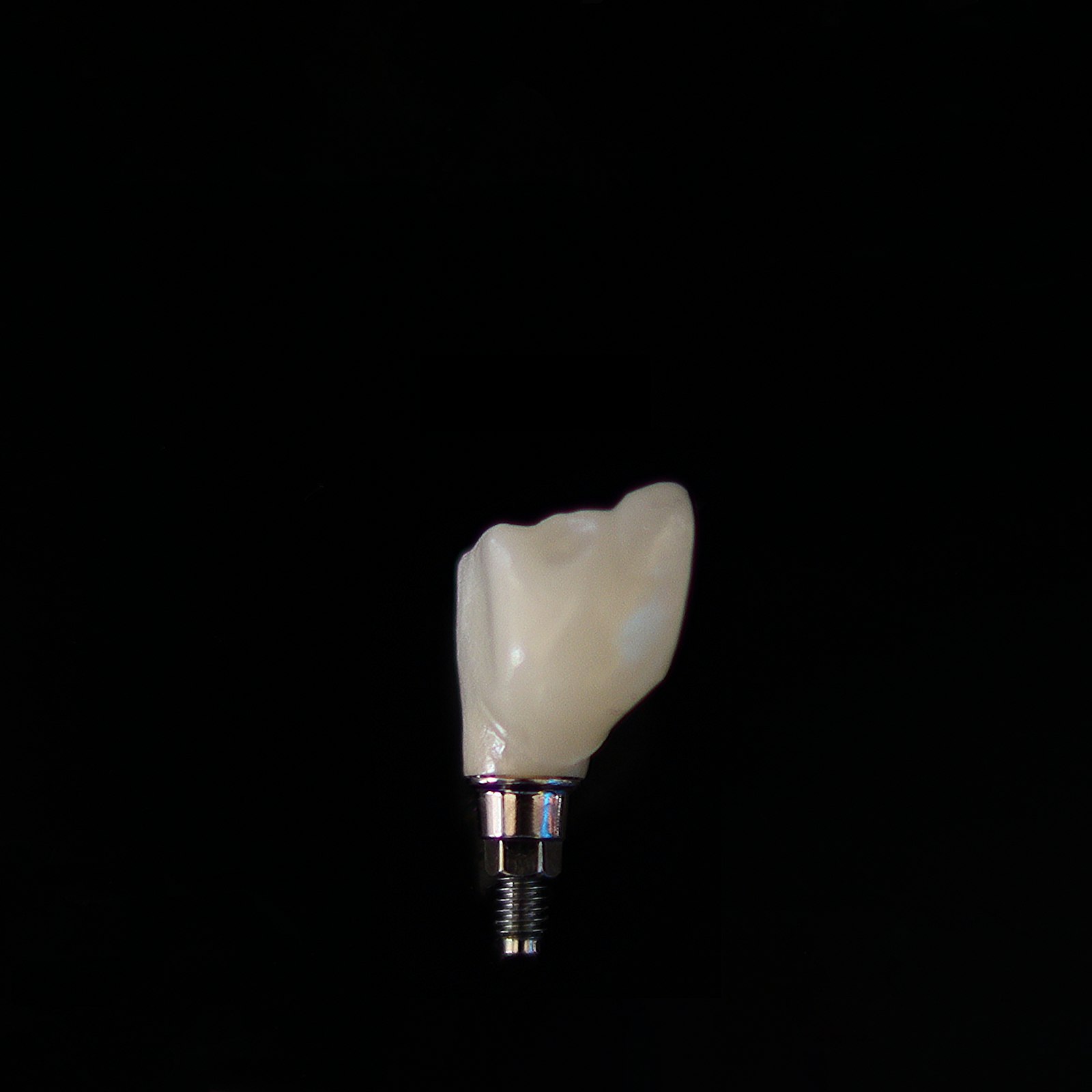
An implant is a titanium post placed in the jawbone, topped with a crown. It replaces the tooth without touching the teeth on either side. It needs enough bone height and width, and in the lower premolar area there is an important nerve, the mental nerve, which exits the jaw nearby. For that reason, a 3D scan is used to plan the implant position safely. If bone has shrunk since the tooth was lost, bone grafting may be needed first. Where a tooth is about to be removed, socket preservation can help preserve bone for a future implant.
Conventional bridge
A conventional bridge uses the teeth on either side as supports. Both are shaped and crowned, and a false tooth is joined between them. It is fixed and does not need surgery, and it can make good sense when the neighbouring teeth already have large fillings or need crowns anyway.
Resin-bonded (Maryland) bridge
A resin-bonded bridge has a small wing bonded to the back of a neighbouring tooth, with little or no drilling. One-wing designs are common. It suits areas with lighter biting forces. It can come away from the tooth over time and can usually be rebonded.
Partial denture or flipper
A removable acrylic partial denture, sometimes called a flipper, fills the gap at lower cost. It is often used as a temporary measure while an implant site heals, or as a budget option.
Orthodontic closure
In some people, especially with a baby molar to be removed or a small space, orthodontic treatment can move teeth to close the gap. This depends on the bite and is planned case by case.
Leaving the gap
Some people with a stable bite choose not to replace a missing premolar after assessment. This can be reasonable, but the gap should be monitored, because neighbouring teeth can tip into the space and the opposing tooth can over-erupt. Our guide to what happens if you do not replace a missing tooth explains the changes to watch for.
Comparing the Options
| Option | Touches neighbouring teeth | Typical lifespan | Often suits |
|---|---|---|---|
| Single implant | No | Often many years to decades with good care | Healthy neighbours, adequate bone, long-term fixed solution |
| Conventional bridge | Yes, both are crowned | Around 10 to 15 years | Neighbours that already need crowns |
| Resin-bonded bridge | Minimally, bonded to the back of one tooth | Varies, can debond and be rebonded | Light bite load, wish to avoid drilling |
| Acrylic partial denture | Rests against them | Several years, may need relines | Temporary use or budget priority |
| Leave the gap | No | Not applicable | Stable bite, with regular monitoring |
If the Neighbouring Teeth Are Healthy, Avoid Cutting Them Down
This is the single rule I find most useful for a premolar gap. A conventional bridge requires crowning the teeth either side, which removes a significant amount of healthy enamel and commits those teeth to future maintenance. If the neighbours are healthy and unfilled, an implant or a resin-bonded bridge keeps them intact. If the neighbours already have large fillings or need crowns, a conventional bridge becomes much more attractive because it treats those teeth at the same time.
In practice, many of the patients I see with a single premolar gap and healthy neighbours lean towards an implant, while those who prefer to avoid surgery often consider a resin-bonded bridge first.
Missing Premolars and Braces
Missing premolars come up often in orthodontic planning. If you are an adult with a congenitally missing premolar or a reopened extraction space, aligners or braces may be used to either close the gap or position the teeth ideally for an implant later. When teeth are moved first, the implant is placed once the orthodontic result is stable. Our article on getting braces with missing teeth covers this sequencing. Where a case needs a registered specialist, such as an orthodontist or periodontist, the team at Lumi Dental will refer you.
General Market Costs to Replace a Missing Premolar
| Treatment | General market range in Sydney |
|---|---|
| Single implant with crown | Around $4,000 to $7,000 |
| Three-unit conventional bridge | Around $3,500 to $6,000 |
| Resin-bonded bridge | Around $1,500 to $3,000 |
| Acrylic partial denture | Around $800 to $1,500 |
These are general market ranges, which vary with complexity and provider; a written quote follows an exam. Bone grafting, extraction or orthodontic treatment add to the total where needed. For any current offers at Lumi Dental, see current deals.
Common Questions
Do I need to replace a missing premolar?
Not always. If the space was closed with braces, nothing needs replacing, and some people with an open gap and a stable bite choose to leave it after assessment, with regular monitoring.
Is an implant or a bridge better for a premolar?
An implant is usually preferred when the neighbouring teeth are healthy, because it avoids cutting them down. A bridge may suit better when those teeth already need crowns or when an implant is not suitable.
Can a baby tooth stay in place of a missing premolar?
Yes, a retained baby molar can last for many years in place of a congenitally missing second premolar. It is monitored, and replacement is planned if it loosens or its roots shorten significantly.
How long does a premolar implant take?
A premolar implant typically takes a few months from placement to final crown, allowing time for the implant to bond with the bone. Extra time is needed if an extraction or bone graft comes first.
Will a gap from a missing premolar cause problems?
It can. Over time, neighbouring teeth may tip into the space and the opposing tooth may over-erupt, which can affect the bite and make later replacement more complex.
Book a Complimentary Implant Consultation at Lumi Dental
If you have a missing premolar, or a baby molar that is starting to loosen, the team at Lumi Dental in Melrose Park can assess the gap, arrange 3D imaging of the bone where needed and explain every option, including leaving the space alone when that is reasonable. Contact us to book a complimentary implant consultation and receive a written quote, or read more about dental implants in Melrose Park.