The oral microbiome is the community of bacteria and other microbes that lives in your mouth, and a healthy mouth depends on keeping that community balanced rather than wiping it out. Around 700 bacterial species have been found in the human mouth, and University of Melbourne researchers note that each of us hosts around 300 of them. Most are harmless or helpful. Tooth decay and gum disease happen when the balance tips towards the few that thrive on sugar or inflammation, so looking after the oral microbiome is less about killing mouth bacteria and more about what you feed them and how often you disrupt them.
Written by Dr James Tran, BDent (University of Sydney), MICOI, GradDip (Oral Implants), general dentist at Lumi Dental in Melrose Park.
The short version
- Hundreds of species live on your teeth, tongue, gums and cheeks. Diversity and balance are the signs of health.
- Plaque is a biofilm, an organised community. Brushing and interdental cleaning work by breaking it up regularly, not by sterilising.
- Decay comes from frequent sugar feeding acid-producing bacteria. Gum disease comes from plaque at the gumline feeding inflammation. Both are loops that feed themselves.
- Saliva is the regulator: it washes sugar away, neutralises acid and carries the minerals that repair early damage. A dry mouth tips the balance quickly.
- How often you eat sugar matters more than how much; see our guide to how sugar causes tooth decay.
What the oral microbiome actually is
Your mouth is several environments, not one. Tooth enamel, the crevice where gum meets tooth, the rough tongue and the soft cheek lining each host their own community. A review in Nature Reviews Microbiology describes these distinct microenvironments as harbouring unique microbial communities, regulated by signalling between the microbes and by the host: your saliva, diet and immune system.
The great majority never cause trouble, and some help by occupying space that harmful species would otherwise take. When patients ask me what a "healthy" mouth looks like under a microscope, the answer is a busy one, not a clean one.

Plaque is a biofilm, not a smear
Dental plaque is the oral microbiome you can feel with your tongue. University of Melbourne researchers compare it to the algae and molluscs on the bottom of a ship: teeth and gums are stable surfaces, so entire communities build on them. Some bacteria arrive first; others move in once conditions suit them. Within a day or two the film has a protective matrix that shields the deeper cells from saliva and from anything you rinse with.
Dr Samantha Byrne of the Melbourne Dental School puts it plainly: supporting a healthy oral microbiome involves reducing the food for bacteria that cause disease and regularly disrupting the communities living on the teeth. A young, regularly broken-up biofilm is dominated by relatively harmless species; left alone for days it matures into one that makes more acid and provokes more inflammation.
Balance and dysbiosis: how decay and gum disease begin
Dysbiosis is a microbial community that has tipped out of balance. The Nature Reviews Microbiology authors describe decay and gum disease as each driven by a feedforward loop between microbes and host, sugar in one case and inflammation in the other. Both feed themselves once they start.
The decay loop
The Better Health Channel explains it well: bacteria in plaque use the sugar you eat for energy and release acid as waste, and the acid dissolves the tooth's crystals. Frequent sugar means frequent acid, and acidic plaque favours the bacteria that tolerate acid and make more of it. That is dysbiosis in the direction of decay, and it is why I ask patients how often they eat sweet things rather than how much.
The gum disease loop
At the gumline the fuel is inflammation. Mature plaque against the gum triggers bleeding and swelling; the inflamed crevice deepens and leaks fluid that feeds the bacteria suited to a low-oxygen pocket, which provoke more inflammation, and bone around the tooth can be lost. Gingivitis is the reversible early stage; periodontitis is the loop having run long enough to damage the supporting tissues. Our guide to the stages of gum disease describes what each looks like.

Saliva: the quiet regulator
If plaque is the community, saliva is the climate. The Better Health Channel lists what it does: washes sugar away, neutralises acid, attacks decay-causing bacteria and fungi, and carries the calcium and phosphate that repair early mineral loss. Decay happens when the acid load outweighs what saliva can counter.
That makes a dry mouth one of the fastest ways to unbalance the oral microbiome. About 10% of the general population and 25% of older people have dry mouth, and around 600 medicines are known to cause it. Without enough saliva, decay appears along the gumline and on root surfaces that are normally protected, and thrush becomes more likely. Sugar-free gum, water and avoiding alcohol-containing mouthwash are the standard measures; if dryness is constant, the medicine list is the first place to look.
The oral microbiome and general health: what we can say
Patients often arrive having read that mouth bacteria cause heart disease or dementia. The careful version is this. The review authors describe decay and periodontitis as two of the most prevalent microbially induced disorders worldwide, and gum disease is a chronic inflammatory condition, so research has reported associations between it and conditions such as heart disease and diabetes. An association is not proof of cause; people who smoke or have diabetes are more prone to both. A mouth in balance is one less source of inflammation, which is reason enough to treat gum disease on its own merits.
Everyday habits and their effect on the oral microbiome
| Habit | Effect on the microbiome | What to do |
|---|---|---|
| Frequent sugar through the day | Repeated acid pushes plaque towards acid-loving species | Keep sweet food and drink to mealtimes |
| Brushing twice a day with fluoride toothpaste | Breaks up biofilm before it matures; fluoride protects enamel | Two minutes, soft brush, all surfaces |
| Cleaning between teeth | Reaches the biofilm a brush misses, where gum disease starts | Floss or interdental brushes daily |
| Antiseptic mouthwash daily | Suppresses helpful and harmful species alike; chlorhexidine can stain | Use for a reason and a set period |
| Smoking or vaping | Dries the mouth; a recognised risk factor for gum disease | Quitting helps more than any product |
| Dry mouth | Less buffering and repair; root decay; thrush | Water, sugar-free gum, review medicines |
| Probiotics | Evidence for lasting change is limited | Not a substitute for cleaning and less sugar |
Two of these deserve a word. The University of Melbourne team notes that antimicrobial rinses are not needed unless your dentist recommends them, because they also remove bacteria that may be important for health; our article on whether you need mouthwash covers when they earn their place. Probiotic lozenges are heavily marketed, but evidence that they change the oral community in a lasting way is limited; see our guide to probiotics for oral health.
A practical plan for a balanced mouth
- Brush twice a day with a fluoride toothpaste, including the gumline, and spit rather than rinse.
- Clean between your teeth daily; without it, the Better Health Channel notes, up to a third of each tooth is never cleaned.
- Move sugar to mealtimes. Three sweet hits with meals is a different mouth from six snacks and a sipped soft drink.
- Drink tap water and chew sugar-free gum after meals if you cannot brush.
- Eat a varied diet with enough vegetables. In the Melbourne study, preliminary findings linked high intakes of added sugar and refined flour to lower bacterial diversity in saliva.
- Use antiseptic mouthwash only when a dentist or oral health therapist has given you a reason and a stop date.
- Do not smoke or vape, and tell your dentist if your mouth is often dry.
- Have a check-up and clean every six to twelve months, or more often if you are prone to decay or gum disease.
How we approach this at Lumi Dental
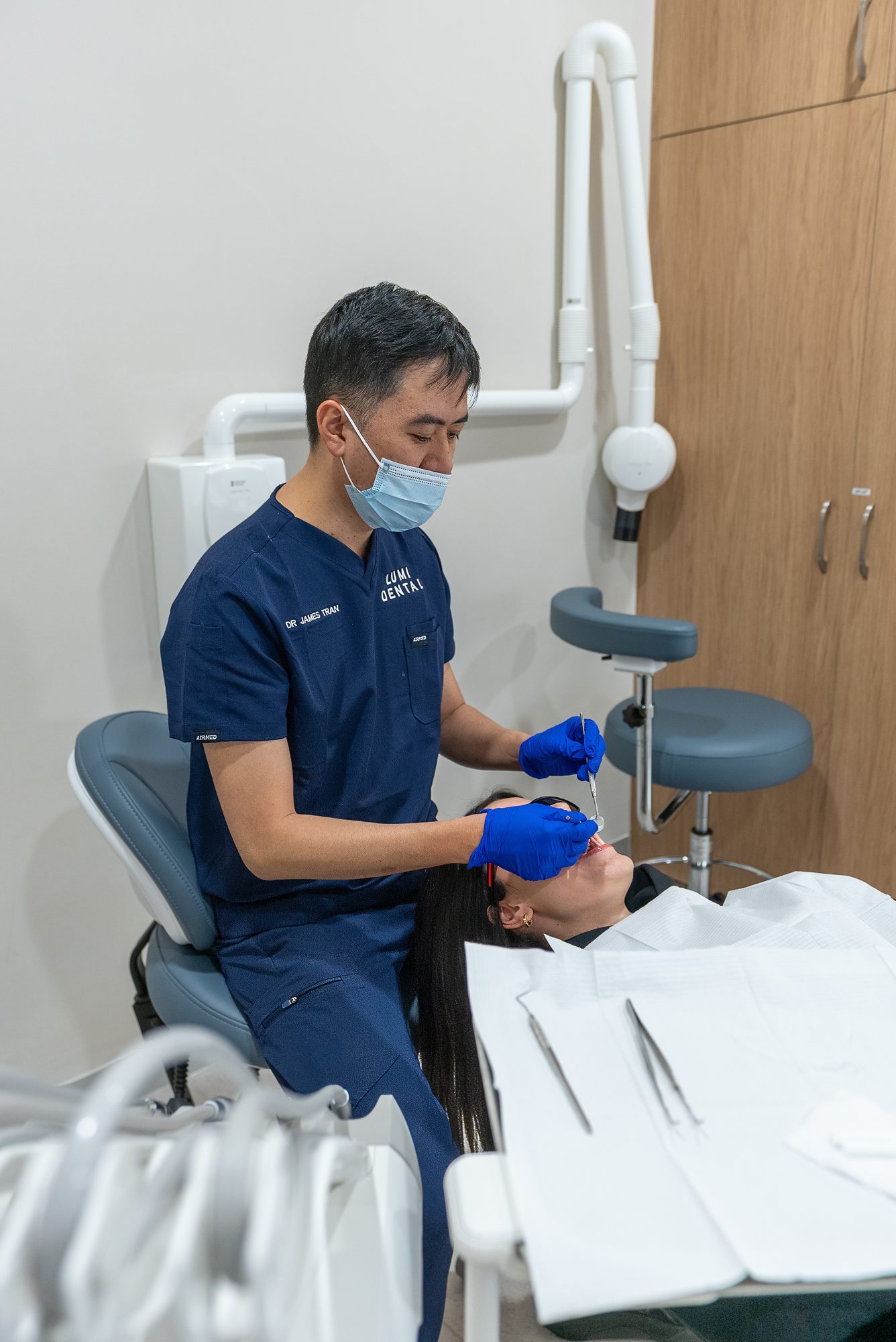
At Lumi Dental in Melrose Park, the dentist carries out the examination and diagnosis, looking at where plaque collects, whether the gums bleed on probing, the pattern of any decay and how much saliva is present, and asks about medicines, diet and smoking. The hygiene team, our oral health therapists, then do the clean and any gum therapy that is needed and go through the home routine with you. In-house 3D intraoral scanning helps show you where the biofilm is being missed. Read more about general dentistry at Lumi Dental or the technology we use.
Questions patients ask
What is the oral microbiome in simple terms?
It is the community of bacteria, fungi and viruses living on your teeth, gums, tongue and cheeks. Most are harmless or helpful; problems start when the species that produce acid or drive inflammation take over.
Is mouthwash bad for your oral microbiome?
Daily antiseptic mouthwash suppresses helpful and harmful bacteria alike, and University of Melbourne researchers advise against it unless your dentist has recommended it. A short course for a specific problem is different from a lifelong habit.
Can you reset or restore your oral microbiome?
Not with a product, but yes with habits. Clean plaque thoroughly every day and cut the number of sugar hits, and the community on your teeth shifts back towards less acidic, less inflammatory species. A professional clean removes the mature deposits home care cannot.
Does the oral microbiome affect the rest of the body?
Research has reported associations between gum disease and conditions such as heart disease and diabetes, but association is not proof of cause. Our article on gum disease and heart health sets out what is established.
Why do I have bad breath even though I brush?
Most persistent bad breath comes from bacteria on the back of the tongue and in gum pockets, which a toothbrush does not reach, and a dry mouth makes it worse. Our guide to bad breath causes and treatment explains how we find the source.
Keep the balance on your side: book a check-up and clean in Melrose Park
A check-up and professional clean is the simplest way to find out whether your oral microbiome is in balance, catch early decay while it can still be reversed and treat gum inflammation before it becomes a pocket. See our current offers for new patients, or read about general dentistry at Lumi Dental in Melrose Park. Patients visit from Ryde, Parramatta, Ermington, Rydalmere and nearby suburbs.
Sources
- PubMed (Nature Reviews Microbiology): The oral microbiota, dynamic communities and host interactions
- Better Health Channel: Tooth decay
- Better Health Channel: Dry mouth
- University of Melbourne (Pursuit): Are you taking care of the microbes in your mouth?
About the author
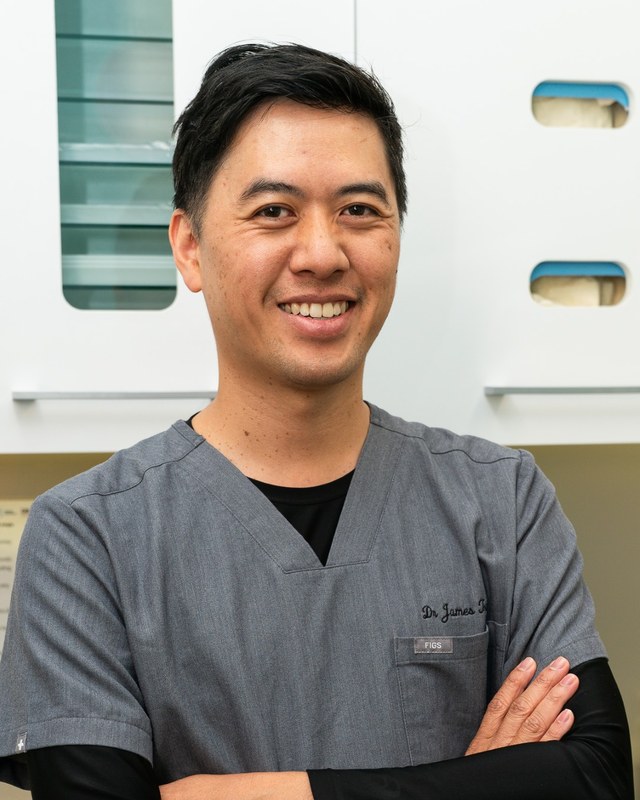
Dr James Tran is a general dentist at Lumi Dental in Melrose Park. He holds a BDent from the University of Sydney and a Graduate Diploma in Oral Implants, and is a Member of the International Congress of Oral Implantologists (MICOI).
This article is general information only and is not a substitute for an examination and individual advice from a registered dental practitioner. Suitability for any treatment varies from person to person.