

For most extractions and many dental implants, a general dentist is well qualified to help, while an oral and maxillofacial surgeon is typically the better fit when the case is complex. The oral surgeon vs dentist extraction implant question comes up often, and the honest answer is that it depends on the tooth, the bone, your health and how you would like to be looked after. This guide explains how the two roles differ so you can make an informed choice.
Key Takeaways
- General dentists routinely perform simple extractions and, with additional training, many dental implant cases.
- Oral and maxillofacial surgeons are AHPRA-registered specialists, and many also hold a medical degree.
- Referral may be suggested for impacted teeth near a nerve, complex bone grafting, jaw pathology, trauma or when a hospital general anaesthetic is needed.
- A referral is not always required, and a straightforward case can often be completed with your regular dentist.
- Specialist fees are typically higher, and rebates under Medicare or private health cover can differ.
- The team at Lumi Dental can assess your case and refer you when it is appropriate.
What a General Dentist Does
A general dentist looks after the broad needs of your mouth: check-ups, fillings, root canal treatment, crowns, dentures and extractions. Removing a tooth that has erupted normally, or a tooth with a damaged crown and a clear root shape, is everyday work for most general dentists.
Many general dentists also place dental implants after completing further study and supervised cases. Where the bone is healthy, the position is straightforward and the patient is in good general health, an implant can often be planned and completed within one practice. Our general dentist service covers this kind of care.
What an Oral and Maxillofacial Surgeon Does
Oral and maxillofacial surgeons are specialists registered with AHPRA, the Australian Health Practitioner Regulation Agency. They complete years of additional training in surgery of the mouth, jaws and face, and many hold both a dental and a medical degree. You can read more about the different dental specialities in our guide to dental specialists explained.
Their day to day work typically includes surgically difficult extractions, jaw pathology, facial trauma, corrective jaw surgery and complex implant reconstruction. They are also used to working in hospital settings, which matters if you need a general anaesthetic.
When a Referral May Be Suggested
Your dentist will look at your history, examine the area and usually take an X-ray before suggesting a pathway. Situations where referral may be discussed include the following.
Impacted or deeply placed teeth
A wisdom tooth lying close to the nerve in the lower jaw can carry a higher chance of nerve irritation during removal. In some cases a technique such as coronectomy may be considered, which you can read about in our article on coronectomy and wisdom tooth nerve risk. Upper and lower wisdom teeth also behave differently, as explained in upper vs lower wisdom tooth removal.
Complex bone grafting or sinus work
If an implant site needs substantial bone rebuilding, or the upper jaw requires a sinus lift, a surgeon may be better placed to carry this out. Our overview of bone grafts and sinus lifts for dental implants explains what these procedures involve.
Jaw pathology, cysts or trauma
Cysts, suspicious lesions, fractured jaws and injuries are generally managed by a surgeon, often with hospital support.
Hospital general anaesthetic
Some people need to be fully asleep for treatment, for example because of extensive surgery or particular medical conditions. This is usually arranged in a hospital or day surgery. Our guide to dental treatment under general anaesthetic describes what to expect.
Comparing the Two Pathways
| Factor | General dentist | Oral and maxillofacial surgeon |
|---|---|---|
| Typical cases | Simple extractions, many straightforward implants | Impacted teeth, complex grafting, jaw pathology, trauma |
| Registration | AHPRA registered dentist | AHPRA registered specialist, many also medical graduates |
| Referral needed | No | Often by your dentist, though not always required |
| Setting | Dental surgery | Dental surgery, day surgery or hospital |
| Fees | Typically lower | Typically higher |
| Rebates | Depend on your private health cover | Depend on cover, and some hospital items may relate to Medicare |
Fees and rebates vary between providers and insurers, so it is worth asking for a written quote and checking with your fund before you begin.
The Role of Planning and Imaging
Good planning helps decide who should do the work. A 3D scan can show the exact position of nerves, sinuses and bone, which makes it easier to judge how complex a tooth removal or implant is likely to be. If you are curious about this technology, see our explanation of the CBCT 3D dental scan.
How Referral Works in Practice
When a case would benefit from a specialist, your dentist writes a referral outlining your history and the images taken. You are free to ask for a particular specialist, or to ask your dentist for suggestions. The process and your choices are explained in more detail in how a dental referral works in Australia.
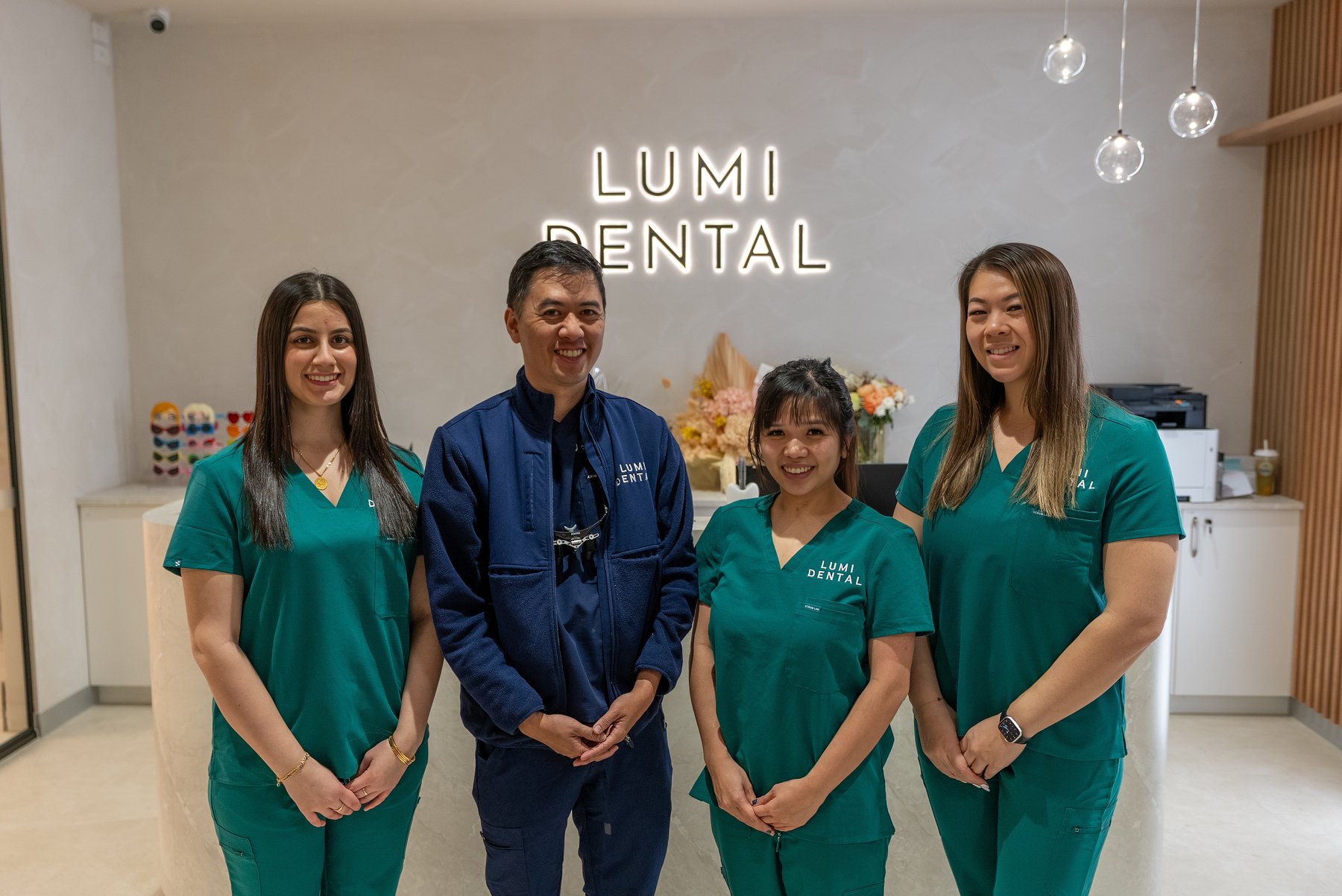
Referral does not mean you lose your regular dentist. Often the specialist completes the surgical step and you return for follow up, restorations and ongoing care. The team at Lumi Dental assesses each case and refers when it is appropriate. We do not have a resident surgeon, so where specialist surgery is indicated we will explain why and help coordinate it.
Questions to Ask Before You Decide
- How many similar cases have you treated?
- Is there anything about my case that makes it more complex than usual?
- What anaesthetic or sedation options are available?
- What is included in the quote, and what could change it?
- Who looks after me if there is a problem afterwards?
Common Questions
Do I need an oral surgeon to remove a wisdom tooth?
Not always, because many wisdom teeth can be removed by a general dentist. Teeth that are deeply impacted or close to a nerve may be referred, and your dentist can explain why after examining your X-ray.
Can a general dentist place a dental implant?
Yes, many general dentists place implants after further training. Straightforward cases with healthy bone are often suitable, while complex cases may be referred.
Is an oral surgeon more expensive than a dentist?
Specialist fees are typically higher than general dentist fees. The exact difference varies, so ask for a written quote and check any rebate with your health fund.
Is a referral always needed to see an oral surgeon?
No, a referral is not always required to see a specialist. It is usually helpful because it passes on your history and images, and some funds or situations may ask for one.
Is an oral surgeon a medical doctor?
Many are, though not all pathways are identical. Oral and maxillofacial surgeons are AHPRA-registered specialists, and many hold both dental and medical degrees.
Will I be asleep for an extraction?
Not necessarily. Most extractions are done with local anaesthetic, and options such as sedation or a general anaesthetic can be discussed when they suit your needs.
Talk It Through With the Team at Lumi Dental
If you are unsure which pathway suits you, a conversation and an examination is the best place to start. The team at Lumi Dental in Melrose Park, Sydney, can assess your situation and explain your options for wisdom teeth removal and dental implants. We offer a free consult and a written quote so you know what to expect before you decide. You can contact us to arrange a time.


