
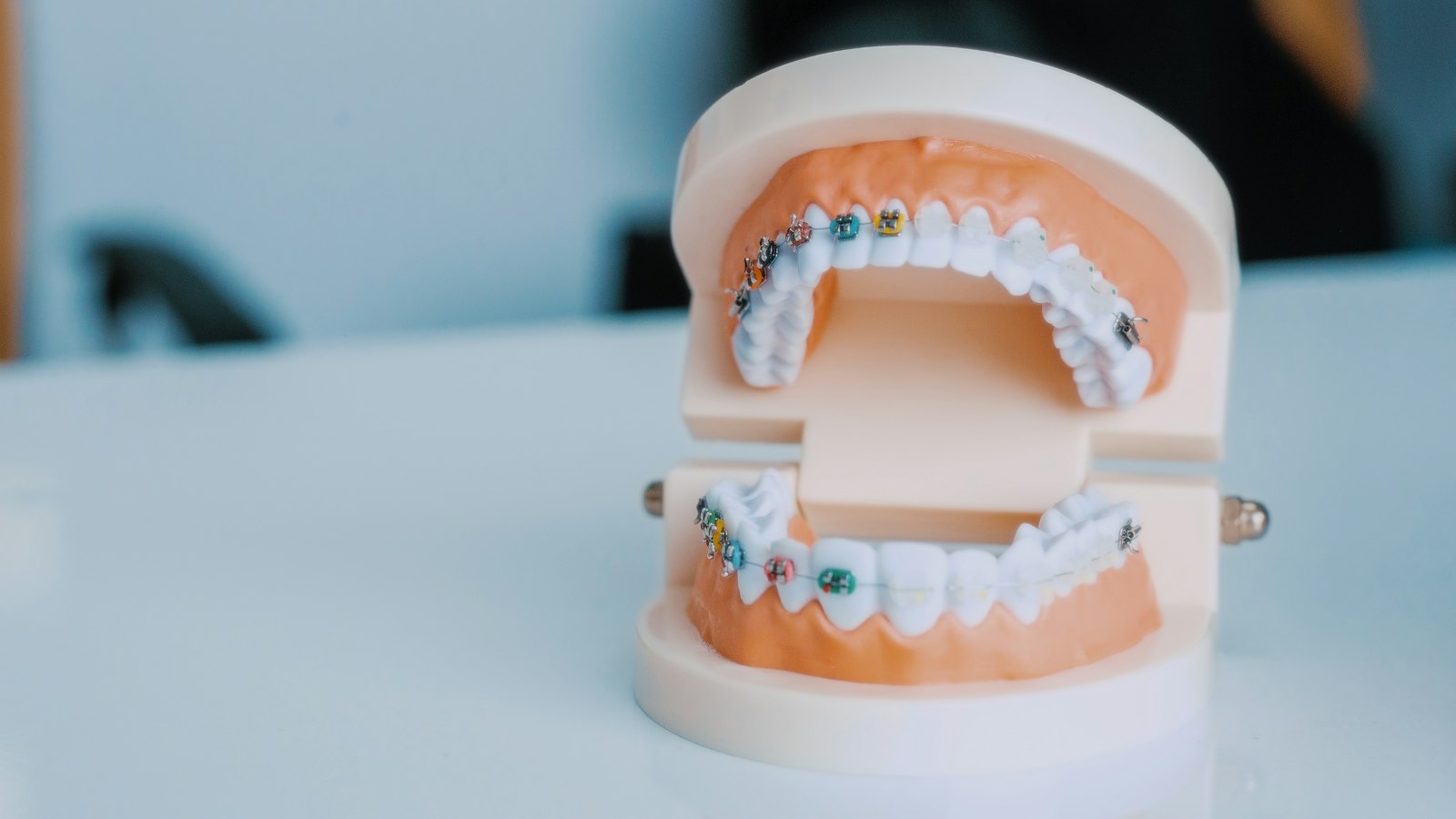

If your orthodontist has mentioned power chains, you may be wondering what those stretchy links on your braces actually do. Orthodontic power chains are connected rings of elastic that stretch across several brackets to close gaps, rotate teeth and hold teeth together while braces do their work. They are a common part of fixed braces treatment, and they are quite different from the small elastics (rubber bands) that attach to hooks and move the bite.
In my experience, patients are usually most curious about how they feel, what they can eat and what to do if one snaps. This guide covers those everyday questions in plain language.
Key Takeaways
- Power chains are a continuous strip of linked elastic rings that sit over braces brackets, so they are used with fixed braces rather than clear aligners.
- They are often used to close gaps, such as after a tooth extraction, and to keep teeth drawn together.
- They are different from small elastics, which usually connect the upper and lower jaws to correct the bite.
- Tightness or mild soreness for a few days after a new chain is common, and it usually settles.
- Elastic can stain and loosen over time, so chains are typically replaced at adjustment visits.
- If a chain breaks, it is usually not an emergency, but let your orthodontic team know.
What power chains do
A power chain looks like a row of tiny doughnuts joined together. It is stretched over the brackets on a stretch of teeth. Because elastic wants to return to its original length, it provides a gentle, continuous pull.
That constant pull can be used for several jobs. The most common is closing spaces. If teeth have been removed to relieve crowding, the chain draws the neighbouring teeth together across the gap. Chains can also help rotate a twisted tooth, keep a closed space from reopening, and keep a group of teeth moving as one unit.
Orthodontists choose chain length and tension to suit each stage of treatment. The force is light and controlled, and it works alongside the archwire, not instead of it.
Power chains vs small elastics and rubber bands
People often use the words interchangeably, but the two have different roles. Power chains stay on the brackets of the same jaw, and a dentist places them. Small elastics, often called rubber bands, are usually removable and hook between the upper and lower arches to adjust how the teeth bite together. Our guide to orthodontic elastics and rubber bands explains those in detail.
| Feature | Power chains | Small elastics (rubber bands) |
|---|---|---|
| Where they sit | Over brackets in the same jaw | Between upper and lower hooks |
| Main purpose | Close gaps, rotate, hold teeth together | Correct the bite |
| Who changes them | Orthodontic team at visits | Often you, several times a day |
| Removable? | No | Usually yes, for eating and cleaning |

Power chains and clear aligners
It is worth being upfront here: power chains are part of fixed braces. They need brackets to attach to, so they are not used with clear aligners. The team at Lumi Dental offers clear aligners in Melrose Park for suitable cases, and aligners close gaps using staged trays and sometimes small attachments. Whether braces or aligners are better depends on your bite, your teeth and your preferences, and our comparison of braces vs aligners for adults may help you weigh them up.
Staining, tightness and comfort
Elastic is porous, so power chains can pick up colour from tea, coffee, curry, red wine and some sauces. Clear or grey chains tend to show stain more than darker colours. Many people choose colours at each visit, which is part of the fun, but stain can build over a few weeks regardless of colour.
After a new chain goes on, teeth often feel tight or tender for a few days. This is the normal response to light pressure. Soft foods and, if your dentist or pharmacist suggests it, usual over-the-counter pain relief as directed on the label can help. Our article on whether braces hurt goes through what to expect.
Elastic also loses stretch over time. A chain that has relaxed does less work, which is one reason it is swapped at adjustment visits instead of being left in for months.
What to eat and how to clean
Chains add extra surfaces where food and plaque can collect, so careful cleaning matters. Brush after meals where you can, use interdental brushes or floss threaders, and rinse with water when brushing is not practical. See our tips on flossing with braces for step by step ideas.
For food, the same rules as for other braces apply. Hard, sticky and chewy foods can pull a chain loose or snap it. Cut crunchy fruit and vegetables into small pieces and avoid biting into hard items such as ice or hard lollies. Our list of foods to avoid and eat with braces is a helpful reference.
What if a power chain breaks?
A snapped chain is common, especially after hard foods. It is usually not an emergency, but the chain stops pulling, so progress on that area can pause. Contact your orthodontic team to arrange a replacement, particularly if the break leaves a loose link or a wire poking out. If a wire or bracket is causing pain or cutting your cheek, see our guide to a broken wire or loose bracket for first steps.
Do not try to cut or remove chains yourself unless your orthodontist has shown you how. Small pieces can end up swallowed, and cutting in the wrong place can disturb the wire.
How long do you need power chains?
It varies by case. Some people wear them for a few months while a gap closes, and others use them on and off across treatment. The timing depends on how far teeth need to move and how your teeth respond. Total braces time also differs, and our overview of how long braces take gives typical ranges.
Common Questions
Do power chains hurt?
You may feel tightness or tenderness for the first few days after a new chain is fitted. It typically eases as teeth settle. Ongoing sharp pain is worth mentioning to your orthodontic team.
Are power chains the same as rubber bands?
No. Power chains are fixed on the brackets and placed by your dentist. Rubber bands usually hook between the upper and lower jaws and are often changed by you.
Why does my power chain look discoloured?
Elastic absorbs pigment from drinks and foods such as tea, coffee and curry. Good cleaning helps, and the chain is typically replaced at your next adjustment.
Can I eat normally with power chains?
Mostly, but hard and sticky foods can break chains and loosen brackets. Cutting food into small pieces and choosing softer options in the first few days can help.
Can I have power chains with clear aligners?
No. Chains attach to braces brackets, so they belong to fixed braces treatment. Aligners use different methods to close spaces.
Book a free cosmetic consult
If you are curious about braces, aligners or how your teeth might move, the team at Lumi Dental can assess your bite and explain which options may suit you. You can book a free cosmetic consult to talk it through with no obligation.


