

Peroxide-free teeth whitening, which mostly means products based on PAP (phthalimidoperoxycaproic acid), can lift some surface stain, but in most laboratory comparisons hydrogen peroxide gel has produced the larger colour change, and clinical evidence for PAP is still limited. In one laboratory study of 60 coffee-stained teeth, PAP and the other over-the-counter agents tested removed stain, while only hydrogen peroxide whitened the teeth further. That difference matters if your teeth are yellow from the inside rather than stained on the surface.
Written by Dr James Tran, BDent (University of Sydney), MICOI, GradDip (Oral Implants), general dentist at Lumi Dental in Melrose Park.
The short version
- PAP is an organic peracid. "Peroxide-free" means free of hydrogen and carbamide peroxide, not free of oxidising chemistry.
- Peroxide gels reach the colour inside the tooth. Our article on how teeth whitening works explains the chemistry.
- Laboratory results for PAP range from a colour change similar to peroxide in one study to no difference from untreated teeth in another.
- Enamel studies of current PAP formulations have mostly found little or no surface damage. Earlier, more acidic formulations did less well.
- PAP products are often marketed as causing less sensitivity, but there are few clinical studies to confirm it.
- Have a check-up first if you have decay, a single dark tooth, or fillings and crowns at the front.
What PAP is, and what "peroxide-free" means
Phthalimidoperoxycaproic acid is the active ingredient in many widely advertised PAP strips, serums and pens. A German laboratory study describes it as an organic peroxide that oxidises stain molecules without forming free radicals, and a Spanish study calls it a peracid that is reported to work at near-neutral pH. Hydrogen peroxide and carbamide peroxide, by contrast, release free radicals that break apart the larger pigment molecules responsible for tooth colour.
So "peroxide-free" on a label is accurate in the narrow sense: the product contains no hydrogen or carbamide peroxide. It still works by oxidation. In my experience, patients often assume the label means a gentler, natural product. It is better read as a different chemical with its own, smaller body of evidence.
Why these products are sold direct to the public
In Australia, stronger peroxide products sit with dental practitioners. The ACCC's product safety site quotes the Dental Board of Australia's policy that products containing more than 6 per cent hydrogen peroxide or 18 per cent carbamide peroxide should only be used by a registered dental practitioner with training in whitening, and advises consumers not to use do-it-yourself kits above those levels because of the risk of chemical burns to the gums and mouth. The German study notes a similar pattern in Europe, where over-the-counter whitening products use other active ingredients such as PAP, sodium chlorite or sodium bicarbonate. Our article on carbamide peroxide versus hydrogen peroxide explains how the two peroxides compare.
What the studies on PAP report
Most PAP research has been done on extracted teeth or blocks of tooth in a laboratory, not in people. The results do not all point the same way.
- Stain removal, not further whitening. The German study stained 60 human teeth with coffee, then treated them for a week. Every whitening gel changed colour more than placebo, but hydrogen peroxide caused the greatest change. The authors concluded that the over-the-counter agents, PAP included, removed stain, whereas hydrogen peroxide could whiten beyond that.
- No significant bleaching. A Brazilian study treated tea-stained bovine tooth blocks for a week with a PAP kit, with and without its LED light. PAP did not differ from the untreated controls, while a 10% hydrogen peroxide gel produced clear bleaching. None of the treatments damaged the enamel.
- A similar change in lightness. The Spanish study compared PAP with 37.5% hydrogen peroxide and 35% carbamide peroxide on 57 extracted incisors. Lightness increased by 7.19 units with hydrogen peroxide, 7.11 with PAP and 4.43 with carbamide peroxide, and PAP caused fewer enamel surface changes. The authors called for clinical studies to confirm this.
- Industry-authored work. One early laboratory study reporting strong results for a PAP gel was written by employees of the company connected to the product. That does not make it wrong, but it is worth weighing.
The Spanish authors also cite a clinical study in which a PAP gel improved shade by around three shade guide units after a single short application, compared with a placebo gel. The Brazilian authors summarise the field fairly: PAP can change tooth colour in some settings, but results are heterogeneous and the evidence remains limited compared with peroxide-based agents.
Enamel and sensitivity
Enamel is where PAP looks reassuring. Both the German and Brazilian studies found no enamel surface changes with PAP, and the Spanish study found less reduction in microhardness than with the peroxides. The German authors note that some earlier sodium chlorite and PAP formulations did reduce enamel hardness in the laboratory, possibly because of their low pH, and that a later PAP formulation adjusted to pH 6.5 to 7.0, with hydroxyapatite added, did not. Our article on hydroxyapatite toothpaste versus fluoride explains what hydroxyapatite does.
Sensitivity is harder to judge. PAP products are often marketed as low sensitivity, and the chemistry makes that plausible, but laboratory studies on extracted teeth cannot measure it. The Spanish authors list sensitivity among the questions that still need clinical trials. Peroxide whitening does commonly cause temporary sensitivity: Leeds Teaching Hospitals tells patients that teeth may be more sensitive to cold for a short time during or after treatment. Our guide to whitening with sensitive teeth covers ways to manage it.
How PAP compares with other peroxide-free options
PAP is one of several peroxide-free approaches, and they work in quite different ways. Our article on purple toothpaste and colour correctors covers the optical products in more detail.
| Agent | How it works | What the evidence suggests about colour | Sensitivity | Where sold |
|---|---|---|---|---|
| Hydrogen or carbamide peroxide gel | Free radicals break down pigment inside the tooth | Largest change in laboratory comparisons; can whiten beyond surface stain | Temporary sensitivity is common | Higher strengths through dental practitioners |
| PAP | Oxidises pigment without free radicals | Mixed: from similar to peroxide to no different from untreated | Marketed as low; few clinical data | Strips, serums and pens |
| Sodium chlorite | Releases chlorine dioxide in the presence of acid | Removed coffee stain in one laboratory study | Some formulations reduced enamel hardness in the laboratory | Over-the-counter gels |
| Enzymes such as bromelain | Break down protein in the stained surface film | Less than peroxide, but still effective on stain in one study | No enamel changes in that study | Toothpastes and gels |
| Blue or violet colour correctors | Pigment on the surface masks yellow | Smaller, temporary visual change | Under 3% in the studies reviewed | Toothpastes and serums |
A systematic review of peroxide-free colour correctors found six studies, with average colour changes of 2.8 to 3.5 units on a standard scale, compared with up to 8.9 for carbamide peroxide. Abrasive products, including charcoal, act on surface stain only.
The single rule: for yellowing inside the tooth, start with supervised peroxide
If your teeth are yellow through and through, start with a peroxide gel used under dental supervision, because that is where the evidence is strongest. If your concern is mostly surface stain from tea, coffee or red wine, or you want to avoid peroxide, a PAP product may lift some of it, but expect less change.
I usually explain it this way: surface stain sits on the tooth, and many products can shift it. The underlying shade sits within the tooth, and the laboratory comparisons above suggest peroxide is better at reaching it.
When to see a dentist before any whitening product
- Decay, cracks or exposed roots, which whitening products can make sore.
- One tooth darker or greyer than the rest. Leeds Teaching Hospitals lists injury and root canal treatment among causes of a darker tooth.
- Fillings, veneers or crowns at the front, which will not change colour.
- Brown or white patches, which may suit another approach, such as microabrasion.
How we approach this at Lumi Dental
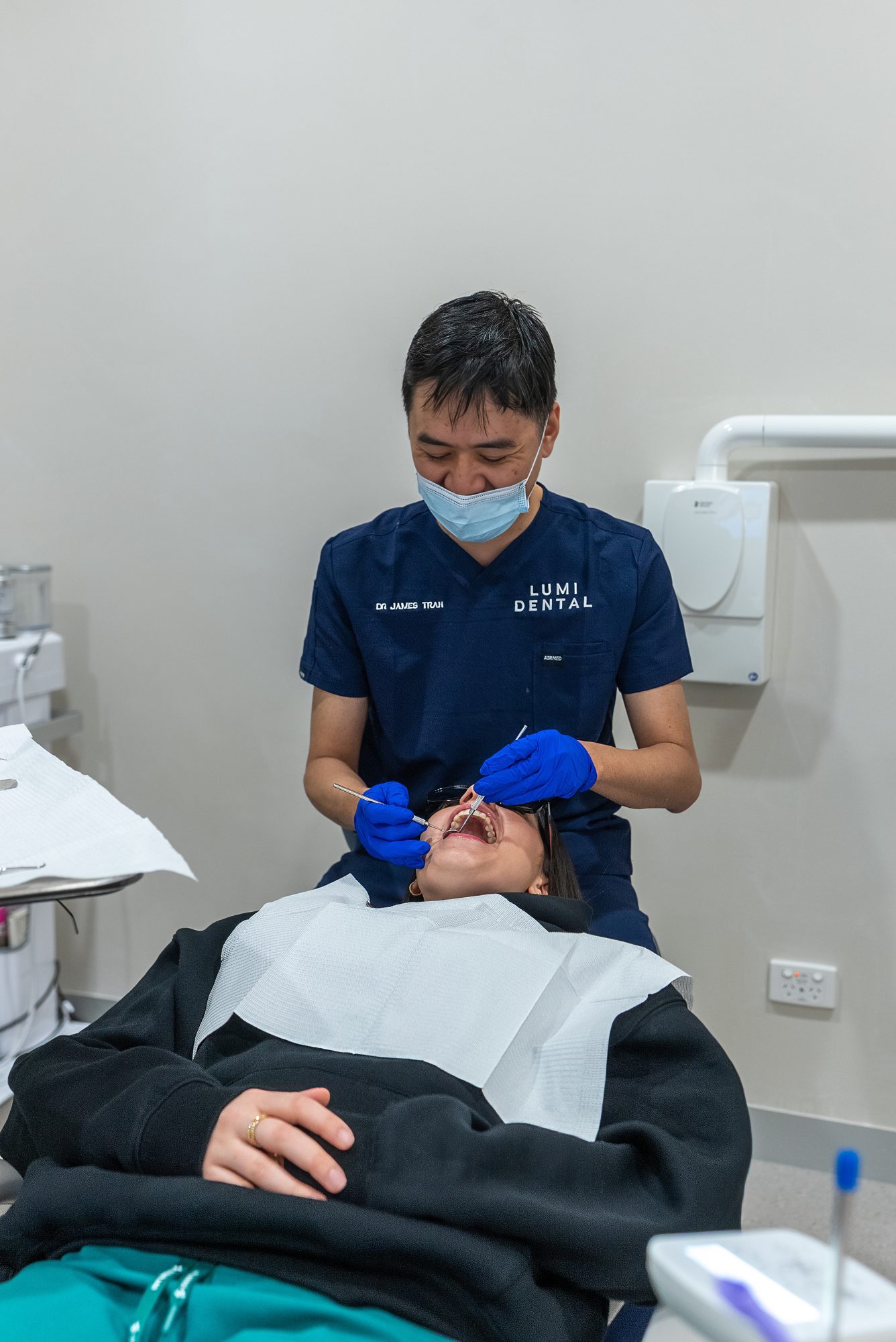
Whitening at Lumi Dental starts with a general check-up, where the dentist looks for decay, gum problems, worn edges and restorations that will not change colour. Where whitening suits, the team supplies a dentist-prescribed peroxide gel for use in custom trays made from a 3D scan. The whitening options are named Lumi Home, Lumi Refresh and Lumi Radiance. If you already use a PAP product and like it, bring it along; the team can talk through whether your remaining colour is surface stain or the shade of the tooth.
Questions patients ask
Is PAP teeth whitening as effective as peroxide?
On current evidence, usually not. Laboratory studies range from PAP matching peroxide to PAP doing no better than untreated teeth, and clinical trials are few.
Is PAP whitening safe for enamel?
Laboratory studies of current PAP formulations have mostly found little or no enamel surface damage, though some earlier acidic formulations reduced enamel hardness. Our article on whether whitening damages enamel covers peroxide as well.
Does peroxide-free whitening cause sensitivity?
It may cause less than peroxide, but this has not been well tested in people. If you have sensitive teeth, a check-up first can rule out decay or exposed roots.
Why did PAP strips not whiten my teeth?
Usually because the colour sits within the tooth rather than on it, or because fillings, crowns or a single dark tooth are part of the picture. A dentist can tell you which applies.
Will peroxide-free whitening change my fillings or crowns?
No. Whitening products do not change the colour of fillings, veneers or crowns, so a visible restoration may stand out once the natural teeth lighten. A cosmetic consult can plan for this.
Thinking about whitening? Complimentary cosmetic consult in Melrose Park
If you are weighing up PAP products against dentist-supplied whitening, the team at Lumi Dental can check your teeth, explain where your colour comes from and talk through the options. Book a complimentary cosmetic consult at Melrose Central in Melrose Park, or read about teeth whitening at Lumi Dental. Patients visit from Ryde, Parramatta, Ermington and Rydalmere, with on-site parking.
Sources
- Effectiveness and safety of over-the-counter tooth-whitening agents compared to hydrogen peroxide in vitro (PMC)
- Phthalimidoperoxycaproic acid (PAP) versus peroxides and impact on dental enamel after whitening treatment: an in vitro study (PMC)
- Effects of phthalimidoperoxycaproic acid (PAP+) associated or not with LED irradiation as a bleaching agent: an in vitro study (PMC)
- ACCC Product Safety: Teeth whiteners containing unsafe levels of peroxide recalled
About the author

Dr James Tran is a general dentist at Lumi Dental in Melrose Park. He holds a BDent from the University of Sydney and a Graduate Diploma in Oral Implants, and is a Member of the International Congress of Oral Implantologists (MICOI).
This article is general information only and is not a substitute for an examination and individual advice from a registered dental practitioner. Suitability for any treatment varies from person to person.








