
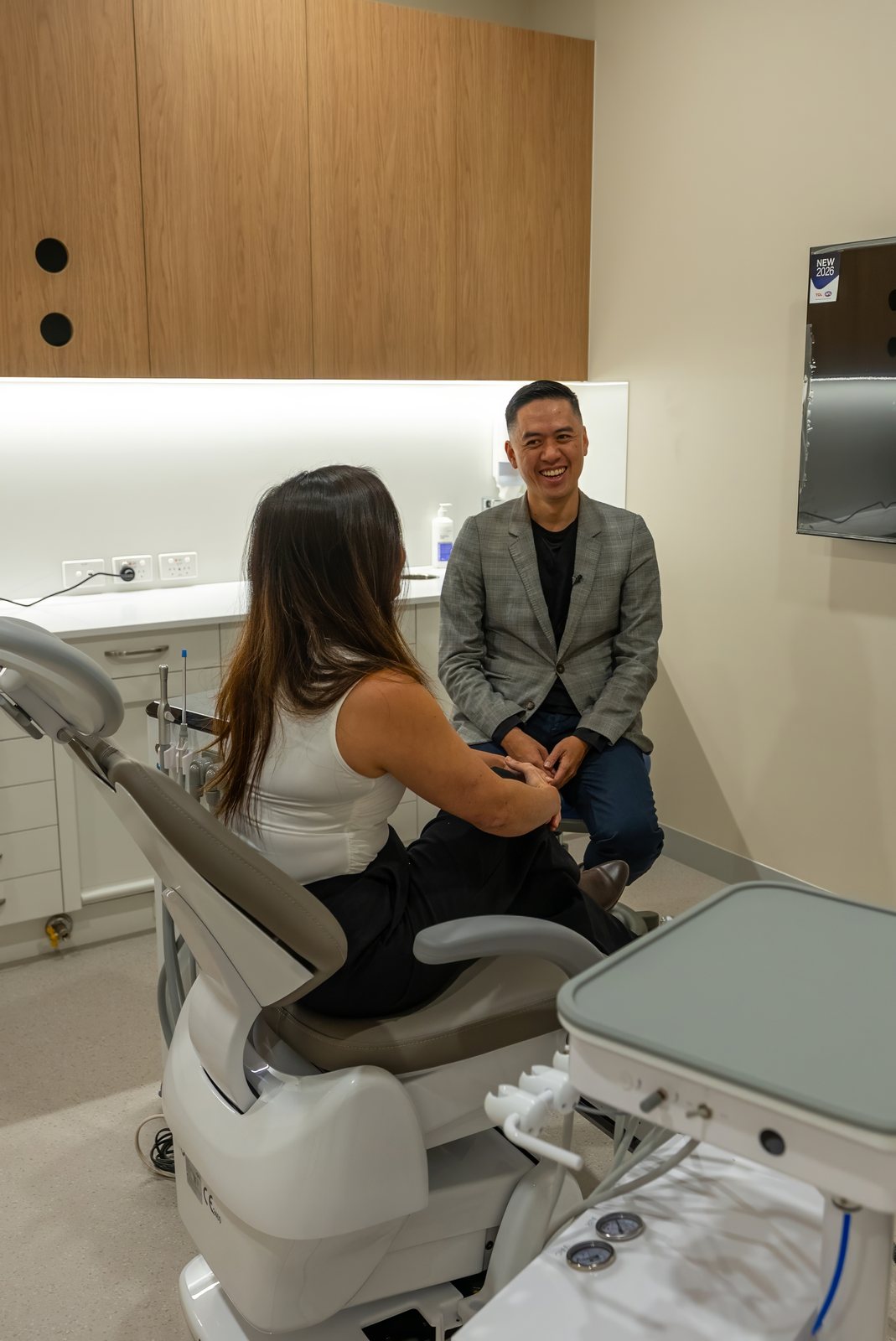

If you have POTS or get dizzy when you stand, tell the dental team when you book, because the hardest moments are usually predictable: standing in a queue, and sitting up and standing at the end of the appointment. Healthdirect describes postural orthostatic tachycardia syndrome (POTS) as a condition that causes a fast heartbeat and other symptoms when you stand up, and notes it is more common in adolescent and adult females. This guide covers POTS at the dentist, and other dizziness on standing, from the waiting room to the drive home.
Written by Dr James Tran, BDent (University of Sydney), MICOI, GradDip (Oral Implants), general dentist at Lumi Dental in Melrose Park.
The short version
- The single rule: say "I have POTS" or "I get dizzy when I stand" at booking, so the team can plan the end of the visit.
- Drink fluids beforehand as your own doctor advises, and wear compression garments if they have been prescribed.
- Many people with POTS feel better lying back. The difficult part is coming up, so the chair is raised in stages and you sit on the edge before standing.
- If you feel faint, say so straight away. Our article on fainting at the dentist explains what the team does.
- Local anaesthetic is chosen by the dentist after hearing your history. Do not skip numbing to avoid a racing heart.
- Regular sports or electrolyte drinks can expose teeth to sugar and acid. Keep to your doctor's plan, and ask the dentist how to protect your teeth.
POTS and dizziness on standing in plain words
Healthdirect explains that when you stand, gravity pulls blood towards the lower body. Normally the autonomic nervous system pushes it back towards the heart and brain. In POTS this does not work properly, so the heart beats faster. The NHS adds that symptoms on standing often get better when you sit or lie down, and may be worse in the morning.
Healthdirect says the cause is not known, but POTS most often develops after a viral infection such as COVID-19 or glandular fever. People with a family history, regular migraines or Ehlers-Danlos syndrome may be more likely to develop it. A review for dentists in the Journal of the American Dental Association described a female to male ratio of about 4 to 6 to 1, with most people affected between their teens and middle age.
Orthostatic hypotension
A related problem is orthostatic, or postural, hypotension, where blood pressure drops when you stand up after sitting or lying down. Healthdirect notes the light-headed feeling usually improves if you sit or lie back down. The dental plan is much the same for both. A spinning feeling is different again, and our guide to vertigo at the dentist covers it.
Why a dental visit can set off symptoms
The NHS lists things that can make POTS worse, including getting too hot, standing or sitting upright for long periods, not drinking enough fluids, eating carbohydrate-heavy meals, and being on your period. A dental visit can stack several of these together:
- standing at reception or waiting in a warm room
- a long appointment
- anxiety, which can speed the heart on its own
- fasting before sedation
- sitting up after a long time lying back, then standing straight away
The JADA review notes an increased risk of fainting with prolonged standing, and suggests filling in forms while seated. In my experience, the moment people worry about is the injection, but the moment that catches them out is the walk from the chair to the door.

The single rule: tell the team at booking, then plan the end of the visit
Say so when you book and again in the chair, including whether you have fainted before. Then three things tend to make the biggest difference:
- Fluids beforehand, as your doctor advises.
- The chair raised slowly, in stages. The JADA review advises that a team member slowly returns the reclined patient to upright and makes sure they stand gradually.
- Sit on the edge before you stand, with someone nearby. The NHS advises not getting up too quickly after lying down, and sitting for a while first.
Lying back is often the easier part. The NHS suggests that if you suddenly feel faint or dizzy, lying down and raising your legs can help, and reclined is how most dental care is done anyway.
Fluids, salt, compression and medicines belong to your doctor
Healthdirect lists drinking plenty of water, adding salt to food, avoiding heat, compression stockings and not standing for long among the self-care measures for POTS. The amounts are individual, and your GP or cardiologist sets them. On the day, keep to that plan: drink as advised, wear compression garments if prescribed, and keep taking your usual medicines unless your own doctor says otherwise.
If sedation with fasting is planned, ask your doctor beforehand how your fluid plan fits around it.
Local anaesthetic, adrenaline and a racing heart
Many dental anaesthetics contain a small amount of adrenaline, which can make the heart beat faster for a short time. The JADA review advises the dentist to assess heart rate and blood pressure before giving anaesthetic with adrenaline in people with POTS, and to use it judiciously. It also points out that poor numbing has its own risk: pain can make the body release its own adrenaline.
So the answer is not to avoid anaesthetic. The dentist chooses the type and amount after hearing your history. Our article on a racing heart after a dental injection explains how much the heart rate usually changes and when to get help.
If you feel faint in the chair
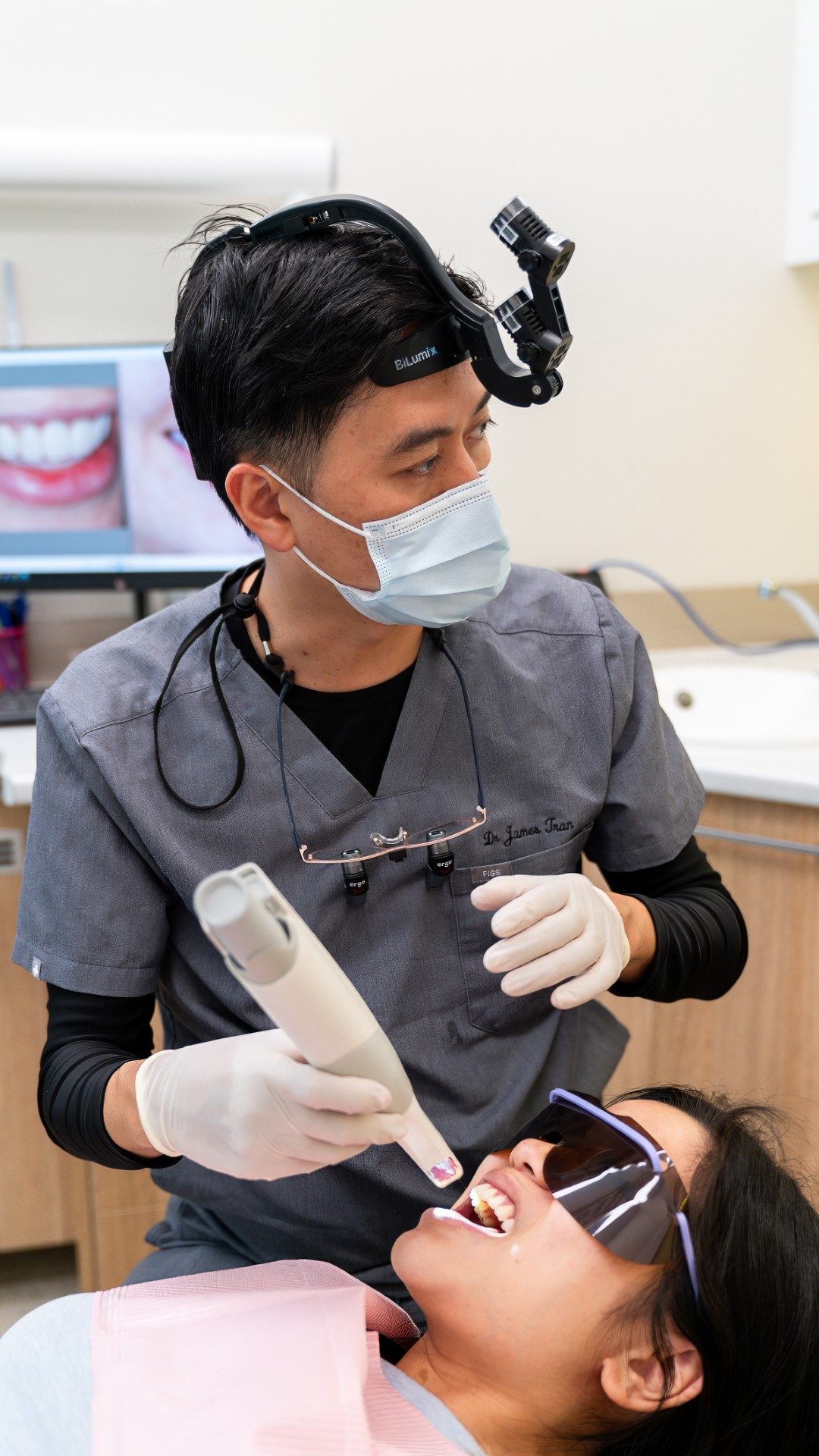
Raise your hand or say so. The team stops, clears your mouth and lays the chair back with your legs raised. If you are already standing and cannot lie down, the NHS suggests crossing your legs, rocking up on your toes, or clenching your fists and tummy muscles. The JADA review advises that anyone who has lost consciousness should not leave unescorted.
Dry mouth, electrolyte drinks and your teeth
The JADA review notes that dry mouth was reported by 38% of people with POTS in one series, and that dry mouth raises the risk of decay. The Australian Dental Association's teeth.org.au explains that sports drinks often contain added sugar and acids, that drinking them regularly can cause tooth decay and erosion, and that they can be more damaging when you are dehydrated.
If your doctor has recommended electrolyte or sports drinks, keep to that advice. It may help to have flavoured drinks with meals rather than sipping all day, follow them with plain water, ask your GP or pharmacist whether a lower-sugar option suits your plan, and ask the dentist whether extra fluoride is worth it.
Hypermobility and light sensitivity
The JADA review notes that symptoms of orthostatic intolerance were reported in 75% of people with Ehlers-Danlos syndrome in one study. If that applies to you, our guide to Ehlers-Danlos syndrome at the dentist covers the jaw, anaesthetic and gums. Healthdirect lists sensitivity to light among POTS symptoms, and tinted glasses under the dental light may help.
Sedation and longer treatment
Sedation can make a long or anxious appointment easier, but it can affect blood pressure and may come with fasting. It is considered only after an assessment of your health, and after liaison with your GP or cardiologist where needed. Our guide to dental sedation options for adults compares nitrous oxide, oral sedation and IV sedation. Lumi Dental does not provide general anaesthetic itself and refers where it is needed, though IV sedation is available at the practice.
The JADA review suggests shorter, morning appointments, when it is usually cooler, though some people feel worse in the morning, so choose the time that suits you.
Moments in the visit and what may help
| Moment | What may help |
|---|---|
| Arriving and waiting | Sitting rather than standing at reception, fluids as your doctor advises, a cool spot |
| Lying back | Often comfortable; say if you prefer to recline in stages |
| The injection | Telling the dentist about POTS and your medicines so the anaesthetic is chosen to suit |
| A long appointment | Agreed breaks, or splitting treatment across shorter visits |
| End of the appointment | The chair raised in stages, with a pause at each |
| Standing up | Sitting on the edge first, someone beside you, and lying back down if symptoms start |
| Driving home | Waiting until you feel steady; after sedation, a lift home |
How we approach this at Lumi Dental
At Lumi Dental, the dentist asks about POTS, dizziness and fainting as part of your medical history, along with your medicines and what your doctor has advised. The team can raise the chair in stages, build in breaks, and give you time to sit before you stand. The anaesthetic is chosen after hearing your history, and sedation is discussed only after an assessment. Read more about IV sedation at Lumi Dental if you are considering it for longer treatment.
Questions patients ask
Can you go to the dentist if you have POTS?
Yes. Most people with POTS can have routine dental care with a few adjustments around fluids, the chair and standing up slowly.
Is dental anaesthetic safe with POTS?
Usually, yes. Adrenaline in some anaesthetics can briefly speed the heart, so the dentist chooses the type and amount after hearing your history.
Why do I feel dizzy after sitting up in the dental chair?
Blood shifts when you sit up and stand, and in POTS or orthostatic hypotension the body is slow to adjust. Ask for the chair to be raised in stages and sit on the edge before standing.
Should I drink electrolytes before a dental appointment?
Follow the fluid plan your own doctor has given you. If it includes electrolyte drinks, rinse with plain water afterwards, and tell the dentist so they can help protect your teeth.
Can I have sedation if I have POTS?
Sometimes, after an assessment and liaison with your doctor where needed. Our guide to nitrous oxide for adults explains the mildest option.
Book a check-up at Lumi Dental, Melrose Park
If POTS or dizziness on standing has made dental visits hard, the team at Lumi Dental can plan an unhurried check-up with the chair raised in stages and time to sit before you stand. See current deals for new patients or read about general dentistry in Melrose Park. Patients visit from Ryde, Parramatta, Ermington and Rydalmere, with on-site parking at Melrose Central.
Sources
- Healthdirect: Postural orthostatic tachycardia syndrome (POTS)
- NHS: Postural tachycardia syndrome (PoTS)
- Journal of the American Dental Association (Brooks and Francis): Postural orthostatic tachycardia syndrome, dental treatment considerations
- Australian Dental Association, teeth.org.au: Sports drinks effect on teeth
About the author

Dr James Tran is a general dentist at Lumi Dental in Melrose Park. He holds a BDent from the University of Sydney and a Graduate Diploma in Oral Implants, and is a Member of the International Congress of Oral Implantologists (MICOI).
This article is general information only and is not a substitute for an examination and individual advice from a registered dental practitioner. Suitability for any treatment varies from person to person.







