
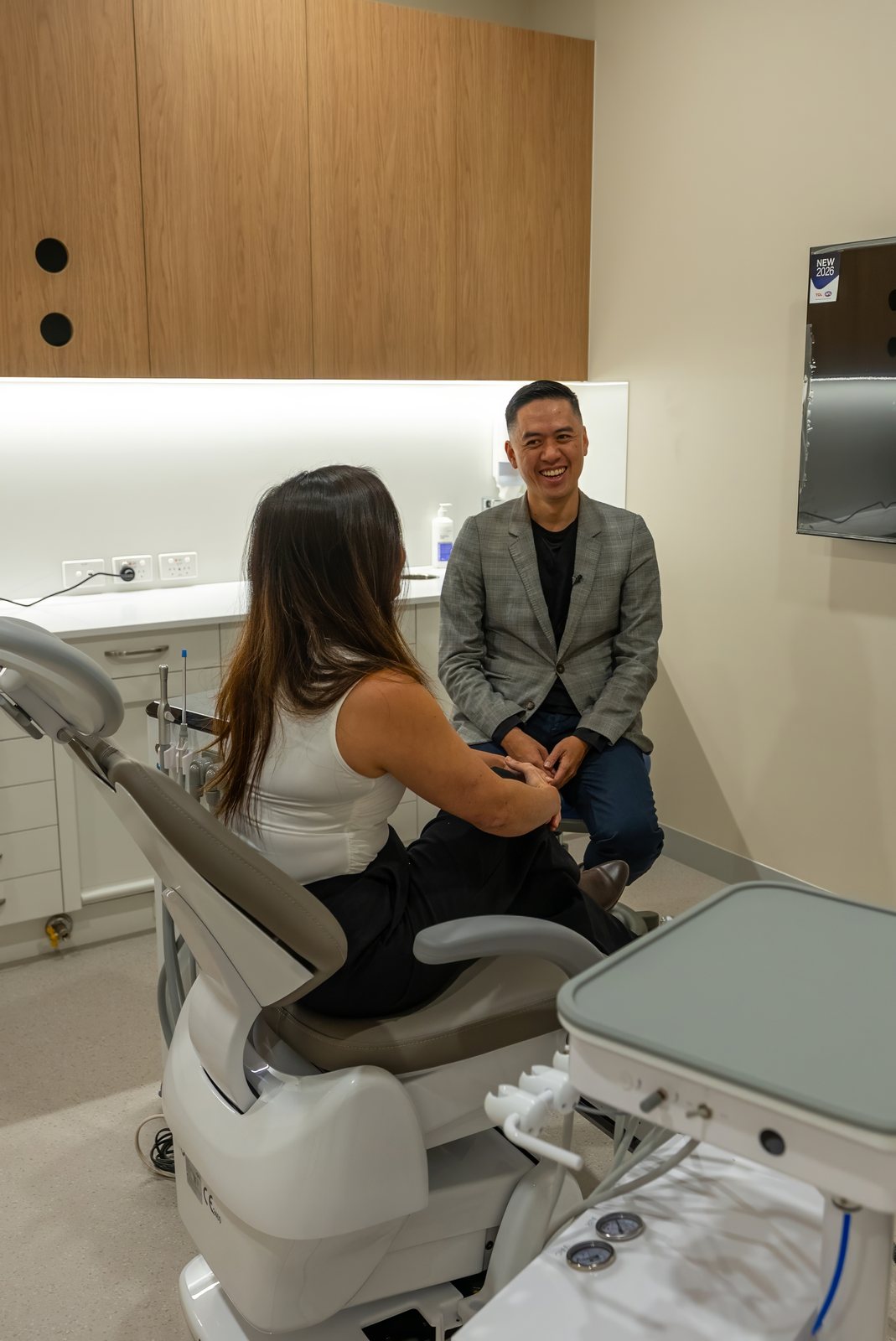

If you have vertigo, BPPV, Meniere's disease or vestibular migraine, tell the dental team before you lie back, so the chair can be reclined in stages with your head supported and brought up slowly at the end, with a pause before you stand. Lying back and tipping the head to look up are classic triggers for benign paroxysmal positional vertigo (BPPV), which the Better Health Channel describes as the most common cause of vertigo, especially in people over 65. A dental chair asks for both. This guide covers vertigo and BPPV at the dentist, from booking to getting home.
Written by Dr James Tran, BDent (University of Sydney), MICOI, GradDip (Oral Implants), general dentist at Lumi Dental in Melrose Park.
The short version
- The single rule: tell the team before the chair moves. Recline in stages, keep your head supported, and sit up slowly with a pause before standing.
- If you know which side or position sets off your BPPV, say so. The chair and your head can often be arranged around it.
- A spinning spell is different from a faint. Our article on fainting at the dentist explains the light-headed, sweaty kind of episode.
- Scaler and drill noise travels through bone, which may bother people with tinnitus or Meniere's disease. Ask for warnings and breaks.
- Vertigo and anti-sickness medicines can cause drowsiness or a dry mouth. Your GP or ENT manages them; tell the dental team what you take.
- New vertigo with weakness, slurred speech, vision changes or a severe headache needs emergency care, not a dental visit.
BPPV, Meniere's disease and vestibular migraine in brief
Healthdirect describes vertigo as a specific type of dizziness: a feeling that you, or the room, are spinning or falling when you are still. It often comes with nausea and can be brought on by a sudden change in position.
BPPV
The Better Health Channel explains that BPPV happens when tiny calcium carbonate crystals in the inner ear come loose and collect in one of the balance canals. When the head moves, the brain gets the wrong message and you feel a spinning or falling sensation. Common triggers are rolling over in bed, getting in or out of bed, and tipping the head back to look up. Symptoms often settle for weeks or months, then return. Healthdirect notes that a doctor or specialist physiotherapist can treat it with repositioning movements, such as the Epley manoeuvre.
Meniere's disease
Healthdirect describes Meniere's disease as an inner ear disorder that causes attacks of vertigo, usually lasting at least 20 minutes but not more than 24 hours, along with tinnitus, hearing changes and a feeling of fullness in the ear. It often affects one ear, and stress can make attacks more frequent.
Vestibular migraine
Healthdirect lists migraine among the causes of vertigo, and notes that medicines used to prevent migraine are sometimes tried. Our article on migraine and your teeth covers facial pain that behaves like migraine.
Why the dental chair can set it off
Most dental treatment is done with the chair reclined and the head tipped back, the positions BPPV dislikes, and sitting up quickly at the end is another trigger.
There is also some evidence that dental treatment itself can be followed by BPPV. A population study from Taiwan compared 768 people with BPPV against 1,536 matched controls and found that 9.2% of the BPPV group had a dental procedure in the month before diagnosis, compared with 5.5% of controls. That is an association, not proof of cause. A scoping review led by Queensland researchers gathered 61 reported cases after dental and oral surgery, most often after wisdom tooth removal or a type of sinus lift done with tapping instruments. Symptoms usually began within a week, and the cases treated with repositioning manoeuvres settled. The authors call it uncommon.

The single rule: tell the team before you lie back
If you live with vertigo of any kind, start by telling the team when you book and again before the chair moves. Mention what sets it off and whether one side is worse.
The Vestibular Disorders Association's guide for dentists sets out the same idea from the other side of the chair: do not move the chair without discussing it with the patient first, ask for feedback on position, and keep the head above the feet. In my experience, a slow recline with a pause at each stage takes very little extra time and saves a lot of distress.
At the end, sit up in stages, rest on the edge of the chair for a minute, and stand only when the room is still. The NHS gives the same advice for getting out of bed with vertigo.
What may help in the chair
- A partly upright chair rather than fully flat, where the treatment allows. The dentist can move around you instead.
- A neck pillow, so your head is supported and not tipped back further than needed.
- Your head turned towards the side that does not trigger symptoms, if you know it.
- A raised hand as a stop signal, and breaks when you need them.
- A warning before vibration, water spray or a change in chair position.
- Booking at your best time of day, with a friend or family member if that helps.
| Situation | What may help in the chair |
|---|---|
| BPPV with a known bad side | Recline in stages, head turned towards the comfortable side, neck pillow, slow sit-up with a pause |
| Meniere's attack in the past few days | Consider postponing routine care; if you come in, a more upright chair and short sessions |
| Vestibular migraine | Tinted glasses, fewer scents, breaks, and booking on a good day |
| Dizzy on standing | Sit on the edge of the chair before standing; tell the team if you feel light-headed or sweaty |
| Tinnitus | Warnings before the scaler or drill, breaks, and hand instruments where suitable |
A vertigo spell or a faint
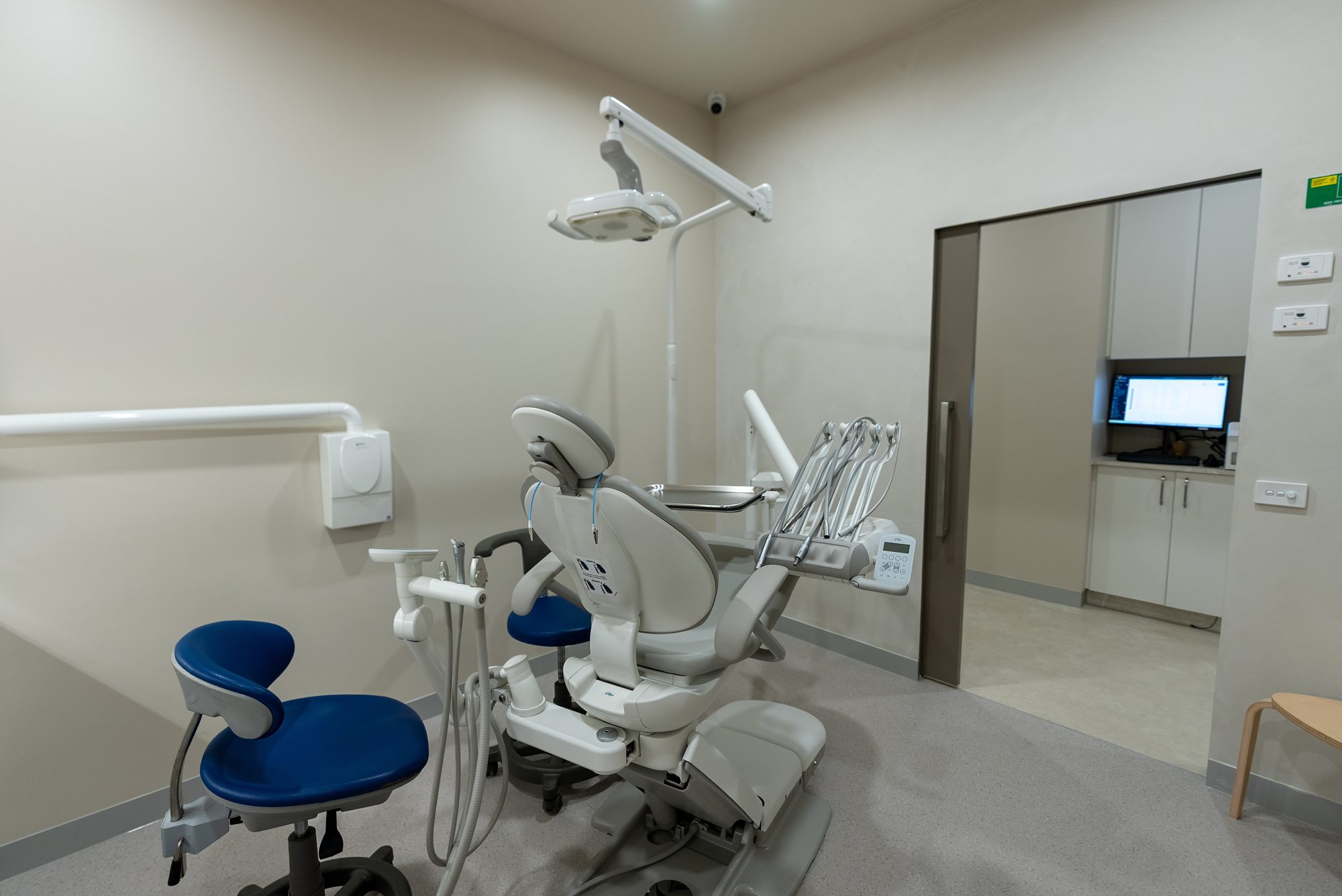
The two feel different from the inside. A vertigo spell is a sense of spinning, often set off by a head position, and you usually stay alert. A faint tends to start with light-headedness, sweating and vision closing in, and the response is the opposite of the vertigo plan: lying flat with the legs raised.
Some people feel dizzy mainly when they stand up, which is a different problem again. Our guide to Ehlers-Danlos syndrome at the dentist discusses that kind of dizziness and long appointments.
Noise, vibration, nausea and the gag
Scalers and drills send vibration through the teeth and jaw bone to the inner ear, so the sound does not stop at the ear canal. For someone with tinnitus or Meniere's, that may feel louder or more unsettling than expected. Our article on hearing aids and dental treatment explains bone-conducted noise, and our guide to jaw problems and tinnitus covers the link with the jaw joint.
Nausea often travels with vertigo, and it can make the gag reflex more sensitive. Suction kept close, a slightly more upright position and stopping before nausea builds may help.
Medicines, nitrous oxide and getting home
Healthdirect notes that a doctor may suggest a medicine for a short time to manage the nausea and vomiting that come with vertigo. The NHS lists prochlorperazine, an anti-sickness medicine used for vertigo and Meniere's disease, as commonly causing sleepiness and a dry mouth. Tell the dental team what you take. Your GP or ENT surgeon manages these medicines; the dentist does not change them.
Nitrous oxide, or happy gas, moves into closed air spaces such as the middle ear. Reviews of its use in dentistry list a recent middle ear problem or ear surgery among the reasons to avoid it. If you have an ear condition, ask whether it suits you before booking with gas.
After a spell, do not drive until you feel steady. Healthdirect advises asking your doctor whether it is safe to drive if you are having vertigo attacks. It also says to go to the nearest emergency department if vertigo comes with problems walking, vision changes, one-sided weakness or numbness, slurred speech, headache or confusion.
How we approach this at Lumi Dental
At Lumi Dental, the dentist takes your medical history, including what triggers your vertigo and the medicines you take, before the chair is moved. The team can recline the chair in stages, use a neck pillow, work with you more upright where the treatment allows, and give you time to sit before standing. Cleans and gum care with the oral health therapists can be split across visits if that is easier.
You can ask for a longer appointment so nothing is rushed, and there is on-site parking at Melrose Central. Mention vertigo when you book through the contact page, where you can also check current hours.
Questions patients ask
Can lying back in the dentist chair cause vertigo?
It can if you have BPPV, because lying back and tipping the head back are common triggers. Reclining in stages with your head supported often reduces it.
Should I go to the dentist if I have vertigo?
For routine care, yes, on a good day and with the team told in advance. If a Meniere's attack or a bad BPPV spell is active, it is reasonable to postpone. New vertigo with weakness, slurred speech or vision changes needs emergency care.
Can dental work cause BPPV?
It appears to be uncommon, but cases have been reported, mostly after wisdom tooth surgery or some sinus lift techniques. If spinning starts within days of treatment, tell your dentist and see your GP.
Can I have happy gas if I have Meniere's disease?
Ask first. Nitrous oxide moves into the middle ear, and a recent ear problem or ear surgery is a reason to avoid it. Our guide to nitrous oxide for adults explains how it works.
How do I get up from the dental chair without getting dizzy?
Ask for the chair to come up slowly, then sit on the edge for a minute and stand when the room is still.
Book a check-up at Lumi Dental, Melrose Park
If vertigo, BPPV or Meniere's disease has made dental visits hard, the team at Lumi Dental can plan your check-up around how you feel in the chair. See current deals for new patients or read about general dentistry in Melrose Park. Patients visit from Ryde, Parramatta, Ermington and Rydalmere, with on-site parking at Melrose Central.
Sources
- Better Health Channel: Benign paroxysmal positional vertigo (BPPV)
- Healthdirect: Vertigo
- Vestibular Disorders Association: Dentist's guide to the dizzy patient
- Oral Surgery, Oral Medicine, Oral Pathology and Oral Radiology: BPPV as a rare complication of oral and maxillofacial surgery, a scoping review (PubMed)
About the author
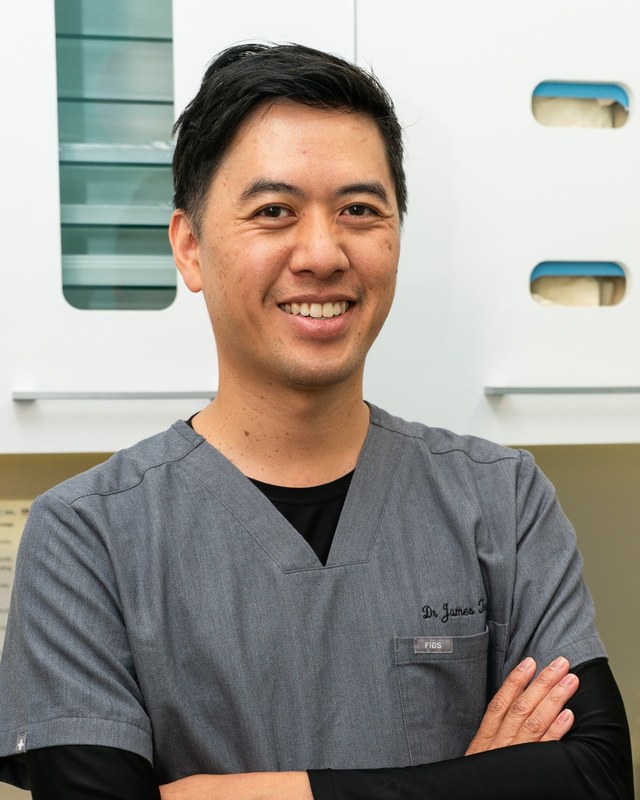
Dr James Tran is a general dentist at Lumi Dental in Melrose Park. He holds a BDent from the University of Sydney and a Graduate Diploma in Oral Implants, and is a Member of the International Congress of Oral Implantologists (MICOI).
This article is general information only and is not a substitute for an examination and individual advice from a registered dental practitioner. Suitability for any treatment varies from person to person.







