
The short answer on Ramadan fasting and oral health is that the measured changes are real but small, and in healthy people they are not enough on their own to cause dental disease. A systematic review of fasting and saliva found salivary flow dropped by around 10 percent during fasting hours, with the lowest flow later in the day, and concluded that the change was not sufficient to cause disease in healthy fasting participants. That is the honest anchor for everything below. With more than 813,392 people in Australia identifying as Muslim at the last census, 3.2 percent of the population and an increase of over 209,000 in five years, it is a question worth answering properly.
A note on scope. This page is written by a dentist, not a scholar. Rulings on what does and does not invalidate a fast vary between schools of thought and between individual scholars, and the final word belongs to your own imam. What follows is the clinical side, with mainstream positions described only so you know what to raise.
Key takeaways
- Salivary flow falls by roughly 10 percent during fasting, and lowest flow tends to be later in the fasting day.
- The same review that measured the drop concluded it was not enough to cause disease in healthy people who fast.
- Fasting breath has a well described mechanism, reduced salivary clearance plus volatile sulphur compounds, but the size of the effect has never been well quantified.
- Mainstream rulings hold that toothbrushing is permitted provided nothing is swallowed, and that a local anaesthetic injection does not break the fast because it is not nutritive and does not reach the stomach.
- Studies report brushing frequency drops during the month, often because of the belief that brushing breaks the fast, and that combines with sugar rich meals at iftar.
- No trial or cohort has shown that fasting increases decay. The research measures surrogates such as plaque index, bacterial counts and salivary pH.
What actually happens to saliva while you fast
Saliva does a great deal of unglamorous work. It buffers acid, clears food debris, carries antibacterial proteins, and supplies the calcium and phosphate that repair softened enamel. When flow drops, all of that slows down.
The measured effect of fasting is modest. Pooled across studies, salivary flow rate fell by about 10 percent, with the reduction more pronounced towards the end of the fasting day, which fits with fluid restriction accumulating over the hours. A study of healthy adult men also measured changes in salivary pH, flow rate and electrolytes during fasting, including reduced phosphate and calcium. Lower phosphate and calcium in saliva theoretically means slightly less capacity to remineralise enamel.
Theoretically is the operative word. These are surrogate measurements taken in mostly healthy volunteers over a limited period, and the authors of the saliva review were clear that the changes were not sufficient to cause disease in that group. Where it becomes more relevant is if you already have a dry mouth from medication, from Sjogren's syndrome, from radiotherapy or from mouth breathing. In that case fasting removes a margin you did not have much of. Our guide to dry mouth and xerostomia covers what to do about a persistently dry mouth.
Fasting breath, and what genuinely helps
Bad breath during fasting hours is the concern people raise most. The mechanism is not mysterious. Bacteria on the tongue and between the teeth break down proteins and release volatile sulphur compounds. Saliva normally washes those away. With less flow and no food or water passing through, they build up.
What is missing from the literature is any decent measure of how much worse breath actually gets, or how much of the difference is perception. People are more self-conscious about their breath while fasting, so they notice more.
The practical measures are the same as any other time, applied at the right moment. Thorough brushing and interdental cleaning at suhoor and after iftar removes the substrate. Cleaning the tongue matters more than most people expect, because the back of the tongue is where the bulk of the odour producing bacteria live, and our article on tongue cleaning and bad breath explains the technique. If breath is a persistent problem outside fasting hours as well, that usually points to gum disease, a decayed tooth or a sinus issue rather than the fast, and our guide to the causes and treatment of halitosis works through the possibilities.
Brushing during fasting hours
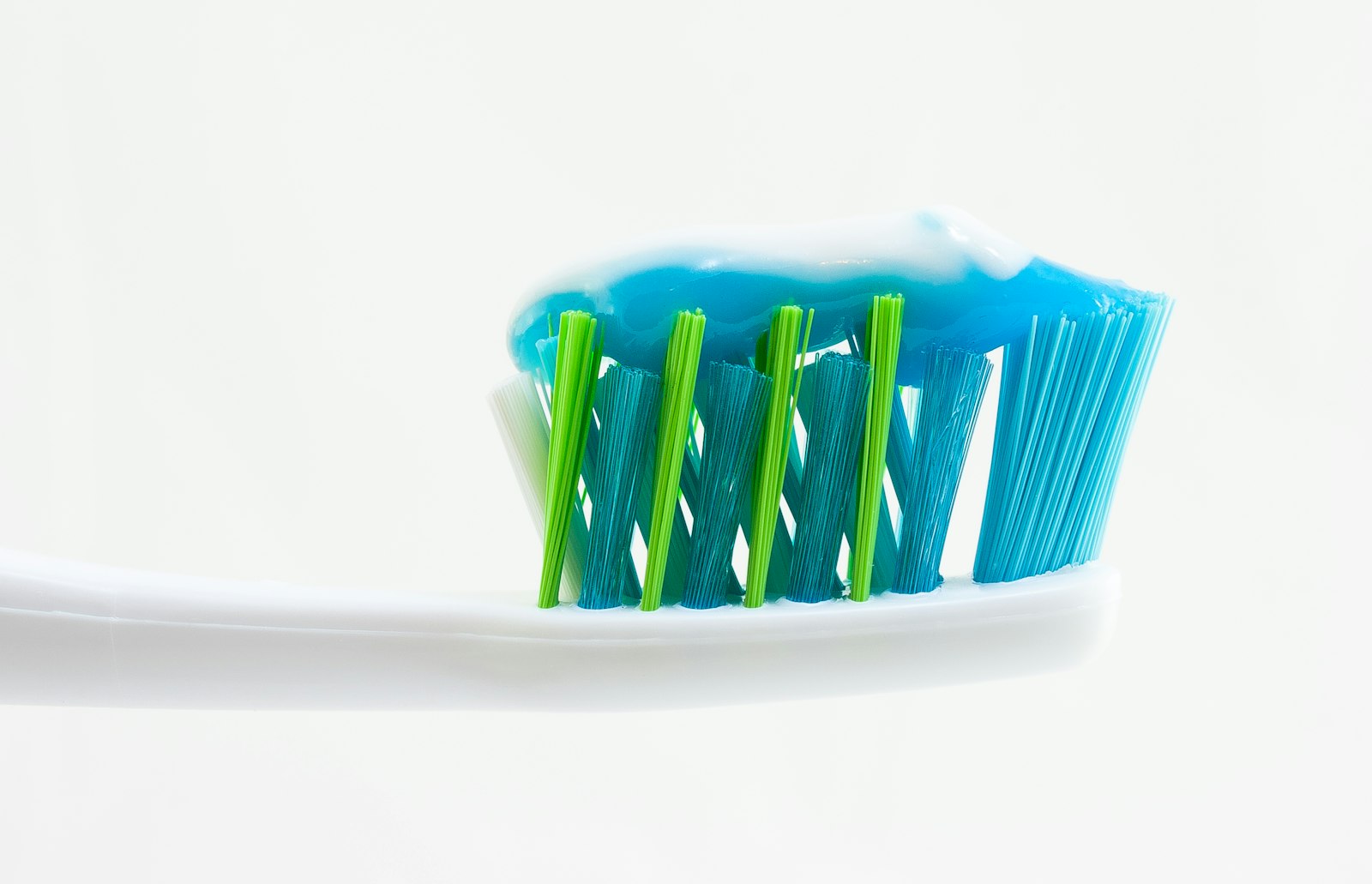
The most common dental misconception during the month is that brushing breaks the fast. Mainstream rulings hold that it does not, provided nothing is swallowed. Miswak has a long tradition and is widely regarded as permissible. Some scholars advise avoiding strongly flavoured toothpaste during fasting hours out of caution, because the flavour is pronounced and the risk of swallowing is real. If that is your position, brushing with a wet brush and no paste during the day, and using fluoride toothpaste at suhoor and after iftar, keeps the fluoride exposure where it counts.
This matters because studies report reduced brushing frequency during the month, driven by that misconception, at the same time as meals become sugar rich. Fewer brushings plus more sugar is the combination that raises risk, not the fast itself. If you take one thing from this page, make it that.
Spitting out thoroughly rather than rinsing heavily is the usual practical advice, and it happens to be better for your teeth anyway, since it leaves more fluoride in contact with the enamel.
Dental appointments while fasting
Guidance published by the British Islamic Medical Association on local anaesthetic procedures during the month, along with mainstream jurisprudence rulings, holds that a local anaesthetic injection does not invalidate the fast. The reasoning is that it is not nutritive and does not reach the stomach. Fillings and extractions are likewise not among the recognised nullifiers.
The consistent caveat across rulings is that deliberately swallowing blood, water or medicament does break the fast. That is a practical problem, not a theological one, and it is solvable in the chair. High volume suction keeps water and saliva out of the throat. Rubber dam isolates the tooth completely for fillings and root canal treatment. Rinsing without swallowing at the end is straightforward if you know to expect it. If you tell the practice you are fasting when you book, these things get set up before you sit down.
Two other points worth raising. Scheduling matters, and many fasting patients prefer a morning appointment when they are better hydrated and less fatigued. And if a procedure is likely to need pain relief afterwards, it is worth discussing timing so that any medicine falls outside fasting hours where possible. That is a conversation for your dentist and your doctor, and the religious side is a question for your imam.
| Concern | What the evidence says | Practical step |
|---|---|---|
| Dry mouth | Salivary flow falls by around 10 percent while fasting, lowest later in the day, and the authors judged this insufficient to cause disease in healthy people | Hydrate well between iftar and suhoor, limit caffeine and salty foods at night, and speak up if you already have a dry mouth from medication or illness |
| Bad breath | Mechanism is well described, reduced clearance plus volatile sulphur compounds, but the magnitude has not been well quantified | Clean the tongue as well as the teeth, floss or use interdental brushes at suhoor, and check for gum disease if breath is bad outside fasting hours too |
| Brushing | Studies report brushing frequency drops during the month, largely due to the belief that brushing breaks the fast | Mainstream rulings permit brushing provided nothing is swallowed. Use fluoride toothpaste at suhoor and after iftar, and spit rather than rinse |
| Dental appointments | Fillings and extractions are not among the recognised nullifiers of the fast | Book in the morning if you tire later, tell the practice you are fasting, and ask for rubber dam and high volume suction |
| Local anaesthetic | Guidance and mainstream rulings hold that an injection does not break the fast because it is not nutritive and does not reach the stomach | Ask your own imam if you want certainty. Clinically there is no reason to delay treatment that is causing you pain |
| Sugar at iftar | No study links fasting to measured decay, but sugar frequency and reduced brushing are established risk factors in general | Keep sweets to the meal rather than grazing all evening, drink water afterwards, and brush before sleeping rather than straight after eating something acidic |
Iftar, suhoor and what you eat
Dates at iftar are traditional and they are also sticky and sugary, which is a fair description of most things that cause decay. That is not a reason to change a tradition. It is a reason to follow them with water and to make sure the evening brush is a proper one.
The pattern that causes trouble is grazing on sweets and drinking sugary or acidic drinks continuously across the hours between iftar and sleep. Decay risk tracks how often teeth meet sugar far more closely than how much sugar is eaten in total, which our explainer on how sugar causes tooth decay sets out in more detail with the timings. Concentrating sweet foods into the meal itself, rather than spreading them across the evening, does most of the work.
Suhoor is the more important meal for teeth, because whatever is left on them at dawn stays there all day. A protein and fibre based suhoor with water is kinder than something sweet, and the brush afterwards is the last fluoride exposure your teeth will get for many hours. If your household is eating more plant based meals during the month, our article on plant based diets and oral health covers the acid and nutrient points worth knowing.
What the research does not tell us
No trial or cohort study has shown that fasting during the month increases actual tooth decay. What exists are studies of surrogate outcomes, plaque index, bacterial counts, salivary pH and flow, gingival scores. Those are useful for understanding mechanism and close to useless for predicting whether anyone will end up with a cavity.
The studies are also mostly small, and mostly from the Middle East and North Africa, where diet, water fluoridation and dental attendance differ from Australia. Applying them directly to a family in Sydney is a leap the data does not support.
So the fair conclusion is modest. Fasting itself has not been shown to harm teeth. The behaviours that sometimes travel with it, less brushing and more sugar in a compressed window, are known risks in any population.
Common questions
Does brushing my teeth break my fast?
Mainstream rulings hold that it does not, as long as you do not swallow. Some scholars advise avoiding strongly flavoured toothpaste during fasting hours as a precaution. Positions differ between schools and individual scholars, so ask your own imam if you want a definitive answer.
Can I have a filling or an extraction while fasting?
Fillings and extractions are not among the recognised nullifiers of the fast. The practical risk is swallowing water or blood, which rubber dam and high volume suction largely prevent. Tell the practice you are fasting when you book so this is set up in advance.
Does a dental injection break the fast?
Published guidance from the British Islamic Medical Association and mainstream jurisprudence rulings hold that a local anaesthetic injection does not break the fast, because it is not nutritive and does not reach the stomach. If you would rather not risk it, treatment can usually be scheduled outside fasting hours. The religious question is one for your imam.
How do I stop bad breath while fasting?
Brush and clean between the teeth at suhoor and after iftar, and clean the tongue properly, since most odour producing bacteria sit at the back of it. Hydrate well overnight. If your breath is also bad outside fasting hours, get your gums checked, because that points to a cause the fast is not responsible for.
Is fasting bad for my teeth?
There is no evidence that it is. The measured saliva changes are small and were judged insufficient to cause disease in healthy people. The risk comes from brushing less and eating more sugar in a shorter window, and both are within your control.
Booking a check-up
If you would like your teeth looked at before the month starts, or you have something bothering you now, the team at Lumi Dental sees patients Monday to Saturday at Melrose Park, with Sunday appointments by arrangement. Let reception know if you are fasting and the appointment will be set up accordingly. New patients can see what is currently available on the current deals page.
This article is general information only and is not a substitute for personal dental advice. Religious rulings vary, and any question about your fast should go to your own imam.