

Most people who look for a Saturday dentist have one of two problems: a tooth that started hurting on Friday night, or a working week that leaves no gap for a check-up. Both can usually be handled on a Saturday. Much of what happens at the practice on a weekday can also happen on a Saturday, and only a few kinds of treatment need a weekday step.
Written by Dr James Tran, BDent (University of Sydney), MICOI, GradDip (Oral Implants), general dentist at Lumi Dental in Melrose Park.
Pain and breakages get a same-day call, check-ups get booked ahead
Saturday appointments are popular with people who work Monday to Friday. A routine visit requested a few weeks out has a good chance of landing on the Saturday you want. The same request made on a Friday afternoon often does not.
Urgent problems are handled differently. Lumi offers emergency appointments for pain, swelling and broken teeth, so the best approach is to phone as early as you can on the day, describe what happened and mention any swelling. If things are getting worse after hours, our guide to dental emergencies after hours and on public holidays covers what to do first.
Routine care runs the same on a weekend
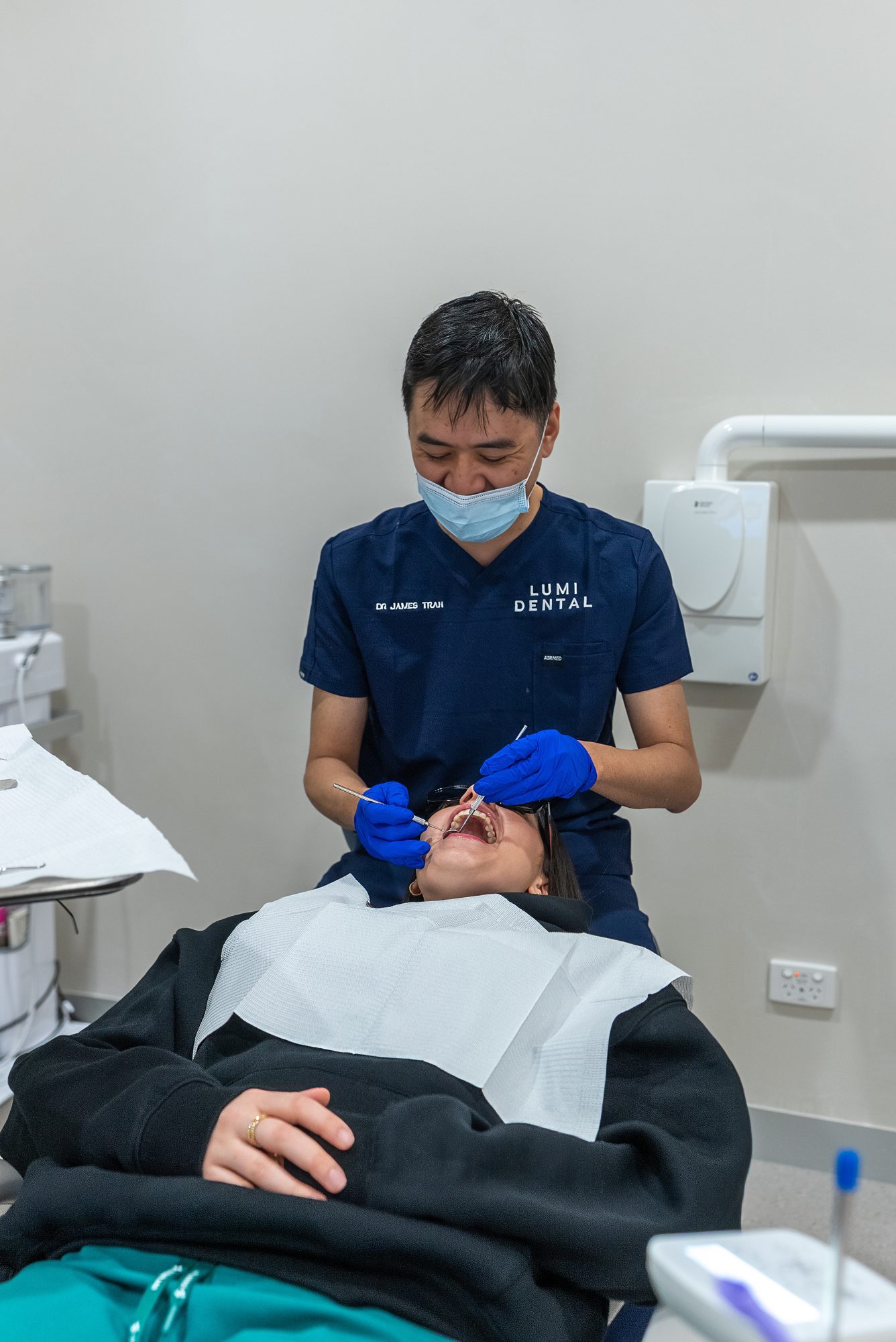
An examination is not shortened because it is a Saturday. The dentist checks each tooth, the gums, the bite, the jaw joints and the soft tissues of the mouth, and takes X-rays only when there is a clinical reason. A scale and clean, fluoride, gum measurements and gum treatment with a dentist or OHT can often be booked for a Saturday too; ask which clinicians are available when you book.
If your last check-up was a long time ago, a weekend can be a lower-pressure time to restart. Our article on returning to the dentist after several years walks through how that first appointment usually goes. New patients have a full 60-minute first visit, which leaves time to talk through what was found, and you will usually receive a written treatment plan afterwards, often by email.
Fillings and small repairs often fit the same morning
Tooth-coloured fillings are finished in one visit and do not rely on a laboratory, so a small cavity found at a Saturday check-up can sometimes be treated straight away if the book allows. The same goes for a chipped edge, a filling that has fallen out, or a crown that has come off in one piece and can be cemented back on.
Many straightforward extractions are also single-visit procedures. Teeth that need surgical removal, such as an impacted wisdom tooth, are planned as a separate appointment after X-rays.
Toothache and swelling can usually be settled on the day
The aim of a Saturday emergency visit is to find what is causing the problem and bring the pain under control. Depending on what the dentist finds, that might mean a soothing dressing in the tooth, starting root canal treatment, draining an abscess, removing a tooth that cannot be saved, or antibiotics if an infection is spreading. The longer repair is then planned for a later visit.
Waiting until Monday for a cracked tooth or a swollen gum tends to give the problem more time to grow. If you are unsure whether something counts as urgent, phone and describe it; the team can tell you how soon you need to be seen. Our article on what to do in a dental emergency has first aid you can use while you wait.
Consultations are a good use of a Saturday
Weekends suit planning appointments, where there is time to ask questions without watching the clock. Whitening consultations, clear aligner and braces assessments, and a first discussion about replacing a missing tooth all fit well. The 3D intraoral scan, clinical photographs and, where needed, a 3D X-ray can be taken at that visit, so the treatment plan can follow without an extra trip. Free consultations are offered for cosmetic, implant, braces and aligner treatment, and for nervous patients; details are on the current deals page.
Some steps depend on people who work weekdays
A Saturday visit can start almost any treatment. What sometimes cannot happen on the same day is the step that relies on someone outside the appointment.
Crowns, bridges and dentures are made after the teeth are prepared or scanned, so they are fitted at a later appointment, which may be a weekday or another Saturday. Patients who need a registered specialist, for example for some complex root canals, surgical gum treatment or orthodontic cases beyond a general dentist's scope, are given a referral, and specialist rooms generally run on weekdays.
Sedation also needs planning. Happy gas (relative analgesia), inhaled pain relief and oral sedation are available, and IV sedation is available at Lumi as well, but it is booked after a consultation and a medical history review rather than on the day.
A quick guide to Saturday and weekday care
| What you need | Usually possible on a Saturday? | What to expect |
|---|---|---|
| Check-up, X-rays, scale and clean | Yes | Book a few weeks ahead if you can |
| Toothache, broken tooth, lost filling or crown | Yes, often the same day | Phone early and mention any swelling |
| Child's check-up under the CDBS | Yes, for eligible children | Bring the child's Medicare card |
| Whitening, aligner, braces or implant consultation | Yes | Scan and photographs taken at the visit |
| Crown, bridge or denture | Partly | Preparation on the day, fitting at a later visit |
| Treatment by a registered specialist | Usually not | A referral can be written at your visit |
| Swelling in the face or neck, or trouble swallowing or breathing | No | Go to a hospital emergency department first |
When to go to hospital instead
A dental chair is the wrong place for an infection that is threatening the airway. NSW Health advises going to the closest hospital emergency department for swelling in the face or neck. If someone is struggling to breathe or swallow, call triple zero (000). Our article on facial swelling from a spreading dental infection explains the warning signs. The tooth that started it is treated at the practice once the person is safe.
A knocked-out adult tooth is the other situation where minutes count. Pick it up by the crown, not the root, and rinse it briefly in milk or saline if it is dirty. Put it back in the socket as soon as possible, ideally within 15 minutes. If you cannot, keep it in milk or saline, or inside the cheek of an older child or adult, never in water and never let it dry out, and see a dentist immediately. International dental trauma guidelines (IADT, 2020) note that the outlook is poor once the root has been dry for over 60 minutes. A knocked-out baby tooth should never be put back, but the child should still see a dentist as soon as possible.

Bring a few things to make the visit count
A current list of your medicines matters more than most people expect. Blood thinners, osteoporosis medicines and diabetes can all change what is safe to do on the day. If you take a blood thinner, keep taking it as prescribed; the dentist will confirm any plan for extractions or surgery with your GP or prescriber.
Your health fund card lets the claim go through at the desk. Children using the Child Dental Benefits Schedule need their Medicare card. A photo taken when the problem first appeared, such as a chipped tooth on Thursday night, can also help the dentist see how things have changed. If you are a new patient, arriving a little early gives you time to finish the medical history form.
Fees and claiming on a weekend
Fees depend on what the examination finds, so they are set out in your treatment plan rather than quoted in advance. If you want to know whether anything differs on a Saturday, ask when you book. Health fund extras are claimed on the spot through HICAPS, and you pay the gap.
The Child Dental Benefits Schedule applies on any day of the week. It covers basic services such as check-ups, X-rays, cleaning, fissure sealing, fillings, root canals and extractions for eligible children aged 0 to 17, with a benefit cap of $1,158 over two calendar years in 2026. It does not cover orthodontic or cosmetic work. Our guide to the Child Dental Benefits Schedule explains eligibility.
Adults with a Pensioner Concession Card, Health Care Card or Commonwealth Seniors Health Card can also use NSW public dental services, which are free for eligible people, as are services for children under 18 with a Medicare card. Waiting times for routine public care can be long.
How a Saturday runs at the practice
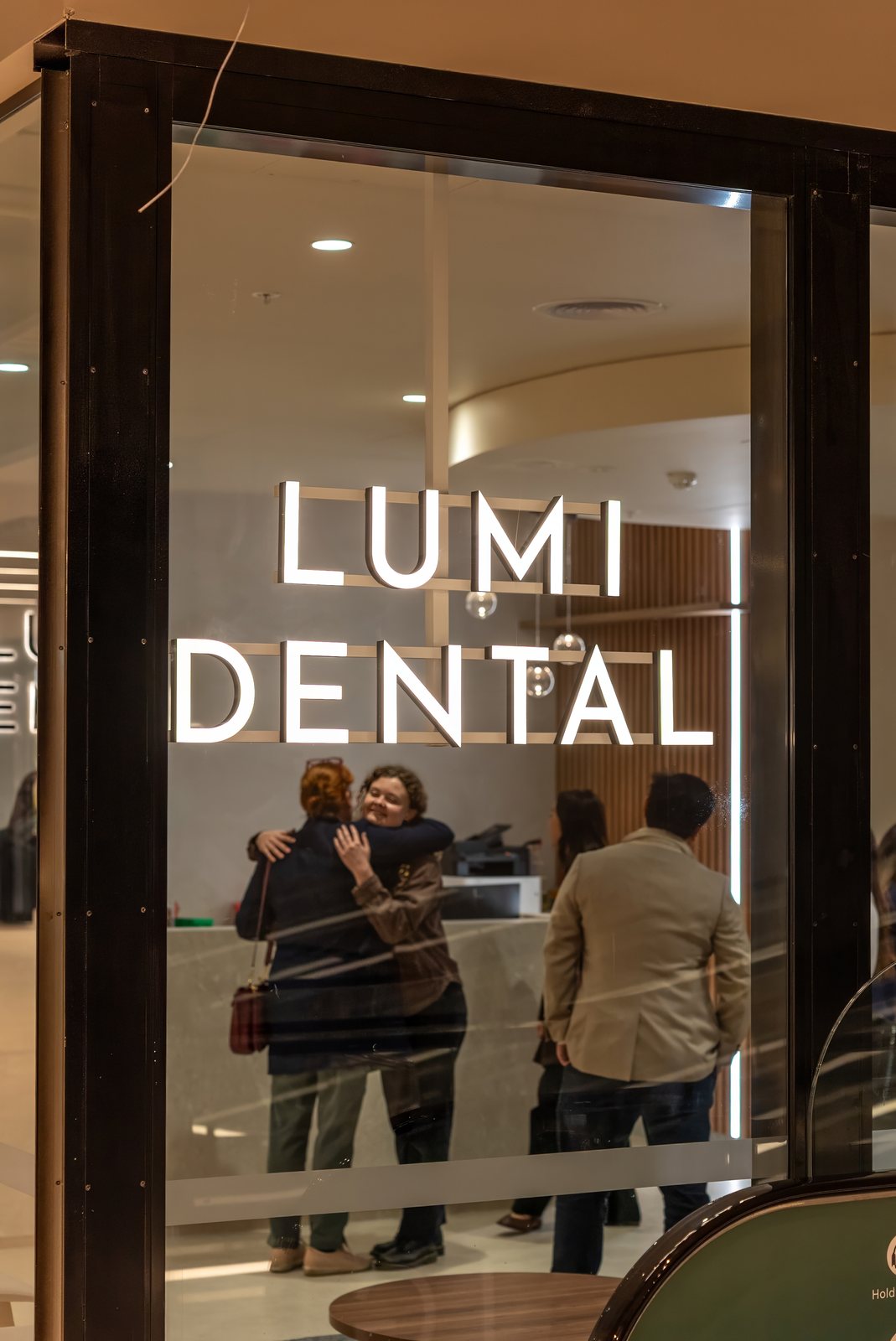
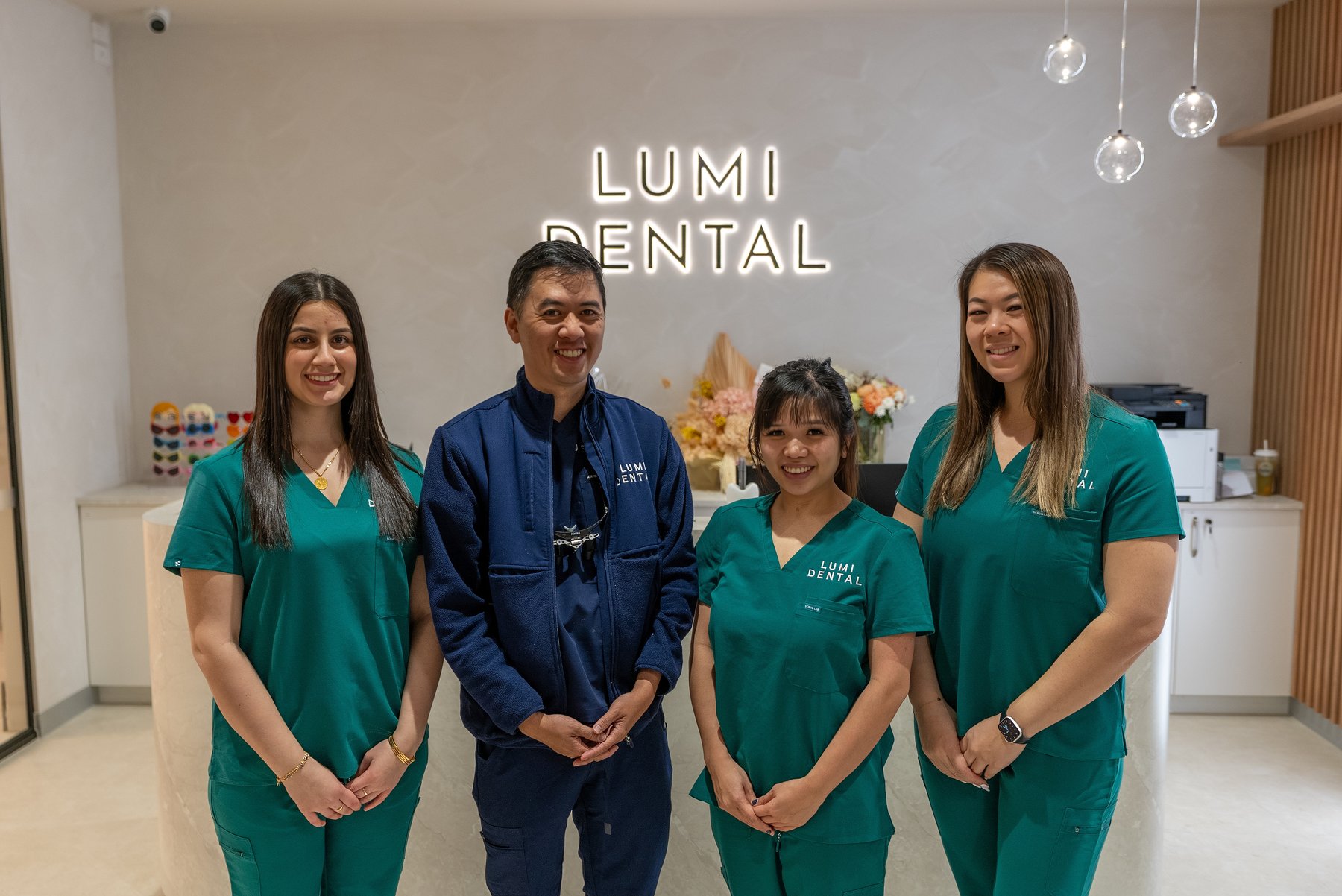
Lumi Dental is an independent general and cosmetic practice at Melrose Central, open Monday to Saturday, until 9:30pm on Thursdays, and on Sundays by appointment. Current hours are on the contact page. The dentists examine, diagnose and treat, the oral health therapists see children, adults and families for cleans and gum care, and the practice has a 3D intraoral scanner and an Orthophos 3D X-ray. Emergency appointments are available, parking is free and undercover, and Melrose Central has lift access. If you are looking for a new general dentist, the first visit is a full examination with time to explain the findings before any treatment is booked.
Questions we are often asked
Is Lumi Dental open on Saturdays?
Yes. The practice is open Monday to Saturday, with Sunday by appointment. Saturday hours can change, so check the contact page or phone before you come in.
Can I have a filling or a tooth removed on a Saturday?
Often, yes. Fillings and many extractions are single-visit treatments that do not need a laboratory. Surgical removal of a wisdom tooth is usually planned separately after X-rays.
Can my child use the CDBS on a weekend?
Yes, if your child is eligible. The schedule does not depend on the day of the week. Bring the Medicare card to the appointment.
What if a toothache starts on a Sunday?
Sunday is by appointment, so phone the practice or check the contact page. For swelling in the face or neck, or any difficulty swallowing or breathing, go to a hospital emergency department instead.
Book a weekend appointment
Saturday appointments at Lumi Dental in Melrose Park cover check-ups, cleans, fillings, children's visits and emergencies, and the practice is a short drive from Ryde, Parramatta, Ermington and Rydalmere. Contact the practice to book or confirm current hours, look through the current deals, or read more about general dentistry at Lumi Dental. If you are still comparing options, our guide to choosing a dentist near Parramatta, Ryde and Melrose Park may help.
Sources
- Australian Dental Association (teeth.org.au): Dental trauma
- Fouad and colleagues, Dental Traumatology, 2020: IADT guidelines, avulsion of permanent teeth
- Services Australia: What is covered by the Child Dental Benefits Schedule
- NSW Health: Public dental services
About the author

Dr James Tran is a general dentist at Lumi Dental in Melrose Park. He holds a BDent from the University of Sydney and a Graduate Diploma in Oral Implants, and is a Master of the International Congress of Oral Implantologists (MICOI).
This article is general information only and is not a substitute for an examination and individual advice from a registered dental practitioner. Suitability for any treatment varies from person to person.







