


Children who come off a scooter or bike tend to keep gripping the handlebars, so there is nothing between their face and the footpath. On a trampoline it is a chin on the frame or a head colliding with another jumper. Falls and knocks during play are leading causes of injured front teeth in children, which is why a helmet, a few trampoline rules and, for some activities, a mouthguard are worth the effort.
When a knock does happen, what you do in the first hour depends on whether the tooth is a baby tooth or an adult one, and a tooth that looks fine that evening still deserves a check in the following days.
Written by Dr James Tran, BDent (University of Sydney), MICOI, GradDip (Oral Implants), general dentist at Lumi Dental in Melrose Park.
Telling a baby tooth from an adult tooth
From about six to nine, a child's mouth holds both kinds of front teeth, and first aid differs. Better Health Channel describes baby teeth as smaller, smoother and usually whiter. New adult front teeth are larger, slightly more yellow, and can have small bumps along the biting edge. If you cannot tell, treat the tooth as an adult tooth and call a dentist.
A knocked-out tooth: two opposite instructions
Baby tooth out
Leave it out. Putting a baby tooth back can injure the adult tooth developing just above its root. Press a clean, damp cloth on the bleeding gum, keep the tooth to show the dentist, and see a dentist as soon as possible so the area and the other teeth can be examined. Our article on why a baby tooth is never replanted explains the reasoning.
Adult tooth out
This is an emergency, and minutes count. Pick the tooth up by the white crown, not the root. If it is dirty, rinse it briefly in milk or saline. Then push it gently back into the socket the right way round, have your child bite on a folded tissue or cloth to hold it, and go straight to a dentist, ideally within 30 minutes.
If you cannot get it back in, keep it moist on the way: in milk or saline, or covered in a little of the child's saliva in a clean container. Do not let it dry out, and do not keep it in water. Our knocked-out tooth first aid guide covers the steps in more detail, and our article on storing a knocked-out tooth in milk explains why milk helps the root cells survive.
Chips, wobbles and teeth pushed out of place
Most falls do not knock a tooth out. More often a corner chips, a tooth loosens, or it is shoved backwards, forwards or up into the gum. After the tears have settled, rinse the blood away and look at each front tooth in good light. Things that need a dental visit within a few days, even with no pain, include a tooth that:
- is chipped or broken, especially if you can see a yellow or pink spot in the break
- moves when touched or looks longer or shorter than its partner
- sits at a different angle, or stops your child closing their teeth together normally
- is bleeding from the gum line
A very loose adult tooth, one pushed well out of position, or a break showing pink should be seen the same day. If you find a broken fragment, keep it moist in a little milk; a clean piece can sometimes be bonded back on. Our guide to loosened teeth after a knock explains how those injuries are managed. Seek emergency medical care straight away for any loss of consciousness, vomiting, confusion, a deep cut that will not stop bleeding, or difficulty breathing.
What the dental check involves
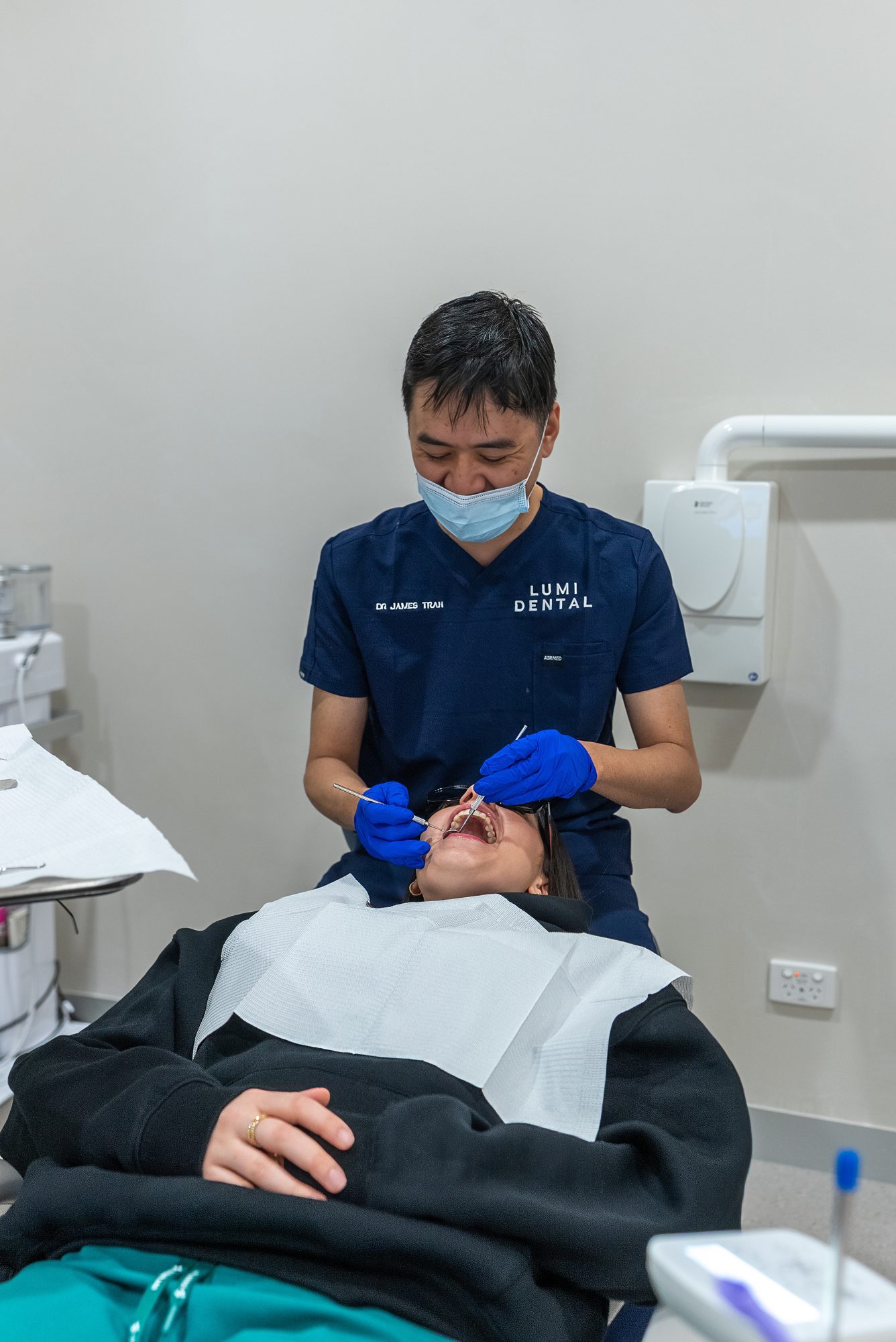
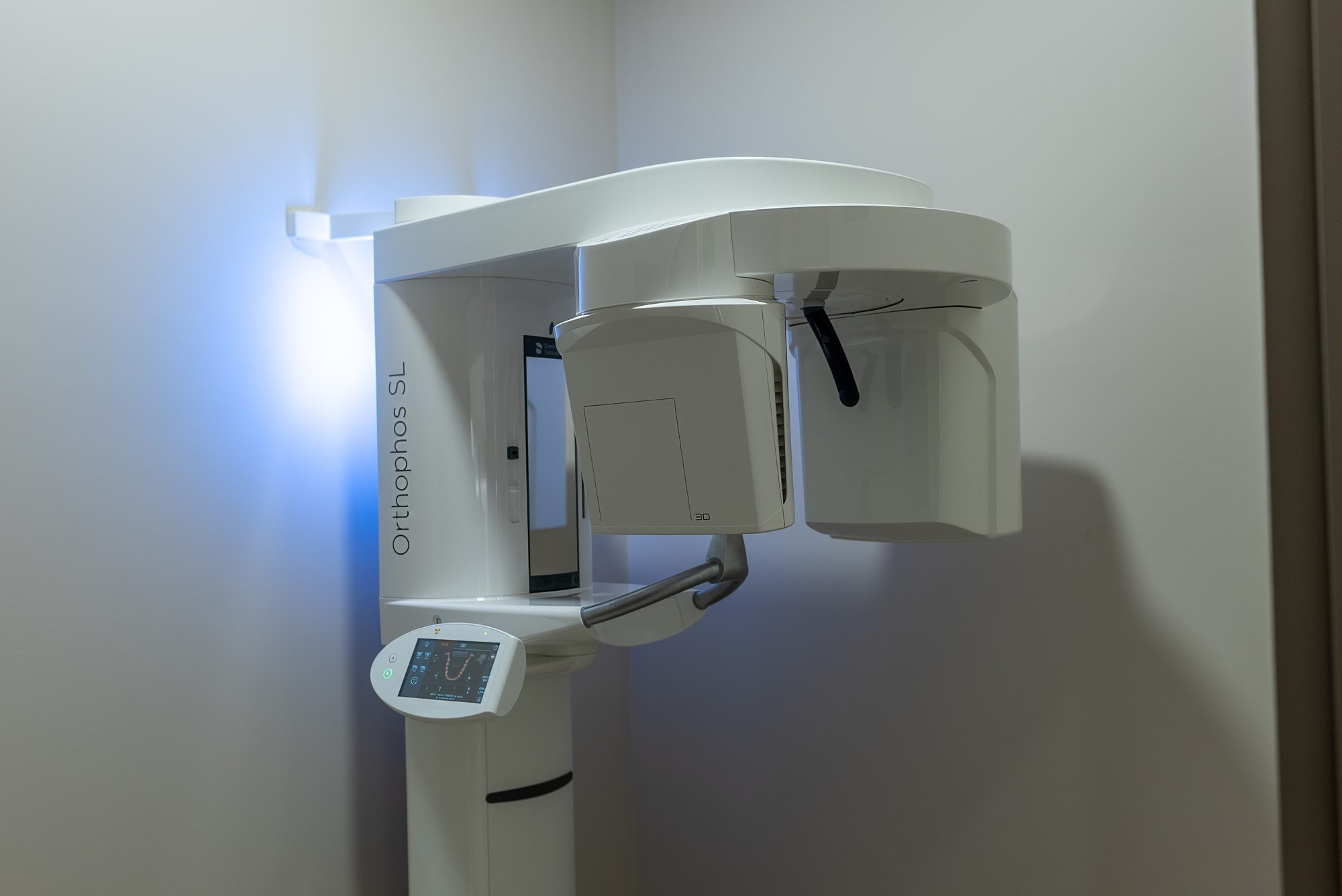
The dentist feels each injured tooth for movement, checks how the teeth meet, looks at the lips and gums for cuts or embedded fragments, and takes a small X-ray where the root or the adult tooth under a baby tooth needs to be seen. A loose adult tooth may be held to its neighbours with a light, flexible splint for a short period. Because damage to the nerve often shows up late, follow-up visits over the next weeks and months are part of the plan.
Changes that can appear weeks later
A blow can bruise the nerve and the ligament holding the tooth even when nothing looks wrong at first. In the weeks after a fall, let your dentist know about:
- a tooth turning grey, dark yellow or pink, which suggests the nerve has been affected. In baby teeth this is common and is often watched rather than treated, as our article on a grey baby tooth after a bump describes.
- pain when biting, or a tooth that feels as if it is sitting higher than the rest
- a small pimple or swelling on the gum above the tooth
- a tooth that stays loose, drifts or, in a baby tooth, appears to sink into the gum
Injuries to baby teeth can occasionally affect the adult tooth forming above, which may come through years later with a white or brown patch or an unusual shape. That is another reason to mention past knocks at check-ups.
Lowering the risk on each activity
Scooters
Fit a helmet every time and keep young riders off steep driveways and slopes they cannot control. For skate park riding, a mouthguard is worth considering.
Bikes
A helmet on every ride, brakes your child can reach and squeeze, and practice on flat paths before kerbs and gutters. For off-road riding, including BMX tracks and mountain bike trails, the Australian Dental Association strongly recommends a mouthguard.
Trampolines
Raising Children Network advises a trampoline that meets the Australian Standard, padding over the frame and springs, a safety net, a clear soft area of at least 2.5 metres around it, one jumper at a time, no somersaults, and stepping off rather than jumping off. It also suggests waiting until a child is older than six before getting a trampoline. One at a time matters for teeth too, because collisions between jumpers can hurt front teeth.
Skateboards and rollerblades
Helmets and wrist guards are standard. Skateboarding and trampolining are both on the ADA's list of activities where a mouthguard is strongly recommended.
Is a custom mouthguard worth it for your child?
Not every child needs one. It becomes worthwhile once the adult front teeth are through, usually around seven or eight, and your child is doing a higher-risk activity such as skate parks, BMX, trampolining or contact sport. Better Health Channel advises a guard about 4 mm thick that fits closely and does not interfere with breathing or speaking, and notes that custom-fitted guards provide the best protection because of their close fit and comfort. Over-the-counter guards are better than nothing but tend to fit less securely, although evidence that custom guards prevent more injuries than boil-and-bite guards is limited.
A child's mouth changes quickly, so Better Health recommends replacing a child's mouthguard every 12 to 18 months even if it looks fine, and wearing it at training as well as games. Our guide to kids' sports mouthguards covers fitting and care. Children whose top front teeth stick out, or whose lips do not cover them at rest, are more likely to injure those teeth, and an orthodontic assessment may be worth discussing.
Checks after a fall at Lumi Dental
A child who has had a knock to the mouth is examined by one of our dentists, with an X-ray where needed. Custom sports mouthguards can be made from a digital scan of the teeth, which most children find easier than an impression. Eligible children are bulk billed under the Child Dental Benefits Schedule, which can include examination and some treatment after an injury. Where an injury needs it, we refer to a paediatric dentist or hospital service.
What parents ask after a fall
The tooth is a bit loose but my child seems fine. Can we wait?
Keep to soft food, avoid wiggling the tooth, and book a check within a few days. Come in the same day if it is an adult tooth that is very loose or out of position. A slightly loose baby tooth often firms up on its own.
The tooth has gone grey. Does it need to come out?
Not necessarily. Colour change means the nerve was affected. In a baby tooth it is often monitored unless there is pain, swelling or a gum pimple. An adult tooth needs testing over time, and may need nerve treatment.
My child's adult tooth was knocked out and we could not put it back. Is it too late?
Get to a dentist straight away, with the tooth in milk or saliva. The longer a tooth is dry or out of the mouth, the lower the chance it survives, but a dentist can still assess what is possible.
Should younger children wear mouthguards on scooters?
For everyday scooting around the neighbourhood, a helmet and sensible supervision usually do more. If you are unsure, ask us at your child's next check-up.
Booking a check for your child
Whether it is after a fall or before your child takes up a new activity, we can check their front teeth and talk through whether a mouthguard makes sense. See our current offers for new patients, read about children's dentistry at Lumi Dental, or contact us to book a visit in Melrose Park.
Sources
- Better Health Channel: Mouthguards
- Better Health Channel: Dental injuries, knocked out, chipped or cracked teeth
- Australian Dental Association: Policy Statement 2.2.5, Prevention and Management of Oral Injuries
- Raising Children Network: Trampoline safety for kids
About the author

Dr James Tran is a general dentist at Lumi Dental in Melrose Central, Melrose Park. He holds a Bachelor of Dentistry (BDent) from the University of Sydney and a Graduate Diploma in Oral Implants, and is a Master of the International Congress of Oral Implantologists (MICOI).
This article is general information only and is not a substitute for an examination and individual advice from a registered dental practitioner. Suitability for any treatment varies from person to person.








