A run of stressful weeks often shows up at the dentist before people mention it: a crack in a filling, flattened edges on the front teeth, a jaw that aches on waking, gums that bleed after months of being fine. Stress rarely damages the mouth directly. Mostly it works through habits, such as clenching, skipped brushing, extra snacks and coffee, and through changes in how the body handles inflammation.
Clenching is the effect most worth catching early
Many people clench their teeth while concentrating, driving or lying awake, without realising. Some also grind during sleep. Over months, that force can wear down biting edges, chip enamel, crack fillings and tire the jaw muscles. Because it happens without awareness, the first clues are usually a stiff jaw in the morning, headaches around the temples, or a dentist pointing out wear.
The research link between stress and grinding is real but not as tidy as often claimed. A 2021 systematic review in the Journal of Oral Rehabilitation (Polmann and colleagues) found some associations between probable sleep bruxism and self-reported stress, but the authors rated the quality of the evidence as very low and called for better studies. Daytime clenching is commonly linked with stress and concentration, and is often the easier habit to change once you notice it.
Simple daytime checks help: lips together, teeth apart, jaw relaxed. Some people put a small sticker on their screen or steering wheel as a reminder. For night-time grinding, a dentist-made night guard spreads the force and protects the teeth. Our guide to teeth grinding covers the signs and options.

When the jaw joint starts to complain
Long periods of clenching load the jaw joints and the chewing muscles. Some people develop aching in front of the ears, clicking, or difficulty opening wide, a group of problems known as temporomandibular disorders. Short-term measures such as softer food, avoiding gum and wide yawns, and gentle heat often help. If symptoms last more than a few weeks or keep coming back, have them assessed. Our article on TMJ disorder explains the causes and treatments.
Gums under pressure
Stress hormones affect the immune system and inflammation, and stressed people often brush and clean between their teeth less carefully. Together these may make gum disease more likely or harder to control. A systematic review in the Journal of Periodontology (Peruzzo and colleagues, 2007) found that 8 of the 14 studies it included (57 per cent) reported a positive association between stress or psychological factors and gum disease, with others showing mixed or no association.
Bleeding gums are worth taking seriously rather than putting down to a busy patch. If your gums still bleed after 3 to 4 days of careful brushing and flossing, see a dentist or oral health therapist (OHT). Our guide to bleeding gums explains what to look for.
Ulcers and a dry mouth
Many people notice mouth ulcers flaring during exams, deadlines or difficult life events. Stress is a commonly reported trigger for recurrent ulcers, though the mechanism is not well understood. Most heal on their own within a couple of weeks. Any ulcer or patch that has not healed or has changed within 3 weeks should be checked by a dentist or GP. Our guides on mouth ulcers and oral cancer screening explain why.
Anxiety can make the mouth feel dry, and some medicines used for anxiety and low mood can reduce saliva. Saliva protects teeth against acid and decay, so a mouth that is often dry deserves attention. Sipping water, sugar-free gum and cutting back on caffeine can help, and our guide to dry mouth has more ideas.
The everyday habits that slip
For most people, the biggest effect of stress on teeth comes from behaviour rather than biology. Under pressure, routines change:
- Brushing gets rushed or skipped at night.
- Sweet snacks and soft drinks become more frequent.
- Coffee and energy drinks increase, often sipped slowly through the day.
- Smoking or vaping increases.
- Dental check-ups get postponed.
These are also the easiest things to act on. Keeping a toothbrush at work, having snacks with meals rather than grazing, and booking your next check-up before you leave the practice all help when life is busy.

Matching the problem to what helps
| What you notice | What may help |
|---|---|
| Sore jaw on waking, worn or chipped teeth | A dentist-made night guard and daytime jaw awareness |
| Clicking or aching jaw | Soft food, rest from gum and wide opening, assessment if it persists |
| Bleeding gums | Careful brushing and cleaning between teeth; see a dentist or OHT if bleeding continues beyond 3 to 4 days |
| Recurrent ulcers | Soothing gels and avoiding triggers; have any ulcer not healed within 3 weeks checked |
| Dry mouth | Water, sugar-free gum, less caffeine, and a medicine review with your GP |
Questions patients ask about stress and teeth
How can I tell if I grind at night?
Common signs are a tired or sore jaw on waking, headaches, sensitive teeth, and flattened or chipped edges. A partner may hear it. A dentist can often see the wear pattern at a check-up.
Will a night guard stop me grinding?
Usually not. It protects the teeth and spreads the force, which is its main job. Reducing stress and daytime clenching may lessen grinding for some people.
Should I mention stress at my dental appointment?
Yes. It helps the dentist interpret what they see, such as wear, gum changes or ulcers, and plan prevention that fits your situation.
Help from Lumi Dental
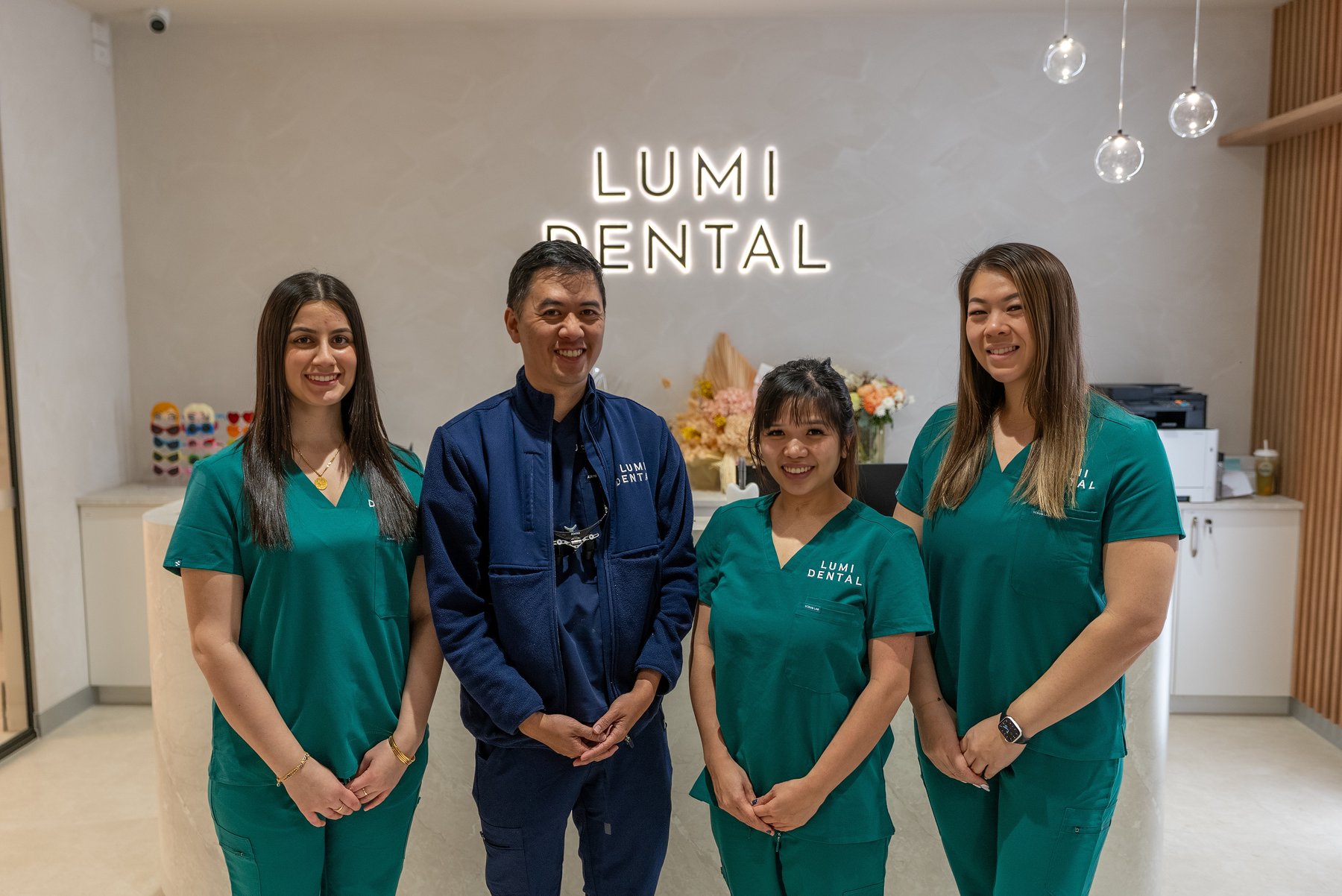
If stress is showing up as a sore jaw, worn teeth, bleeding gums or ulcers, our dentists and OHTs can check what is going on and suggest practical steps, including a custom night guard where it suits. Get in touch, read about our general dental care in Melrose Park, or see current offers on our deals page.
Sources
- Polmann H, et al. Association between sleep bruxism and stress symptoms in adults: a systematic review and meta-analysis. Journal of Oral Rehabilitation, 2021. PubMed 33377534
- Peruzzo DC, et al. A systematic review of stress and psychological factors as possible risk factors for periodontal disease. Journal of Periodontology, 2007. PubMed 17668968
- NHS: Mouth ulcers