
Sun protection for your lips matters more in Australia than almost anywhere else, because the lower lip faces the sky and has almost none of the defences the rest of your skin relies on.
Most people who are careful about sunscreen still treat lip balm as something for dryness rather than for ultraviolet light. The lips end up among the least protected parts of an Australian face, on the site least equipped to cope.
This article covers why the lower lip takes the damage, what early changes look like, which ones are worth examining, and what practical lip sun protection involves.
Key takeaways
- Global comparison work has found some of the highest observed lip cancer rates in the world in Australia, so this is not a rare problem here.
- The lower lip is the site in roughly 80 per cent of lip cancer cases, and lower lip tumours occur predominantly in men.
- The vermilion has no meaningful protective outer layer, reduced melanocyte activity, and no sebaceous or sweat glands, so it lacks most of skin's usual defences.
- Actinic cheilitis is the potentially malignant precursor. A systematic review reported a malignant transformation rate of 3.07 per cent, with individual cohorts reporting considerably higher figures.
- Cancer Council Australia advises sun protection whenever the UV index is 3 or above, SPF30 or SPF50+ broad spectrum, applied 20 minutes beforehand and reapplied every 2 hours.
- Any mouth or lip sore that has not healed after three weeks warrants assessment, and early lesions are often painless, so pain is not a useful filter.
Why the lower lip takes the damage
The reason is geometric and nobody explains it. Your forehead, nose and cheeks face outwards and partly downwards. Your lower lip faces upwards, on a surface angled towards the sky, catching direct ultraviolet light the way the top of an ear does, while the upper lip is shaded by the nose and the angle of the face.
What the figures show
The lower lip is the affected site in about 80 per cent of lip cancer cases, and one retrospective series reported 73.6 per cent of lower lip tumours occurring in men. Ultraviolet exposure is far more important in lower lip cancer than in upper lip cancer, which is exactly what the anatomy would predict. Once you have noticed the upward angle, the pattern in the data stops looking like a coincidence.
The vermilion is skin without most of skin's defences
The vermilion is the red part of the lip, and every one of its anatomical quirks works against it here. It lacks a robust stratum corneum, the tough outer layer providing most of skin's physical barrier. It has reduced melanocyte activity, so less of the pigment that absorbs ultraviolet light. It has no sebaceous or sweat glands, meaning no hydrolipidic film and no acid mantle, and no hair follicles.
Put together, it is a thin, poorly pigmented, unlubricated surface pointed at the sun, and it is routinely the last place anyone puts sunscreen. It also cannot be covered by a hat brim in the way the nose and forehead can.

How common is lip cancer in Australia
Australia consistently appears at or near the top of international comparisons for lip cancer. Global analysis of cancers of the lip, tongue and mouth found the highest observed rates in Australia and Papua New Guinea. One review of the literature has cited Australian lip cancer incidence as high as 13.5 per 100,000 population.
Why the numbers are harder to pin down than you would expect
That 13.5 figure comes from a review rather than from current national reporting, and the limitation is worth stating. Lip squamous cell carcinoma sits awkwardly between two reporting systems in Australia: partly in head and neck cancer statistics, partly in non-melanoma skin cancer data, which is not notified in the same way. Australian lip cancer is probably undercounted.
The cleanest official Australian figures cover head and neck cancer as a group, which includes lip but is not limited to it. Cancer Australia reported 5,097 new head and neck cancer diagnoses in a single year, comprising 3,663 males and 1,432 females, with 5,577 projected for a later year. Around 90 per cent of lip, oral cavity and pharyngeal cancers are squamous cell carcinoma, and incidence of that group rose about 1.3 times between two consecutive ten-year periods.
Actinic cheilitis, the change that comes first
Actinic cheilitis, sometimes called solar cheilosis, is the potentially malignant change that chronic ultraviolet exposure produces on the lip. It appears most often on the lower lip of fair-skinned people with long-term sun exposure. Typical features are persistent dryness or scaling that does not settle, a rough or leathery texture, patchy pale or reddened areas, and blurring of the sharp line between the vermilion and the surrounding skin.
How often it progresses
Reported malignant transformation rates vary a great deal, and the variation is mostly methodological. A systematic review of observational studies reported 3.07 per cent. Individual retrospective cohorts have reported 12.05 per cent and 16.9 per cent, and some narrative sources quote ranges as wide as 10 to 30 per cent. The systematic review figure is the most defensible headline, and the honest position is that this is not a settled number.
More compelling than any single percentage is the other direction of the relationship: up to 95 per cent of lip squamous cell carcinomas are reported to arise on pre-existing actinic cheilitis. Even at a low transformation rate, the precursor is where almost all of these cancers begin. That is the argument for taking a persistent scaly patch on the lower lip seriously rather than as stubborn chapping.
Squamous cell carcinoma of the lip is also reported to be more likely to spread than squamous cell carcinoma at other skin sites, with figures around eleven times quoted in some series. Those figures vary and come from older data.
Who is most at risk
Cancer Council Australia attributes around 59 per cent of mouth cancers in Australia to smoking and around 31 per cent to excess alcohol, and notes that cancers of the lip are commonly associated with ultraviolet exposure. Those smoking and alcohol figures are for mouth cancer overall rather than lip cancer alone. Our article on smoking and oral health covers the rest.
Outdoor work
People who work outdoors in Australia receive up to ten times more sun exposure than indoor workers. Cancer Council figures attribute an estimated 200 melanomas and 34,000 non-melanoma skin cancers per year in Australia to occupational ultraviolet exposure. The gap between intention and practice is the striking part: while 95 per cent of Australian outdoor workers exposed to solar radiation use some sun protection, only 8.7 per cent are classified as fully protected, meaning hat, sunscreen, clothing and shade for more than half of their outdoor working time.
In practice that describes a lot of Western Sydney: construction, landscaping, roofing, agriculture, delivery driving and anyone who spends the working day outdoors. The lip balm is usually already in the ute. It is the reapplication that does not happen.
Immunosuppression
This is a specific and strong risk factor that almost never appears in consumer content. Australian and New Zealand data on kidney transplant recipients show markedly increased lip cancer incidence, with risk strongly related to currently receiving immunosuppression and falling back towards pre-transplant levels if the transplant fails. Independent risk factors for lower lip cancer in that group included increasing age, time since transplantation, current azathioprine or cyclosporine, and a smoking history. If you take immunosuppressive medication for any reason, lip sun protection deserves more attention than average, not less.
Everyday lip changes versus changes worth getting looked at
| What you notice | How long it usually lasts | Where it typically is | Usual explanation | What to do |
|---|---|---|---|---|
| Dry, chapped lips in cold weather | Days, improves with balm | Both lips, general | Cold, wind, dehydration, mouth breathing | Balm and hydration, review if it does not settle |
| Cold sore | Usually about 1 to 2 weeks, recurs in the same spot | Lip border, often one side | Herpes simplex reactivation | Manage the episode, see someone if the pattern changes |
| Cracking at the corners of the mouth | Weeks, may recur | Corners only | Angular cheilitis, often multifactorial | Dental or medical review, the cause matters |
| Persistent scaly or rough patch, blurred lip border | More than three weeks, does not settle | Lower lip most often | Possible actinic cheilitis | Have it examined, do not wait for it to hurt |
| Ulcer that has not healed | More than three weeks | Anywhere on the lip or in the mouth | Needs assessment regardless of pain | Have it examined promptly |
| New numbness, a lump, or a firm thickened area | Persistent | Lower lip or under the jaw | Needs assessment | Have it examined promptly |
| Sunburn on the lips after a day outdoors | Days | Lower lip most often | Direct ultraviolet exposure, no reapplication | Reapply SPF50+ every 2 hours, and after eating or drinking |
What good lip sun protection actually looks like
Cancer Council Australia's guidance is straightforward and it applies to the lips as much as anywhere else. Use sun protection whenever the UV index is 3 or above. Outdoor workers should use sun protection all year round rather than seasonally. Choose SPF30 or SPF50+ broad spectrum. Apply 20 minutes before going outside. Reapply every 2 hours.
Reapplication is the whole game
Lips are unusual in that the product is removed constantly by eating, drinking, talking and licking. Cancer Council's own SPF50+ lip products are tested to four hours water resistance, and the advice is still to reapply every 2 hours. Nothing on the lips is all-day, and no product removes the need to reapply.
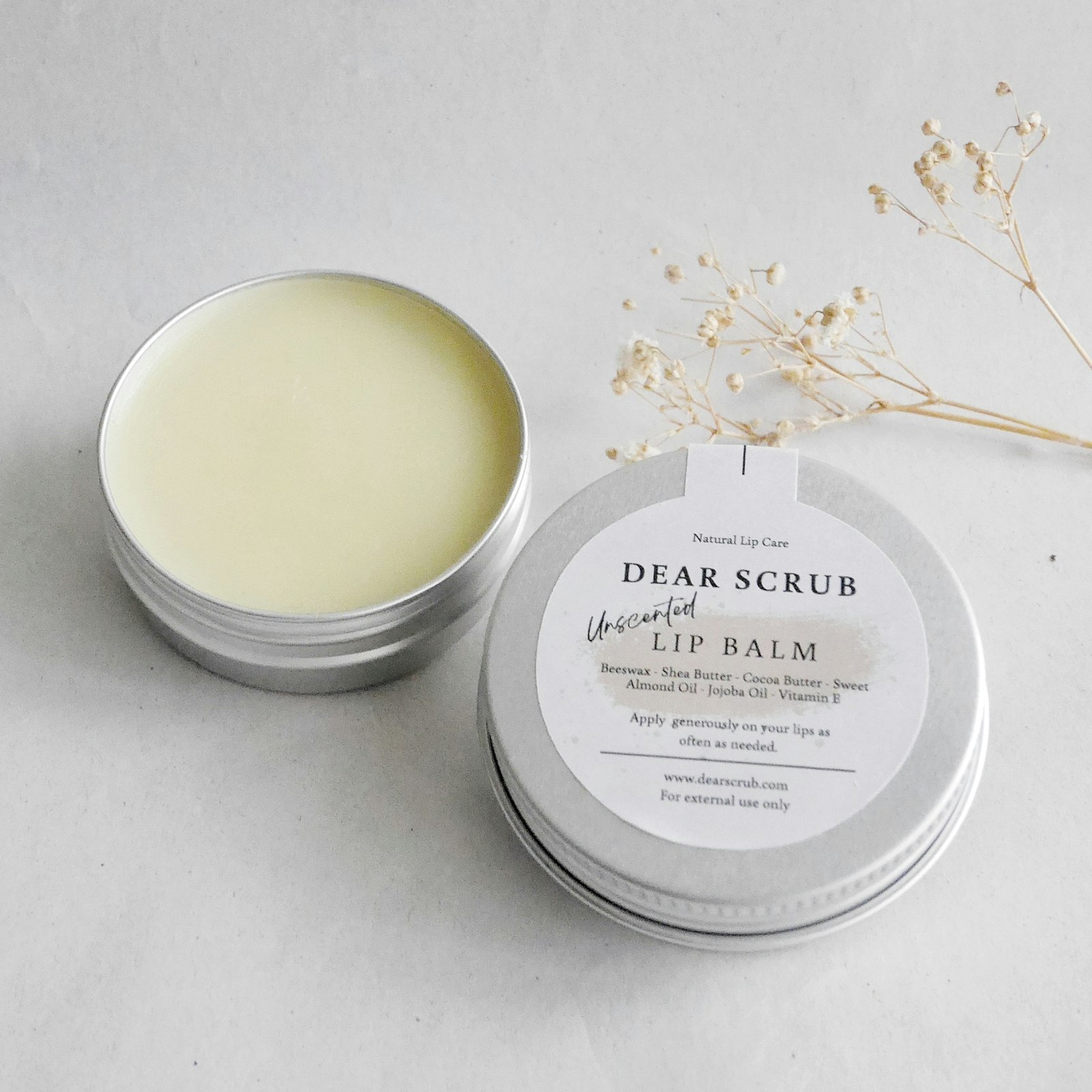
Two practical points. A broad-brimmed hat shades the upper lip well and the lower lip poorly, so a hat is not a substitute. And products marketed as natural or chemical-free, without a tested SPF, do not protect the lips.
The three week rule
The Australian rule of thumb is simple. Any mouth or lip sore that has not healed after three weeks warrants assessment, with earlier assessment if it is painless, growing, or accompanied by difficulty swallowing or swelling in the neck.
The counter-intuitive part is that painlessness is not reassuring. Early oral and lip cancers are often painless, which is precisely why they get left. A tender ulcer gets attention. A firm, painless patch that has been there for two months often does not. Our articles on when to worry about a mouth ulcer and on white and red patches in the mouth go further. Cracking confined to the corners of the mouth is usually something else, covered in our piece on angular cheilitis.
What a dentist does and does not do
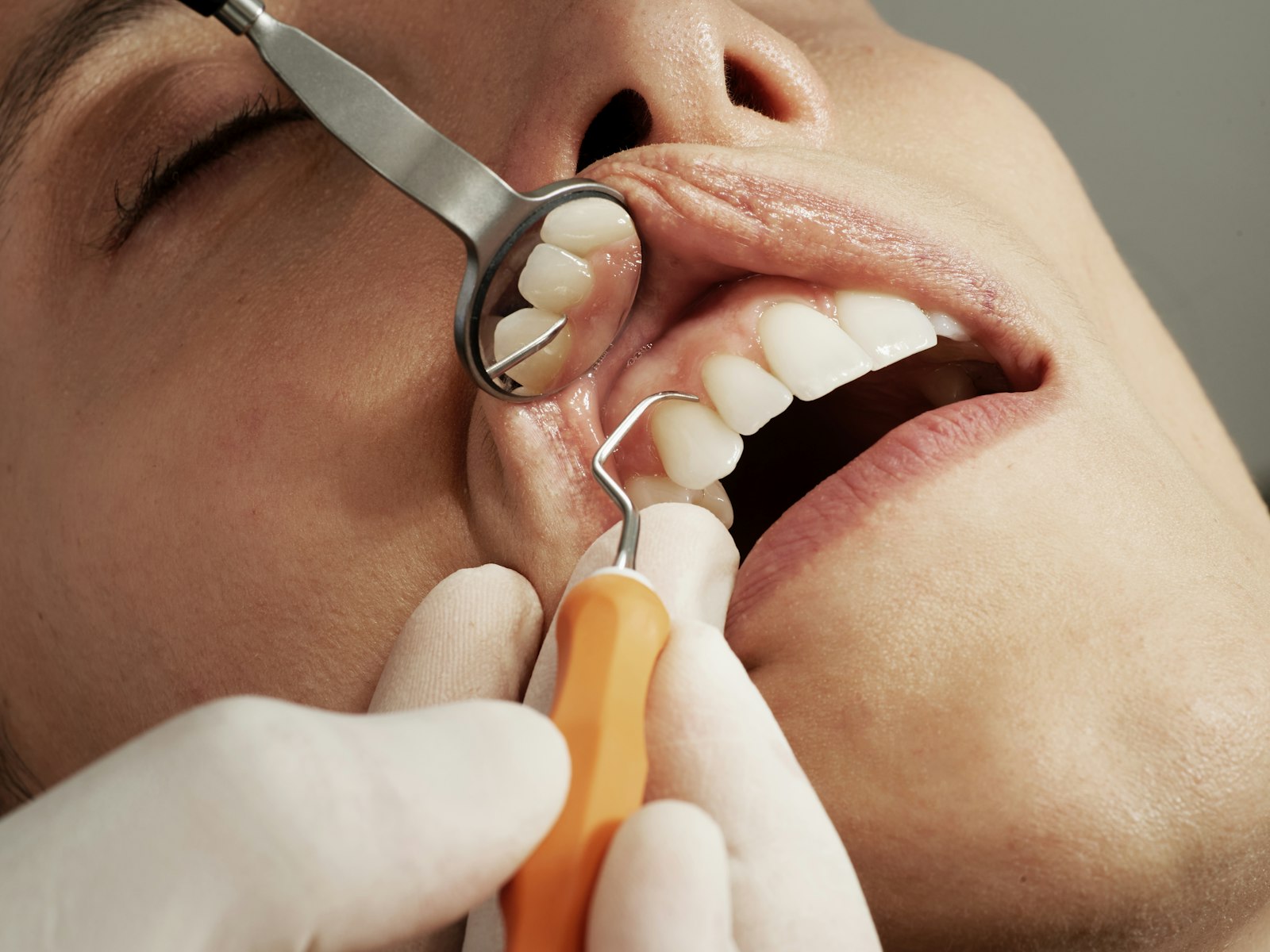
A dentist examines the lips, cheeks, tongue, floor of the mouth and palate as part of a routine check-up, and Cancer Council Australia advises telling your dentist about any mouth sores, swelling or change in colour, noting that dentists are trained to look for signs of mouth cancer.
What that examination is, and is not, is worth being clear about. It is opportunistic examination during a check-up. There is no national oral cancer screening programme in Australia, and describing a check-up as a screening programme would misrepresent it. A dentist can detect a change, examine it, document it and refer. Diagnosis is established by biopsy or specialist assessment, not in a dental chair. Our guide to oral cancer examination explains what is looked at and why.
The useful thing about a dental visit is timing. Most people see a dentist more regularly than anyone else who looks closely at their lips.
Common questions
What does lip cancer look like in the early stages?
Early changes are often unremarkable: a persistent scaly or rough patch, a small sore that does not heal, a firm thickened area, or blurring of the border between the red part of the lip and the surrounding skin. They are frequently painless. Because early appearances overlap with harmless conditions, anything persisting beyond three weeks is worth examining.
Can you get skin cancer on your lips?
Yes. The vermilion is skin that lacks most of skin's protective features, and around 90 per cent of lip, oral cavity and pharyngeal cancers are squamous cell carcinoma. Ultraviolet exposure is the main modifiable risk factor for lower lip cancer.
Why is lip cancer more common on the lower lip?
Because the lower lip faces upwards and receives far more direct ultraviolet light than the upper lip, which is partly shaded by the nose and by the angle of the face. The lower lip is the site in about 80 per cent of lip cancer cases, and ultraviolet exposure is much more important in lower lip cancer than upper lip cancer.
How long should a lip sore take to heal?
Most ordinary lip sores settle within a couple of weeks. A cold sore typically runs about 1 to 2 weeks and recurs in the same place. Anything that has not healed after three weeks should be examined, and sooner if it is growing, firm, numb, or accompanied by neck swelling or difficulty swallowing.
Do you need sunscreen on your lips?
The lips need ultraviolet protection just as other exposed skin does, and they have fewer natural defences. Cancer Council Australia recommends SPF30 or SPF50+ broad spectrum products whenever the UV index is 3 or above, applied 20 minutes before going out and reapplied every 2 hours. Reducing ultraviolet exposure addresses the main modifiable risk factor for lower lip cancer.
Have anything persistent looked at
If you have a patch, ulcer or rough area on your lip that has lasted more than three weeks, have someone look at it. The team at Lumi Dental in Melrose Park examines the lips and soft tissues as part of every general check-up and examination, and can refer on where appropriate. You can see what is currently available for new patients on our current offers page.
This article is general information only and is not a substitute for an examination. If you are concerned about a change on your lip or in your mouth, please speak with a dental practitioner or your GP about your own situation.