You have had a sore inside your mouth for a while now and you keep checking it with your tongue, wondering whether it is the ordinary kind or something to worry about. The deciding factor is mostly time. A routine ulcer is usually gone within 10 to 14 days, while a sore that is still there, or has changed, after 3 weeks should be looked at by a dentist or doctor even if it has stopped hurting.
Written by Dr James Tran, dentist at Lumi Dental.
Three weeks is the point to stop waiting
Pain is a poor guide to how serious a mouth sore is. Common ulcers are often very sore, yet they heal. The sores that need attention are frequently the ones that do not hurt much at all. That is why dentists focus on how long something has been present rather than how uncomfortable it is.
If an ulcer, lump, or red or white patch has not cleared or has changed within 3 weeks, book an examination. In most cases the cause turns out to be harmless, such as a sore that keeps being rubbed by a tooth. But a sore that will not heal is also one of the ways mouth cancer can first appear, and any problem is simpler to manage when it is found early.
Features that make a sore more concerning
Alongside the 3 week rule, see a dentist or doctor without delay if a sore or patch has any of these features:
- It is painless, or it was painful at first and has become numb.
- It is a red or white patch that does not rub off.
- The edge feels firm, raised or rolled, or there is a lump or thickening under it.
- It bleeds without an obvious reason.
- There is numbness of the lip, tongue or chin, a tooth has become loose for no clear reason, or you can feel a lump in your neck.
- It is growing or changing shape.
None of these means cancer is present. They mean the sore needs a professional look so that the cause can be confirmed. Smoking and regular alcohol use both raise the risk of mouth cancer, so people who smoke or drink should be especially quick to have a slow sore checked. It is also one reason that routine dental check-ups include an examination of the cheeks, tongue, floor of the mouth and throat, not only the teeth.
What happens when a sore needs a closer look
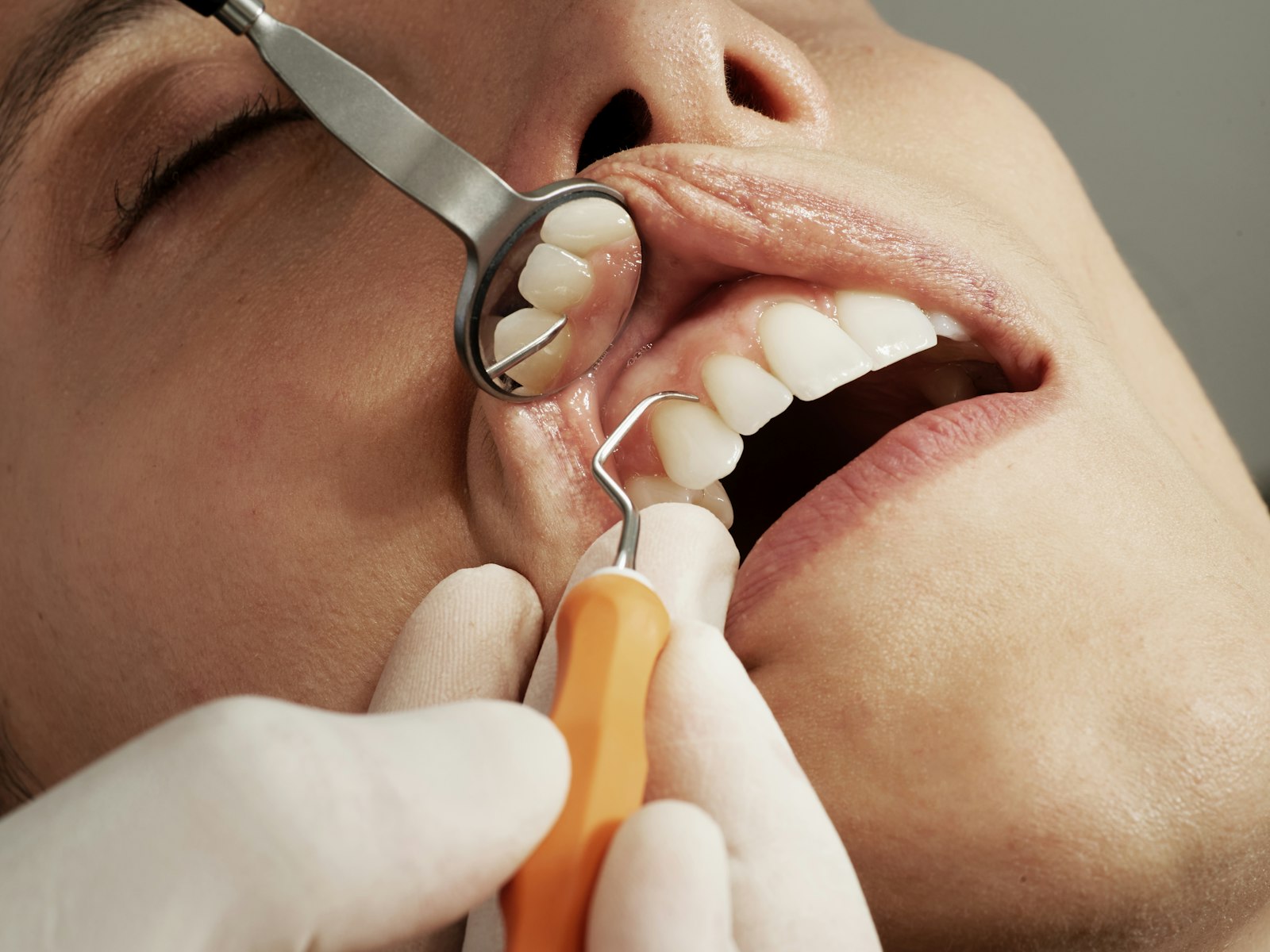
The dentist will ask how long the sore has been there and whether it has changed, then examine it and the surrounding tissue, feeling for any firmness and checking the neck. Often the cause is plain, for example a broken filling or a denture edge rubbing the same spot. Removing that cause and reviewing the area a week or two later may be all that is needed.
If the cause is not clear, a small sample of tissue may be taken so it can be examined under a microscope. This is called a biopsy, and it is the only way to know exactly what a persistent sore is. Our article on what to expect from an oral biopsy walks through the procedure and the recovery. Some patients are referred to an oral medicine specialist or oral surgeon for this step.
Ordinary ulcers and how to settle them
Most mouth ulcers have an everyday cause. Biting your cheek, a sharp tooth or filling, a denture that rubs, or brushing too hard can all break the lining. The common recurring kind, aphthous ulcers, are round sores with a pale centre and a red rim. Their exact cause is unclear, but stress, tiredness, hormonal changes, some foods and low iron, folate or vitamin B12 are often linked to them.
While an ordinary ulcer heals, comfort is the goal. Warm salt water rinses, an alcohol-free antiseptic mouthwash, and an ulcer gel or protective paste from the pharmacy can help. Stinging foods, such as acidic, spicy, salty or crunchy ones, are best avoided for a few days. Brush with a soft brush and try to leave the sore alone with your tongue. If a sharp tooth or denture is the culprit, your dentist can smooth or adjust it so the area can heal and the ulcer does not keep coming back in the same place.
Ulcers that keep coming back
Getting ulcers repeatedly is common and usually not dangerous, although it can wear you down. A diary of when they appear can show patterns linked to foods, stress, sleep or your menstrual cycle. If you get frequent crops, tell your dentist or GP. A blood test can check for low iron or vitamin levels and for conditions such as coeliac disease, and treating an underlying cause often means fewer ulcers. Our longer guide to mouth ulcer causes and treatment covers triggers in more detail.
A cold sore is a different problem
Mouth ulcers form inside the mouth and are not contagious. Cold sores usually appear on or around the lips, begin with tingling and then blisters, and are caused by a contagious virus. A blistering sore on the outer lip is more likely to be a cold sore. The two are compared side by side in our guide to cold sores and mouth ulcers. If what you have is a lump rather than an open sore, our article on oral fibromas and other mouth lumps may help.
Common questions
My ulcer does not hurt any more but it is still there. Is that good?
Not necessarily. A sore that has stopped hurting but has not healed still needs to be checked if it has been present for 3 weeks. Lack of pain does not mean a sore is harmless.
How quickly should a normal ulcer heal?
Most heal within about 10 to 14 days without treatment. Larger ulcers can take longer, which is one more reason to have anything still present at 3 weeks assessed.
Can a dentist check a mouth ulcer, or do I need a doctor?
Either can. Dentists examine the soft tissues of the mouth as part of a routine check-up and can assess a sore, arrange a biopsy or refer you on. If you also have symptoms elsewhere in the body, your GP is a good place to start.
If a mouth ulcer is not settling, the team at Lumi Dental in Melrose Park can take a look. You can read about our general dental care or see current offers on the deals page. This article is general information and not a substitute for personal dental or medical advice. Mouth ulcers can occasionally signal a more serious condition, so if you are worried about a persistent sore, please have it assessed.