If you have acid reflux or GORD, teeth whitening is usually still possible, but only once the reflux is controlled and the enamel has been assessed, and often with a gentler protocol than usual. Stomach acid has a pH of around 1.2, far below the level of about 5.5 at which enamel starts to dissolve, and a meta-analysis of 28 studies found dental erosion in about half of adults with GORD compared with about a fifth of people without it. Thinner enamel looks yellower, responds less to peroxide and zings more. The order matters: reflux first, erosion check second, whitening third.
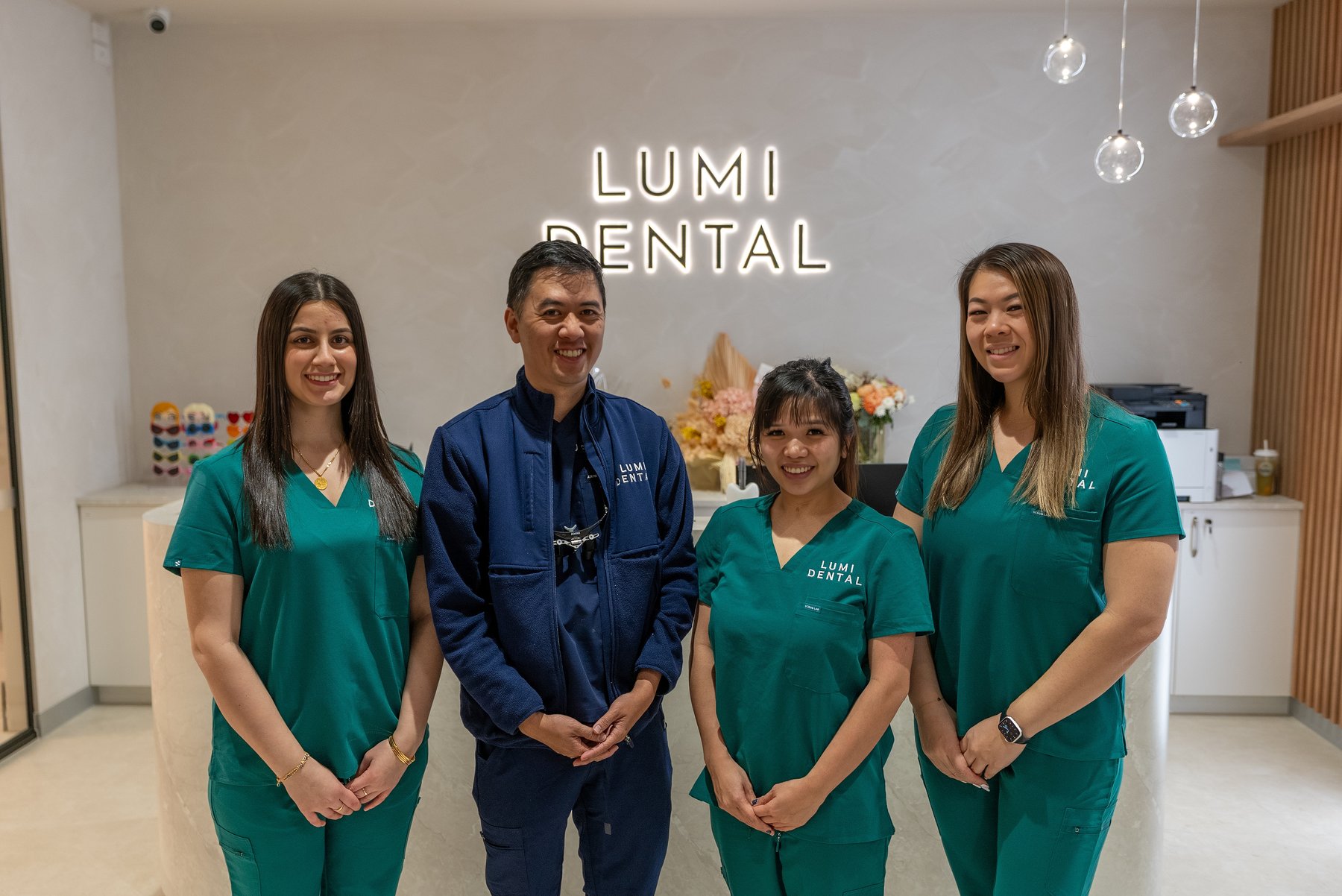
Written by Dr James Tran, BDent (University of Sydney), MICOI, GradDip (Oral Implants), general dentist at Lumi Dental in Melrose Park.
The short version
- Reflux acid reaches the inside surfaces of the upper front teeth first and hollows the chewing surfaces of molars, often without obvious heartburn.
- Eroded enamel is thinner, so the yellowish dentine beneath shows through. Whitening cannot replace enamel, so the change is smaller.
- Laboratory studies report that peroxide softens already-demineralised enamel, and that remineralising pastes can restore hardness afterwards.
- The dentist asks three questions: is the reflux controlled, is the erosion active or stable, and is dentine exposed. Our guide to whitening with enamel erosion covers the enamel side.
- When the answers are good, a lower-strength take-home gel, shorter wear and remineralising care usually make whitening sensible.
- Reflux medicines and lifestyle changes are GP territory; the dentist does not alter your medicines.
How reflux reaches your teeth
Gastro-oesophageal reflux disease is stomach acid leaking back up the food pipe, and healthdirect, the Australian government health service, defines it as reflux happening more than twice a week. It describes GORD as common in Australia, with pregnancy, hiatus hernia, smoking and excess weight among the risk factors. A review of GORD and tooth erosion puts the pH of stomach acid at around 1.2, well below the critical pH of about 5.5 at which enamel begins to dissolve, and notes that gastric acid displaces protective saliva from the tooth surface.
The pattern is distinctive. healthdirect notes that the inside surfaces are more likely to be affected when the acid comes from the stomach, so the backs of the upper front teeth thin first, unseen in a mirror. On molars the acid hollows the chewing surfaces into shallow cups. Night reflux matters most: the review reports that 40 to 81 per cent of people with reflux symptoms also have them during sleep, when lying flat helps acid travel upward and saliva flow is lowest. Some people have no heartburn at all, the so-called silent refluxers, and dentists may be the first to suspect the condition from unexplained erosion. Our article on acid reflux and your teeth covers the wider dental picture.
Why eroded enamel looks yellower and whitens less
Enamel is white and slightly translucent; the dentine under it is, in healthdirect's words, a yellowish-brown colour. As acid thins the enamel, more of that dentine shows through, so teeth look darker even though nothing has stained them. Whitening gel lightens enamel and dentine by breaking down stain molecules; it cannot add enamel back, and enamel does not grow back once it is gone. An eroded tooth therefore often whitens less than its neighbour, and a thinned front edge can look greyer afterwards because there is less white enamel to lighten; our article on translucent teeth explains that effect.
The second problem is sensitivity. Thin enamel puts peroxide closer to the dentine tubules, and acid-softened enamel is more porous. A laboratory study of enamel with demineralised white spot lesions found that both a 15 per cent carbamide peroxide home gel and a 40 per cent hydrogen peroxide in-office gel reduced surface hardness significantly. Another laboratory study reported that a single 35 per cent hydrogen peroxide session reduced enamel hardness by about 18 per cent, and that a week of daily remineralising paste restored it. These are bench results rather than clinical trials, so they are a reason for care rather than a prohibition.
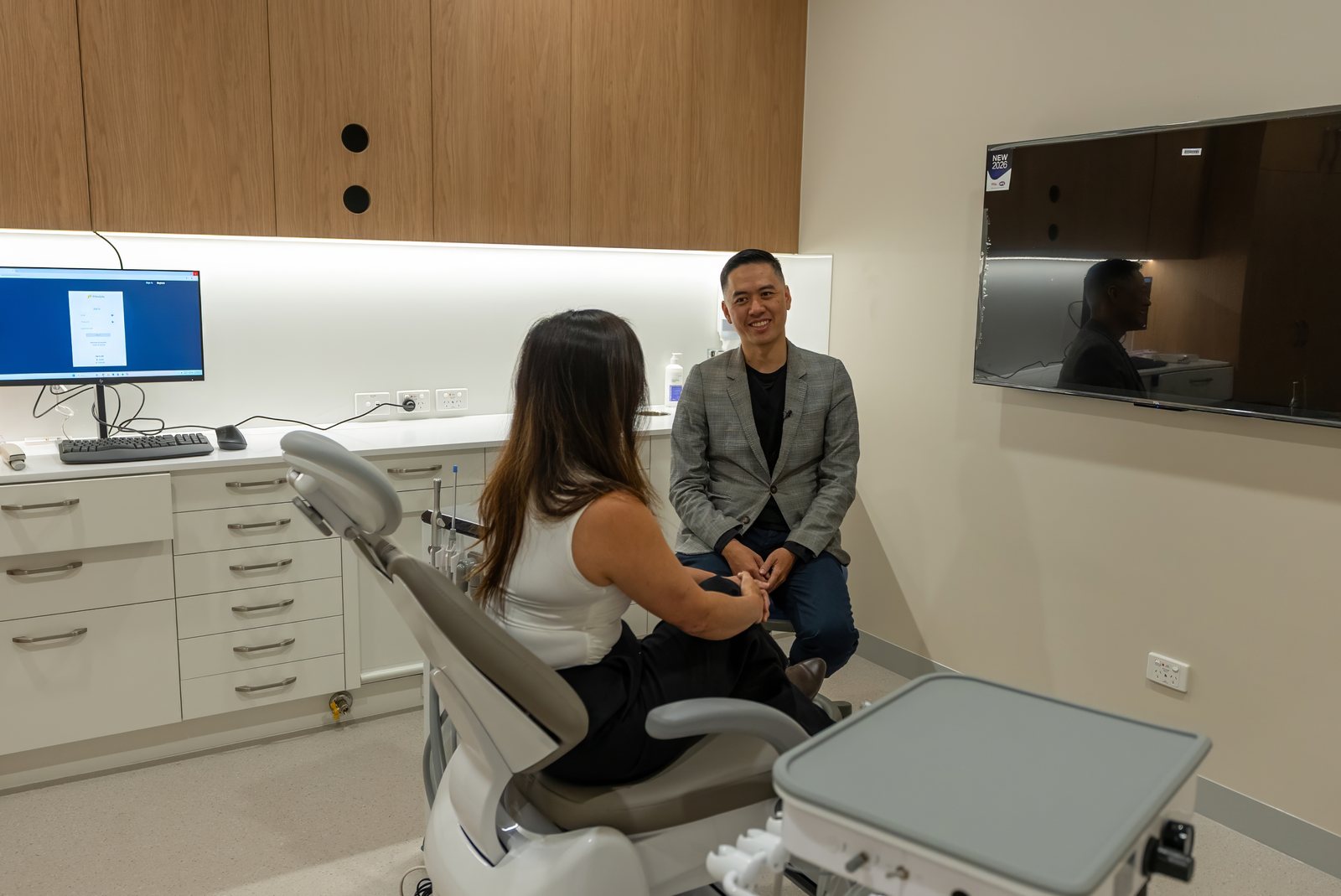
The three questions the dentist asks first
Is the reflux controlled?
If acid is still reaching the mouth most nights, whitening is pouring effort into enamel that is being dissolved faster than it can be protected, and sensitivity will be worse. Controlled means a GP has diagnosed the reflux, treatment is under way, and symptoms such as heartburn, a sour morning taste or a night cough have settled. If you have never discussed your reflux with a doctor, that is the first appointment to make.
Is the erosion active or stable?
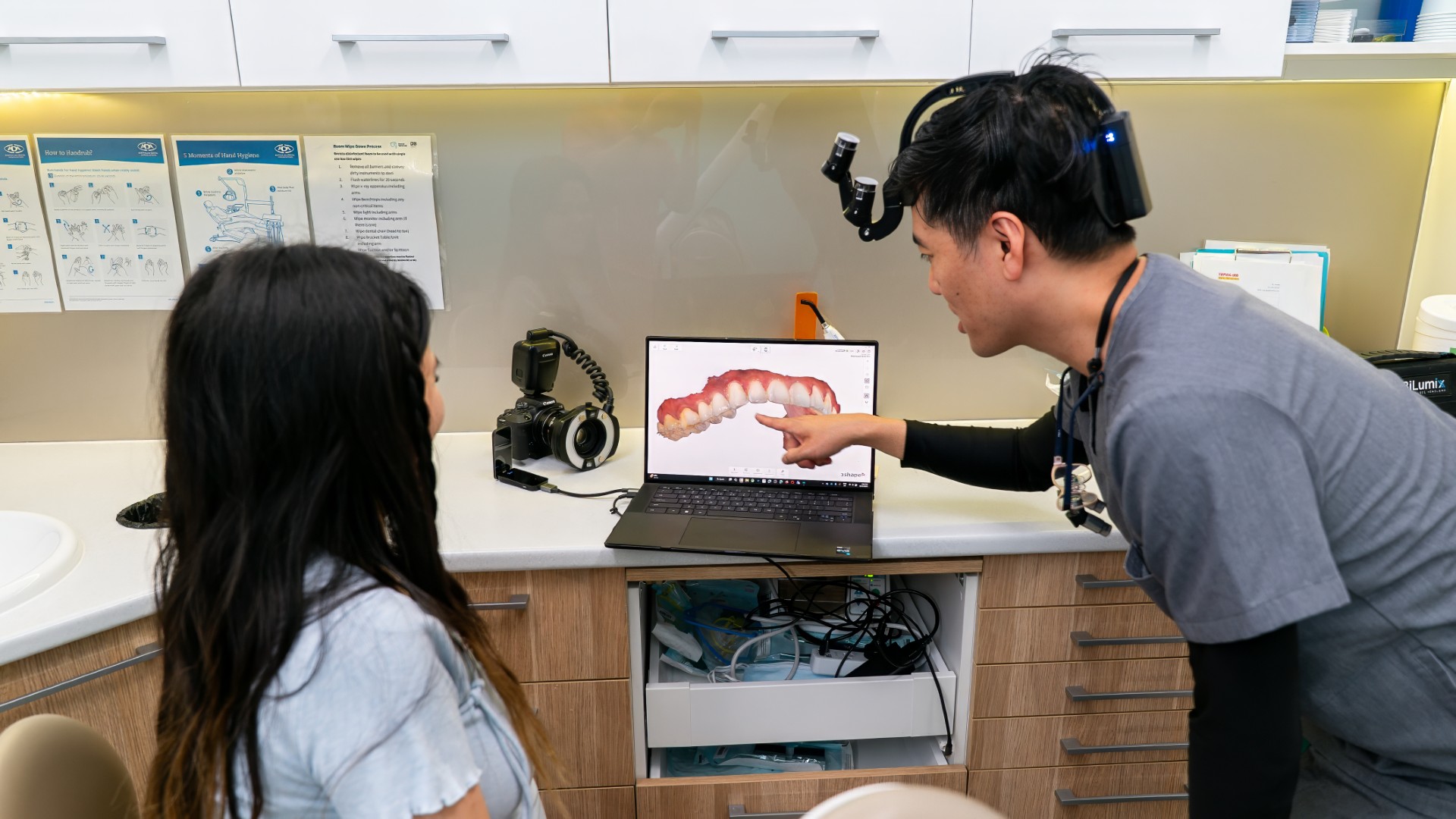
Active erosion has a frosted, matt look, sharp new edges and fillings that stand proud of the tooth surface. Stable erosion is smooth, slightly glossy and unchanged between visits. In my experience two 3D scans a year apart settle the question better than any single examination.
Is dentine exposed?
Yellow or brown patches on the backs of the upper front teeth, cupped molars with a darker centre, or shortened, chipped edges mean dentine is already showing. Whitening those surfaces gives little colour change and a lot of sensitivity; they usually do better with bonding or a veneer.
The single rule: control the reflux, assess the erosion, then whiten gently
When a patient I see has GORD under a GP's care, stable erosion and enamel still covering the visible surfaces, whitening goes ahead with a changed protocol. The table sets out what changes.
| Feature | Healthy enamel | Reflux-eroded enamel |
|---|---|---|
| Expected shade change | Usually several shades | Smaller, uneven where enamel is thinnest |
| Sensitivity risk | Common but short-lived | Higher; longer to settle |
| Gel | Standard take-home or in-chair strength | Lower-strength carbamide peroxide take-home gel |
| Wear time | As directed | Shorter sessions with rest nights |
| Preparation | Optional desensitising paste | Desensitising paste for two weeks plus remineralising paste or CPP-ACP cream |
| Aftercare | Fluoride toothpaste | Remineralising care; no brushing for 30 minutes after a reflux episode |
| Review | Shade check at two weeks | Shade check plus erosion monitoring by photograph or 3D scan |
Lower-strength gel worn for shorter periods still reaches the same end shade over a longer course, so nothing is lost except speed. Our article on fluoride and remineralising toothpaste after whitening covers the aftercare.

When whitening is declined, and when bonding or veneers do the job better
Three situations lead me to say not yet. Uncontrolled reflux, because the acid will undo the work and the sensitivity can be miserable. Active erosion, because softened enamel should be protected and monitored first. And exposed dentine on the surfaces you want lighter, because peroxide cannot make dentine look like enamel.
For cupped molars and shortened or thinned front edges, the better route is often to rebuild the missing enamel. Composite bonding adds tooth-coloured resin to worn edges and cups; porcelain veneers cover the front surface when the loss is more extensive. Any whitening of the surrounding teeth happens first, with the restoration matched about two weeks later once the shade has settled. Our article on whitening worn teeth with exposed dentine walks through that decision, and the composite bonding page describes the repair; a written quote follows an examination.
The GP side: what is theirs, not ours
Reflux treatment belongs to your doctor. Acid-suppressing medicines and how long to take them, lifestyle measures such as meal timing and raising the head of the bed, investigation of a hiatus hernia, and reflux in pregnancy are decisions for a GP or a gastroenterologist. healthdirect's advice on dental erosion is the same: if gastric reflux is causing it, discuss treatment with your doctor. A dentist's role is to recognise the pattern, record it and write to your GP with what the teeth show, never to stop or change a reflux medicine.
Two dental habits help straight away. healthdirect advises waiting at least 30 minutes before brushing after an acidic drink or vomiting, because acid leaves enamel softer for about 20 to 30 minutes, and rinsing with water or a fluoride mouthwash meanwhile. The same applies after a reflux episode in the night. Our article on whether to brush after vomiting covers the detail.
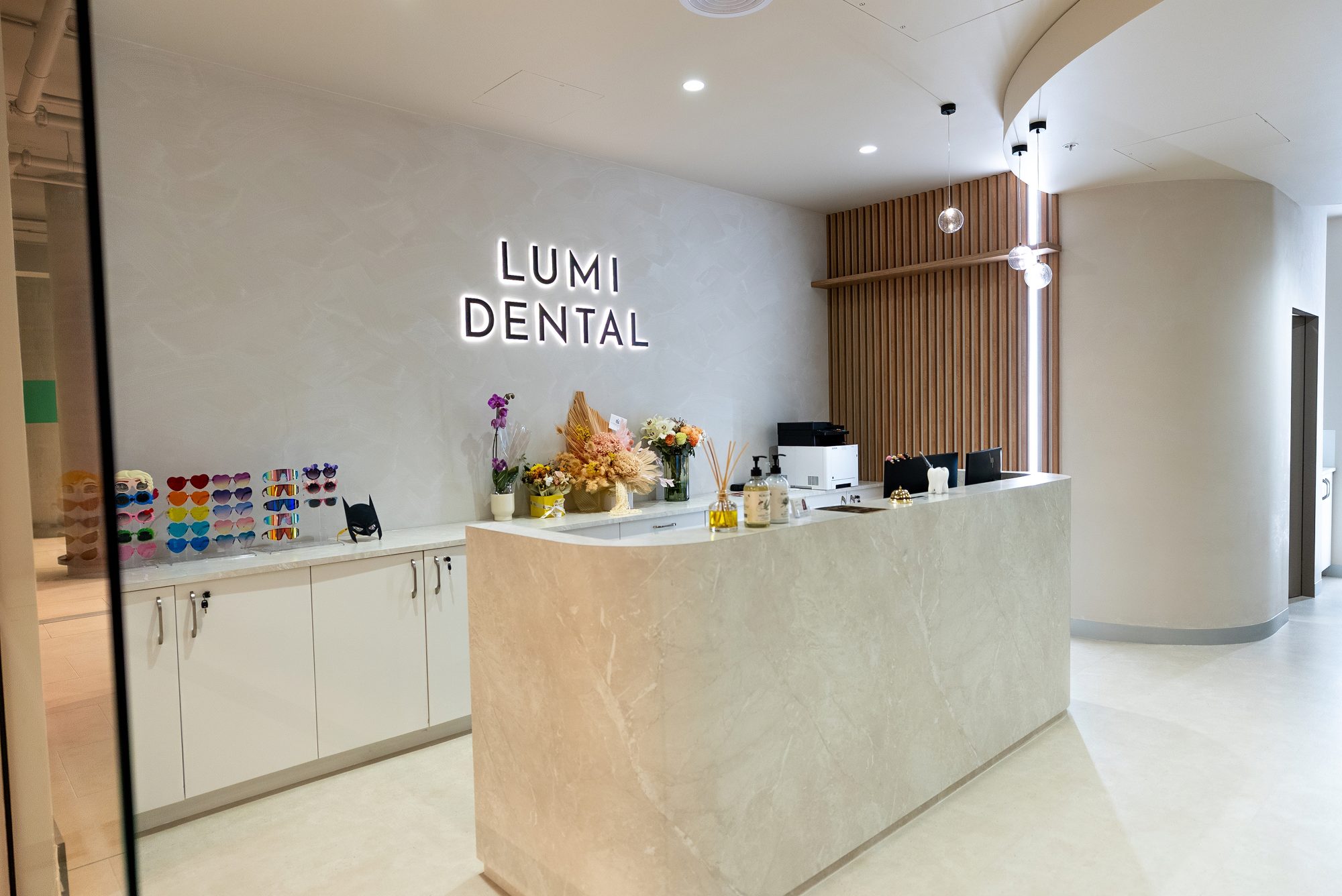
How we approach this at Lumi Dental
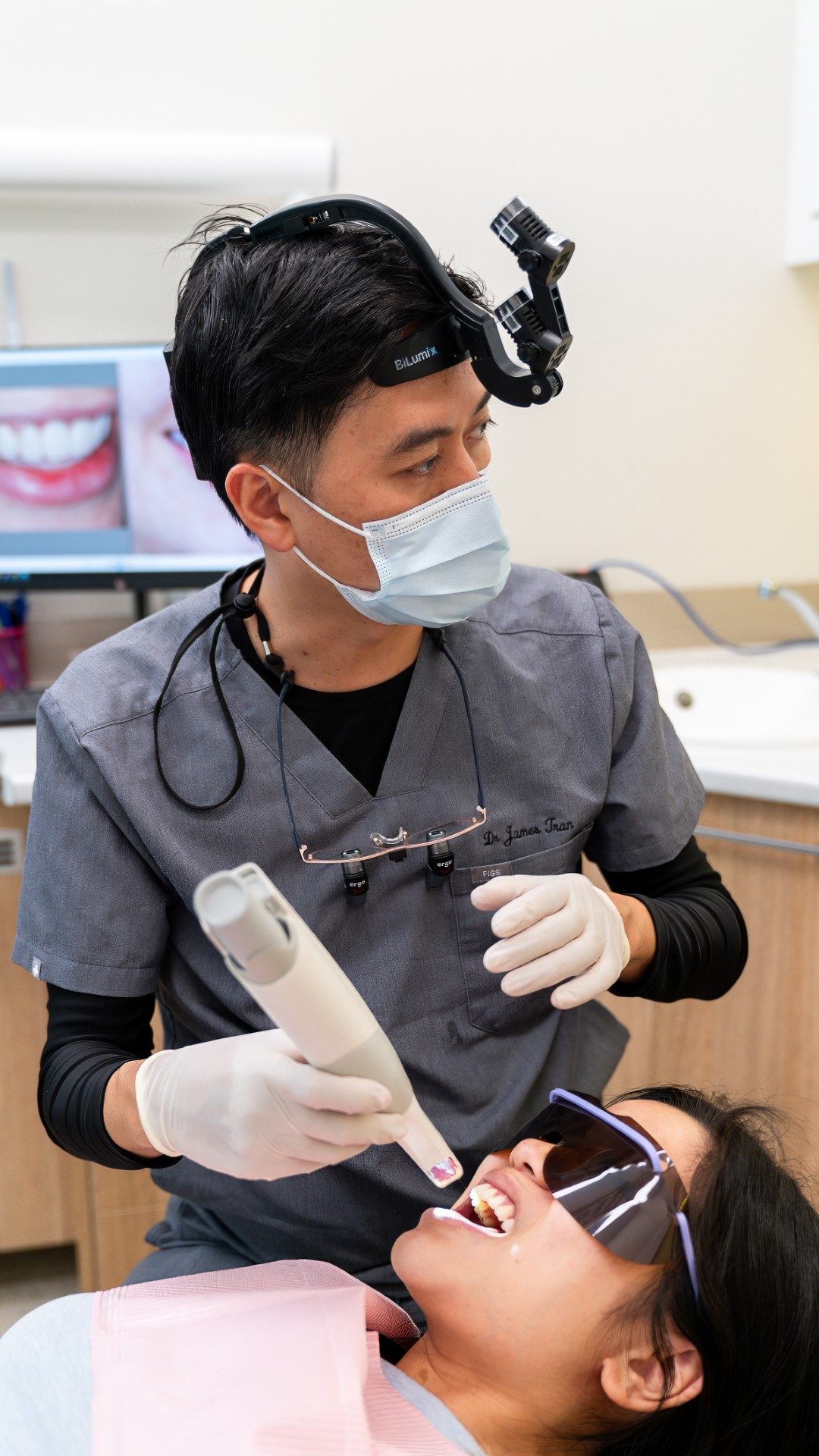
At Lumi Dental the dentist examines before any whitening is planned, and reflux is asked about directly, because the backs of the upper front teeth tell the story even when heartburn is absent. The in-house 3D intraoral scanner and clinical photographs record the erosion so it can be compared at the next visit. Where the pattern suggests reflux that has not been diagnosed, the team writes to your GP. The oral health therapists look after remineralising care and the desensitising prep, and the whitening options are named Lumi Home, Lumi Refresh and Lumi Radiance; the teeth whitening page has the details. Patients with reflux are usually guided towards the gentler take-home route.
Questions patients ask
Can you whiten your teeth if you have acid reflux?
Usually yes, once the reflux is being treated and a dentist has checked the enamel. Expect a gentler protocol: lower-strength take-home gel, shorter wear and remineralising care. If the reflux is uncontrolled or dentine is exposed, the dentist will ask you to wait or suggest bonding instead.
Does acid reflux make your teeth yellow?
It can. Acid thins the enamel, and the dentine beneath is yellowish-brown, so the teeth look darker without any stain. The backs of the upper front teeth and the chewing surfaces of molars are affected first.
Will whitening make reflux-damaged teeth more sensitive?
It is more likely to, because thinner and softer enamel lets peroxide reach the dentine more easily. Two weeks of desensitising toothpaste beforehand, a lower-strength gel and rest nights reduce the risk.
Should I treat my reflux before whitening my teeth?
Yes. Whitening teeth that are still bathed in acid gives a poorer, shorter-lived result and more sensitivity. See your GP first, let the symptoms settle, then have the enamel assessed.
Can whitening fix the see-through edges on my front teeth?
No. Translucent edges mean the enamel there is thin, and whitening can make them look greyer by contrast. Composite bonding or veneers rebuild the edge; any whitening is done first and the repair matched afterwards.
Thinking about whitening? Complimentary cosmetic consult in Melrose Park
If you have reflux and are weighing up whitening, the team at Lumi Dental can assess the enamel, record where the acid has reached and plan a protocol to suit. Book a complimentary cosmetic consult at Melrose Central in Melrose Park, or read about teeth whitening at Lumi Dental. Patients visit from Ryde, Parramatta, Ermington and Rydalmere, with on-site parking.
Sources
- healthdirect: Dental erosion
- healthdirect: GORD (reflux), symptoms, treatments and causes
- Yanushevich OO and colleagues. Prevalence and risk of dental erosion in patients with gastroesophageal reflux disease: a meta-analysis. Dentistry Journal (PMC)
- Ranjitkar S and colleagues. Gastroesophageal reflux disease and tooth erosion. International Journal of Dentistry (PMC)
About the author

Dr James Tran is a general dentist at Lumi Dental in Melrose Park. He holds a BDent from the University of Sydney and a Graduate Diploma in Oral Implants, and is a Member of the International Congress of Oral Implantologists (MICOI).
This article is general information only and is not a substitute for an examination and individual advice from a registered dental practitioner. Suitability for any treatment varies from person to person.