

Vaping is not a safe alternative to smoking when it comes to dental implants: nicotine slows bone and gum healing however it is delivered, the suction and heat of a vape disturb a fresh wound, and early research on vapers with implants shows more bone loss and deeper gum pockets than in non-smokers. A systematic review in the Journal of Dentistry called e-cigarettes a potential risk factor for the healing process and the results of implant treatment, similar to cigarettes. Our articles on smoking and dental implants and whether smokers can have implants each give vaping a section; this piece goes deeper.
Written by Dr James Tran, BDent (University of Sydney), MICOI, GradDip (Oral Implants), general dentist at Lumi Dental in Melrose Park.
The short version
- Vapour is mostly propylene glycol, glycerol and flavourings, usually with nicotine. Each part affects a healing mouth differently.
- Nicotine narrows blood vessels and acts directly on bone-forming and gum-repairing cells. A patch, a pouch or a vape delivers the same molecule.
- Suction and heat in the first days can disturb the clot and pull at stitches, the mechanism behind dry socket.
- Vapers with implants show more bone loss and deeper pockets than non-smokers in small studies, with less bleeding, which can hide inflammation.
- Nicotine-free vapes remove one problem and keep the others. Patches, arranged with your GP, are the usual bridge through healing.
What is in vapour
An e-liquid is a solvent base of propylene glycol and glycerol, flavourings, and usually nicotine. A review of e-cigarette effects on oral health cites an analysis of 16,839 e-liquids that found 219 distinct ingredients, 213 of them flavourings, and notes that heating adds breakdown products and trace metals.
The same review summarises laboratory work on human gum fibroblasts, the cells that knit a wound closed: exposed to e-cigarette aerosol condensate they showed more cell death and less proliferation, migration and wound closure. This is cell-culture evidence, not a clinical trial, but these are the cells an implant surgeon relies on in the first two weeks.
Nicotine and bone healing: the delivery device does not matter to an osteoblast
An implant succeeds when bone grows onto its surface, a process called osseointegration, and the bone cells doing that work carry nicotinic receptors. A systematic review of 62 studies on nicotine and bone healing, written for joint replacement surgeons but directly relevant here, reports that nicotine slows osseointegration of titanium implants in animal models, reducing implant stability and bone-to-implant contact, and that higher doses inhibit osteoblast proliferation. Activation of those receptors impairs new blood vessel formation and reduces type I collagen, the scaffold of both bone and gum.
The review is careful about two things: the effect is dose-dependent, and there are almost no human studies separating nicotine from the rest of tobacco smoke. One animal study using vaporised nicotine found no difference in bone healing, so the picture is not settled. Nicotine also constricts blood vessels, the main reason smokers heal more slowly. None of that changes with the device.
The first days: suction, heat and the clot
Whatever the liquid contains, a vape is drawn on. The negative pressure that lifts a clot out of an extraction socket and causes dry socket acts on an implant site in the same way, and the Better Health Channel, produced with the Australian Dental Association's Victorian branch, lists dry socket, increased pain after oral surgery and less success with dental implants among the healing problems of vaping and smoking. Warm aerosol dries a sutured flap, and pursing the lips tugs at stitches; a lifted edge can expose a graft or membrane. This applies to nicotine-free vapes too, because the clot cannot tell what is in the liquid. Our guide to infection versus normal healing in the first two weeks describes what a settled site looks like.
Dry mouth and gum inflammation
Better Health describes dry mouth as the main oral effect of vaping, leading to taste changes and a higher risk of decay, erosion, sensitivity and gum disease, partly because propylene glycol and glycerol vaporise into acidic compounds and sweet flavourings leave a sticky film. It adds that vaping alters the blood supply to the gums, blunting the response to plaque, and that gum disease risk rises with the amount of nicotine consumed. The gum around an implant has a weaker seal than the gum around a tooth, so it feels those changes first. Our article on nicotine pouches and your gums covers the smoke-free cousin of the same problem.
What the research shows so far, and how thin it is
The clinical evidence is a handful of cross-sectional studies, mostly of men, comparing vapers with never-smokers. A meta-analysis in an oral surgery journal pooled four such studies, 327 participants with implants in place for at least a year, and found greater marginal bone loss, plaque and probing depth and lower bleeding on probing in the vapers, with a mean difference in bone loss of 0.89 mm at the distal implant surfaces and raised inflammatory markers. The Journal of Dentistry review, pooling seven studies, reached the same conclusion: more probing depth, more bone loss, more IL-1 beta, less bleeding.
Two cautions. Less bleeding is not good news; it is nicotine's vasoconstriction masking inflammation, so a vaper's peri-implantitis can look quieter than it is. And these are small studies with no failure rate attached. For scale, a meta-analysis covering around 150,000 implants reported about 2.4 times the odds of failure in smokers; nobody has a comparable number for vaping, and in my experience it is wise to plan as if the risk sits between non-smoker and smoker. Our guide to peri-implantitis treatment explains what bone loss around an implant means.
The single rule: if you vape, stop before surgery and stay off until the gum has sealed
Vaping is a planning factor, not a bar to treatment. The rule I give patients is to stop before the surgery date, stay completely off for the first two weeks while the gum seals, and treat the bone-healing weeks that follow as the chance to stay off for good.
| Stage | What is usually suggested | Why |
|---|---|---|
| Before surgery | Stop vaping well ahead of the date; ask your GP or pharmacist about patches | Blood flow to gum and bone improves as nicotine clears |
| First 72 hours | No vaping of any kind, nicotine-free included | The clot forms and the flap seals; suction and heat are the risk |
| Days 3 to 14 | Still off; a patch rather than anything inhaled | Stitches and gum closure |
| Weeks 2 to 12 | Stay off if possible; if you resume, tell the team | Bone is growing onto the implant surface; nicotine slows it |
| After the crown | Clean daily, attend reviews every three to six months, report swelling | More bone loss with less bleeding means problems can hide |
Nicotine-free vapes, patches and the Australian rules
A nicotine-free vape removes the vasoconstriction and the direct effect on bone cells. It keeps the suction, heat, drying and solvents, and Better Health notes that liquids labelled nicotine-free can still contain harmful substances. It is a step down for the later weeks, not an option for the first days.
Nicotine replacement therapy is the usual bridge. A patch delivers a steady, known dose without suction, heat or aerosol. It is still nicotine, so not neutral for bone, but it is the better option, and the product and dose sit with your GP or pharmacist. Under the reforms described by the Therapeutic Goods Administration, non-therapeutic and disposable vapes are banned and therapeutic vapes are supplied through pharmacies: those with 20 mg/mL of nicotine or less to adults after a pharmacist consultation, with a prescription needed for under-18s or higher strengths, and flavours limited to unflavoured, mint, menthol and tobacco. So a pharmacist is already in the loop, which helps when the goal is to come off it around surgery.
How we approach this at Lumi Dental
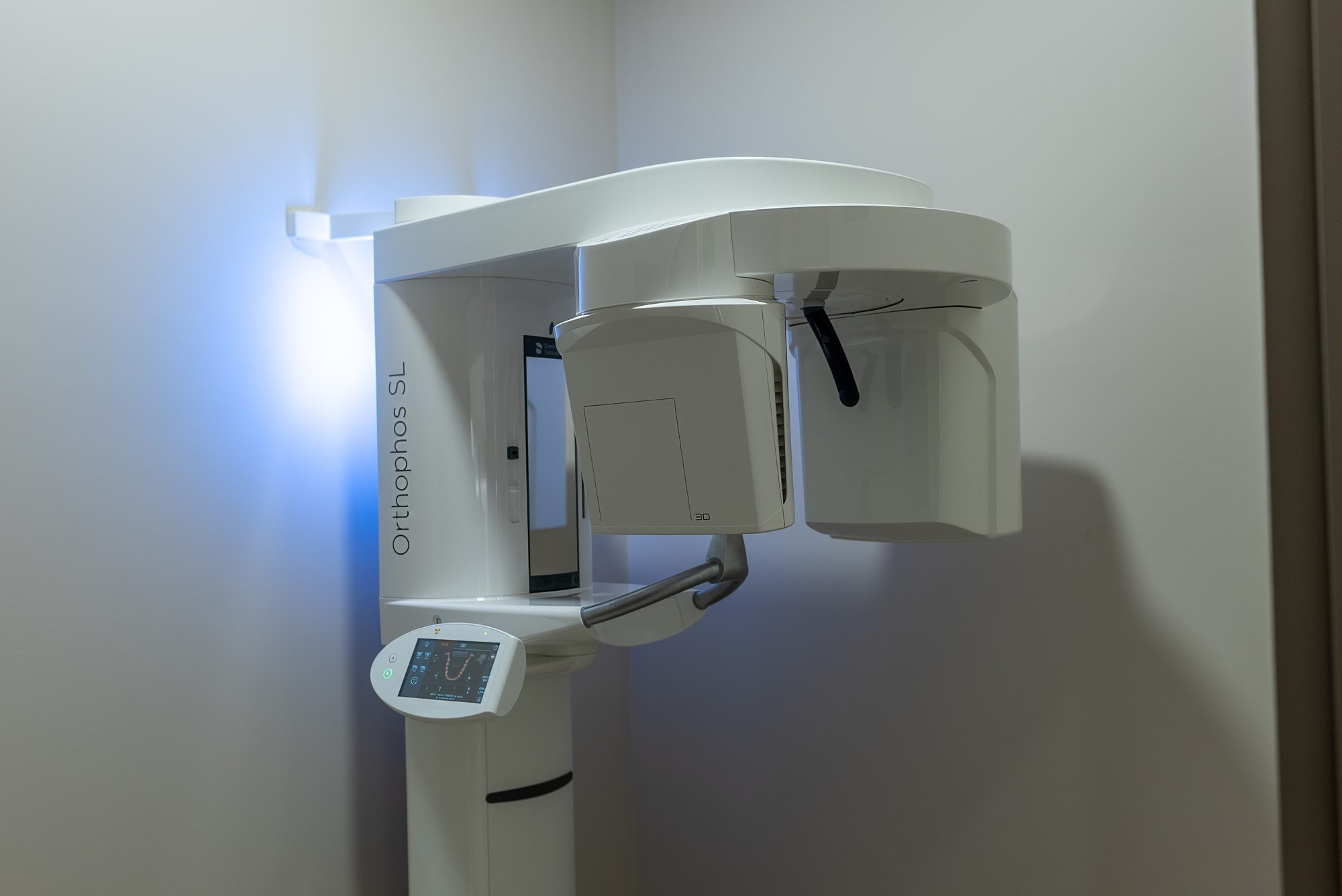
At Lumi Dental the implant consultation starts with a medical history, and vaping is asked about as plainly as smoking, nicotine-free devices and pouches included; Better Health's advice is to tell your dentist if you vape, and the team would rather know than guess. The dentist examines, takes a 3D intraoral scan and an in-house 3D X-ray (CBCT) to measure the bone, the oral health therapists settle any gum inflammation with gum therapy, and the team at Lumi Dental writes to your GP or specialist before planning surgery. Patients who find surgery hard to face can ask about IV sedation, which is available at the practice. Read more about dental implants at Lumi Dental.
Questions patients ask
Can you get dental implants if you vape?
Usually, yes. Vaping is a risk factor the team plans around, like smoking, not a reason to refuse treatment. Expect to be asked to stop before surgery and through early healing.
How long after implant surgery can you vape?
Not at all in the first 72 hours, and ideally not for the first two weeks while the gum seals. After that, the longer you stay off during bone healing the better. Our implant recovery timeline sets out the stages.
Is vaping as bad as smoking for dental implants?
Research has not answered this with a number. Smokers have roughly 2.4 times the odds of implant failure in a large meta-analysis; vapers show more bone loss and deeper pockets than non-smokers in small studies, and no failure rate has been published.
Does a nicotine-free vape affect implant healing?
Less, but not zero. The suction, heat and drying remain, and they are the main problem in the first days. It is a reasonable step down later in healing, not a free pass in the first week.
Can you use nicotine patches or gum after implant surgery?
Patches are the option most often discussed, because they deliver nicotine without suction or heat; nicotine gum means chewing near the surgical site. Your GP or pharmacist sets the product and dose, and the aim is to step down.
Considering dental implants? Complimentary implant consult in Melrose Park
If you vape and are wondering whether an implant is still an option, the team at Lumi Dental in Melrose Park can examine the site, measure the bone on a 3D X-ray and plan the timing around your quitting support. Contact Lumi Dental to book a complimentary implant consult, or read about dental implants at the practice. Patients visit from Ryde, Parramatta, Ermington and Rydalmere, with on-site parking.
Sources
- PubMed (Journal of Dentistry): The impact of electronic cigarettes on peri-implant health, a systematic review and meta-analysis
- PMC: The effect of non-tobacco nicotine on bone healing, a systematic review and application to total joint arthroplasty
- Better Health Channel (Victorian Department of Health): Effects of smoking and vaping on oral health
- Therapeutic Goods Administration: Changes to the regulation of vapes
About the author

Dr James Tran is a general dentist at Lumi Dental in Melrose Park. He holds a BDent from the University of Sydney and a Graduate Diploma in Oral Implants, and is a Member of the International Congress of Oral Implantologists (MICOI).
This article is general information only and is not a substitute for an examination and individual advice from a registered dental practitioner. Suitability for any treatment varies from person to person.








