

Saliva flow falls to its lowest point of the day while you sleep, so a slightly dry mouth on waking is normal; waking up with a dry mouth that is parched, sticky or sore most nights means something has tipped that normal dip over the edge, and what helps depends on which thing it is. Better Health Channel, the Victorian government health site, reports that around 10% of the general population and 25% of older people have dry mouth, and calls it a symptom of an underlying problem rather than a condition in itself.
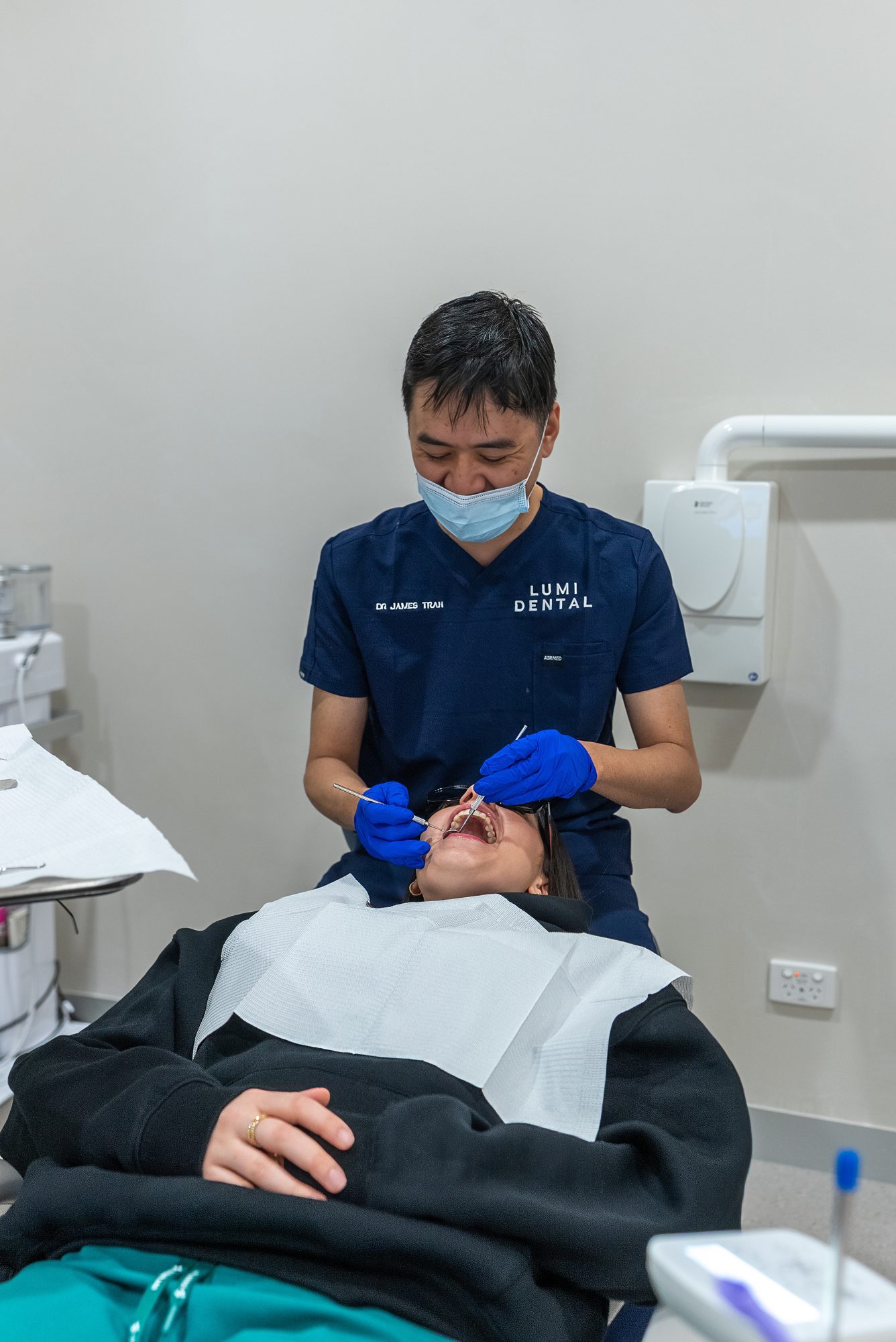
Written by Dr James Tran, BDent (University of Sydney), MICOI, GradDip (Oral Implants), general dentist at Lumi Dental in Melrose Park.
The short version
- Saliva follows a daily rhythm: highest in the late afternoon, lowest during sleep. A little dryness at 3 am is built in.
- The clue is in the pattern. Dry lips and throat point to mouth breathing; snoring or gasping to sleep apnoea; dryness that arrived with a new tablet to the medicine.
- Water by the bed, nasal breathing, a humidifier, no alcohol late, sugar-free gum after dinner and a saliva gel at bedtime help most people.
- Snoring with pauses, dryness all day with dry eyes, or a suspected medicine need a GP first. A dentist never changes a medicine; the prescriber does.
- Daytime dryness has its own guide: our article on dry mouth causes and treatment covers the wider picture.
Why every mouth is drier at night
A review in the Journal of Prosthetic Dentistry puts resting whole saliva in healthy adults at about 0.3 to 0.4 mL per minute, with anything under 0.1 mL per minute classed as hyposalivation, the clinical term for too little saliva. The same review notes that saliva flow follows a circadian rhythm, peaking in the late afternoon and reaching its lowest rate during sleep. Add seven or eight hours without chewing or swallowing much, and the mouth you wake with is always drier than the one you went to bed with.
So I do not treat "a bit dry when I wake" as a problem on its own; the questions I ask are whether it wakes you, whether you need water to speak, and whether it lasts until mid-morning.

The single rule: a dry mouth at night is a clue, so find what tipped it
Because flow during sleep is already low, a blocked nose, a bedtime tablet, two glasses of wine or a hot night is enough to push the mouth from damp to parched. Work down the list from the most common, and keep the GP involved for anything about breathing or medicines.
The cause ladder, and the clue that points to each
Dry lips and a dry or sore throat on waking
The NHS lists breathing through the mouth at night as a main cause of dry mouth, usually because the nose is blocked or the mouth falls open in sleep. The NHS notes that a pharmacist may suggest a decongestant for a blocked nose; whether that or a saline rinse suits you is a question for the pharmacist or GP, not the dentist.
Your partner says you snore, gasp or stop breathing
healthdirect lists waking up with a dry mouth or a headache among the symptoms of obstructive sleep apnoea, alongside pauses in breathing, loud snoring, gasping, mouth breathing and daytime sleepiness. Diagnosis and treatment sit with the GP and a sleep physician, who can arrange a sleep study at a clinic or at home. Our guide to snoring versus sleep apnoea explains the difference.
The dryness started with a new tablet
Better Health Channel reports that about 600 medicines are known to cause dry mouth, including antihistamines, blood pressure medicines, sedatives, decongestants, pain relievers and antidepressants. Our article on antihistamines and dry mouth covers the most common over-the-counter culprit. The NHS is clear that you should not stop a prescribed medicine without medical advice; any change is the prescriber's decision.
Evening alcohol, caffeine, smoking or too little water
Better Health Channel lists alcohol, caffeinated drinks, cigarettes and e-cigarettes among the things that aggravate dryness, and notes that too little fluid makes saliva thick as well as scarce. Dehydration is first on the NHS list.
You use a CPAP machine
Patients I see on CPAP often describe a dry mouth when the mask leaks or the mouth drops open with a nasal mask. Humidifier settings, mask style and fit are adjustments for the sleep clinic or supplier.
Dry all day, and dry eyes too
Better Health Channel names Sjögren's disease and diabetes among the causes of persistent dryness, and the NHS advises seeing a GP if dry mouth comes with dry eyes or needing to pass urine often. Our article on Sjögren's syndrome and dry mouth explains what the GP looks for.
| What you notice | Most likely cause | First step |
|---|---|---|
| Dry throat and cracked lips, worse with a cold | Mouth breathing or a blocked nose | Pharmacist or GP about the nose |
| Snoring, gasping, pauses, tired by day | Possible sleep apnoea | GP for a sleep study |
| Dryness began after a new medicine | Medicine side effect | Tell the prescriber; do not change it yourself |
| Worse after an evening drink or late coffee | Alcohol or caffeine | Move them earlier or cut back |
| Dry mouth and dry eyes all day | Sjögren's or another condition | GP review |
What dry nights do to your teeth, gums and breath
Saliva neutralises plaque acids, carries calcium and phosphate back into enamel and rinses food away. Better Health Channel notes that dry mouth significantly increases the risk of tooth decay, and that people with dry mouth tend to get decay along the gum line, on the root surface, and on the lower front teeth, which are normally bathed by saliva from beneath the tongue. Roots are dentine, which resists acid less well than enamel, so these cavities move quickly; I usually spot them on X-rays before the patient feels anything.
The other costs are less serious but more noticeable: thick saliva on waking, cracked lips, a burning tongue, oral thrush, and the stale breath of bacteria multiplying overnight; our article on morning breath covers that side.
What helps tonight
- Keep water by the bed and sip through the day rather than catching up at bedtime.
- Run a humidifier in the bedroom, one of Better Health Channel's self-care suggestions, and deal with the blocked nose so you can breathe through it.
- Chew sugar-free gum after dinner to stimulate your own flow, then brush.
- Use fluoride toothpaste and an alcohol-free mouthwash; the NHS and Better Health Channel both warn that alcohol-containing rinses aggravate dry tissue.
- Apply a saliva substitute gel last thing at night, use a greasy lip balm, and take dentures out overnight.
| Pharmacy product type | What it does | When it suits |
|---|---|---|
| Saliva substitute gel | Coats and lubricates; outlasts a rinse | Last thing at night |
| Dry mouth spray or rinse | Short-lived moisture | Beside the bed for night waking |
| Sugar-free gum or lozenges | Stimulate your own saliva | After meals, not in bed |
| Dry mouth toothpaste and alcohol-free mouthwash | Clean without stinging | Twice daily |
| High-fluoride toothpaste (dentist-prescribed) | Protects exposed roots from decay | At night, as directed |
One caution from the NHS: avoid acidic artificial saliva products if you still have your own teeth.

When to see a GP first
- Snoring with pauses, gasping or choking in sleep, or sleepiness during the day.
- Dryness all day, especially with dry or gritty eyes or joint pain.
- Dryness that began with a prescribed medicine.
- A mouth still dry after a few weeks of self-care and pharmacy products, the NHS threshold.
- A painful, red, swollen or bleeding mouth, or sore white patches.
How we approach this at Lumi Dental
At a check-up for dry mouth at night the dentist examines first: the lips, cheeks and floor of the mouth, how quickly saliva pools, and the X-rays where root decay hides. The team asks about medicines, sleep and what a partner has noticed, and writes to your GP when the picture points to sleep apnoea, a medicine or a salivary condition, since those decisions belong with the doctor. The hygiene team of oral health therapists then helps with cleaning technique, fluoride and products. See general dentistry at Lumi Dental and check current hours on the contact page.
Questions patients ask
Why do I wake up with a dry mouth every morning?
Saliva flow is lowest during sleep in everyone, so some dryness on waking is normal. A mouth that is parched every morning usually has an added cause: mouth breathing, snoring or sleep apnoea, a medicine taken at night, evening alcohol or too little fluid.
Is a dry mouth at night a sign of sleep apnoea?
It can be. healthdirect lists waking with a dry mouth or a headache among the symptoms of obstructive sleep apnoea, but on its own it is more often mouth breathing. With loud snoring, witnessed pauses, gasping or daytime sleepiness, see your GP, who can arrange a sleep study.
Can a dry mouth at night cause tooth decay?
Yes. Without saliva overnight, plaque acids are not neutralised and the root surfaces and lower front teeth lose their usual protection. Fluoride and regular checks matter more for anyone with dry nights.
Should I tape my mouth shut at night to stop mouth breathing?
I do not suggest it. If the nose is blocked, taping the mouth is unsafe, and if snoring or pauses are part of the picture, the real question is sleep apnoea, which needs a GP rather than tape. Our article on mouth breathing in adults explains the usual causes.
What is the best thing to use for a dry mouth at night?
For most people a saliva substitute gel at bedtime, water by the bed and an alcohol-free mouthwash make the biggest difference, with a humidifier if the air is dry.
Dry mouth at night? Book a check-up at Lumi Dental in Melrose Park
If you wake with a dry, sticky mouth most mornings, the team at Lumi Dental can check your teeth for the early signs and help you work out the likely cause. Book a check-up at Lumi Dental at Melrose Central in Melrose Park, or see the current deals page. Patients visit from Ryde, Parramatta, Ermington and Rydalmere, with on-site parking.
Sources
- Better Health Channel: Dry mouth
- NHS: Dry mouth
- healthdirect: Obstructive sleep apnoea (OSA)
- Uchida H and Ovitt CE. Novel impacts of saliva with regard to oral health. Journal of Prosthetic Dentistry (PMC)
About the author

Dr James Tran is a general dentist at Lumi Dental in Melrose Park. He holds a BDent from the University of Sydney and a Graduate Diploma in Oral Implants, and is a Member of the International Congress of Oral Implantologists (MICOI).
This article is general information only and is not a substitute for an examination and individual advice from a registered dental practitioner. Suitability for any treatment varies from person to person.








