


Morning breath happens because saliva flow drops while you sleep, so the bacteria on your tongue and between your teeth multiply for hours undisturbed and release sulphur compounds; it is normal, and it should clear once you brush and have something to drink. healthdirect puts it simply: bad breath on waking is normal and usually goes after a drink or a clean, while breath that does not improve during the day may signal a dental or medical problem. Research reviews report that more than 85 percent of persistent bad breath starts inside the mouth, with the coating on the back of the tongue the largest single source, so the fix is mostly about what you do the night before.
Written by Dr James Tran, BDent (University of Sydney), MICOI, GradDip (Oral Implants), general dentist at Lumi Dental in Melrose Park.
The short version
- Overnight your mouth makes far less saliva, so bacteria are not rinsed away and their waste builds up until morning.
- The back of the tongue is where most of the smell comes from; our guide to tongue cleaning and bad breath covers the technique.
- The evening routine matters more than the morning one: brush, clean between the teeth, clean the tongue, then nothing but water.
- Mouth breathing, snoring, alcohol, smoking, late eating and some medicines all make morning breath worse.
- The single rule: gone by mid-morning after brushing is morning breath; still there at lunch is something else.
- All-day breath with bleeding gums, a coated tongue or a dry mouth needs an examination, not a stronger mouthwash.
What happens in your mouth overnight
Saliva is the mouth's cleaning system, rinsing food debris and bacteria off the teeth and tongue through the day. healthdirect notes that the mouth produces less saliva overnight, which allows bacteria to grow, and that this is why most people have bad breath on waking. A published review describes the same chain: diminished salivary flow lets anaerobic bacteria break down the food debris left after eating.
The smell itself comes from volatile sulphur compounds. Better Health Channel explains that sulphur-producing bacteria live naturally on the tongue and in the throat, and that when they break down proteins at a high rate, odorous sulphur compounds are released from the back of the tongue and throat. Eight hours of low saliva in a warm, closed mouth suits them well. If you sleep with your mouth open, or snore, the tongue dries out and the effect is stronger. Our article on snoring versus sleep apnoea explains when that pattern is worth raising with a GP.
The single rule: gone by mid-morning, or still there at lunch
I give patients one test. Brush, clean the tongue, have breakfast and a glass of water, then forget about it. If your breath is fine by mid-morning, it was morning breath, and the answer is a better evening routine. If a partner or colleague still notices it at lunch, or you have a constant bad taste, it is not morning breath. healthdirect lists gum disease, dry mouth, tooth decay, tonsillitis, sinus infection, reflux and diabetes among the causes of breath that persists, and the NHS advises seeing a dentist if bad breath does not go away after a few weeks of self-care. Better Health Channel puts persistent halitosis at around 2.4 percent of adults: a minority problem with a cause that can usually be found.

The evening routine that fixes most morning breath
In my experience the people who complain most about morning breath brush well in the morning and barely at night. The night clean is the one that counts, because whatever is left behind has eight hours to ferment.
| Step | Why it matters | Detail |
|---|---|---|
| Brush for two minutes with fluoride toothpaste | Removes plaque, the film the bacteria live in | Soft brush, gentle pressure; the NHS advises not brushing so hard that the gums bleed |
| Clean between the teeth | Food packed between teeth is a major overnight odour source | Floss or interdental brushes once a day, best at night |
| Clean the tongue | The tongue coating is the largest single source of sulphur compounds | Scraper or brush from the back forward; Better Health Channel notes the back portion smells the worst |
| Spit, do not rinse | Rinsing washes the fluoride away | The NHS advises against rinsing with water straight after brushing |
| Nothing but water afterwards | A late snack or milky drink feeds the bacteria all night | Water by the bed for a dry mouth |
| Dentures out and cleaned | Bacteria build up on dentures as they do on teeth | healthdirect advises cleaning dentures and removing them before sleep |
If you use a mouthwash, treat it as the last step, not a replacement for the others. healthdirect suggests one containing peppermint, zinc or chlorhexidine, the last being an antiseptic typically used for a short course on a dentist's advice. Our comparison of alcohol-free and alcohol mouthwash explains why an alcohol-free rinse suits a dry mouth better.
The morning routine
Morning is simpler. A glass of water on waking starts saliva moving. Brush and clean the tongue again, because the overnight coating is at its thickest. Breakfast helps too: chewing stimulates saliva, which is why people who skip it often notice their breath lasts longer into the morning, and the NHS lists fasting and crash dieting among the causes of bad breath. Sugar-free gum after breakfast keeps saliva flowing, and healthdirect notes it can help reduce bad breath, with the caveat that mints containing sugar raise the risk of decay.

Why some people wake up worse than others
Two people with the same routine can wake with very different breath, and the difference is usually how dry the mouth gets overnight.
Dry mouth
healthdirect lists medicines, diabetes and ageing as causes of a dry mouth, and anything that lowers saliva makes morning breath heavier. Do not stop a medicine because of your breath; ask the pharmacist or GP whether an alternative exists, and read our guide to dry mouth causes and treatment.
Mouth breathing and snoring
A blocked nose, enlarged tonsils or snoring all mean air passes over the tongue for hours, drying the coating onto it; healthdirect includes snoring among the factors behind bad breath. A dentist can see the signs, such as a dry, fissured tongue, and suggest a GP review if snoring is loud or sleep is unrefreshing.
Alcohol, smoking and late eating
Alcohol dries the mouth and is listed by healthdirect alongside smoking and vaping as a contributor. Better Health Channel notes that smoking starves the mouth of oxygen, which favours the sulphur-producing bacteria. Garlic or onion close to bedtime adds its own layer, though that effect is short-lived.
When morning breath is something else
These patterns tell me the problem is not the overnight bacteria but something behind them.
| What you notice | Likely cause | Who to see |
|---|---|---|
| Breath all day, gums that bleed when brushing, bad taste | Gum disease; healthdirect names plaque along the gum line as the trigger | Dentist; see our guide to the stages of gum disease |
| Thick white coating at the back of the tongue, dry mouth, thick saliva | Tongue coating with low saliva; Better Health Channel lists these as features of halitosis | Dentist or hygiene team |
| Sour or bitter taste, heartburn, breath worse lying down | Reflux (GORD) | GP |
| White lumps coughed up, constant throat clearing, post-nasal drip | Tonsil stones or chronic sinusitis; Better Health Channel suggests a saline nasal spray for sinusitis | GP, and a dentist to rule out a mouth cause |
| Sweet or fruity breath, thirst, tiredness | Possible diabetes; healthdirect lists it among medical causes | GP promptly |
| Breath from a denture or around one tooth | Denture hygiene, decay or a failing filling | Dentist |
Mouth causes account for the large majority, so the dentist is the right first stop; ear, nose and throat causes are reported at around 10 percent and causes elsewhere in the body at about 5 to 10 percent, so a GP referral follows if the mouth is clear.
How we approach this at Lumi Dental
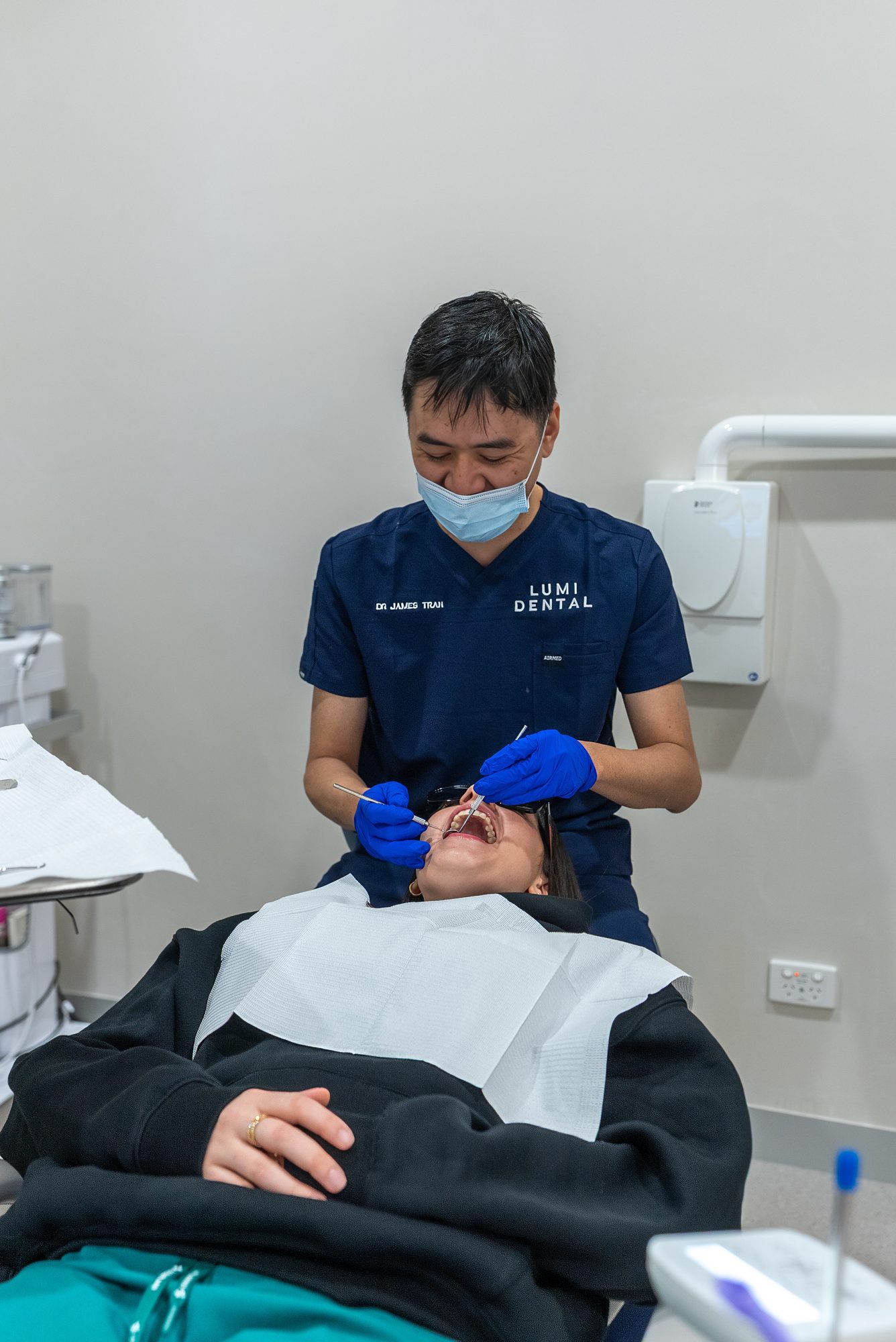
At Lumi Dental in Melrose Park, breath that lasts beyond the morning is treated as a symptom to be explained rather than masked. The dentist examines the teeth, gums, tongue and throat, asks about dry mouth, snoring, reflux and medicines, and takes X-rays where decay between teeth is suspected. The hygiene team, our oral health therapists, then does the scale and clean, provides gum therapy where gum disease is found, and coaches the tongue and interdental technique most people were never shown. Where the mouth is healthy and the smell persists, the team writes to your GP. Regular check-ups are described on our general dentistry page.
Questions patients ask
Why does my breath smell so bad in the morning even after brushing at night?
Because saliva drops overnight whatever you did before bed, so some morning breath is unavoidable. If it is heavy, the usual gaps are skipping the floss or the tongue, a snack after brushing, or mouth breathing.
Does tongue scraping get rid of morning breath?
It helps more than any other single step, because the tongue coating is the main source of sulphur compounds. healthdirect notes a scraper does not treat the underlying cause of persistent halitosis, so breath that lasts all day still needs a check.
Is morning breath a sign of gum disease?
On its own, no. Gum disease is suggested when the breath lasts all day and the gums bleed on brushing, look red or puffy, or have pulled back from the teeth. Our guide to bad breath causes and treatment explains how the two are separated at an examination.
Does drinking water before bed help morning breath?
A glass before bed and another on waking both help by keeping the mouth from drying out fully. Water does not replace cleaning, and a dry mouth from medicines or mouth breathing usually needs more than water alone.
Should I use mouthwash at night or in the morning?
At night, after brushing and tongue cleaning, if you use one at all. An alcohol-free rinse is kinder to a mouth that will dry out overnight. Mouthwash masks for a few hours; it does not remove plaque or the tongue coating.
Breath that does not improve with brushing? Book a check-up and clean in Melrose Park
If your breath is still there at lunch despite a good routine, the team at Lumi Dental in Melrose Park can examine the gums, tongue and teeth, carry out a scale and clean, and work through the dry mouth, snoring and medical causes with you. Current offers are on the current deals page, and a written quote follows the examination. Contact Lumi Dental to book, or read about check-ups on the general dentistry page. Patients visit from Ryde, Parramatta, Ermington and Rydalmere.
Sources
- healthdirect: Halitosis (bad breath)
- Better Health Channel: Halitosis or bad breath
- NHS: Bad breath
- PubMed Central (Cureus): Causes and Management of Halitosis, a Narrative Review
About the author

Dr James Tran is a general dentist at Lumi Dental in Melrose Park. He holds a BDent from the University of Sydney and a Graduate Diploma in Oral Implants, and is a Member of the International Congress of Oral Implantologists (MICOI).
This article is general information only and is not a substitute for an examination and individual advice from a registered dental practitioner. Suitability for any treatment varies from person to person.








