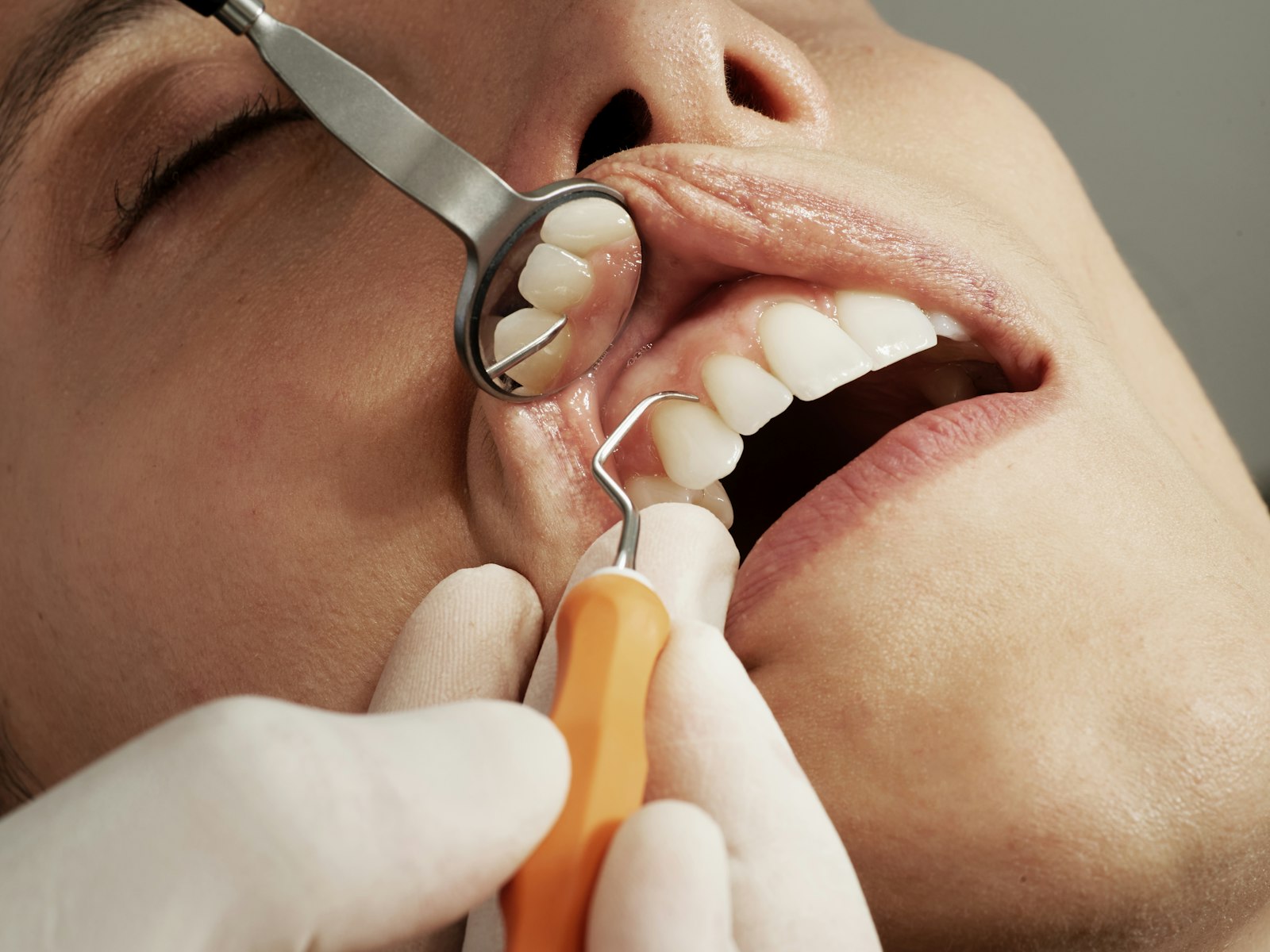

A dental onlay is a custom-made restoration that covers one or more of the raised points, or cusps, on the biting surface of a back tooth, without covering the whole tooth the way a crown does. That single feature is what defines it. An onlay sits neatly between a filling and a crown: it repairs damage too large for a simple filling, while keeping more of your natural tooth than a crown would. It is made outside the mouth and then bonded on, which makes it strong and precise.
Here is what an onlay is, how it differs from a filling and a crown, and when a dentist might suggest one.
Key takeaways
- An onlay covers one or more cusps of a tooth but not the entire tooth.
- It is an indirect restoration, made in a lab or by digital design and then bonded on.
- Onlays suit damage too large for a filling but not extensive enough to need a crown.
- They preserve more natural tooth than a crown, which removes the whole outer surface.
- Onlays are typically made from tooth-coloured ceramic or composite, or sometimes gold.
Fillings, inlays, onlays and crowns
These four restorations form a ladder from smallest to largest, based on how much of the tooth they rebuild.
| Restoration | How much it covers | Made |
|---|---|---|
| Filling | A small hole within the tooth | Directly in the mouth |
| Inlay | Within the cusps, a larger single piece | Outside the mouth, then bonded |
| Onlay | One or more cusps, but not the whole tooth | Outside the mouth, then bonded |
| Crown | The entire tooth above the gum | Outside the mouth, then cemented |
A filling is placed directly and sets in the mouth. An inlay sits inside the cusps like a filling but is made as a single solid piece. An onlay goes a step further and rebuilds one or more cusps. A crown caps the whole tooth. Our guide comparing inlays, onlays, crowns and fillings lays these out side by side.

When an onlay is a good option
An onlay tends to suit a tooth that has a large old filling that has failed, a fractured cusp, or decay too big to fill reliably but where enough healthy tooth remains that a full crown would be overkill. Because it is bonded and made to fit precisely, it restores the biting surface strongly while conserving tooth structure. Keeping more natural tooth is not just cosmetic. More remaining tooth generally means a stronger long-term result, which is why many dentists prefer the most conservative option that will do the job.
How an onlay is made and fitted
Placing an onlay usually takes two visits, though some practices with in-house digital milling can do it in one. At the first visit the dentist removes the decay or old filling and shapes the tooth, then takes a scan or impression. The onlay is made to match, and at the second visit it is bonded into place and the bite is checked. Because it is crafted outside the mouth, an onlay can be shaped and polished more precisely than a large direct filling, which helps it fit and last.
What onlays are made from
Modern onlays are most often tooth-coloured ceramic, which blends in and is very hard-wearing, or composite resin. Gold onlays are still used occasionally because they are gentle on opposing teeth and extremely durable, though they are less popular for appearance reasons. The best material depends on the tooth, the bite and your preference, and a dentist can talk through the options.
How long onlays last
A well-made, well-bonded onlay can last many years, comparable to a crown in many cases, provided you look after it with good brushing and flossing and protect it if you grind. As with any restoration, the edges are the vulnerable point, so regular check-ups let a dentist confirm the seal is holding. Grinding and clenching shorten the life of any bonded restoration, so a night guard is worth considering if that applies to you.
For more on this topic, read Why dental lab work gets remade and what that means for your timeline and Informed financial consent.
Frequently asked questions
Is an onlay better than a crown?
Neither is universally better. An onlay preserves more natural tooth and suits moderate damage, while a crown suits a tooth that is more extensively broken down or weakened. The right choice depends on how much healthy tooth remains.
Is an onlay the same as a filling?
No. A filling is placed directly and sets in the mouth, while an onlay is custom-made outside the mouth and bonded on. Onlays handle larger damage and rebuild cusps.
How many visits does an onlay take?
Usually two, one to prepare the tooth and take a scan or impression, and one to bond the finished onlay. Some practices with digital milling can complete it in a single visit.
Are onlays worth it?
For the right tooth, yes. They restore strength while keeping more natural tooth than a crown, which can mean a stronger result over time. A dentist can advise if your tooth suits one.
Do onlays look natural?
Ceramic and composite onlays are tooth-coloured and blend with the surrounding tooth, so they are hard to spot. Gold onlays are durable but visible.
The takeaway
A dental onlay is a custom restoration that rebuilds one or more cusps of a tooth without covering it entirely, sitting between a filling and a crown. It suits damage too large for a filling while preserving more natural tooth than a crown, which often means a stronger long-term result. To find out whether an onlay suits your tooth, see our current offers or visit our general dentistry page.
This article is general information and not a substitute for an individual dental assessment.