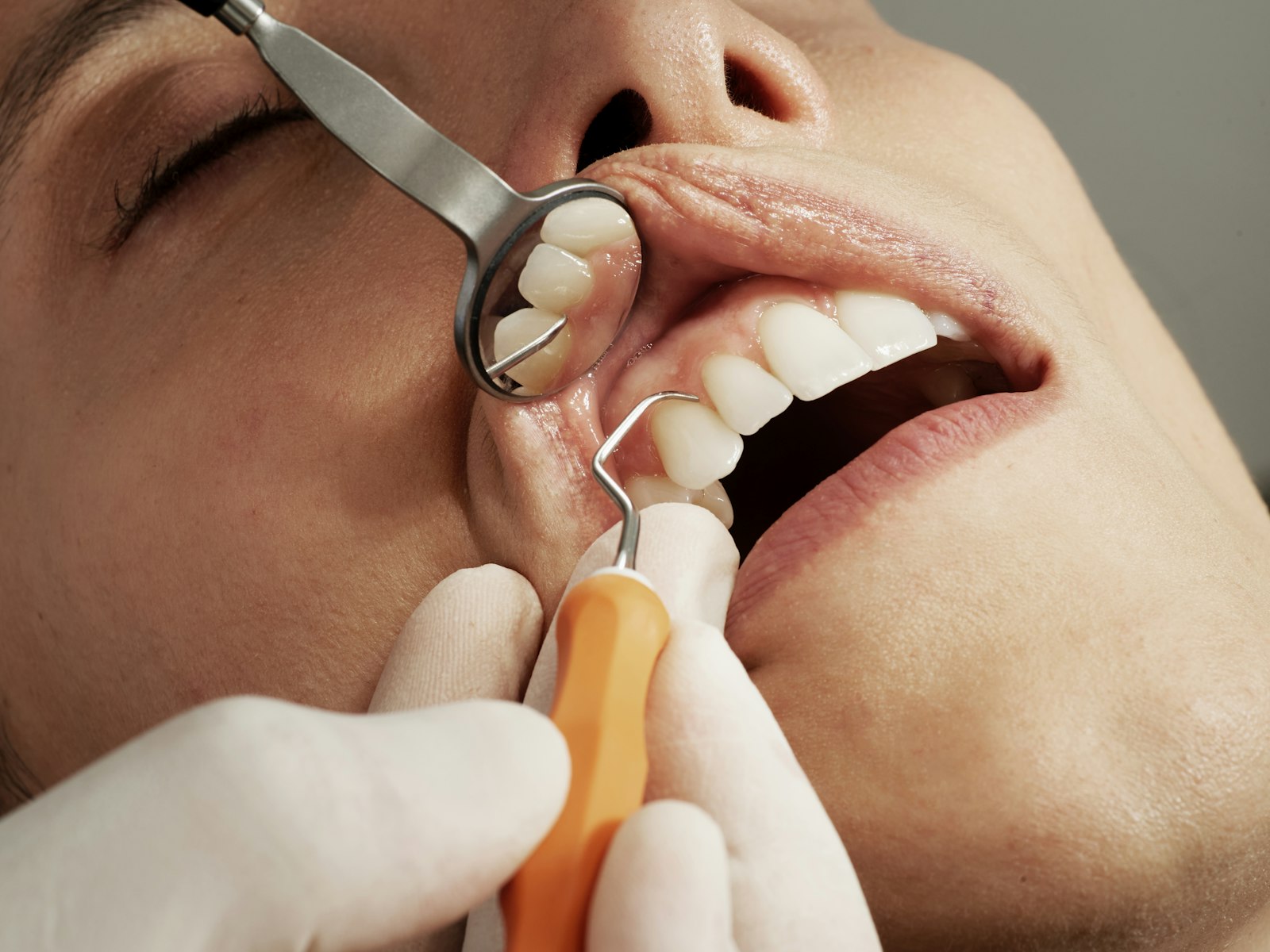

Many people assume a dental clean has to feel scratchy, with a rubber cup grinding gritty paste over every tooth. Air polishing swaps that cup for a fine jet of warm water, air and a very soft powder that washes plaque and surface stain away. It is not a stronger clean than the traditional kind, and it does not remove hardened tartar on its own, but for many people it is a noticeably more comfortable one.
A powder spray does the polishing a rubber cup used to do
A routine clean has two jobs. The first is removing calculus, the hard mineral deposit also called tartar, which is bonded to the tooth and needs an ultrasonic scaler or hand instruments to shift. The second is clearing the soft, sticky biofilm (plaque) and the surface staining that sits on top of the enamel.
Air polishing handles that second job. The handpiece mixes compressed air, water and a fine powder into a narrow stream aimed at the tooth surface. The powder particles are small enough to slip into the pits on chewing surfaces, along the gum line, between crowded teeth and around brackets, places a polishing cup tends to skate over. Many modern systems use erythritol or glycine powder, which are far less abrasive than the older sodium bicarbonate powders, so they can be used close to the gums.
The scaler is still part of the visit. If you want to know why plaque and tartar need different tools, our explainer on plaque versus tartar covers it.

What a visit with air polishing usually involves
Many clinicians start by painting on a disclosing solution, a harmless dye that tints plaque so it shows up clearly. That makes it easy to see which surfaces your brushing is missing, which is often more useful than any general advice. The powder spray then removes the coloured plaque and stain, and the ultrasonic scaler deals with any tartar left behind. Some practices do the scaling first; the order varies with the person and the system.
The sensation is closer to a fine mist than to scraping. Some people find it ticklish on the lips and tongue. Suction runs throughout to keep the spray under control.
At Lumi Dental, air polishing is offered as part of a clean, and our unit warms the water, which many people with sensitive teeth find easier to tolerate. More on that is in our article on warm water cleans for sensitive teeth, and the practical side of air polishing at Lumi is set out in our guide to stain removal with air polishing.
Results in trials are similar to a traditional clean
Studies comparing erythritol or glycine air polishing with conventional scaling and polishing, mostly in people on regular gum maintenance, tend to report similar changes in plaque levels, bleeding gums and pocket depths over the following months. The evidence does not show air polishing producing healthier gums than a well performed traditional clean. Where it does tend to come out ahead is comfort, with patients in several trials rating it as more pleasant, and sometimes in time taken.
Laboratory and early clinical work has suggested erythritol may have a mild effect on some of the bacteria linked with gum disease, but that is not a reason to treat it as a gum disease treatment. People with deeper pockets still need thorough instrumentation below the gum line, and air polishing may be used alongside deep cleaning and root planing, not instead of it.
People who tend to benefit most
Air polishing can be a good option for people who dread the feel of a traditional polish, people wearing braces or retainers, and anyone with deep grooves or crowded teeth where plaque collects. It also suits those who pick up surface stain from coffee, tea, red wine or smoking, and people on a regular gum maintenance schedule who have frequent cleans. If staining is the main concern, our article on coffee, wine and tea stains explains where that discolouration comes from.
It is not the right choice for everyone. Let your dentist or OHT know if you have asthma or another breathing condition, are on a sodium-restricted diet, or wear contact lenses, as the powder type or technique may need to change, or a traditional polish may be preferred.
The limits worth knowing
Air polishing removes stain sitting on the surface of the enamel. Greyness or yellowing inside the tooth, or discolouration from old fillings, will not shift with any clean and would need whitening or other cosmetic treatment to change. And a polished surface will start collecting plaque again within hours, so what you do at home between visits matters more than the method used in the chair. Two habits that make the biggest difference are flossing properly and choosing a brush you will use well, whether electric or manual.
Common questions
Will air polishing make my teeth whiter?
It can make teeth look brighter by removing surface stain, but it does not change the natural colour of the tooth. That needs whitening.
Can it damage fillings or crowns?
Low-abrasive powders are considered gentle on most restorations, and the clinician adjusts the angle and power around them. Tell your dentist or OHT about any veneers or bonding so they can take care around the edges.
How often can I have it?
With low-abrasive powders it can be used at each routine clean. How often you need a clean depends on your gum health and how quickly tartar builds up, which your dentist or OHT will discuss with you.
If you would like your next clean to include air polishing, ask when you book a check-up with us at Melrose Park. Any current offers are listed on our current deals page.
This article is general information and not a substitute for personalised advice from your dentist.