

Aligner chewies are small, soft cylinders that you bite on for a few minutes after putting your clear aligners in, so the plastic settles fully over every tooth and attachment instead of floating slightly above them. Used with some method, aligner chewies are one of the cheapest ways to keep treatment on schedule; used as an all-day habit they can loosen attachments. Healthline describes them as soft plastic cylinders about the size of a cotton roll, and a published expert consensus on clear aligner treatment lists chewie use among the instructions given when the first aligners are fitted.
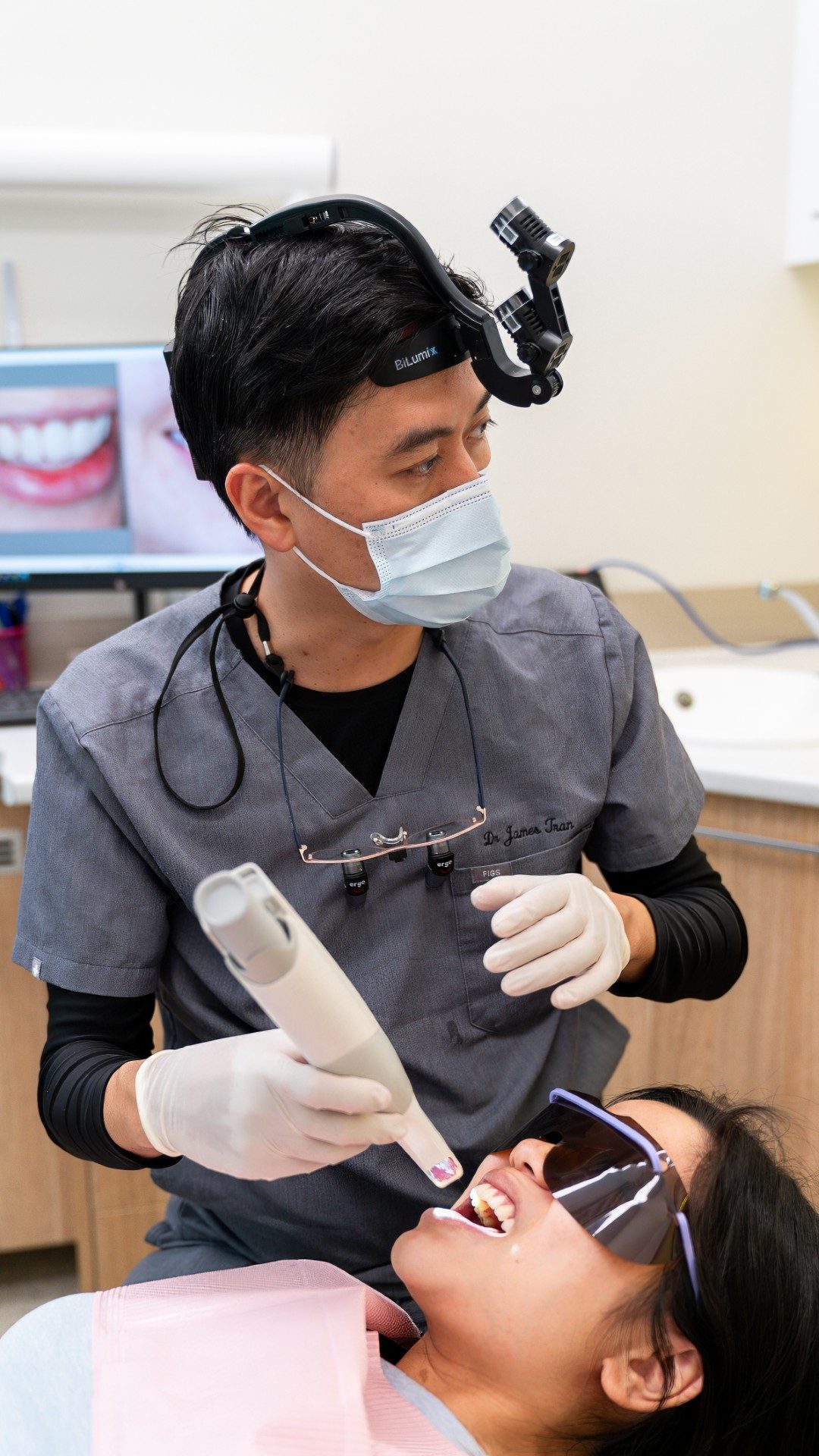
Written by Dr James Tran, BDent (University of Sydney), MICOI, GradDip (Oral Implants), general dentist at Lumi Dental in Melrose Park.
The short version
- A chewie is a reusable, soft cylinder. Biting on it presses a new aligner down and closes air gaps at the edges and around attachments.
- Use it each time the aligner goes back in, for around five minutes, longest in the first days of a new tray. Your dentist's instructions override any general figure.
- A study linked heavy use of tray seaters, fewer than 18 hours of daily wear and chewing on one side with attachments coming off, so chewies are a tool, not a habit.
- A gap that is still there after a week of proper chewie use means the aligner is probably not tracking. Call before moving to the next tray.
- In your first days of treatment? Our guide to the first week in clear aligners covers the rest of the settling-in routine.
What aligner chewies are, and what they are not
A chewie is a short cylinder of soft, foam-like plastic or silicone, about the size of the cotton rolls a dentist uses to keep a tooth dry. The practice usually supplies the first few; pharmacies sell more as aligner seaters.
What they are not is a tooth-moving device. The aligner moves the teeth; the chewie only makes sure the aligner is in full contact so the force built into the plastic reaches the tooth it was designed for. The consensus paper puts it in clinical language: accurate seating of the aligner on all areas of the tooth surface is critical to the transfer of force.
Seating and tracking: two words that explain the whole topic
Seating
Seating is about this aligner, right now. A seated aligner sits flush, with no air space at the biting edges, no lift at the gum line, and the attachments filling their pockets in the plastic. A new aligner is shaped for where the teeth should be in a few days, not where they are today, which is why it never quite clicks home on day one.
Tracking
Tracking is about the plan over weeks. The consensus paper defines off-tracking as an incomplete fit between teeth and aligner that signals a difference between the planned movement and what has actually happened. Chewies fix seating; they cannot rescue tracking that has drifted for more than a few days. The attachments themselves are covered in our article on what aligner attachments are.
How to use aligner chewies, step by step
- Start with clean hands and a clean tray. Push the aligner on with your fingertips, back teeth first, then the front.
- Bite on one side first. Place the chewie between the upper and lower back teeth. Bite firmly, not forcefully, for three to five seconds, release, and repeat two or three times.
- Move along the arch. Shift the chewie forward one or two teeth and repeat, all the way round to the other side. Hold it vertically between the incisors so the front seats too.
- Spend extra time where the tray lifts. If you see an air bubble or a pale gap on one tooth, hold a steady bite there for ten to fifteen seconds.
- Stop at around five minutes. Healthline's figure is about five minutes twice a day, more in the first days of a new aligner. In my experience a focused five minutes beats a distracted twenty.
A sore jaw in the first days is common and settles, which Healthline also notes, but a tray that still rocks is a reason to call, not to bite harder.
The rule: seated when it clicks down, a call if a gap stays
If the aligner clicks fully down over the attachments and there is no gap at the edges, it is seated. If a gap remains after a week of proper chewie use, call the practice before moving on to the next aligner.
Every aligner assumes the one before it finished its job. Orthodontics Australia notes that each aligner is worn for 20 to 22 hours a day for at least a week before moving on, and a tray that never seated has not really been worn on the tooth it missed.
When to use chewies, and when to ease off
There is a case for using chewies less than online guides suggest. A prospective study of 94 clear aligner patients looked at which habits went with composite attachments coming off. Wearing aligners for fewer than 18 hours a day, using aligner tray seaters and chewing mainly on one side were each associated with higher attachment loss, and the authors suggested that more wear and less seater use may help.
Chewies still have a job: seating a tray, not keeping your jaw busy. Use them when the aligner goes in, for the first days of each new tray, and on a specific gap, on both sides equally.
| Situation | How long to use the chewie | What you should notice |
|---|---|---|
| First three days of a new aligner | About five minutes each time the tray goes in, morning and night at least | Tightness is normal and gaps shrink day by day |
| Rest of the week on the same aligner | A minute or two after meals when the tray goes back in | The aligner clicks down with little effort |
| A visible gap on one tooth | Ten to fifteen second holds on that spot, a few times a day | The gap closing within a few days; if not, call |
| An aligner that will not go on at all | Stop; do not force it | Go back to the previous aligner and call; backtracking is the dentist's decision |
Looking after chewies, and what to use if you have none
Wash chewies after use with mild soap and warm water, let them dry and keep them in the aligner case. Replace them when they lose their spring or split. A clean tray seats better than a coated one; our guide to cleaning clear aligners covers the routine.
If you have run out, I usually tell patients that a clean cotton roll or a folded piece of clean gauze between the teeth does a similar job for a night. What I ask them not to do is bite on a pen lid, press a fingernail into one spot, or chew the tray down with bare teeth. Orthodontics Australia warns that hot drinks can distort aligners, and a warped tray will not seat however long you chew.

Signs an aligner is not tracking, and what the dentist does about it
The signs patients notice first are a pale gap at the biting edge of a front tooth, a tooth sitting outside the outline of the tray, a tray that lifts at the back, or an attachment that no longer fills its pocket. The consensus paper lists the same places a dentist checks: the incisal edges, the cusps of the back teeth, around the attachments and along the aligner margin. After a week of proper chewie use, any of these is worth a phone call.
Options at the review include going back a tray, a few extra days on the current one, re-bonding a lost attachment, or a rescan and refinement aligners. Orthodontics Australia describes refinements as additional aligners for teeth that did not move completely as planned. Our article on what refinement aligners are explains how they are planned.
How we approach this at Lumi Dental
At Lumi Dental in Melrose Park, clear aligner treatment starts with an examination by a dentist and a 3D intraoral scan. At the fitting visit the team shows each patient how to push the aligners on, use chewies around the arch, and recognise a seated tray in a mirror. The hygiene team of oral health therapists looks after cleans during treatment, because plaque trapped under a tray for 22 hours a day matters. Read more about clear aligners at Lumi Dental and the scanning equipment on our technology page.
Questions patients ask
How long should I use aligner chewies each day?
Around five minutes each time the aligner goes back in, longer in the first days of a new tray. After that, a minute or two after meals is usually enough. Your dentist's routine overrides this if it differs.
Do chewies make clear aligner treatment faster?
Not directly. Healthline calls the idea partly true, because a tray that fits properly delivers its planned movement on time. Chewies protect the schedule rather than shorten it.
Can chewies damage my aligners or pull attachments off?
Used hard and often, they can. A study of clear aligner patients found that heavy use of tray seaters and chewing on one side were associated with more attachments coming off. Our guide to attachments and IPR explains why those small bumps matter.
What can I use instead of aligner chewies?
A clean cotton roll or a folded piece of clean gauze bitten between the teeth works for a night or two. Avoid pen lids, fingernails and biting the tray down with bare teeth.
My new aligner will not go on fully. Should I keep chewing or go back a tray?
Give it a day or two of proper chewie use first, since a new tray is meant to feel tight. If it still rocks, shows a clear gap, or will not go on at all, put the previous aligner back in and call the practice. Whether to backtrack, extend the wear time or rescan is the dentist's decision.
Aligners that fit the way they should: complimentary aligner consult in Melrose Park
If your aligners never seem to seat, the team at Lumi Dental in Melrose Park can check the fit and show you the technique in the chair. Book a complimentary aligner consultation, or read more about clear aligner treatment at Lumi Dental. Patients visit from Ryde, Parramatta, Ermington, Rydalmere and nearby suburbs.
Sources
- Healthline: Invisalign chewies, purpose, precautions, how to use them
- PMC: Risk factors of composite attachment loss in orthodontic patients during clear aligner therapy, a prospective study
- PMC: Expert consensus on the clinical strategies for orthodontic treatment with clear aligners
- Orthodontics Australia: Clear aligners
About the author

Dr James Tran is a general dentist at Lumi Dental in Melrose Park. He holds a BDent from the University of Sydney and a Graduate Diploma in Oral Implants, and is a Member of the International Congress of Oral Implantologists (MICOI).
This article is general information only and is not a substitute for an examination and individual advice from a registered dental practitioner. Suitability for any treatment varies from person to person.








