
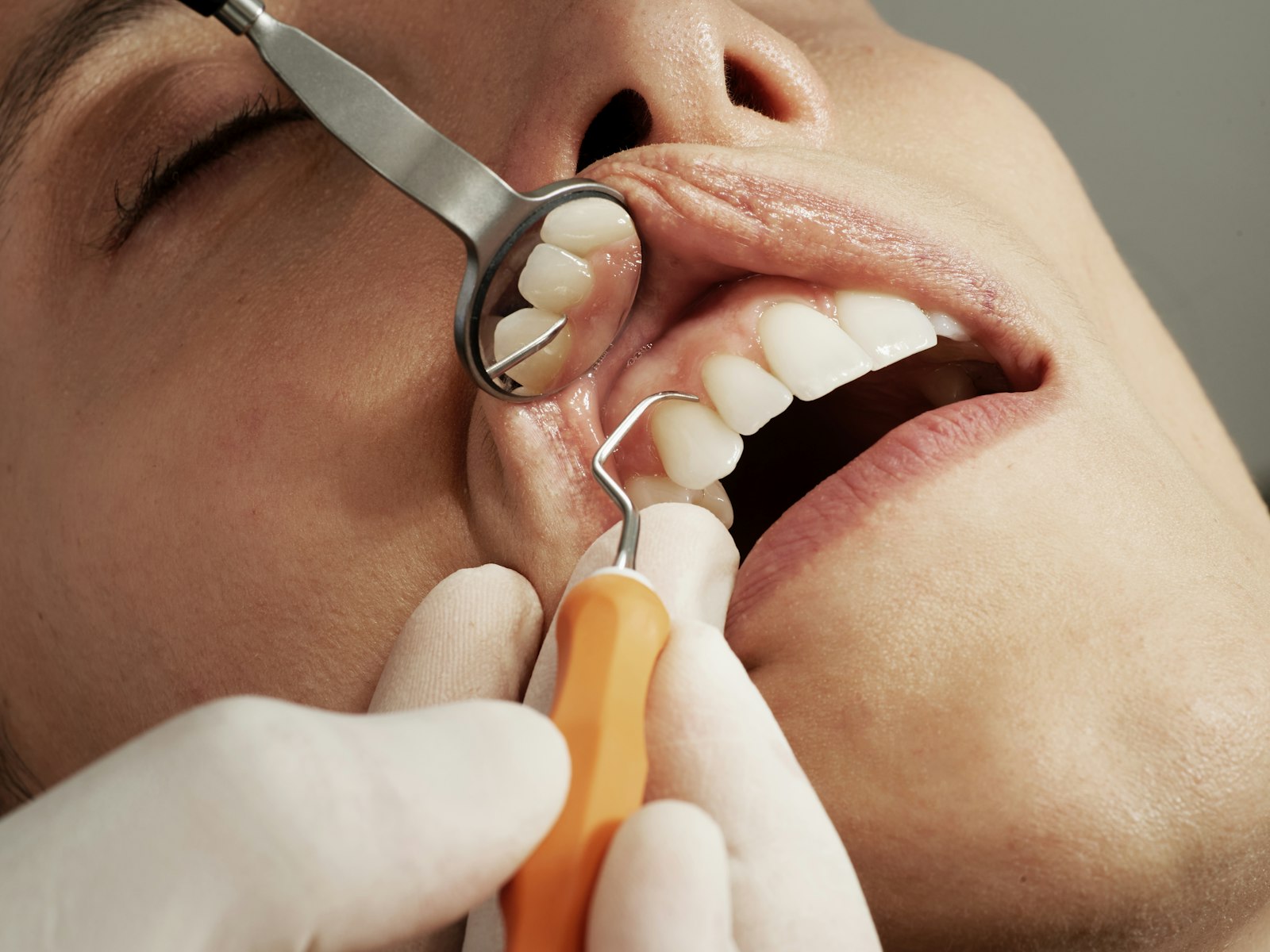

Yes, some fillings can be done without a needle, but it depends on how deep the decay is. Air abrasion, silver diamine fluoride and, for genuinely shallow decay, a topical numbing gel alone can sometimes avoid an injection, while deeper cavities close to the nerve still need local anaesthetic for a comfortable, thorough clean-out. The size and depth of the cavity, not personal preference, is what actually decides whether a needle-free approach is realistic.
Key takeaways
- Needle-free options exist and are genuinely used in practice, but they suit small, shallow or early-stage decay, not every cavity.
- Air abrasion uses a fine stream of particles to remove soft decay without a drill, and often doesn't require numbing.
- Silver diamine fluoride (SDF) is a liquid that can arrest decay without any drilling or injection, but it doesn't restore the tooth's shape or match its colour, and it permanently stains the treated area black.
- Laser dentistry can remove some decay with less vibration and discomfort than a traditional drill, sometimes without anaesthetic.
- Deeper decay, decay near the nerve, or a tooth with existing sensitivity usually still needs local anaesthetic for the dentist to work thoroughly and comfortably.
- If needle anxiety is the real issue rather than the depth of the cavity, there are ways to manage that anxiety without skipping proper numbing.
Why dentists use local anaesthetic in the first place
Local anaesthetic isn't just about comfort during the appointment. It also allows a dentist to remove decay thoroughly and work precisely without you needing to move or flinch, which matters for getting a clean, well-sealed filling. For anything beyond very shallow decay, a numb tooth generally means a better, more predictable result, not just a more pleasant appointment.
The real needle-free options
| Option | How it works | Best suited to | Limitations |
|---|---|---|---|
| Air abrasion | A fine stream of particles and air pressure removes soft decay, similar to gentle sandblasting | Small, shallow cavities, especially in enamel | Not suitable for larger or deeper decay, can be noisy and creates dust that needs suction |
| Silver diamine fluoride (SDF) | A liquid applied directly to decay that kills bacteria and helps arrest its progress | Early decay, young children, or patients who can't tolerate a filling appointment | Permanently stains treated decay black, doesn't restore tooth shape or function, decay may still need a filling later |
| Topical numbing gel alone | A gel anaesthetic applied to the gum or tooth surface, no injection | Very shallow decay, or minor procedures | Doesn't numb deeply enough for most standard fillings |
| Laser dentistry | A focused light beam removes decayed tooth structure with less vibration than a drill | Small to moderate cavities, particularly in children | Not available in every practice, still may need anaesthetic for larger cavities |

What silver diamine fluoride actually does
SDF is worth understanding on its own because it's a genuinely different approach, not just a needle-free filling. It doesn't restore a tooth's shape the way a filling does, instead it stops decay from progressing by killing the bacteria causing it and helping the surrounding tooth structure remineralise. Studies have reported it can be highly effective at arresting decay over time, but the trade-off is that the treated area turns black permanently, so it's typically used on back teeth, baby teeth, or as an interim step for patients who aren't ready for a full filling appointment, rather than as a routine cosmetic solution.
When you'll still need an injection
Once decay has moved past the outer enamel into the softer dentine layer, or is close to the nerve, needle-free options generally aren't precise or deep-reaching enough to remove it properly and comfortably. A dentist needs to be confident they can clean out all the decayed tissue, and for most people that requires the tooth to be fully numb so the process can be done thoroughly rather than rushed. If you're not sure whether your tooth is a candidate for a simple filling at all, our guide to is my tooth savable, a decision guide walks through how that assessment works.
Why cavities happen even with a good routine
It's a common frustration, brushing regularly but still ending up with a cavity. Diet, saliva flow, genetics and the exact spots where plaque builds up all play a role beyond brushing alone. If this sounds familiar, why do I get cavities even though I brush covers the less obvious reasons, and cavities and tooth decay, causes and prevention covers prevention in more depth.
Managing needle anxiety without skipping proper numbing
For a lot of people, the real issue isn't the depth of the cavity, it's a fear of needles. That's worth raising directly with your dentist rather than pushing for a needle-free technique that isn't suited to your cavity. Topical numbing gel applied before the injection, a slower, gentler injection technique, and distraction methods can all make a real difference. For more significant anxiety, sedation options can remove the awareness of the injection altogether, our guides to dental sedation options for anxious adults and IV sedation dentistry cover what's available and how it works.
What to expect after a needle-free or standard filling
Regardless of which technique is used, most people can eat and drink normally again once any numbness (if used) has worn off. If you've had a standard filling with anaesthetic, our guides to how long does a filling take to set and how long after a filling can I drink coffee cover the practical timing questions people usually ask.
Frequently asked questions
Is a filling without a needle just as effective as a normal filling?
For small, shallow decay it can be just as effective. For deeper decay, a needle-free technique may not allow the dentist to remove all of the decayed tissue as thoroughly, which is why it's not suitable for every cavity.
Does silver diamine fluoride hurt?
No, it's a liquid applied directly to the tooth and doesn't require numbing or drilling.
Why does silver diamine fluoride turn teeth black?
The silver in the solution reacts with the minerals in decayed tooth structure, which causes a permanent dark staining in the treated area. It doesn't affect healthy tooth structure.
Can children get fillings without a needle?
Sometimes, for shallow decay in baby teeth, options like SDF or laser dentistry can avoid an injection, which can make dental visits easier for anxious kids, though it depends on the specific cavity.
Does air abrasion work on all cavities?
No, it's generally limited to small, shallow decay in enamel. Larger or deeper cavities usually still need a drill and local anaesthetic.
Will my dentist tell me if I'm a candidate for a needle-free filling?
Yes, this is assessed based on an examination and often an X-ray, so it's worth asking directly if needle anxiety is a concern for you.
Is laser dentistry available everywhere?
No, not every practice has laser equipment, and it's typically better suited to smaller cavities regardless of where you're treated.
This article is general information and not a substitute for personal dental advice. To find out whether a needle-free option might suit your specific cavity, the Lumi team can take a look and talk you through it, check our current deals or book with our general dentist in Melrose Park.


