


Plenty of people buy whitening strips or gel for a yellowed denture and find nothing changes. That is expected. Peroxide whitening works on natural tooth structure, and denture teeth and the pink base are made of acrylic or similar resins that it cannot lighten. What usually can be fixed is the stain and build-up on the surface, which proper cleaning and a professional polish often remove.
Written by Dr James Tran, BDent (University of Sydney), MICOI, GradDip (Oral Implants), general dentist at Lumi Dental in Melrose Park.
Peroxide needs tooth structure to act on
Whitening gels contain hydrogen peroxide or carbamide peroxide. On a natural tooth, the peroxide passes into the enamel and dentine and breaks down coloured molecules inside them, so the tooth itself looks lighter. Acrylic and composite resin do not respond in the same way, which is also why fillings, crowns and veneers keep their colour when the teeth around them are whitened. Our article on whitening veneers and crowns covers the same issue for fixed restorations.
So the shade a denture was made in is the shade it stays. The aim is to get it back to that original colour by removing what has built up on it. If your own remaining teeth are the ones that look darker, the choice between cleaning and whitening is explained in our guide to stain removal versus whitening.
Most yellowing sits on the surface
Tea, coffee, red wine, tobacco and strongly coloured foods such as curry all leave pigment on acrylic, just as they do on enamel. Plaque collects too, especially on the tongue side of the lower front teeth, and over time it can harden into a cream or yellow crust of tartar that brushing will not lift.
The state of the surface matters. Acrylic is softer than enamel, and abrasive cleaning leaves fine scratches. The Cambridge University Hospitals denture care leaflet warns that scratches make a denture more likely to collect debris and stain. A denture that has been scrubbed with toothpaste for years therefore tends to stain faster than a newer, smoother one.
A cleaning routine that lifts stain without scratching
The Australian Dental Association's patient site, teeth.org.au, recommends a spare toothbrush or denture brush with a non-abrasive cleaner such as liquid hand soap, and says toothpaste should not be used on dentures. Brush the teeth, the pink gum area and the fitting surface that sits against your mouth, then rinse well.
Soaking in a denture cleaning solution helps remove plaque and disinfect the denture. The ADA's advice is to follow the directions for the product you buy. The Cambridge leaflet suggests avoiding overnight soaks in solutions, and says that about 10 minutes in a sterilising solution once or twice a week is usually enough.
Keeping soaks short has a reason behind it. In a 2017 laboratory study in The Journal of the Indian Prosthodontic Society, Porwal and colleagues immersed three denture base materials in two types of cleanser for 180 days. Colour changes stayed within the clinically acceptable range, but conventional heat-cured acrylic became rougher than the acceptable limit, and the authors advised matching the cleanser, its strength and soaking time to the material. Our article on denture cleaning tablets, soaks and brushing compares the main products.
Things that leave a denture looking worse
Some popular home remedies do more harm than good, and none of them change the colour of the denture teeth.
- Hot or boiling water. The Better Health Channel warns that hot water can change the shape and fit of a denture.
- Toothpaste, including whitening pastes, and baking soda scrubs. They are abrasive, and the scratches they leave hold new stain.
- Household bleach. Strong bleach can lighten or blotch the pink acrylic and may damage metal parts such as clasps or a metal frame.
- Whitening strips, pens and gels. They have nothing to act on, and leftover peroxide on a denture can irritate the gums.
- Scourers, stiff brushes or sharp tools used to chip off tartar, which can gouge the surface or crack a tooth.
A professional clean can make a visible difference
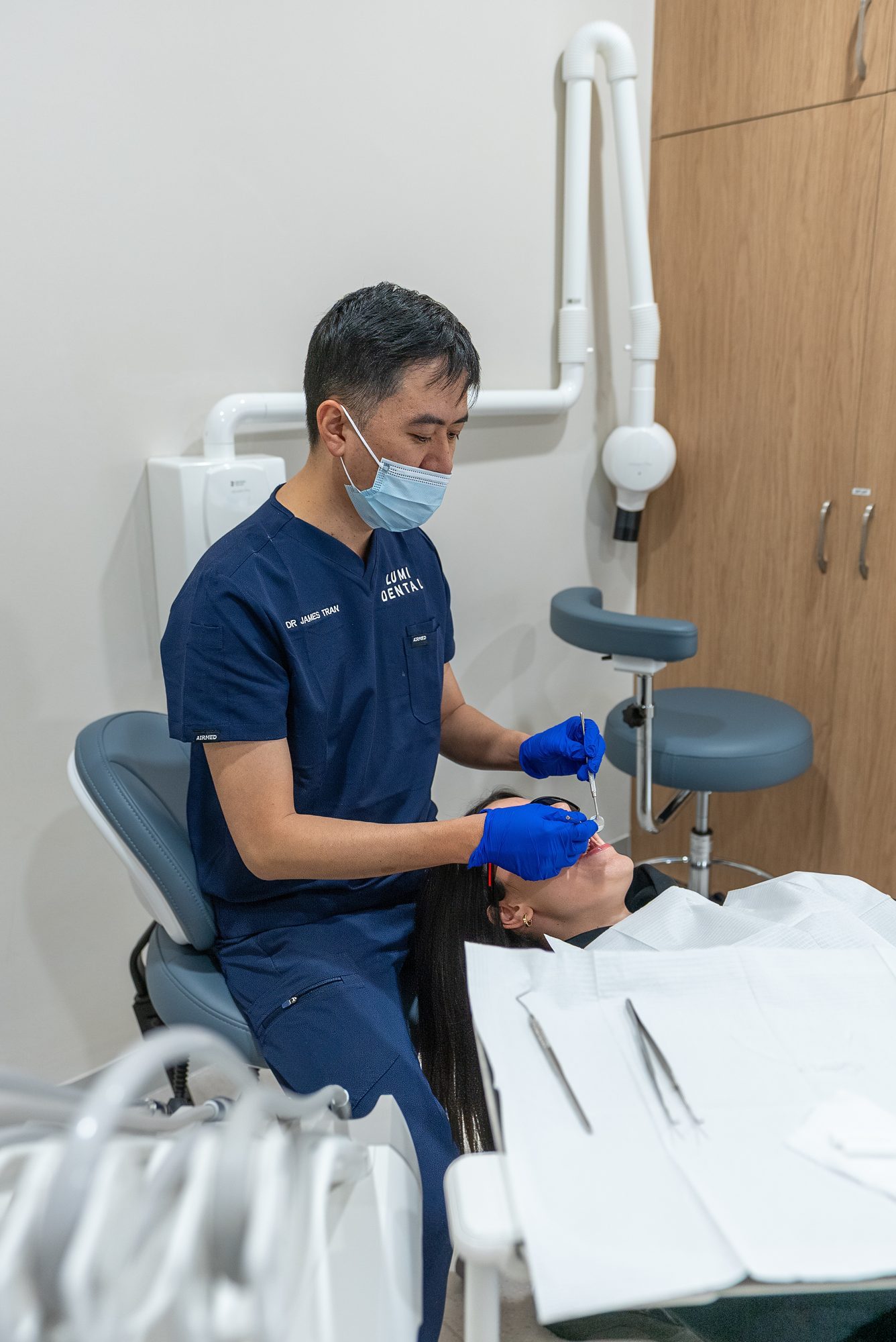
Hard tartar and stain that has settled into fine scratches are often beyond what a home routine can shift. A dentist or OHT can remove the deposits and polish the acrylic back to a smoother finish, which tends to stain more slowly afterwards. It is worth bringing the denture to every check-up for this reason, even if you have no natural teeth left, because the gums, tongue and the rest of the mouth still need checking.
A denture covered in plaque can also inflame the gum beneath it. Redness under an upper denture is a common sign, and our denture stomatitis guide explains what to look out for.
When the colour will not come back
If a denture still looks grey, flat or yellow after a thorough professional clean, the change is usually in the material itself. Acrylic wears with years of use, and pigment can work into a surface that is no longer smooth. Around the same time, the gums and bone that support a denture gradually shrink, so an older denture that looks tired often feels loose as well.
In that situation, the options are a reline, which reshapes the fitting surface, or a new denture. A reline improves the fit but does not change the colour of the teeth. Our article on relines versus new dentures explains how a dentist decides between them.
Choosing what comes next
A new denture is the point at which the shade can actually change, because the teeth are chosen during the planning stage. It is also a good moment to think about whether a removable denture is still the right fit for you. An implant-retained overdenture clips onto implants for more stability, although its acrylic teeth will pick up stain in the same way. A fixed full-arch bridge on implants can be made from materials such as zirconia, which are generally less prone to surface staining than acrylic. Our comparison of dentures and full-arch implants sets out the trade-offs, and suitability depends on your health, bone and budget.
Questions about denture colour
Can a dentist whiten my dentures?
Not in the sense of bleaching them lighter. What a dentist or OHT can do is remove tartar and stain and polish the surface, which often brings a denture back close to how it looked when new. If you want teeth that are lighter than the original shade, that means new denture teeth.
Why does my denture stain so quickly?
The usual reasons are a surface roughened by toothpaste or hard brushing, an older denture whose acrylic has worn, or frequent tea, coffee, red wine or smoking. Gentle daily cleaning with soap, rinsing after dark drinks, and a regular professional polish all slow the build-up.
Can I pick a lighter shade for my next denture?
Yes, the shade of the teeth is chosen when a new denture is planned. A dentist will usually suggest a shade that suits your skin tone, age and any natural teeth you still have, so the result looks natural rather than overly white.
If your denture has lost its colour or no longer feels secure, you can contact Lumi Dental in Melrose Park to book an examination and clean, or read about dental implants if you would like to talk through moving away from a removable denture.
Sources
- teeth.org.au (Australian Dental Association): Dentures
- Cambridge University Hospitals NHS: Denture care, looking after your dentures
- Better Health Channel: Dentures
- Porwal A and colleagues. Effect of denture cleansers on color stability, surface roughness, and hardness of different denture base resins. The Journal of the Indian Prosthodontic Society, 2017
About the author

Dr James Tran is a general dentist at Lumi Dental in Melrose Park. He holds a BDent from the University of Sydney and a Graduate Diploma in Oral Implants, and is a Master of the International Congress of Oral Implantologists (MICOI).
This article is general information only and is not a substitute for an examination and individual advice from a registered dental practitioner. Suitability for any treatment varies from person to person.








