

Yes, you can whiten your teeth with a fixed retainer in place, because the wire sits on the tongue side of the teeth and whitening gel in a custom tray works on the outer surfaces you actually see. The bonded wire and the small composite pads that hold it will not change colour, and gel tends to pool around them, so the method matters more than usual. Australian law also means that only registered dental practitioners can use or supply whitening products stronger than 6% hydrogen peroxide or 18% carbamide peroxide, which rules out the strongest options from a kiosk or an online shop. Here is what works around a bonded wire, what to avoid, and when to whiten first and re-bond afterwards.
Written by Dr James Tran, BDent (University of Sydney), MICOI, GradDip (Oral Implants), general dentist at Lumi Dental in Melrose Park.
The short version
- A fixed retainer is a thin wire bonded to the back of the front teeth, most often the lower ones, so it does not block gel from the outer enamel.
- Dentist-made custom trays, moulded over the wire, are the most reliable route.
- The wire and its composite pads stay the same colour, but almost nobody sees them.
- Strips and paint-on gels are hard to seat around a wire and give patchy results.
- Do not use a removable retainer as a whitening tray. Our article on using a retainer as a whitening tray explains why.
- If your wire is loose or due for replacement, whiten first and have the new wire bonded about two weeks later.
What a fixed retainer is, and where it sits
Orthodontics Australia describes a fixed retainer as a thin, passive wire bonded or glued to the back or tongue side of the teeth after braces. It usually runs from canine to canine on the lower front teeth, sometimes the uppers too, and a small blob of composite resin on each tooth holds it. A well-made wire can last many years if you clean around it and avoid very hard or sticky foods.
The part of a tooth that shows when you smile is the outer surface, facing the lip, and the wire never touches it. Whitening gel lightens enamel, and the Australian Dental Association's teeth.org.au site notes that it will not change the colour of composite resin. So the enamel you see can still lighten while the resin pads at the back stay as they are. That is the whole basis of whitening with a fixed retainer.
How whitening gel behaves around a bonded wire
A custom tray is made on a digital scan of your teeth with the wire in place, so it has a small channel where the wire runs. On the outer surfaces and biting edges, the gel sits in a thin film and works exactly as it would without a retainer. On the tongue side, it reaches the enamel between the composite pads but not under them, and it does nothing to the pads or the wire. Up close, the resin dots may look slightly warmer than the lightened enamel; from speaking distance, nobody notices.
The thing to watch is pooling. More gel collects in the channel around the wire than anywhere else, and if you overfill, the excess squeezes out onto the gum. The teeth.org.au whitening page lists chemical burns to the gums, lips and tongue among the risks, and those burns often ulcerate before they heal. The fix is a small drop of gel per tooth on the outer side, and wiping away any excess. In my experience, patients with a lower wire do well when they load the front of the tray only and leave the tongue side almost dry. The same page notes that cold sensitivity can be severe, so a gentler gel and shorter wear are sensible starting points.
Which whitening methods work with a fixed retainer
The table summarises what I usually tell patients.
| Method | With a fixed retainer | What to know |
|---|---|---|
| Dentist-made custom trays (take-home) | Works well | Trays are moulded over the wire; the dentist sets gel strength and wear time. |
| In-chair whitening | Works | Gel is painted onto the outer surfaces with the gums protected; the wire is not in the way. |
| Over-the-counter strips | Patchy | Strips lift over the wire and miss the gaps between teeth. |
| Whitening toothpastes | Surface stain only | They polish off stain around a wire but do not change the enamel colour. |
| A removable retainer used as a tray | Not recommended | Not designed to hold gel; fits loosely; peroxide can affect the plastic. |
| Whitening, then bonding a new wire | Works if timed well | Bonding straight after whitening gives a weaker bond; wait about two weeks. |
If the wire is due to be replaced, whiten first
Here is the single rule I apply: if the wire is sound and well bonded, whiten around it; if it is loose, broken or due for replacement, whiten first and bond the new wire about two weeks later. Resin does not bond to freshly bleached enamel as well as it does to untreated enamel.
The evidence comes from laboratory studies on orthodontic brackets, which are glued on with the same family of resin used for retainer wires. One study reported that brackets bonded to enamel bleached with 35% hydrogen peroxide had a tensile bond strength around 15% lower than brackets on unbleached enamel, 5.4 compared with 6.4 megapascals. Earlier studies cited in the same paper left anywhere from 24 hours to 4 weeks before bonding, and in some a one-week delay was enough for the bond to recover. Researchers think oxygen left in the enamel after bleaching interferes with the setting of the resin and clears over days rather than hours.
These are bench results on extracted teeth, not clinical trials on retainers, so treat them as a reason for caution rather than a precise timetable. If your wire has come loose, read our article on what to do about a broken fixed retainer first, because a removable retainer may be needed meanwhile to stop the teeth drifting.

Cleaning around the wire before and after whitening
Whitening gel needs clean enamel. Plaque and tartar collect along a retainer wire more than anywhere else in the mouth, and gel sitting on tartar lightens nothing underneath it. A scale and clean with the hygiene team a week or two before you start is sensible, and it also removes the brown stain that gathers around the pads.
Daily cleaning follows the Orthodontics Australia advice: floss above the wire as normal, then thread the floss under the wire towards the gum, using a floss threader if your fingers cannot manage it, and use small interdental brushes for the gaps. Our guide to floss threaders and superfloss shows the technique. Brush and floss before each whitening session so the tray seats on clean teeth.
What whitening will not change
Three things stay as they are: the wire, the composite pads, and any white filling on a front tooth. If a filling looks darker afterwards, it may need replacing once your new colour has settled. Lower front teeth also tend to lighten less than uppers because their enamel is thinner. Our article on why lower teeth look darker explains this, which matters because most fixed retainers are lower ones.
Timing after braces matters too. If the wire went on only weeks ago, the gums may still be puffy and there may be chalky white marks where brackets sat. Our guide to whitening after braces come off covers when to start.
How we approach this at Lumi Dental
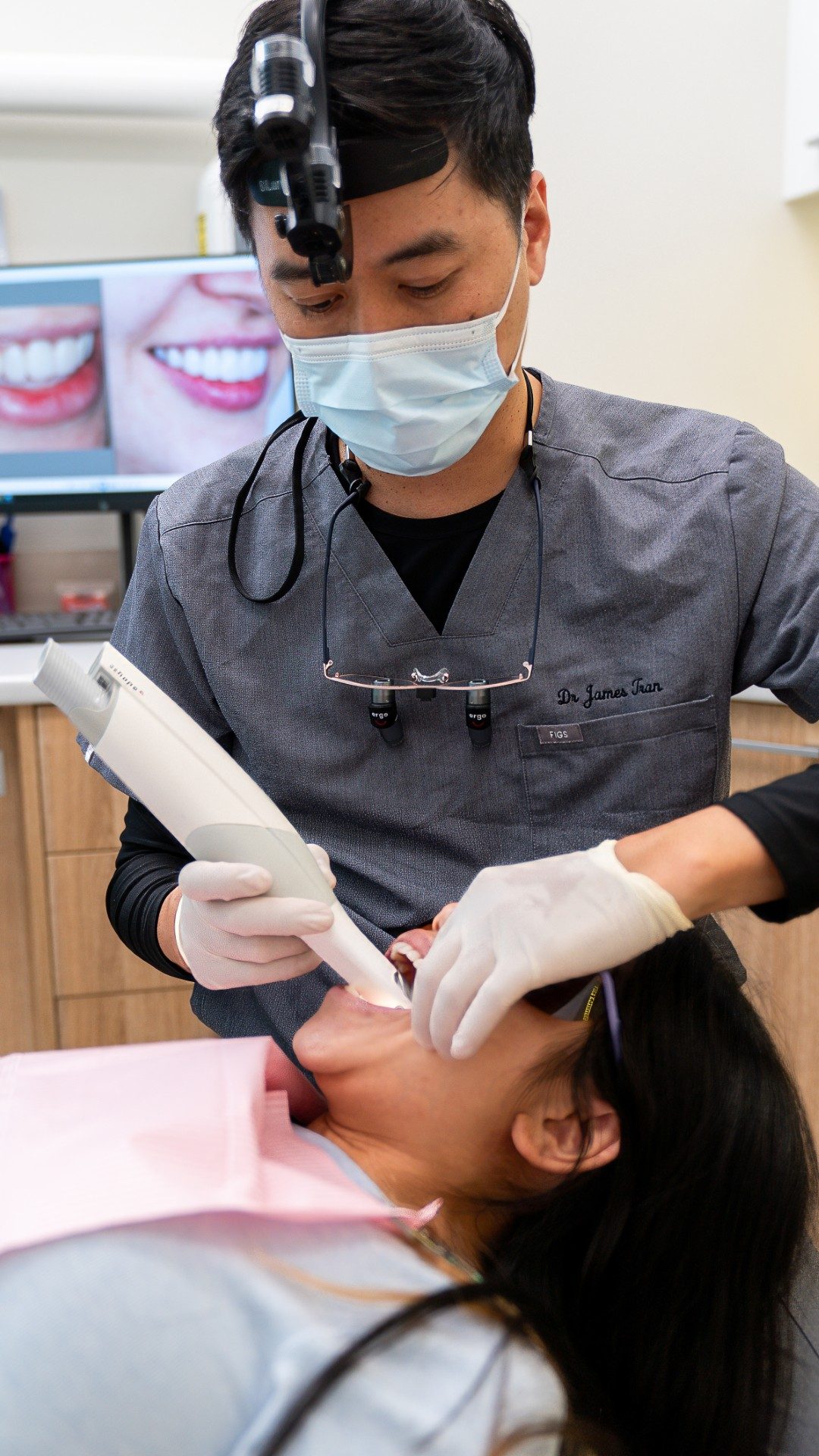
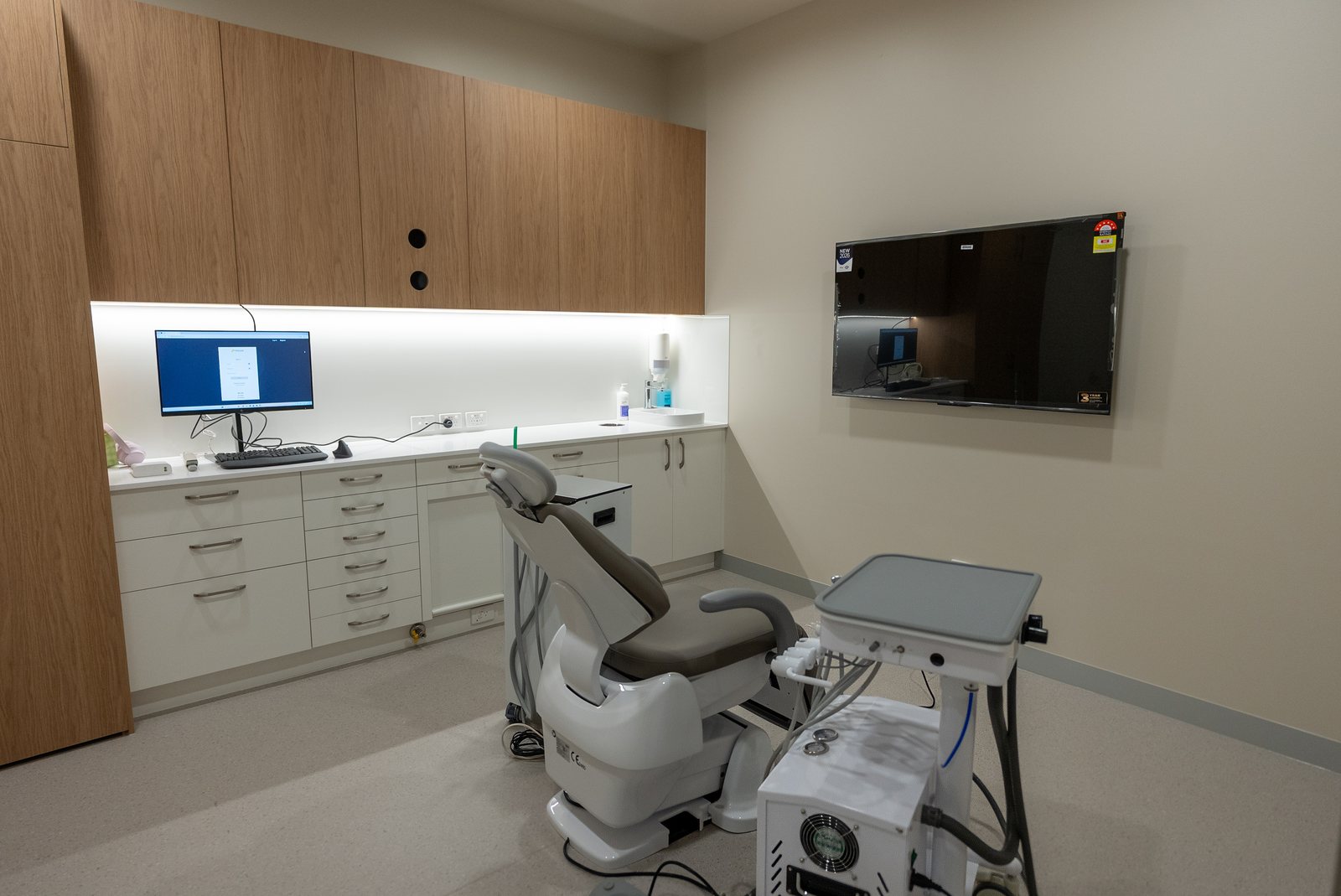
Whitening at Lumi Dental starts with an examination by a dentist, who checks that the wire is firmly bonded, the gums around it are healthy and there is no decay hiding behind the pads. A 3D intraoral scan is taken with the wire in place so the custom trays fit over it, and clinical photographs record the starting shade. Our whitening options are Lumi Home, Lumi Refresh and Lumi Radiance, and the teeth whitening page explains them. The hygiene team, our oral health therapists, look after the clean beforehand and can help with whitening maintenance later.
If the wire needs replacing, the team at Lumi Dental plans the order so that whitening finishes first and the new wire goes on once the enamel has settled. Current offers are on the current deals page, and a written quote follows the examination.
Questions patients ask
Will whitening loosen my fixed retainer?
Whitening is not known to loosen a wire that is already bonded. The bond-strength research is about gluing to enamel that has just been bleached, which is a different situation. If a wire comes loose during a whitening course, a hard food or a tired old bond is the more likely cause.
Can I use whitening strips with a permanent retainer?
You can, but the result is usually uneven. Strips lift over the wire and rarely reach between the teeth. A custom tray from a dentist gives a more even result.
Will the teeth behind the wire stay yellow?
The enamel between the composite pads lightens along with the rest of the tooth; the pads do not. Because all of this is on the tongue side, it is hidden when you talk and smile.
Can I whiten while I still have braces on?
It is usually better to wait until the brackets are off, because the enamel under each bracket cannot be reached. Our article on whitening with braces on goes through the exceptions and what aligner wearers can do.
How long after whitening can a new retainer be bonded?
About two weeks is a sensible gap. Laboratory studies have used anywhere from 24 hours to 4 weeks, and several found that a one-week delay allowed the bond to recover, so a fortnight gives a margin.
Fixed retainer and thinking about whitening? Complimentary cosmetic consult in Melrose Park
If you have a bonded wire and would like a brighter smile without disturbing it, the team at Lumi Dental can check the wire, scan the teeth and plan trays to fit over it. Book a complimentary cosmetic consult at Melrose Central in Melrose Park, or read more about teeth whitening at Lumi Dental. Patients come to us from Ryde, Parramatta, Ermington and Rydalmere, and there is on-site parking.
Sources
- Orthodontics Australia: What are the benefits of a fixed retainer?
- Australian Dental Association (teeth.org.au): Teeth whitening
- Dental Board of Australia: Teeth whitening products
- Trakiniene G and colleagues. The effect of the teeth bleaching with 35% hydrogen peroxide on the tensile bond strength of metal brackets. Scientific Reports (PMC)
About the author

Dr James Tran is a general dentist at Lumi Dental in Melrose Park. He holds a BDent from the University of Sydney and a Graduate Diploma in Oral Implants, and is a Member of the International Congress of Oral Implantologists (MICOI).
This article is general information only and is not a substitute for an examination and individual advice from a registered dental practitioner. Suitability for any treatment varies from person to person.








