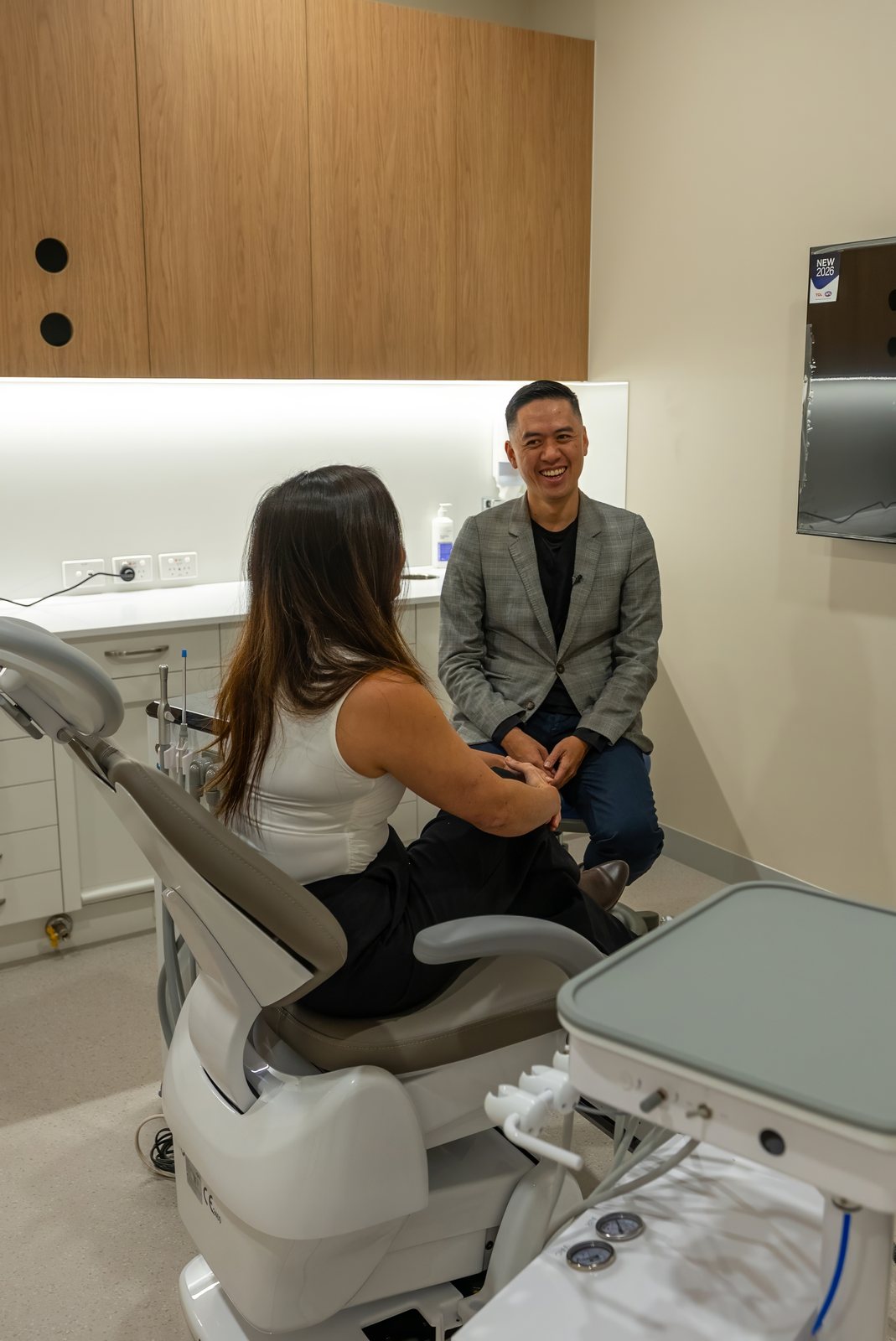

You can whiten your teeth after braces come off, but the better results come from waiting until the gums have settled and any white spots have been assessed, rather than starting gel the week the brackets go. Teeth whitening after braces come off is a common request at the debond review, and the answer turns on how the gums look, whether there are white spots after braces, and how even the colour is. Orthodontics Australia explains that the enamel under each bracket was shielded from food and drink, so teeth often look patchy at first, and that this evens out with saliva over time.
Written by Dr James Tran, BDent (University of Sydney), MICOI, GradDip (Oral Implants), general dentist at Lumi Dental in Melrose Park.
The short version
- Wait. Orthodontics Australia suggests at least six months; many dentists start sooner where gums are healthy and there are no white spots, and an examination decides.
- Have a check-up and clean first. Leftover adhesive, plaque and puffy gums all spoil an even result.
- White spots are mineral loss, not stain. Whitening does not remove them and can make them stand out at first; see our guide to white spots on teeth.
- Your clear retainer is not a whitening tray: gel leaks, coverage is uneven and the retainer can be damaged.
- For teenagers, a parent or guardian consents, and there is no rush: the retainer phase lets the colour even out on its own.
Why wait, and how long
The day the braces come off, the mouth is not at its best. Gums crowded by brackets and wire for a long time are often swollen and bleed easily. The bracket adhesive is polished away at the debond visit, leaving the enamel slightly roughened until saliva and brushing smooth it, and enamel around the brackets has often been through months of plaque and acid. Gel on gums like that stings, and on enamel like that it causes more sensitivity and patchy colour.
How long to wait is where advice differs. Orthodontics Australia recommends at least six months, because teeth can feel sensitive and weak for a period after debond and because saliva reduces the patchiness given time. Many dentists, myself included, are comfortable starting sooner where the gums have settled, the clean is done and there are no white spots to manage, usually a few weeks to a couple of months. The order matters more than the date: examination, clean, then whitening. Our guide on whitening before or after a scale and clean explains why the clean comes first.
White spots after braces, and why whitening can make them stand out
White spot lesions are the most common lasting mark braces leave. Plaque sitting undisturbed around a bracket produces acid, the acid draws mineral out of the enamel beneath an intact surface, and the porous enamel left behind scatters light differently, so it looks chalky. An expert consensus on enamel demineralisation in orthodontics calls them a common problem affecting both the health of the enamel and its appearance, and urges prevention, early detection and timely treatment.
The disappointment I try to prevent is this: a patient whitens to hide the spots and finds they look worse. Peroxide lightens the healthy enamel around a spot, and freshly whitened enamel is dehydrated, so the contrast sharpens. Over the following weeks the enamel rehydrates and the spots often blend in better than before, but a deep spot will not fade. So spots are assessed before whitening, not after.
Remineralisation
Early, shallow spots may improve with time and with products that return mineral to the enamel: fluoride toothpaste and varnish, and creams containing casein phosphopeptide and amorphous calcium phosphate, often applied in the retainer at night. This is the first step for most people.
Resin infiltration
For spots that persist, a low-viscosity resin is drawn into the porous enamel after brief acid conditioning, so it scatters light more like its neighbours. A meta-analysis of eleven studies, covering 1,834 affected teeth in 413 patients, found resin infiltration gave a significantly greater optical improvement than natural remineralisation or fluoride varnish, while noting the evidence was moderate and rested on few well-conducted trials. Our article on resin infiltration for white spots covers the visit.
Microabrasion
Where the spot sits in the outer enamel, a little surface can be removed with a mild acid and abrasive paste, polishing the mark out rather than masking it.
Uneven colour: bracket footprints, adhesive and fillings
Not every patch is a white spot. The commonest pattern after debond is the bracket footprint: a lighter square on each tooth where the enamel was covered, with darker enamel around it. Saliva and brushing even this out over weeks to months, and whitening speeds it up. Flecks of adhesive left at the margins can look yellow and should be polished off at the clean; they do not whiten. Neither do fillings: the Australian Dental Association's consumer site notes that whitening gel only lightens enamel and will not change white fillings, veneers or crowns, so an old filling on a front tooth may need redoing afterwards to match.
Why your retainer is not a whitening tray
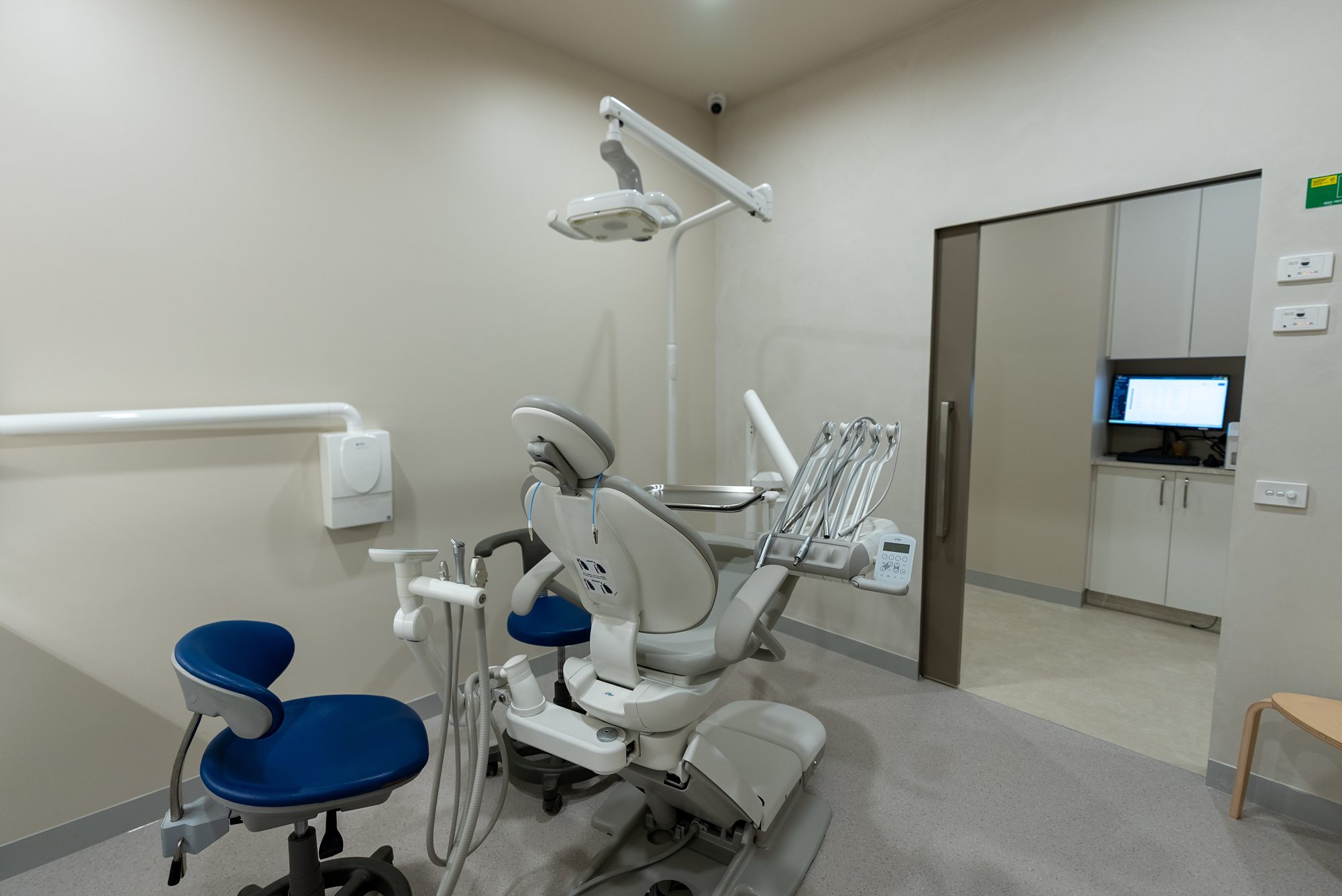
It is a reasonable thought, and there are three reasons against it. First, a clear retainer hugs the teeth with no space for gel, so most of what you load in is squeezed onto the gums the moment it seats, which is where peroxide does its damage; a whitening tray has a thin reservoir on each tooth and an edge trimmed short of the gum. Second, coverage is uneven: gel pools where the retainer is loose and is absent where it is tight, which gives a blotchy result. Third, peroxide can cloud or distort a retainer, and a distorted retainer no longer holds the teeth where the orthodontist left them.
Retainer wear carries on as prescribed throughout a whitening course: take the retainer out, whiten in the tray for the directed time, brush, and put the retainer back. Our guide to custom whitening trays explains how they are made.
A typical timeline after braces
The stages below are a general pattern; your orthodontist and dentist adjust them to your mouth.
| Stage | What is happening | What to do about whitening |
|---|---|---|
| Debond week | Adhesive polished off, gums swollen, teeth tender, retainer fitted | No whitening. Brush gently, wear the retainer as directed, book a check-up and clean |
| Weeks 2 to 4 | Gums settle, enamel surface smooths, bracket footprints start to fade | Check-up and clean. White spots assessed, remineralisation started if needed, shade photographed |
| Whitening course | Custom trays made from a scan; gel worn as directed over a few weeks | Begin once gums are healthy and white spots have a plan. Pause and review if sensitivity builds |
| Maintenance | Colour stabilises; spots blend further as enamel rehydrates | Short top-ups when needed, retainer wear continues, regular cleans |
Sensitivity: why it is more likely after braces
Two sources of sensitivity add together. Teeth that have just finished moving are often tender to bite on for a few weeks. Whitening causes its own sensitivity to cold, which the Australian Dental Association's consumer site says can be very severe, and healthdirect lists sensitive teeth among the reasons whitening may not be recommended. That means a lower-strength gel for shorter sessions, and a sensitive toothpaste for a fortnight beforehand. In my experience it settles within a day or two of each session; if not, the course pauses and the teeth are checked for cracks or exposed roots.

Teenagers, consent and the case for patience
Many people finishing braces are teenagers. There is no fixed legal age for whitening in Australia that I can point to, so the decision is a clinical one. Young teeth tend to have larger pulp chambers and so tend to be more sensitive, and a sixteen-year-old's colour is usually lighter than they think. For anyone under eighteen a parent or guardian gives consent, and the teenager has to want it for themselves. Whitening is cosmetic and there is no penalty for waiting. Our article on whitening for teenagers goes into the detail.
How we approach this at Lumi Dental
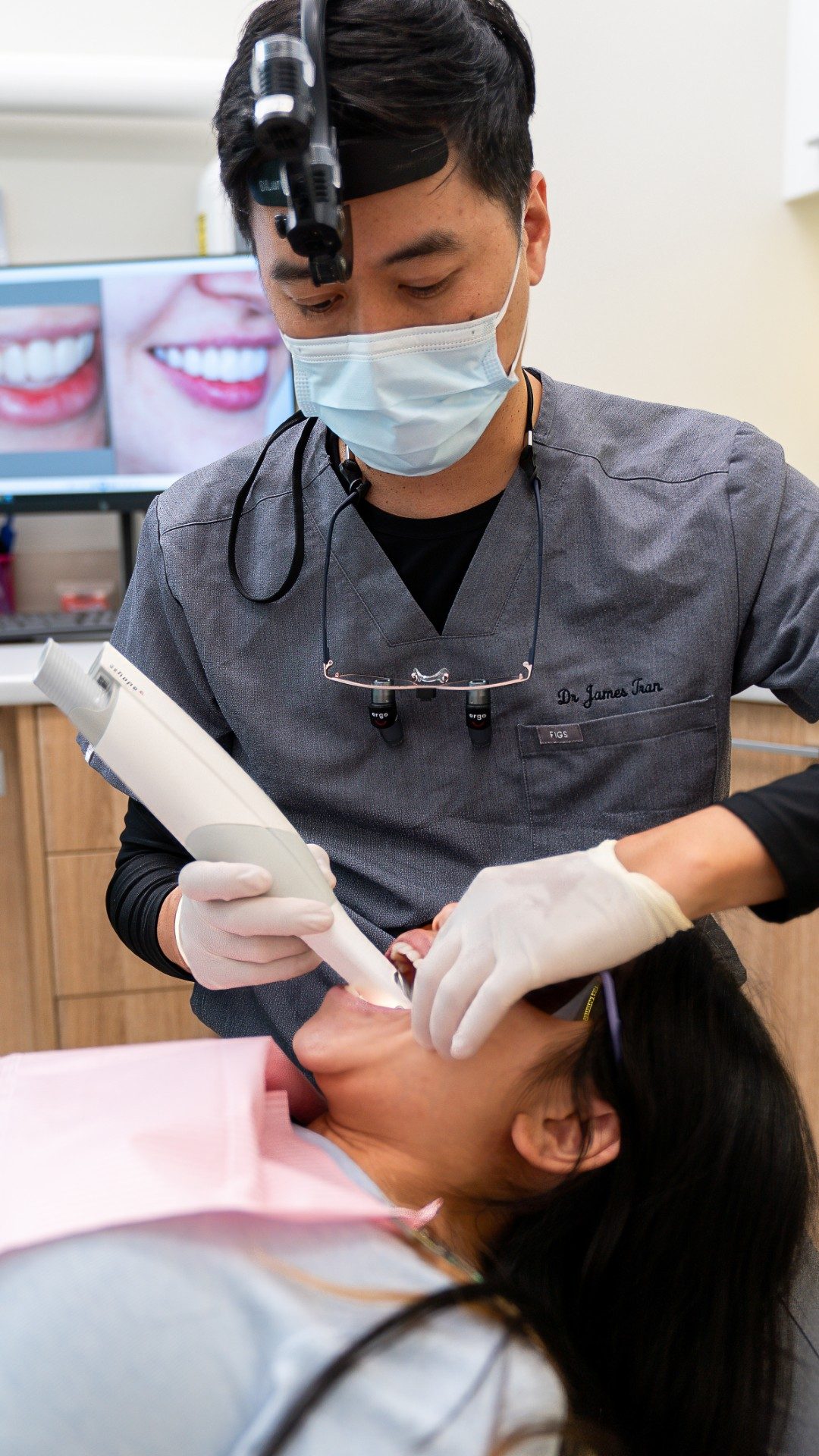
At Lumi Dental in Melrose Park, whitening after braces or aligners begins with an examination by a dentist and a 3D intraoral scan, used to make the custom trays. The dentist checks the gums, looks for white spots and leftover adhesive and photographs the shade. The hygiene team, our oral health therapists, does the clean and may deliver maintenance later. Lumi Dental also provides clear aligners, and the same sequence applies after aligner treatment. Where a white spot needs more than remineralisation, the options are discussed before whitening begins, and a written quote follows.
Questions patients ask
How long after braces can I whiten my teeth?
Orthodontics Australia suggests at least six months. Many dentists start sooner, typically a few weeks to a couple of months after debond, once the gums are healthy, the teeth are cleaned and any white spots assessed. The examination decides, not the calendar.
Will whitening get rid of white spots after braces?
No. White spots are mineral loss inside the enamel, and peroxide lightens the enamel around them, so they can look more obvious for a few weeks before blending in. Persistent spots need remineralisation, resin infiltration or enamel microabrasion.
Can I put whitening gel in my retainer?
No. A retainer fits too tightly to hold gel, so it squeezes onto the gums, coverage is patchy and the retainer can be distorted. Custom trays are made separately.
Why are my teeth two different colours after braces?
The enamel under each bracket was protected from food and drink, so it is lighter than the enamel around it. Saliva and brushing even this out over weeks to months, and a supervised course speeds it up once the gums settle.
Can teenagers whiten their teeth after braces?
Often yes, with a parent or guardian's consent and an examination first. Young teeth are more prone to sensitivity, so lower-strength gel and shorter sessions are usual, and there is no harm in waiting.
Finish the job after braces: complimentary whitening consult in Melrose Park
If your braces have just come off, the team at Lumi Dental in Melrose Park can check your gums, assess any white spots, photograph your shade and tell you plainly when to start whitening. Book a complimentary cosmetic consult, or read more about teeth whitening at Lumi Dental. Patients visit from Ryde, Parramatta, Ermington, Rydalmere and nearby suburbs.
Sources
- Orthodontics Australia: Teeth whitening after braces
- Australian Dental Association (teeth.org.au): Teeth whitening
- PubMed: Expert consensus on enamel demineralization in orthodontic treatment
- PubMed: Resin infiltration to mask post-orthodontic white spot lesions, a meta-analysis
About the author

Dr James Tran is a general dentist at Lumi Dental in Melrose Park. He holds a BDent from the University of Sydney and a Graduate Diploma in Oral Implants, and is a Member of the International Congress of Oral Implantologists (MICOI).
This article is general information only and is not a substitute for an examination and individual advice from a registered dental practitioner. Suitability for any treatment varies from person to person.