

A removable clear retainer can physically hold whitening gel, but it was not made for the job, and using your retainer as a whitening tray tends to give a patchier result, more gum irritation and a retainer that may not fit the way it did. Healthdirect describes take-home whitening as thin, custom-made plastic trays worn with a gel supplied in the correct strength by a dental professional, and notes that only registered dental professionals can use products containing more than 6% hydrogen peroxide. A retainer's one job is holding teeth still after braces, and that job does not pause while you whiten.
Written by Dr James Tran, BDent (University of Sydney), MICOI, GradDip (Oral Implants), general dentist at Lumi Dental in Melrose Park.
The short version
- Whitening trays are thin and flexible, with edges trimmed at the gum line. Retainers are thicker and more rigid with no reservoir, so gel squeezes out onto the gums.
- Clear retainers can hold gel, badly. Hawley plates cannot hold gel at all. A fixed wire retainer keeps gel off the inside of the lower front teeth.
- Peroxide gel may soften and roughen retainer plastic, and a retainer that no longer fits snugly is not holding your teeth.
- Whitening does not change the hours your retainer must be worn.
- The usual answer is custom whitening trays made from a digital scan, with the retainer kept for its own job. Our guide to how custom teeth whitening trays work explains the fit.
The rule: if it was made to hold teeth still, it was not made to hold gel
Better Health Channel puts a retainer's purpose in one line: retainers are used to retain, or hold, the teeth in their new place after treatment, and they stop teeth from shifting. Everything about a retainer follows from that. It is stiff enough to resist ligaments that are still settling, and it sits tight on the enamel for hours with nothing in between. A whitening tray has the opposite brief: hold a thin layer of gel against the enamel, keep it off the gums, and come out after the prescribed time. When patients ask me whether a retainer can double as a whitening tray, that is the distinction I draw first. A retainer can hold gel the way a shoe can hold water.
What a whitening tray does that a retainer does not
Thin, flexible and trimmed to the gum line
Whitening trays are pressed from a soft, thin sheet so they flex over the teeth and seal lightly at the edges. Many are trimmed along the gum margin so gel sits on enamel rather than gum, and some have small reservoirs to hold a measured bead of gel. The tray is a delivery device: it is not trying to move or hold anything.
Thicker, stiffer and full coverage
A clear retainer is pressed from a thicker, more rigid sheet, because flex is the enemy of retention. It covers a few millimetres of gum beyond the teeth, has no reservoir, and seats with force. Load it with gel and the gel has nowhere to go but out: over the gum margin, across the palate, and down the throat. Healthdirect lists irritation or burns to the lips, gums and tongue among the complications of whitening products. Where the retainer stands off a tooth, that tooth gets saliva instead of gel and lightens less, which is why retainer whitening often looks blotchy. Our article on gum irritation after teeth whitening covers how to settle overflow.
Retainer by retainer: clear, Hawley and fixed
Clear (vacuum-formed) retainers
These are the ones people are tempted to use. Orthodontics Australia describes clear retainers as moulded to the teeth from a more malleable plastic than other types, needing more care, more frequent replacement and protection from heat. They will carry gel. The problems are overflow, patchy contact, and what the peroxide does to the plastic.
Hawley (wire and acrylic) retainers
A Hawley has an acrylic plate against the palate and a wire across the front of the teeth. Nothing covers the front surfaces of the teeth, so there is nothing to hold gel against the enamel. A Hawley cannot be used for whitening at all.
Fixed (bonded) wire retainers
A fixed retainer is a wire cemented to the inside of the front teeth, most often the lower six. Orthodontics Australia advises having it checked every six months because the wire can break. Gel cannot reach the enamel under and around the wire, so the inside surfaces of those teeth stay a little darker. This rarely shows, because the inside of the lower front teeth hides behind the lip and tongue. Our guide to fixed versus removable retainers goes through the trade-offs.
| Retainer type | Can it hold gel? | What tends to go wrong | Better option |
|---|---|---|---|
| Clear (vacuum-formed) retainer | Yes, poorly | Gel overflows onto gums, patchy contact, plastic may soften | Custom whitening trays from a scan |
| Hawley (wire and acrylic) plate | No | No plastic over the front of the teeth | Custom whitening trays worn at a separate time |
| Fixed (bonded) wire retainer | Not relevant; it stays in place | Inside surfaces of the bonded teeth stay darker | Whiten the outside surfaces with custom trays |
What whitening gel may do to the retainer
This is the part most online answers skip. Clear retainers and clear aligners use closely related plastics, and a peer-reviewed laboratory study tested what 10% carbamide peroxide does to clear aligner material used as a bleaching tray at night. After two weeks of gel at body temperature, tensile strength and translucency were unchanged, but surface hardness roughly halved and both surfaces became measurably rougher. The authors concluded the aligners could be used for bleaching without excessive distortion, and called for clinical trials before recommending it.
Read that from a retainer's point of view. Softer plastic flexes more under the pull of settling teeth, and a rougher surface holds plaque and stain. An aligner is replaced in a week or two; a retainer is expected to last years. A retainer that has gone cloudy, soft or loose may no longer be holding your teeth where the orthodontist left them.
Timing: whitening after braces come off
The weeks after braces are when the question comes up most, and when retainer wear matters most. Orthodontics Australia gives a typical schedule: around 22 hours a day at first, then every night after about three months, and eventually two to three nights a week, always on the orthodontist's instructions. An hour of gel in the retainer is not an hour of retention if the gel is lifting the plastic off the teeth. The cleaner arrangement is whitening trays in the evening, then the retainer straight back in.
Teeth straight out of braces often carry chalky white marks where plaque sat around the brackets, and these can look more obvious in the first days of whitening. Our articles on teeth whitening after braces come off and white spots on teeth cover timing and options.
What a dentist does instead
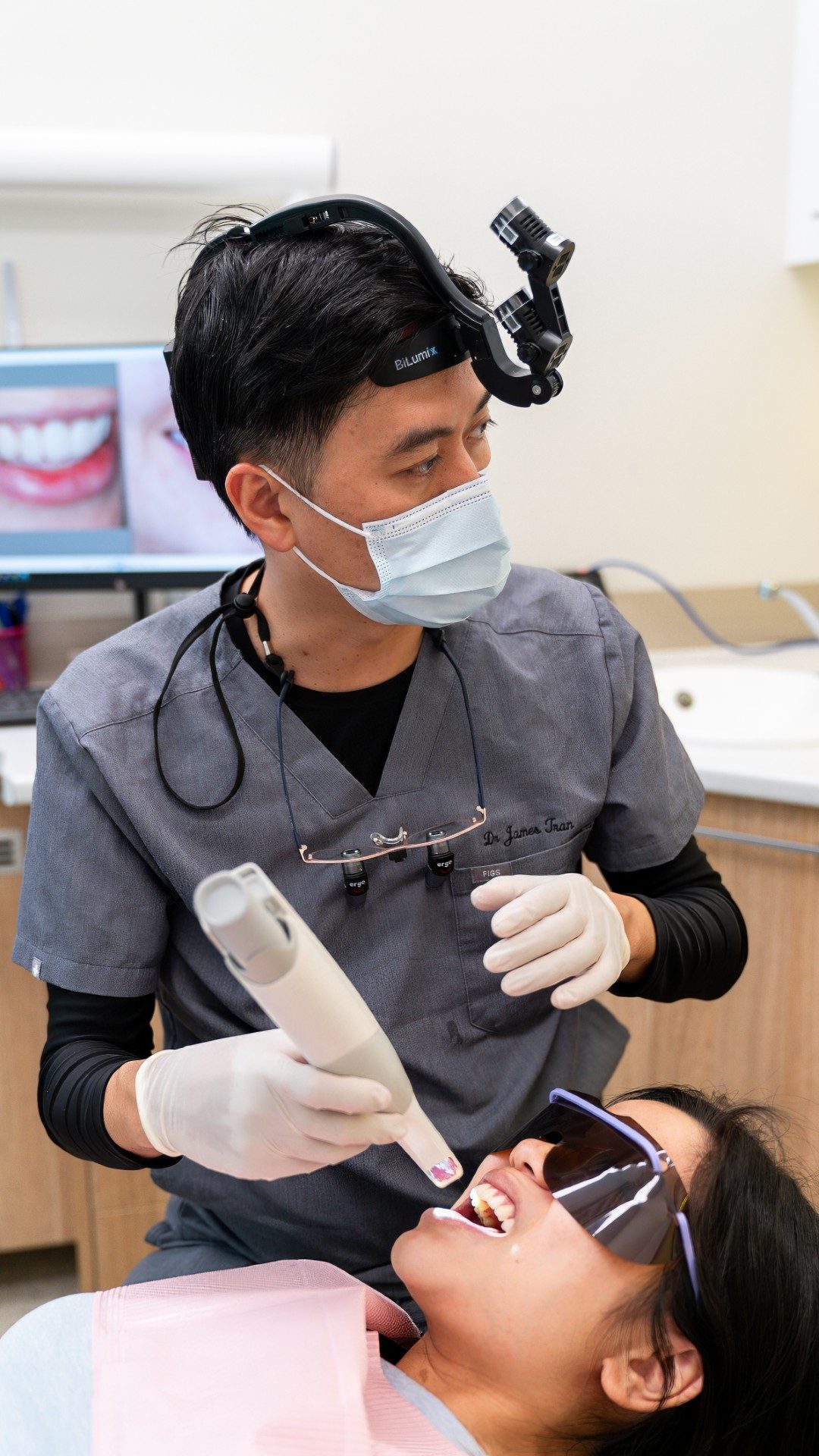
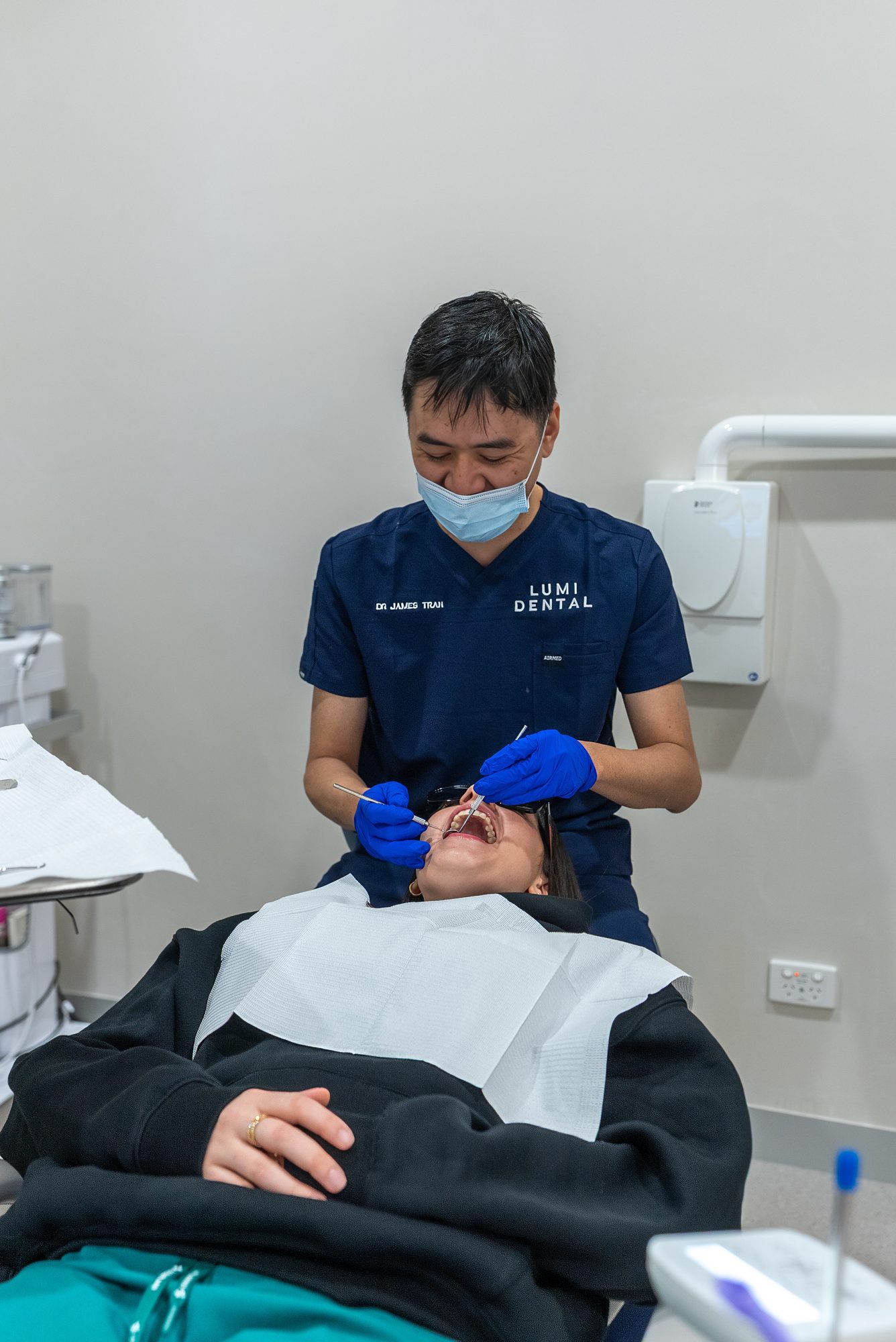
The sequence I usually follow is unglamorous. First an examination, because healthdirect lists gum disease, cracks or holes in the teeth and untreated dental problems as reasons whitening is not recommended, and because whitening will not change the colour of crowns, veneers or fillings. Then a digital scan of both arches, from which thin whitening trays are made, and a gel at a strength chosen for your enamel and sensitivity, with a written schedule. The retainer is checked for fit at the same visit. Healthdirect notes that take-home whitening takes longer than in-chair treatment without the final result being better or worse; what decides the result is tray fit and whether the schedule is followed.
How we approach this at Lumi Dental
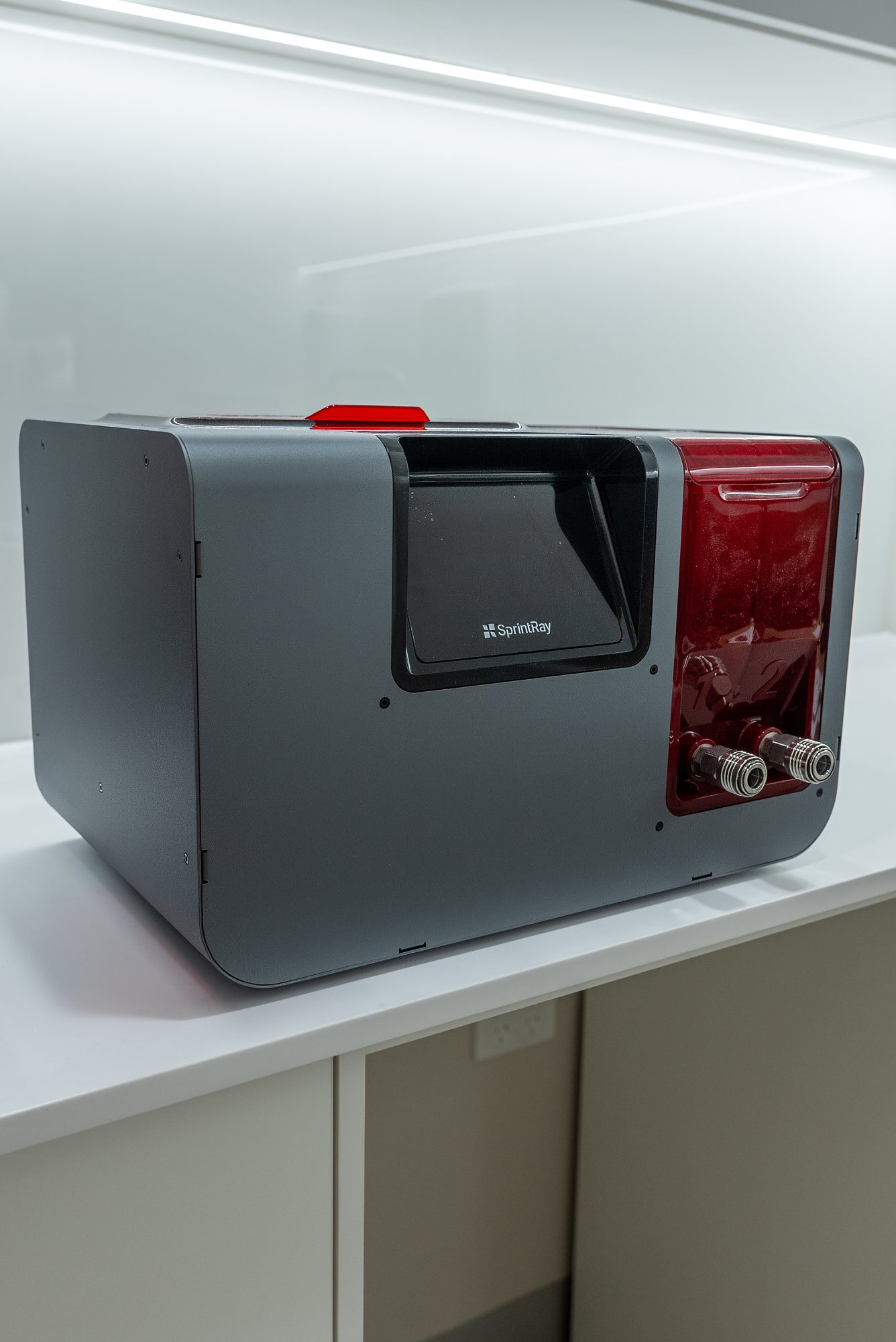
At Lumi Dental in Melrose Park, a whitening request from someone wearing a retainer starts with a dentist checking the teeth, the gums and the retainer itself. If the retainer is loose, cracked or no longer seating fully, that is dealt with first. A 3D intraoral scan is taken in-house and used to make custom whitening trays, so the retainer is never asked to carry gel. The whitening options at Lumi Dental are named Home, Refresh and Radiance, and the dentist recommends one based on stain type and target shade. The hygiene team of oral health therapists handles cleans and maintenance, and the scanning and printing equipment is described on the Lumi Dental technology page.
Questions patients ask
Can I put whitening gel in a clear retainer overnight?
It is not recommended. A retainer is not shaped to keep gel off the gums, so overnight wear means hours of gel on soft tissue, and the peroxide may soften the plastic. Whitening during sleep is a decision for a dentist, who can make trays and choose a gel strength suited to long wear.
Can you whiten teeth with a permanent retainer?
Yes. The outside surfaces whiten normally in custom trays. The enamel under and around the bonded wire does not receive gel, so the inside of those teeth stays slightly darker, which is rarely visible.
Will whitening gel damage a retainer?
It may. Laboratory testing of clear aligner plastic found two weeks of 10% carbamide peroxide roughly halved surface hardness and roughened the surface, and a softer, rougher retainer tends to fit less well and stain more. Our guide to how to clean a retainer or night guard explains what is safe to use on the plastic.
Can you use whitening strips with a retainer?
With a removable retainer, strips go on with the retainer out, and the retainer goes back in after rinsing. With a fixed retainer, a strip only whitens the surface it touches. Strips sold to the public are limited in strength, so results are slower and smaller.
Do I still have to wear the retainer the same hours if I whiten?
Yes. Time with gel in the retainer is not reliable retention time, because gel lifts the plastic off the teeth. The orthodontist's wear schedule stands regardless of whitening, which is why separate trays are simpler.
Whitening after braces, done with the right tray: complimentary cosmetic consult in Melrose Park
If your braces have just come off and you want the colour to match the new alignment, the team at Lumi Dental in Melrose Park can check your retainer, scan your teeth and make trays that whiten without risking your result. Book a complimentary cosmetic consult, or read more about teeth whitening at Lumi Dental. Patients visit from Ryde, Parramatta, Ermington, Rydalmere and nearby suburbs.
Sources
- healthdirect: Teeth whitening
- Orthodontics Australia: Do you need a retainer after orthodontic treatment?
- Better Health Channel: Orthodontic treatment
- PMC: The effect of 10% carbamide peroxide dental bleaching on the physical properties of clear aligners, an in vitro study
About the author

Dr James Tran is a general dentist at Lumi Dental in Melrose Park. He holds a BDent from the University of Sydney and a Graduate Diploma in Oral Implants, and is a Member of the International Congress of Oral Implantologists (MICOI).
This article is general information only and is not a substitute for an examination and individual advice from a registered dental practitioner. Suitability for any treatment varies from person to person.








