
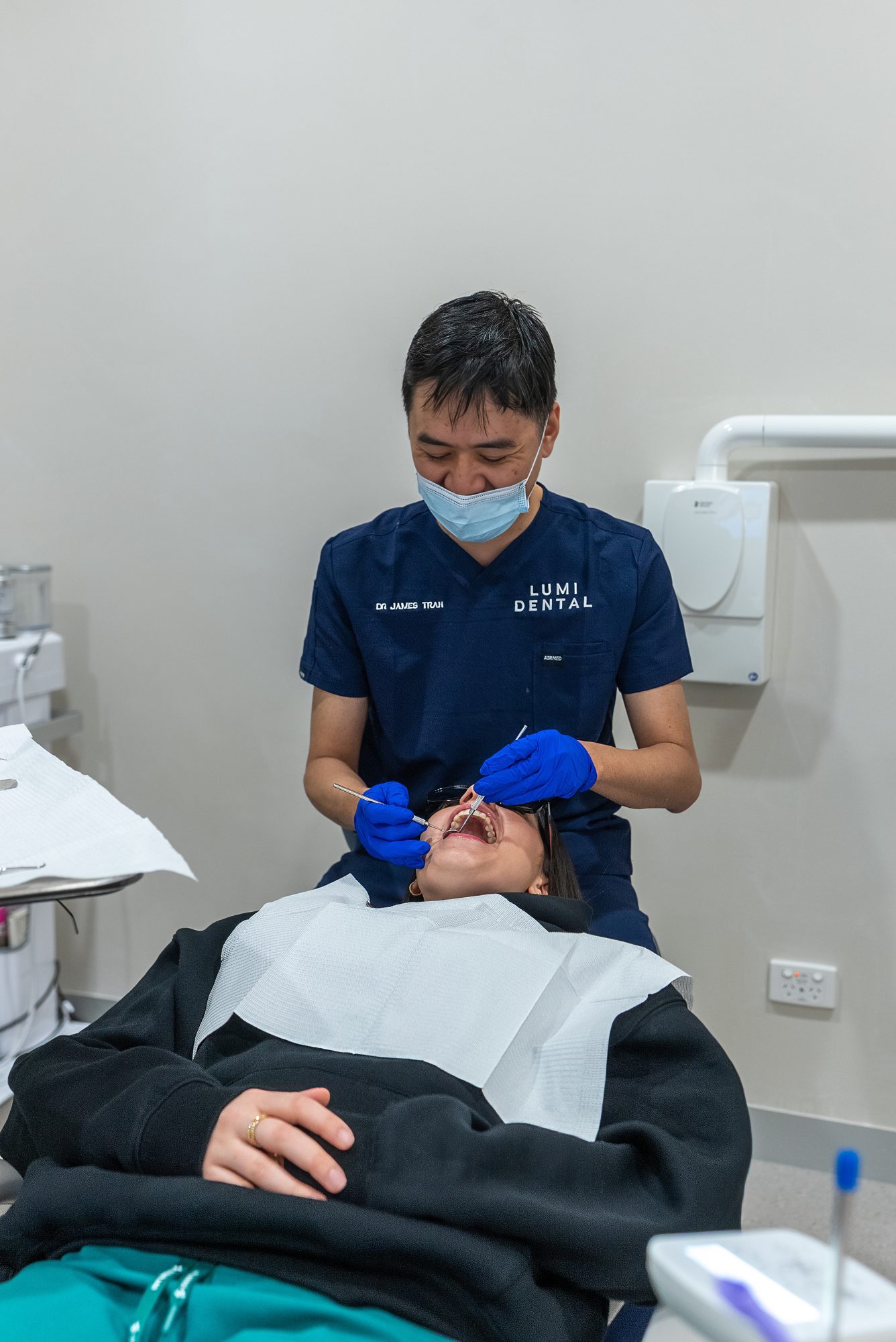

Children who are deaf or hard of hearing usually do well at the dentist when the family and the dental team agree, before the chair goes back, how the child will communicate and how they will signal stop, and when the team knows about any hearing device before the visit. Hearing Australia reports that it cares for around 14,000 children up to the age of 12 who use a hearing aid or cochlear implant, so a dental team should expect to meet these families regularly. This guide for parents covers booking, communication in the chair, interpreters, devices and anxious children.
Written by Dr James Tran, BDent (University of Sydney), MICOI, GradDip (Oral Implants), general dentist at Lumi Dental in Melrose Park.
The short version
- Your child's communication approach, whether spoken English, Auslan or both, is the starting point, and the team should follow it.
- Tell the team when you book: how your child communicates, any hearing aid or cochlear implant, and whether a longer or quieter first appointment would help.
- Agree a stop signal, such as a raised hand, before anything goes in your child's mouth.
- A mask hides the lips, so explanations happen face to face first, with the mask down at a distance.
- Hearing aids and sound processors can often stay on for talking and come off for some steps. Our guide to hearing aids, cochlear implants and dental treatment covers the equipment questions.
- The National Sign Language Program is for Deaf seniors, not children, so ask about interpreting through your child's NDIS plan.
The single rule: agree communication and the stop signal before the chair goes back
Once a child is lying back, with a light overhead, a mirror in the mouth and a masked adult beside them, communication narrows to what they can see and feel. So the order matters: questions, explanations and the stop signal are sorted out while your child is sitting up, can see faces clearly and has their devices on if they use them.
In my experience, children who are deaf or hard of hearing are often very good visual communicators, and parents know exactly what works for their child. The team's job is to listen, record it and use it every visit.
Booking: what to tell the team
When you book, mention how your child communicates (spoken language, Auslan, sign-supported English, lip-reading or a mix), whether you would like an interpreter, any hearing aid, bone conduction device or cochlear implant, whether reminders by SMS or email suit you, and anything else that affects visits, such as anxiety or sensory sensitivity.
A first or quiet appointment
Background noise makes listening harder with hearing aids or a cochlear implant, so a first appointment of the day or a quieter time can help. For a first visit, ask for extra time so your child can look around and meet the dentist before anything clinical happens. Our guide to a child's first dental visit covers what usually happens and when to start.

Communication in the chair
Aussie Deaf Kids describes the main communication approaches families use as auditory-oral approaches, sign bilingualism (usually Auslan first, with English as a second language) and total communication, and notes that families can change approach as they learn what suits their child.
Faces, masks and lip-reading
Aussie Deaf Kids estimates that about 30% to 40% of speech sounds can be lip-read under the best conditions, and lists covering the mouth and poor lighting among the things that make it harder. A dental mask covers the mouth completely. Helpful habits include:
- explaining each step with the mask down, at your child's eye level, before masking up;
- light on the dentist's face rather than behind them;
- rephrasing rather than repeating when something is missed;
- key words written on a card or tablet.
Aussie Deaf Kids also suggests explaining dental phrases such as "open wide" and "say ahh" beforehand, so a child can follow the lip patterns.
Show, then do
Dentists often use a "tell, show, do" approach with children. For a child who relies on vision, the showing carries most of the weight: let them hold the mirror, see the polishing cup spin on a fingernail and feel the air syringe on their hand. A visual schedule of three or four steps, ticked off as you go, shows what is next and when the visit ends.
Signals that work lying down
- Raised hand: stop, please.
- Thumbs up: okay, keep going.
- Pointing: something hurts here.
- A light tap on the shoulder from the dentist, if your child is comfortable with touch: a new step is starting.
Auslan interpreters for children: who arranges them
If your family uses Auslan, an interpreter helps your child, not just you, take part. Deaf Connect explains that the National Sign Language Program is available to Deaf Australians without an NDIS plan who are 65 or older (50 or older for Aboriginal and Torres Strait Islander people), so it does not cover children's appointments.
For children, Hearing Australia notes that the NDIS can fund supports not available through Hearing Australia, including Auslan services. If your child has an NDIS plan, check with your plan manager or planner whether interpreting for dental visits is included before the appointment. Deaf Connect also notes that booking interpreters for public hospitals is the state government's responsibility, which is relevant if your child is ever referred for treatment in a hospital.
On the day, the interpreter needs a spot in your child's line of sight, and the dentist should speak to your child, not the interpreter. Our article on dental visits for Deaf and hard of hearing adults covers the same points for grown-ups.
Hearing aids and cochlear implant processors
A routine many families use: devices on for the welcome and explanations, then a decision with your child about noisy steps such as cleaning, where amplified suction can be loud. Some children prefer devices off and back on before the dentist explains what comes next; others keep them on throughout. Either is fine if it is agreed first. Vibration from a polisher may still be felt through the teeth and jaw with devices off, so warn your child beforehand. Bring a case, so a device that comes off goes straight into it.
Equipment questions specific to cochlear implants are set out in our article on hearing aids, cochlear implants and dental treatment, and dental X-rays for children explains when X-rays are taken.
| Visit moment | What may help |
|---|---|
| Booking | Communication approach, devices and interpreter plans written on the record |
| Waiting room | A team member comes over to you rather than calling a name across the room |
| Before the chair goes back | Explanations with the mask down; stop signal agreed; interpreter positioned |
| Cleaning or polishing | A decision about devices on or off; a warning about vibration |
| End of visit | Devices back on before the results are explained; a written summary for home |
Babies, children and teenagers
For babies and toddlers, the visit is mostly a conversation with you, often with your child on your lap. Hearing Australia notes that about 500 children are fitted with hearing aids before their first birthday each year, so a baby with devices at a first dental check is not unusual.
School-age children can practise the signals at home and choose how devices are handled. Teenagers often prefer to manage it themselves, typing questions on their phone and deciding whether a parent comes in, and following their lead builds independence.
Language matters too. Hearing Australia notes that some people in the Deaf Community prefer Deaf with a capital D, and that many deaf or hard of hearing people prefer to avoid terms like "hearing impaired". The dental team should use the words your family uses.
When your child is also anxious or has other needs
Some children who are deaf or hard of hearing are also anxious about the dentist, autistic or managing other health needs, and Aussie Deaf Kids reminds families to check that a communication approach is accessible if a child has other disabilities. Shorter visits and the same clinician each time can help. Our article on a child who is scared of the dentist has more ideas.
Lumi Dental does not provide general anaesthetic itself. If a child needs more treatment than can comfortably be done in the chair, the team refers to a paediatric dentist or hospital service.
How we approach this at Lumi Dental
At Lumi Dental, the dentist examines your child and makes the diagnosis, and the oral health therapists see children for cleans and prevention. You can ask the team to note your child's communication approach, devices and interpreter arrangements when you book, and the dentist or oral health therapist will agree signals with your child before starting. The whole practice accepts the Child Dental Benefits Schedule for eligible children, and our CDBS explainer covers how it works. You can read more on the children's dentist page.
Questions patients ask
Should my child take their hearing aids out at the dentist?
Not necessarily. Many children keep them on for talking and take them out for noisy steps such as cleaning, then put them back on before the dentist explains anything. Agree the plan with your child before the visit.
Can my child have dental X-rays with a cochlear implant?
Usually, yes. Our article on hearing devices and dental treatment summarises published guidance that treats dental X-rays as safe with a cochlear implant, with the external processor moved away briefly.
How do I get an Auslan interpreter for my child's dental appointment?
Ask the team when you book so the appointment can be timed with the interpreter, and check with your NDIS plan manager whether interpreting is funded, as the National Sign Language Program is for Deaf seniors.
How will my deaf child tell the dentist to stop?
With a signal agreed before anything goes in their mouth, such as a raised hand. The dentist should stop as soon as they see it, and practising at home first helps.
Is my child covered by the Child Dental Benefits Schedule?
That depends on eligibility. Lumi Dental accepts the CDBS for eligible children, and the Medicare CDBS page explains how it works.
Book your child's check-up at Lumi Dental, Melrose Park
If your child is deaf or hard of hearing, the team at Lumi Dental can plan a visit around how your child communicates, agree signals first and note any device on the record. Read about our children's dentist services or how the Child Dental Benefits Schedule works, then book at Melrose Central in Melrose Park. Families visit from Ryde, Parramatta, Ermington and Rydalmere, and there is on-site parking.
Sources
- Hearing Australia: Services for children and young adults
- Hearing Australia: Our funding options for children
- Deaf Connect: National Sign Language Program explained
- Aussie Deaf Kids: Making choices about communication
About the author

Dr James Tran is a general dentist at Lumi Dental in Melrose Park. He holds a BDent from the University of Sydney and a Graduate Diploma in Oral Implants, and is a Member of the International Congress of Oral Implantologists (MICOI).
This article is general information only and is not a substitute for an examination and individual advice from a registered dental practitioner. Suitability for any treatment varies from person to person.







