
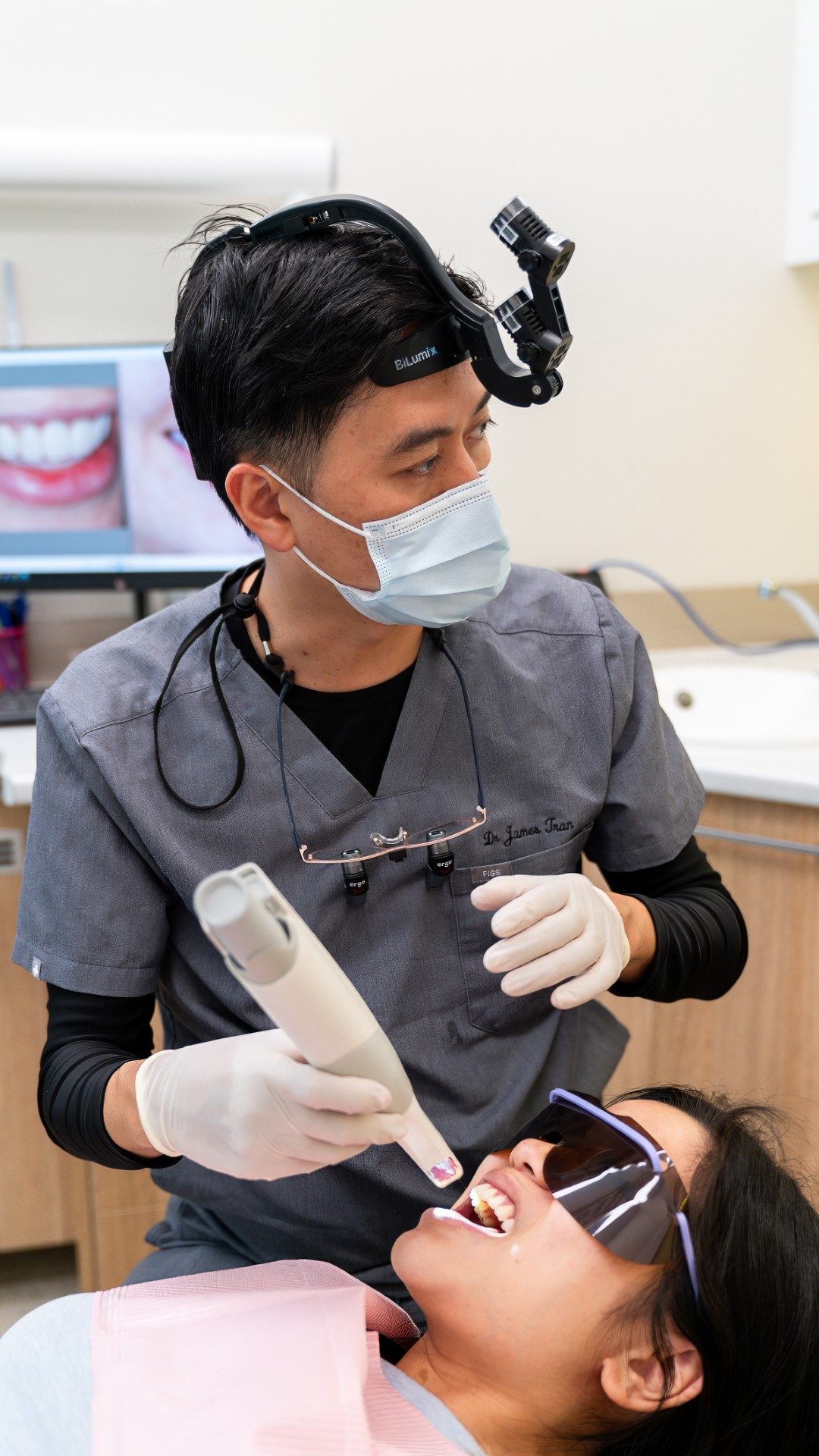

Teeth whitening works the same way for Deaf and hard of hearing adults as for anyone else; what needs planning is communication, because once the cheek retractor is in and the dentist is masked, neither speech nor signing is easy. healthdirect cites an estimate that about 3.6 million Australians have some level of hearing loss. The practical answer is to agree, before the first session, how explanations, questions and a stop signal will work, and then the whitening itself can go ahead as planned.
Written by Dr James Tran, BDent (University of Sydney), MICOI, GradDip (Oral Implants), general dentist at Lumi Dental in Melrose Park.
The short version
- Being Deaf or hard of hearing does not change whether whitening suits you. Your teeth, gums and existing fillings do.
- Say how you communicate when you book: Auslan interpreter, captions, written notes, lip reading, SMS or email.
- Agree on the stop signal before anything goes in your mouth. A raised hand for pause and a thumbs up for fine is a common choice.
- Hearing aids and cochlear implant processors can usually stay on if they are comfortable. Our guide to hearing aids, cochlear implants and dental treatment covers the equipment questions.
- Take-home instructions work best written down, with captions on any video.
- Questions about sensitivity during the course can go by text or email rather than a phone call.
The single rule: agree on communication before the mask goes on
An in-chair whitening visit stacks up things that block communication: a mask over the dentist's mouth, a bright light, a retractor holding the lips apart and suction near your ears. With a retractor in, you cannot easily speak or sign beyond simple gestures, so the order matters. Explanations, questions and consent happen face to face first, with the mask down at a safe distance and the room quiet. Then the agreed signals take over.
In my experience, a two-minute agreement at the start saves far more time than it costs. People who are Deaf or hard of hearing usually know exactly what works for them, and the useful step is recording it so the next visit starts from the same place.
| Moment | What may help |
|---|---|
| Booking | State how you communicate, ask for it to be noted on your file, and choose email or SMS for reminders |
| Consultation | An interpreter booked ahead if you use Auslan; the mask down while the plan is explained; written treatment notes |
| Mask on | All questions asked before masking; key words written down; a clear-window mask if one is available |
| In-chair session | Agreed hand signals; clear rather than dark eye protection; the interpreter in your line of sight |
| Take-home instructions | Written steps; captioned video; a practice run with the trays in the chair |
| Follow-up questions | Text or email to report sensitivity, with replies in writing |
Booking: tell the team how you communicate
When you book, say how you would like to communicate and ask for it to be written on your file. Useful details include:
- whether you use Auslan and would like an interpreter,
- whether you lip-read, and which side you prefer people to speak from,
- whether written notes, a tablet or a captioning app on your phone suits you,
- whether reminders by SMS or email work better than calls,
- whether you use hearing aids, a cochlear implant or both.
Email and SMS are often the simplest way to book, and Expression Australia points to the National Relay Service for phone calls. Our article on dental visits with vision or hearing impairment has wider booking tips.
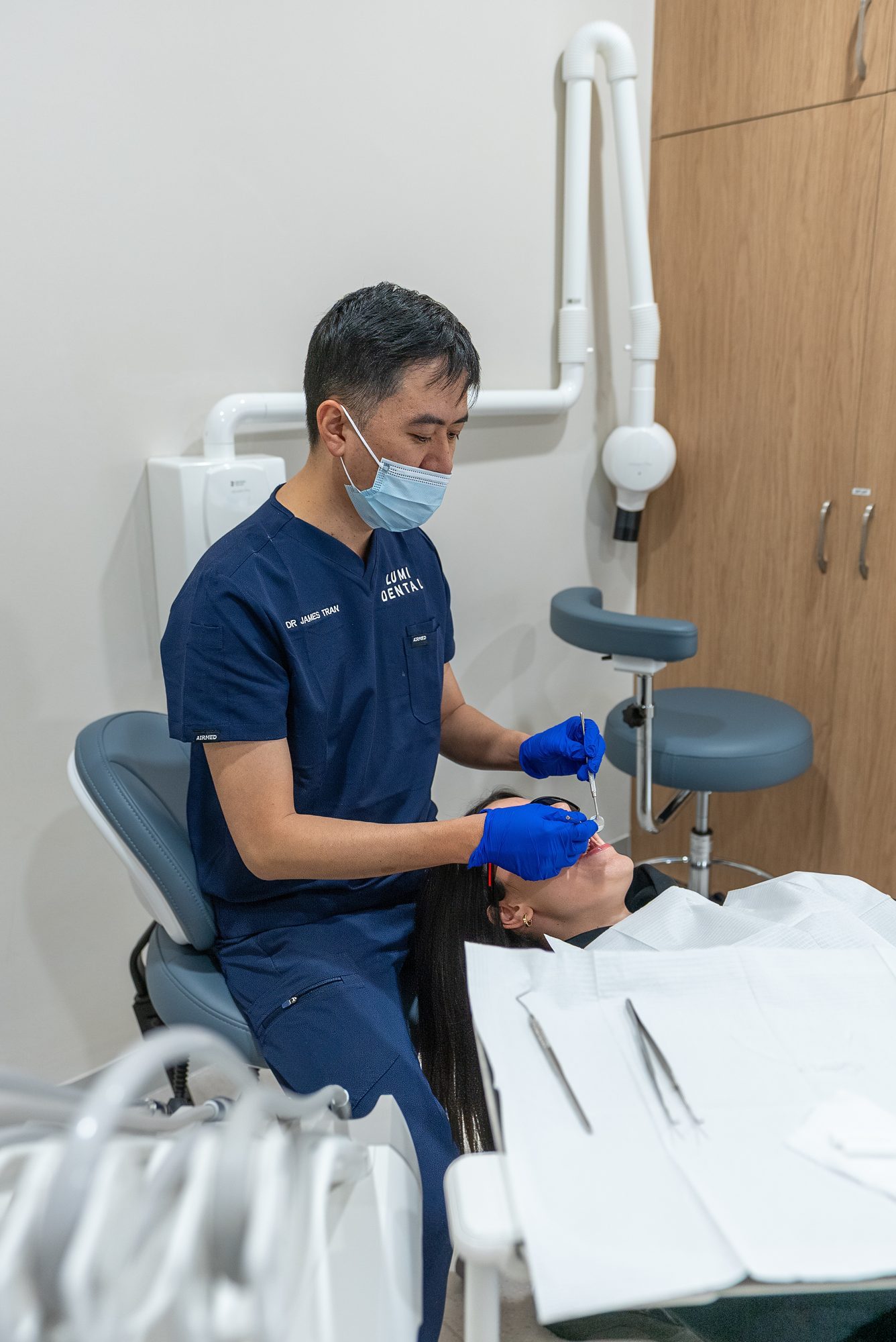
Auslan interpreters: who arranges them and how
Expression Australia notes that choosing the right mode of communication may mean using an Auslan interpreter. Funding depends on your age and circumstances.
- Aged 65 or over (50 or over for Aboriginal and Torres Strait Islander people) and not eligible for the NDIS: the National Sign Language Program, run by Deaf Connect for the Australian Government, provides free interpreting and captioning. The Department of Health lists health and medical appointments that attract a Medicare rebate among its uses, so ask Deaf Connect whether a whitening consultation fits before relying on it.
- Under 65: Auslan interpreting is usually arranged through an NDIS plan, where one is in place. Check with your plan manager whether a dental visit is covered.
- Book early. The Department of Health suggests booking early to allow preparation time.
Confirm who books and who pays before the appointment, not on the day. During the visit, the dentist should look at and speak to you rather than the interpreter, and the interpreter needs a spot you can see while lying back.
Masks, lip reading and written steps
Expression Australia notes that only about 30 percent of what we say can be seen on the lips and mouth, and that not everyone with hearing loss lip-reads. A mask removes even that. Things that may help:
- The dentist explains each step before masking up, at your eye level, with the light on their face rather than behind them.
- Rephrasing, rather than repeating the same words, when something is missed.
- A clear-window mask, if the practice has one. Ask, but do not assume.
- A written step card: retractor in, gum barrier on, gel on, wait, rinse, retractor out.
- Key words written down whenever background noise is high.
Bring a notes app or tablet if you prefer typing.
In-chair whitening: retractors, the light and agreed signals
In-chair whitening involves a cheek retractor, a protective barrier placed along the gums, gel on the teeth for set periods and, with some systems, a light. Our guide to in-chair whitening explains each stage.
Signals to agree before you start
- Raised hand: pause, please.
- Thumbs up: comfortable, carry on.
- Pointing to a tooth or the gum: stinging there.
- A light tap on the arm from the dentist, if you are happy with touch: a step is about to start or finish.
Eye protection and eye contact
Protective glasses are worn while gel is placed and while any light is used. Dark tinted lenses can make faces and signs harder to read, so ask about clear ones, and agree where any interpreter will stand before the chair goes back.

Hearing aids and cochlear processors during whitening
Whitening does not use a drill, so many people keep hearing aids or a sound processor on for the whole visit. If the retractor presses near the ear, or the earpiece whistles as you lie back, take it off and put it in its case rather than on the chair arm.
Hearing Australia advises keeping hearing aids dry, never rinsing them under running water, wiping off any moisture with a tissue or dry cloth, and removing them before using products such as hairspray or sunscreen because chemicals may damage them. It makes sense to treat whitening gel and rinse water the same way and keep the device out of the splash zone.
Cochlear implants have a few specific equipment questions, mostly for other treatment, and our article on hearing aids and cochlear implants at the dentist covers them.
Take-home trays: instructions you can read and keep
Take-home whitening relies on a few steps done well: how much gel, how long to wear the trays and how to clean them. Our guide to how much whitening gel to put in your trays covers loading and cleaning. Ask for:
- written steps, with the wear time and storage rules at the top,
- captions on any demonstration video,
- a practice run in the chair, loading and seating a tray while the dentist or oral health therapist watches.
Follow-up: reporting sensitivity in writing
Sensitivity is one of the most common side effects of whitening, and our article on how long sensitivity after whitening lasts explains the usual pattern. Agree at the start how you will report it, by email or SMS. Say what you feel, where and when, such as a zing with cold water on the upper front teeth. If a tooth aches rather than zings, stop and get in touch. I would rather hear about it early, in writing, than at the review.
How we approach this at Lumi Dental
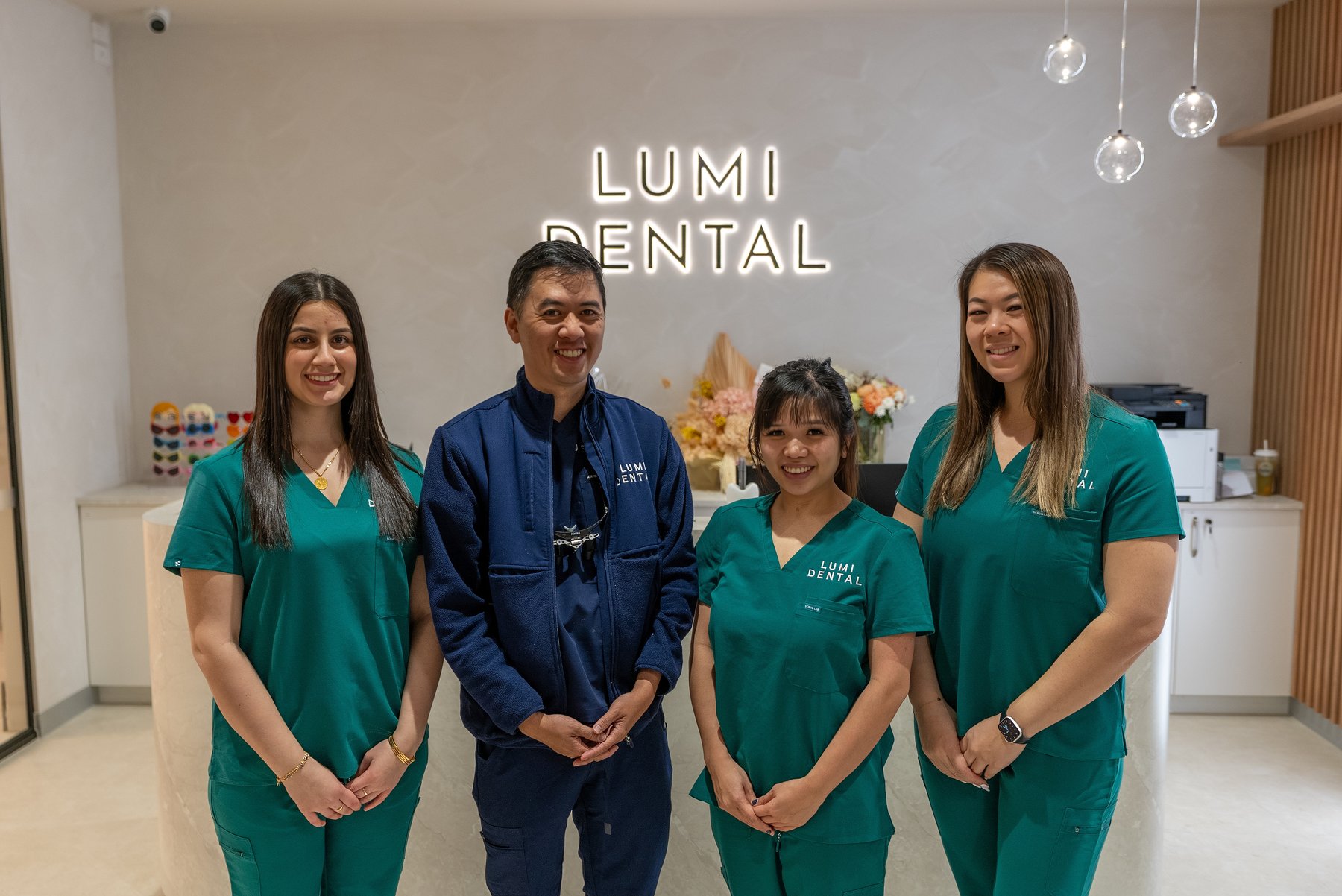
At Lumi Dental, whitening starts with an examination by a dentist, who checks the teeth, gums and any fillings or crowns that will not change colour. You can ask the team to note your communication preference when you book, and the dentist explains the plan face to face and agrees signals with you before anything goes in your mouth. The whitening options are named Lumi Home, Lumi Refresh and Lumi Radiance, and the dentist will explain which may suit you. You can read more on the teeth whitening page.
Questions patients ask
Can deaf people get teeth whitening?
Yes. Being Deaf or hard of hearing does not affect whether whitening suits you; your teeth and gums do. Planning how you will communicate during the appointment is the main difference.
Can I wear my hearing aids during teeth whitening?
Usually, yes, if they are comfortable. Take them out and put them in their case if the retractor presses or they whistle, and keep them away from gel and water.
How do I tell the dentist to stop if I cannot talk?
Agree a signal before you start, such as a raised hand for pause. The dentist should stop as soon as they see it.
Can I bring an Auslan interpreter to my dental appointment?
Yes, and saying so when you book lets the appointment be timed around the interpreter. Confirm beforehand who arranges and pays for the booking, as this depends on your NDIS or National Sign Language Program eligibility.
Can I get whitening instructions in writing?
Yes. Ask for written steps and captioned video, and say whether email or SMS suits you for follow-up. You can make the request through the contact page.
Thinking about whitening? Complimentary cosmetic consult in Melrose Park
If you are Deaf or hard of hearing and would like a brighter smile, the team at Lumi Dental can check your teeth and gums, agree how you will communicate and talk through whether trays or an in-chair visit may suit you. Book a complimentary cosmetic consult at Melrose Central in Melrose Park, or read about teeth whitening options at Lumi Dental. Patients visit from Ryde, Parramatta, Ermington and Rydalmere, and there is on-site parking.
Sources
- healthdirect: Hearing loss
- Expression Australia: Communicating with people who are Deaf or hard of hearing
- Australian Government Department of Health: The National Sign Language Program
- Hearing Australia: Taking care of your hearing aids
About the author

Dr James Tran is a general dentist at Lumi Dental in Melrose Park. He holds a BDent from the University of Sydney and a Graduate Diploma in Oral Implants, and is a Member of the International Congress of Oral Implantologists (MICOI).
This article is general information only and is not a substitute for an examination and individual advice from a registered dental practitioner. Suitability for any treatment varies from person to person.







