
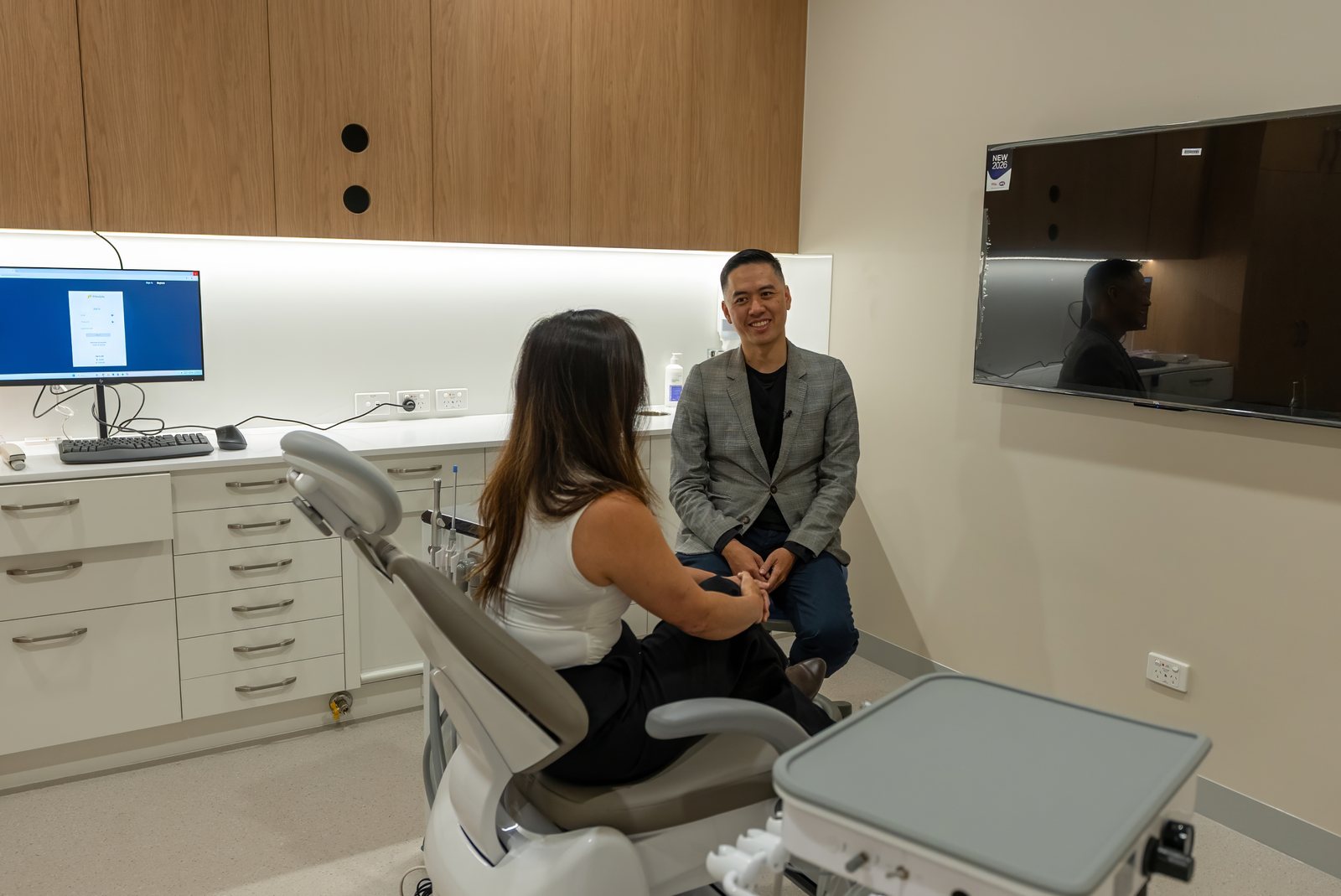

For most children with a heart condition, healthy teeth and gums do more to lower the risk of a heart infection than antibiotics do, and antibiotic cover before dental treatment is kept for a small group of the highest-risk children, decided with the cardiology team. The Royal Children's Hospital Melbourne advises that children at risk should keep the best possible oral health, including toothbrushing and regular dental review, to reduce the bacteria that can reach the blood. That makes everyday dental care for children with a heart condition part of their heart care.
Written by Dr James Tran, BDent (University of Sydney), MICOI, GradDip (Oral Implants), general dentist at Lumi Dental in Melrose Park.
The short version
- Bacteria from the mouth can enter the blood during everyday chewing and brushing, not only at the dentist. Clean teeth and healthy gums lower that everyday load.
- Antibiotic cover before some dental procedures is only for children in the highest-risk group, and the cardiology team decides who that is.
- Check-ups, simple fillings, fissure sealants and cleans that do not cause gum bleeding are usually considered unlikely to need cover.
- Sugary liquid medicines and nutrition supplements can add to decay risk, so plan brushing and rinsing around them.
- Start dental visits early. The Royal Children's Hospital Melbourne suggests before 18 months of age.
- Our article on antibiotics before dental treatment lists the Australian high-risk conditions in full.
Infective endocarditis in plain language
Infective endocarditis is an infection of the lining of the heart and its valves. The Royal Children's Hospital Melbourne describes it as rare but serious, usually needing a hospital stay and a long course of antibiotics. In many children with a heart defect, parts of that lining may be thin or roughened, and bacteria can stick there.
Small numbers of bacteria can enter the blood during ordinary daily activities. Guy's and St Thomas' NHS Foundation Trust, a large UK heart and dental service, notes that some cases of endocarditis follow daily activities such as toothbrushing, flossing and chewing, particularly when oral hygiene is poor. A tooth abscess or inflamed gums add to that load.
This is why the advice for parents starts at home. Regular dental visits matter, but what happens in the mouth every day matters more.
The single rule: prevention first, antibiotics only when the cardiology team says so
If your child's cardiologist has not told you your child needs antibiotic cover, start with prevention: fluoride toothpaste twice a day, less sugar between meals and regular check-ups from an early age. If your child is in the highest-risk group, start with a letter from the cardiology team before any dental procedure that involves the gums.
The Royal Children's Hospital explains that guidelines on antibiotic cover now apply to fewer children than they once did. Its list includes children with a prosthetic valve or valve repair material, a previous episode of endocarditis, and some types of congenital heart disease, such as unrepaired cyanotic defects or repairs with a remaining defect near a patch or device. It adds that a cardiologist and dentist may still choose cover for an individual child outside the list, after discussion.
I never decide this for a child on my own. The cardiology team knows the heart, and their letter settles the question for each visit type.
Which dental treatments may need antibiotic cover
Even for children in the high-risk group, most visits do not need cover. The Royal Children's Hospital guidance describes at-risk procedures as those that handle the gum tissue, the area around the root tip of a tooth, or break the lining of the mouth. Its dental fact sheet for parents gives examples.
| Type of visit | Gum bleeding likely? | Usual approach for a high-risk child |
|---|---|---|
| Check-up | No | Usually no cover needed |
| Fissure sealants | No | Usually no cover needed |
| Simple filling | Unlikely | Often no cover; your dentist will advise |
| Clean when gums are inflamed | Yes | Ask the cardiologist about cover |
| Deep filling or nerve treatment | Possible | Ask the cardiologist about cover |
| Extraction | Yes | Ask the cardiologist about cover |
If cover is recommended, the cardiology team or dentist prescribes it, and the fact sheet stresses it is given just before treatment starts. The choice of medicine and amount is theirs to make, so this article does not list any.
A dental check before heart surgery
Guy's and St Thomas' asks for a dental assessment before heart valve surgery or repair of a structural heart defect, so that decay or gum disease can be treated before a new valve, patch or device goes in. Your child's heart team may ask for the same. Our article on a dental check before heart surgery explains timing and what the appointment involves, though it is written for adults.
Book early where you can, as some treatment may need healing time before the operation date.
Why decay risk can be higher, and what helps
The Royal Children's Hospital fact sheet notes that children with heart conditions may have a higher risk of dental disease, partly because of weaker enamel formation, and that sugar in medicines and nutrition supplements adds to it. The research is mixed. A systematic review and meta-analysis in the Journal of Clinical Medicine found a possible increased risk of decay, especially as children grow older, but the pooled results were not statistically significant and varied across studies.
In my experience, the families who do best treat daily brushing as part of the heart routine, alongside medicines and appointments.
Sugary liquid medicines
Heart medicines should not be changed without the cardiologist, and the fact sheet is clear on that. What you can change is the routine around them: give doses with meals where the instructions allow, offer water afterwards, and clean the teeth after the last dose at night. Ask the cardiologist or pharmacist whether a sugar-free version exists. Our article on sugar in children's liquid medicines covers this in more detail.
Bottles, feeds and supplements
The fact sheet warns that prolonged bottle use, especially at night, can cause severe decay, and suggests drinking from a cup by about 12 months. Some high-energy feed supplements contain carbohydrates that can feed decay, so ask your dietitian how to fit them around cleaning.
Fluoride and sealants
Fluoride toothpaste is the simplest daily protection. At check-ups, fluoride varnish painted on the teeth adds more, and our guide to fluoride varnish for children explains how it works. The fact sheet describes fissure sealants as quick, with no injection, and they do not cause gum bleeding. Our article on dental sealants for kids covers who benefits.

Medicines that affect dental treatment
Tell the dentist about every medicine your child takes. The fact sheet names aspirin and warfarin as examples that may complicate treatment because of bleeding, while noting that dental treatment is safe with the right precautions. Guy's and St Thomas' adds that some medicines cause a dry mouth, which raises decay risk. Any change to a heart medicine before a procedure is a question for the cardiologist, not the dentist.
Anxious children, sedation and general anaesthetic
Many children cope well with short, calm visits. Where a child is anxious, or needs a lot of treatment at once, some are treated under general anaesthetic in hospital, where the cardiology and anaesthetic teams can plan together. Lumi Dental does not provide general anaesthetic and refers children who need it to a paediatric dentist or hospital service. Any form of sedation for a child with a heart condition is a decision for the cardiology team as well.

What to bring to the dental visit
- A letter from the cardiologist naming the heart condition and saying whether antibiotic cover is needed, and for which procedures.
- A list of every medicine and supplement, including liquids and feeds.
- The cardiology team's contact details, so the dentist can check before treatment.
- Any alert card or plan the hospital has given you.
How we approach this at Lumi Dental
At Lumi Dental in Melrose Park, the dentist examines your child's teeth and gums, reviews the cardiology letter and medicine list, and plans any treatment around it. Where the letter is unclear or treatment involves the gums, the team at Lumi Dental writes to your child's cardiologist before going ahead. Oral health therapists support families with cleaning and prevention advice. The practice accepts the Child Dental Benefits Schedule for eligible children, and complex cases are referred to a registered paediatric dentist or hospital service. Read more about our children's dentist services.
Questions patients ask
Does my child need antibiotics before every dental visit?
No. Most children with a heart condition do not need antibiotic cover for dental care, and even high-risk children usually need it only for procedures that make the gums bleed. The cardiologist confirms which group your child is in.
Can a child with a heart condition have a normal check-up?
Yes. The Royal Children's Hospital Melbourne recommends regular dental visits, and a check-up does not involve the gum procedures that need cover. Our antibiotics guide explains which visits do.
Is laughing gas safe for a child with a heart condition?
It depends on the heart condition, so ask the cardiology team first. Our article on nitrous oxide for kids explains how it works in general.
My child's heart defect was repaired. Do they still need cover?
Many do not, once the repair has healed and no defect remains near a patch or device. Some repaired defects still qualify, which is why a current cardiology letter matters.
When should a child with a heart condition first see a dentist?
Early. The Royal Children's Hospital fact sheet suggests visits start before 18 months of age, so prevention starts before problems do.
Book your child's check-up at Lumi Dental, Melrose Park
If your child lives with a heart condition, the team at Lumi Dental can check their teeth and gums, work from the cardiology letter and set up a prevention plan with you. Families visit from Ryde, Parramatta, Ermington and Rydalmere. Book with our children's dentist in Melrose Park, and read how the Child Dental Benefits Schedule may help with costs for eligible children.
Sources
- The Royal Children's Hospital Melbourne: Endocarditis in Children with Heart Defects
- The Royal Children's Hospital Melbourne: Dental health for children with heart conditions, advice for parents and carers (PDF)
- Guy's and St Thomas' NHS Foundation Trust: Avoiding infective endocarditis
- Journal of Clinical Medicine: Dental Health in Children with Congenital Heart Defects, a Systematic Review and Meta-Analysis (PMC)
About the author

Dr James Tran is a general dentist at Lumi Dental in Melrose Park. He holds a BDent from the University of Sydney and a Graduate Diploma in Oral Implants, and is a Member of the International Congress of Oral Implantologists (MICOI).
This article is general information only and is not a substitute for an examination and individual advice from a registered dental practitioner. Suitability for any treatment varies from person to person.








