
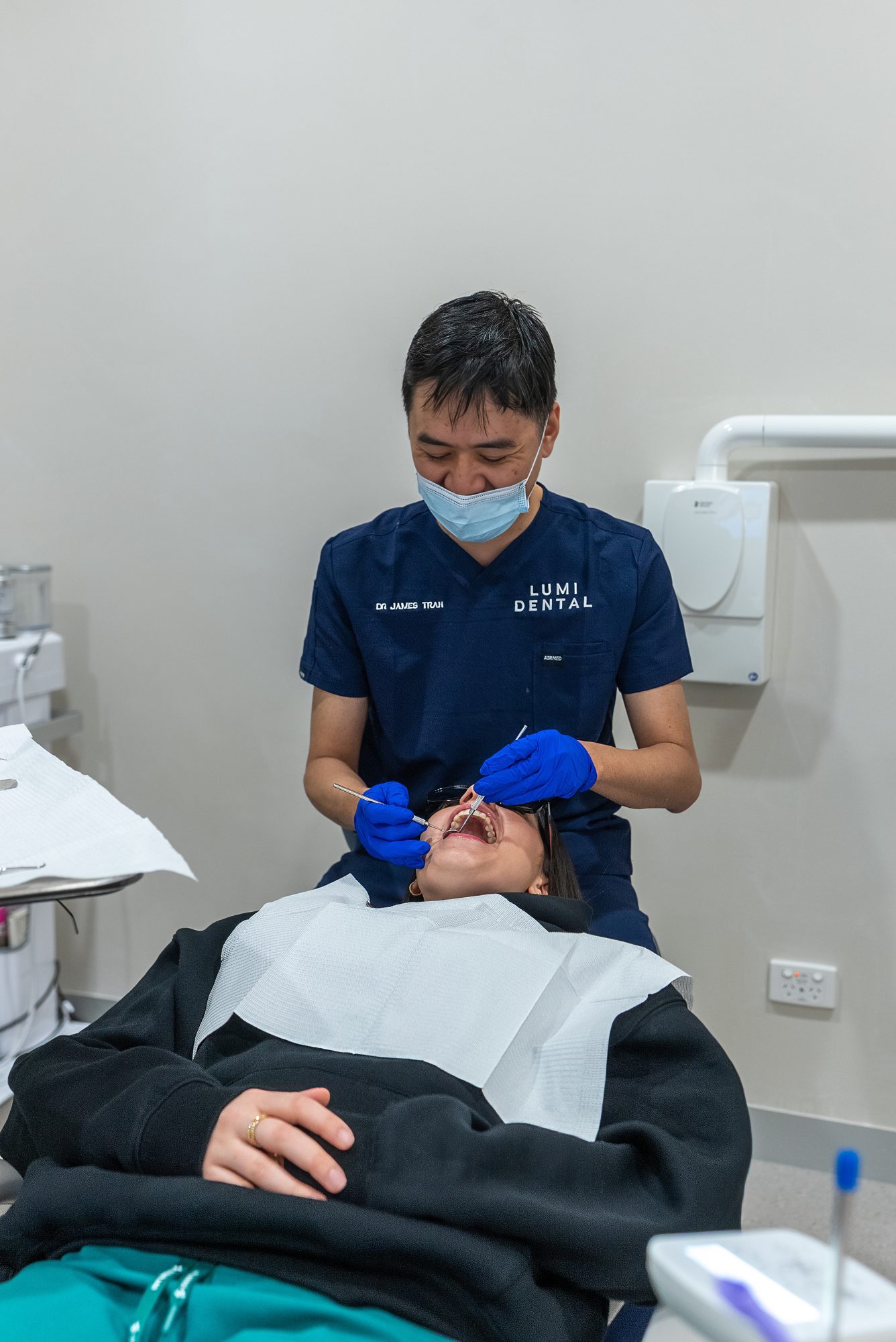

Most children with epilepsy can have the same check-ups, cleans and fillings as any other child, and the step that helps most is bringing your child's epilepsy management plan to every dental visit and booking at the time of day seizures are least likely. The Royal Children's Hospital Melbourne says about one in 200 children has epilepsy, and that children whose epilepsy is controlled can usually lead a normal, active life. This guide for parents covers children with epilepsy at the dentist: what to share, how to plan the visit, and issues such as chipped teeth, gum overgrowth and medicines.
Written by Dr James Tran, BDent (University of Sydney), MICOI, GradDip (Oral Implants), general dentist at Lumi Dental in Melrose Park.
The short version
- Bring your child's epilepsy management plan, and any emergency medication plan, to every visit.
- Book when your child is rested, has had their usual medicine and has eaten as normal.
- Tell the team about triggers, including flashing or bright light if your child is photosensitive.
- If a seizure happens, the team stops, keeps your child safe, times it and follows the plan. Nothing goes in the mouth.
- Falls can chip or knock out teeth. A knocked-out adult tooth needs urgent care.
- For the adult side of epilepsy and dental care, see our guide to seizure safety and gum health.
The single rule: bring the plan, and book the right time of day
If your child has epilepsy, bring their epilepsy management plan to every dental visit, and book at the time of day when seizures are least likely for them. With those two things in place, routine dental care is usually the same as for any other child.
What the plan covers
The Epilepsy Foundation describes an epilepsy management plan as a practical tool that brings together seizure types, possible triggers, what helps during a seizure and what to do in an emergency. It recommends the plan is endorsed by your doctor and usually reviewed each year, or sooner if seizures or treatment change. If emergency medication has been prescribed, it recommends a separate emergency medication management plan, attached to the main one.
Epilepsy Action Australia lists emergency contacts, a description of the seizures, safety and supervision needs, instructions about medication and first aid as the core contents. Those are the details a dental team needs.
Choosing the appointment time
Many families already know their child's pattern. In my experience, a short appointment at your child's best time of day does more than a long one squeezed in when they are worn out.
What to tell the dentist, and why it matters
A quick run-through at the start of each visit helps, especially if anything has changed.
| What to tell the dentist | Why it matters |
|---|---|
| Seizure type and how often seizures happen | Helps the team recognise a seizure and plan how long the visit should be |
| Known triggers | Tiredness, hunger, stress or light can often be planned around |
| Emergency medicine prescribed, and who gives it | The team follows the plan rather than guessing |
| Recent changes to medicines or seizures | A change may mean rebooking or a shorter visit |
| Photosensitivity | The overhead light can be angled away, and your child can wear sunglasses |
| Diet, such as a ketogenic diet | Some dental products and medicines contain carbohydrate |
| All current medicines, including liquids | Some affect the gums, saliva or sugar exposure |
Triggers that can turn up at a dental visit
Epilepsy Action Australia lists missed or late medicine doses, lack of sleep, tiredness, stress or excitement, illness or fever, poor diet or low blood sugar, other medicines and flashing lights or geometric patterns among reported seizure triggers. It notes that triggers differ from person to person.
Several of these have a dental version:
- An early start after a poor night. Move the appointment if your child slept badly.
- Skipping breakfast through nerves. Unless you have been told otherwise, eat as normal and give medicines at the usual time.
- Worry about the visit. Our article on helping a child who is scared of the dentist covers preparing at home and keeping visits short.
- Bright light. For photosensitive children, the light can be angled away and sunglasses worn.
- Being unwell. If your child has a fever or is coming down with something, rebooking is usually the safer choice.
If a seizure happens in the dental chair
If a seizure starts, the team stops treatment, takes instruments out of the mouth only if it is safe to do so, moves equipment away and stays with your child. You know your child's seizures best, so stay close and tell the team if this looks like their usual pattern.
Epilepsy Action Australia's first aid steps are to stay with the person, time the seizure, keep them safe and protect the head, roll them onto their side after the seizure stops (or straight away if there is food, fluid or vomit in the mouth), watch their breathing and reassure them until they recover. Its first aid page is clear: do not put anything in the person's mouth, do not restrain them, and do not move them unless they are in danger.
It advises calling an ambulance if you are in any doubt, if the seizure lasts longer than 5 minutes, if another seizure quickly follows, or if the person is injured or has trouble breathing afterwards. Your child's own plan may set a different time for emergency medicine or calling 000, and the plan comes first.
Falls, chipped teeth and knocked-out teeth
Tonic-clonic and atonic seizures can cause falls, and the face often takes the impact. In a study of 108 children with epilepsy at a children's hospital in Dakar, 44.5% had injured their mouth during seizures, most often the lips and tongue, with the upper front teeth the most commonly injured teeth. It was a single hospital study, so the figure will not apply everywhere.
After a seizure with a fall, check the lips, tongue and front teeth once your child has recovered. Our guides cover a chipped permanent front tooth and a knocked-out baby tooth. A knocked-out adult tooth needs urgent care, so call an emergency dentist straight away.
Mouthguards
For contact sport, a custom mouthguard is worth discussing for any child, and our article on kids' sports mouthguards explains the options. Whether a mouthguard should be worn at other times to protect against seizures is a different question, and one for your child's neurologist and dentist to decide together.
Medicines, gums and sugar
Your child's neurologist and GP manage their epilepsy and their medicines. The Royal Children's Hospital stresses that epilepsy medicine should not be stopped suddenly except on medical advice, because that can bring on a severe or prolonged seizure. Nothing in a dental plan changes that.
Gum overgrowth
Some anti-seizure medicines, phenytoin in particular, can cause the gums to swell and overgrow. Plaque along the gum line makes it worse, so careful brushing there matters most. Our article on epilepsy medicines and gum overgrowth explains what it looks like and how it is treated.
Liquid medicines
Some children take sweetened syrups two or three times a day, and frequent doses add up. Our guide to sugar in children's liquid medicines has practical tips, such as giving doses at mealtimes where your doctor or pharmacist agrees.
Ketogenic diet
For some children whose seizures are not controlled with medicine, a medically supervised ketogenic diet is used. SickKids in Toronto notes that some medicines and even toothpaste contain carbohydrate, and advises telling every doctor and pharmacist involved that your child is on the diet. Tell the dental team too, and ask your keto team which toothpaste suits before changing anything, so fluoride protection is not lost by accident.
Happy gas, sedation and longer treatment
Most children with epilepsy manage check-ups and small fillings with local anaesthetic and an unhurried visit. I usually suggest a short practice visit first for a nervous child. Where anxiety persists, nitrous oxide (happy gas) may be considered only after the dentist and your child's neurologist agree it is suitable.
Lumi Dental does not provide IV sedation for children and does not provide general anaesthetic. If a child needs a lot of treatment, or cannot manage it awake, the team refers to a paediatric dentist or a hospital service where care under general anaesthetic can be arranged with your child's medical team.
How we approach this at Lumi Dental
At Lumi Dental, the dentist examines your child, reviews their epilepsy management plan and medicines, and plans visits around their best time of day. The oral health therapists provide cleans and show brushing along the gum line for children on medicines linked to gum overgrowth. The whole practice accepts the Child Dental Benefits Schedule for eligible children.
Where more care is needed than can be managed in the chair, the team refers to a paediatric dentist or hospital service. Read more about children's dentistry at Lumi Dental.
Questions patients ask
Is it safe for a child with epilepsy to go to the dentist?
Yes, for most children. Sharing the plan and booking at a good time of day lets the team plan around triggers and respond calmly if a seizure happens.
Can the dentist's light trigger a seizure?
For some photosensitive children it can, as flashing light is a known trigger. Tell the team so the light can be angled away.
Should my child take their epilepsy medicine before a dental appointment?
Yes, give it at the usual time unless your doctor has said otherwise. Missed or late doses are a common trigger.
Can a child with epilepsy have happy gas at the dentist?
Sometimes. It is considered only after the dentist and your child's neurologist agree it is suitable for their type of epilepsy.
Does the Child Dental Benefits Schedule cover children with epilepsy?
Eligibility depends on your child's age and whether your family receives certain government payments, not on a medical condition. Our article explaining the Child Dental Benefits Schedule sets out who qualifies.
Book your child's check-up at Lumi Dental, Melrose Park
If your child or teenager has epilepsy, bring their epilepsy management plan and medicines list to a check-up, and the team at Lumi Dental can plan visits around their best time of day. Read about children's dentistry in Melrose Park or check whether your child is eligible for the Child Dental Benefits Schedule. Families visit from Ryde, Parramatta, Ermington and Rydalmere, with on-site parking at Melrose Central.
Sources
- Epilepsy Action Australia: First Aid
- Epilepsy Foundation: Epilepsy Management Plans
- The Royal Children's Hospital Melbourne: Kids Health Info, Epilepsy
- Odonto-Stomatologie Tropicale (Faye and colleagues): Study of oro-dental injuries during seizures in Senegalese children with epilepsy (PubMed)
About the author

Dr James Tran is a general dentist at Lumi Dental in Melrose Park. He holds a BDent from the University of Sydney and a Graduate Diploma in Oral Implants, and is a Member of the International Congress of Oral Implantologists (MICOI).
This article is general information only and is not a substitute for an examination and individual advice from a registered dental practitioner. Suitability for any treatment varies from person to person.







