
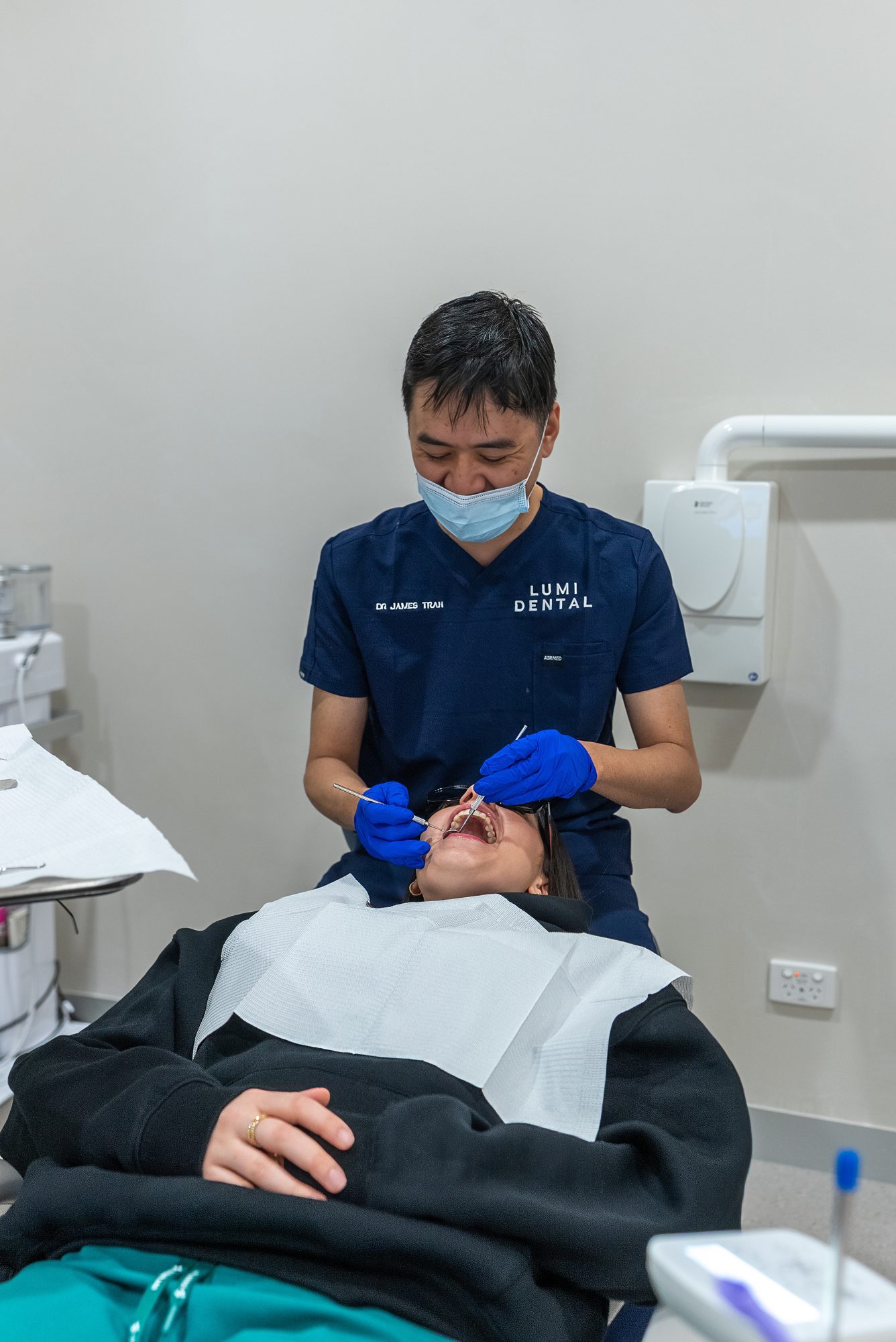

Children with food allergies can have routine dental care safely, as long as the dental team knows the allergens before the visit, because some dental products contain food proteins, most often milk. The Australian Dental Association's teeth.org.au factsheet notes that milk is the most common food found in dental products, including some remineralising creams, a fluoride varnish and a filling material. Telling the team at booking, and bringing your child's ASCIA Action Plan and adrenaline device, lets products be checked and swapped before your child sits in the chair.
Written by Dr James Tran, BDent (University of Sydney), MICOI, GradDip (Oral Implants), general dentist at Lumi Dental in Melrose Park.
The short version
- Products made with CPP-ACP, also called casein phosphopeptide or Recaldent, come from milk protein and should not be used for a child with a milk allergy.
- Our article on Tooth Mousse and CPP-ACP explains what the paste does; this one is about the allergy side.
- Some fluoride varnishes contain colophony, a pine resin, which can cause reactions in children who are sensitive to it.
- Latex gloves and rubber items matter for children with a latex allergy, and some fruits share proteins with latex.
- The single rule: name the allergens at booking and bring the action plan and adrenaline device to every visit.
- Your child's allergist decides what is safe. The dental team plans around that advice.
Milk protein in dental products
Milk-derived ingredients are used in some products that help strengthen enamel and protect teeth at risk of decay. The teeth.org.au factsheet on milk allergies and dental care lists examples:
- GC Tooth Mousse, sold through dental clinics, pharmacies and supermarkets
- MI Paste, MI Paste Plus and MI Paste ONE
- MI Varnish, a fluoride treatment
- Fuji VII EP, a material used to fill teeth
- Recaldent chewing gum
The factsheet stresses that this list is not complete, and that the ingredients of every dental product should be checked every time it is used. Milk can appear on labels under several names, including casein, casein phosphopeptide (CPP), CPP-ACP and Recaldent. It also notes that GC Tooth Mousse carries a warning against use in people with a soy allergy.
Milk allergy is not lactose intolerance
Lactose intolerance is a problem digesting milk sugar, not an immune reaction to milk protein. The factsheet explains that lactose intolerance does not cause anaphylaxis, and that people with it can often manage the small amounts in dental products. If your child has been tested and diagnosed with a cow's milk allergy, say "allergy" when you book, so the two are not confused.
Fluoride varnish, pastes and flavours
Fluoride varnish is one of the most useful preventive steps for children, so it is worth knowing what is in it rather than skipping it. Our guide to fluoride varnish for children explains how it works.
A review in Dentistry Journal describes most varnishes as a resin called colophony (rosin), alcohol and sodium fluoride. Colophony is a contact sensitiser also found in sticking plasters, chewing gum and nail varnish. The review describes reactions as uncommon, but a child with a known colophony sensitivity can react with irritation of the gums or skin. If your child reacts to sticking plasters, mention it, as varnishes made with other bases exist. MI Varnish contains milk protein, so a milk-allergic child needs a different product.
Polishing pastes and toothpastes come in many flavours and formulas. I usually ask families to name every allergen, not just the most serious, so the team can read the ingredient list of each product before it touches the teeth.
Latex, rubber dam and latex-fruit links
Latex allergy matters at the dentist because gloves, rubber dam sheets and some small items can be made from natural rubber latex. ASCIA, the Australasian Society of Clinical Immunology and Allergy, explains that the most serious reactions usually happen when latex protein is absorbed through moist surfaces such as the mouth. Synthetic rubber does not contain latex proteins, and ASCIA advises people with latex allergy to tell their dentist well before treatment.
ASCIA also notes that many people with latex allergy already have asthma, hay fever or eczema, and that some latex proteins are found in foods. The foods most often involved are banana, avocado, kiwifruit, passionfruit, plums, strawberry and tomato. ASCIA says these foods do not need to be avoided unless they cause problems. If your child gets an itchy mouth from raw fruit, it may be a different condition linked to pollen, explained in our article on hay fever and an itchy mouth from fruit.
For more on reactions to anaesthetic, metals and other materials, see our article on allergic reactions to dental materials.
The single rule: name the allergens at booking and bring the plan to every visit
If your child has a food allergy, tell the team every allergen when you book, then bring the ASCIA Action Plan and your child's adrenaline device to every appointment, including check-ups. Booking is the point where products can be swapped, because a varnish or paste chosen in the moment is harder to check.
| Dental item | Possible allergen | What to ask about |
|---|---|---|
| Remineralising creams such as Tooth Mousse or MI Paste | Milk protein (CPP-ACP); soy warning on Tooth Mousse | A milk-free fluoride product |
| Fluoride varnish | Colophony in many brands; milk protein in MI Varnish | A varnish suited to your child's allergies |
| Some filling materials, such as Fuji VII EP | Milk protein | A filling material without milk derivatives |
| Polishing paste and toothpaste | Varies by flavour and formula | The ingredient list before use |
| Gloves and rubber dam | Natural rubber latex | Synthetic or latex-free items |
| Rewards after the visit | Food allergens, sugar | Stickers or small toys instead of food |
What to tell the team
- Every confirmed allergen, and any food your child avoids for other reasons.
- Past reactions, including to plasters, latex or dental products.
- Asthma, eczema or hay fever, and any medicines your child takes.
- Your allergist's name and contact details.
If a reaction happens in the chair
If a reaction happens, the plan your child's doctor has written is what everyone follows. ASCIA's First Aid Plan for Anaphylaxis lists signs such as difficult or noisy breathing, swelling of the tongue, swelling or tightness in the throat, wheeze or persistent cough, a hoarse voice, and persistent dizziness or collapse. Young children may become pale and floppy. Anaphylaxis can occur without skin symptoms.
The ASCIA steps are:
- Lay the person flat and do not let them stand or walk. Hold young children flat, not upright. If breathing is difficult, they may sit with legs outstretched.
- Give the adrenaline device.
- Phone an ambulance on 000.
- Phone family or the emergency contact.
- Further adrenaline may be given if there is no response after 5 minutes.
- Transfer to hospital for at least 4 hours of observation.
ASCIA's advice is: if in doubt, give the adrenaline device, and always give it first if there is severe and sudden breathing difficulty. The device and its strength are prescribed by your child's doctor, so this article does not list doses. Check before each visit that the device is in date.
Food allergy diets, snacks and decay
Children on an allergy diet often rely on a short list of safe foods, and some swaps can be sweeter than the foods they replace. Some plant-based milks and packaged allergy-friendly snacks contain added sugar, so check labels and offer them at meals rather than as grazing snacks. The allergist and dietitian set the diet; the dental team helps fit brushing and timing around it. Our guide to tooth-friendly snacks for kids has ideas that are easy to adapt.
In my experience, the safest reward after a visit is not food at all. A sticker avoids any allergen and any sugar.
How we approach this at Lumi Dental
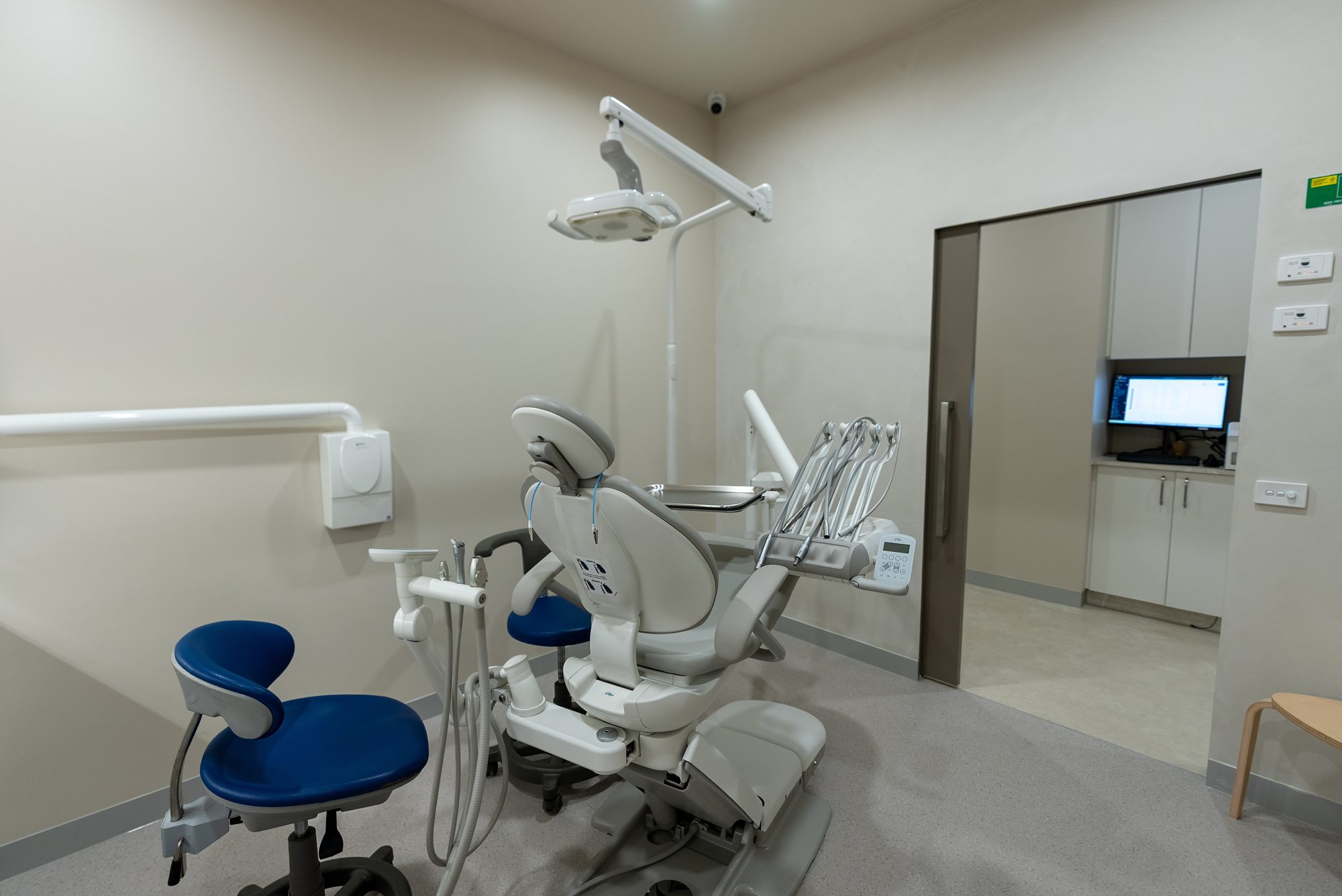
At Lumi Dental in Melrose Park, the dentist reviews your child's medical history, allergies and action plan before any treatment, and the team can check products against the allergens you list at booking. Oral health therapists support families with prevention advice that suits the diet. The practice accepts the Child Dental Benefits Schedule for eligible children. Lumi Dental does not provide general anaesthetic and refers children who need it to a paediatric dentist or hospital service. Read more about our children's dentist services.
Questions patients ask
Can my child with a milk allergy have fluoride varnish?
Usually, yes, as long as the varnish does not contain milk protein. MI Varnish contains CPP-ACP, which comes from milk, so a different varnish is chosen. Ask the team to check the product before it is applied.
Is Tooth Mousse safe for children with allergies?
Not for children with a milk allergy, because CPP-ACP is made from milk protein. GC Tooth Mousse also carries a soy allergy warning. Your dentist can suggest a fluoride product instead.
Should I bring my child's EpiPen to the dentist?
Yes. The teeth.org.au factsheet advises taking the adrenaline device and the ASCIA Action Plan to every dental appointment. Bring them even to a check-up.
Does a nut allergy matter at the dentist?
Tell the team about it, as with any allergen, so they can read product labels. Milk is the most common food found in dental products, but the only way to be sure about any allergen is to check. If your child also has asthma, our article on asthma inhalers and oral health covers the teeth side.
My child is lactose intolerant. Do dental products matter?
Lactose intolerance is different from a milk allergy and does not cause anaphylaxis. Mention it at booking anyway, so the team can record it correctly.
Book your child's check-up at Lumi Dental, Melrose Park
If your child has a food allergy, the team at Lumi Dental can record the allergens at booking, check products before the visit and set up a prevention plan with you. Families visit from Ryde, Parramatta, Ermington and Rydalmere. Book with our children's dentist in Melrose Park, and read how the Child Dental Benefits Schedule may help with costs for eligible children.
Sources
- Australian Dental Association (teeth.org.au): Factsheet, Milk allergies and dental care (PDF)
- ASCIA: First Aid Plan for Anaphylaxis (PDF)
- ASCIA: Latex Allergy, Frequently Asked Questions
- Dentistry Journal (Baik A): Fluoride Varnishes for Preventing Occlusal Dental Caries, a Review (PMC)
About the author

Dr James Tran is a general dentist at Lumi Dental in Melrose Park. He holds a BDent from the University of Sydney and a Graduate Diploma in Oral Implants, and is a Member of the International Congress of Oral Implantologists (MICOI).
This article is general information only and is not a substitute for an examination and individual advice from a registered dental practitioner. Suitability for any treatment varies from person to person.







