
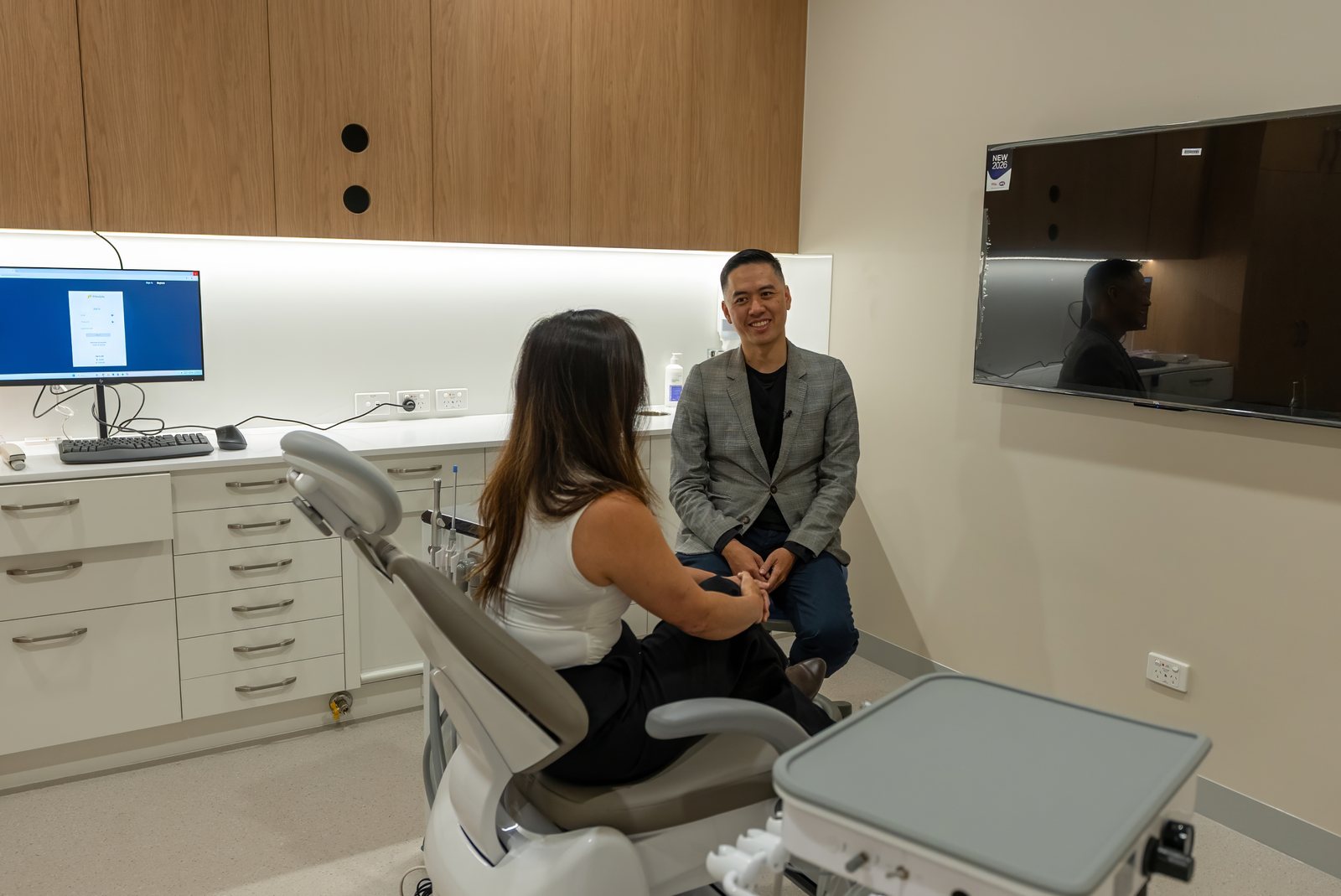

If your child has juvenile idiopathic arthritis (JIA), tell the dentist even if their jaw has never hurt, because the jaw joint can be inflamed without pain and the rheumatology team may want to know what the dentist sees. The Royal Children's Hospital Melbourne estimates JIA affects at least one child in every 1,000 in Australia. This guide covers what to expect for children with juvenile arthritis at the dentist.
Written by Dr James Tran, BDent (University of Sydney), MICOI, GradDip (Oral Implants), general dentist at Lumi Dental in Melrose Park.
The short version
- JIA can affect the jaw joint (the temporomandibular joint, or TMJ), often without any pain, and that can affect how the lower jaw grows.
- The single rule: tell the dentist about the JIA and every medicine at each visit, and ask whether the rheumatology team would like a copy of the findings.
- The rheumatology team confirms jaw involvement with MRI and manages it; the dentist watches for signs and passes them on.
- Sore or stiff hands and wrists can make brushing hard. Thicker handles, an electric brush and a parent finishing the job all help.
- Methotrexate can occasionally cause mouth ulcers, and sweetened liquid medicines can add to decay risk.
- General jaw clicking and jaw pain in children without arthritis is covered in our article on jaw clicking or jaw pain in children and teenagers.
JIA in brief
The RCH describes JIA as chronic arthritis that begins before the age of 16 and causes inflammation in one or more joints for six weeks or longer. There are at least 5,000 children in Australia with JIA. Healthdirect notes that about half of children grow out of it by adulthood. The RCH is clear on one point parents often carry quietly: having JIA is no one's fault.
A paediatric rheumatologist usually leads care; regular eye checks sit with the rheumatology and eye teams. The dentist is one more member of the team, with a useful view of the jaw.
The jaw joint: often silent, still important
The TMJ sits just in front of the ear, where the lower jaw meets the skull. JIA can inflame it like any other joint. SickKids in Toronto notes that children often have no symptoms at all from JIA in the TMJ, and that by the time symptoms appear there may already be damage.
What the research found
In a study of 32 children with newly diagnosed JIA at the Children's Hospital of Philadelphia, MRI showed active TMJ arthritis in 75%. Of those children, 71% had no jaw symptoms and 63% had a normal jaw examination. The authors concluded that history and examination alone are not enough to screen for TMJ disease, and that MRI was better than ultrasound for finding it. This was a small study, and figures vary widely between centres.
A Norwegian study compared 221 children and teenagers with JIA with 221 healthy peers. Signs and symptoms of jaw joint or jaw muscle problems were found in 39.8% of those with JIA, compared with 11.3% of the controls, and average jaw opening was smaller. The authors recommended that checking the jaw muscles and measuring opening be part of routine medical and dental examinations for children with JIA. Other researchers argue that a careful combination of clinical checks can help decide who needs an MRI. Either way, the dentist's measurements count.
Signs a dentist may notice
- A mouth that does not open as wide as expected for the child's age, or opening that has reduced since the last visit.
- The lower jaw shifting to one side as the mouth opens.
- A chin that looks small or set back, or a face that is becoming uneven.
- Changes in the bite, such as crowding or the top teeth sitting further forward.
SickKids explains that JIA in the jaw can make one side grow faster than the other, and if both sides are affected a child may develop a small, receded chin and crowded teeth. Early treatment may prevent some of this. Confirming it is the rheumatology team's job, with contrast-enhanced MRI regarded as the gold standard rather than a dental X-ray.
The single rule: tell the dentist, even if the jaw feels fine
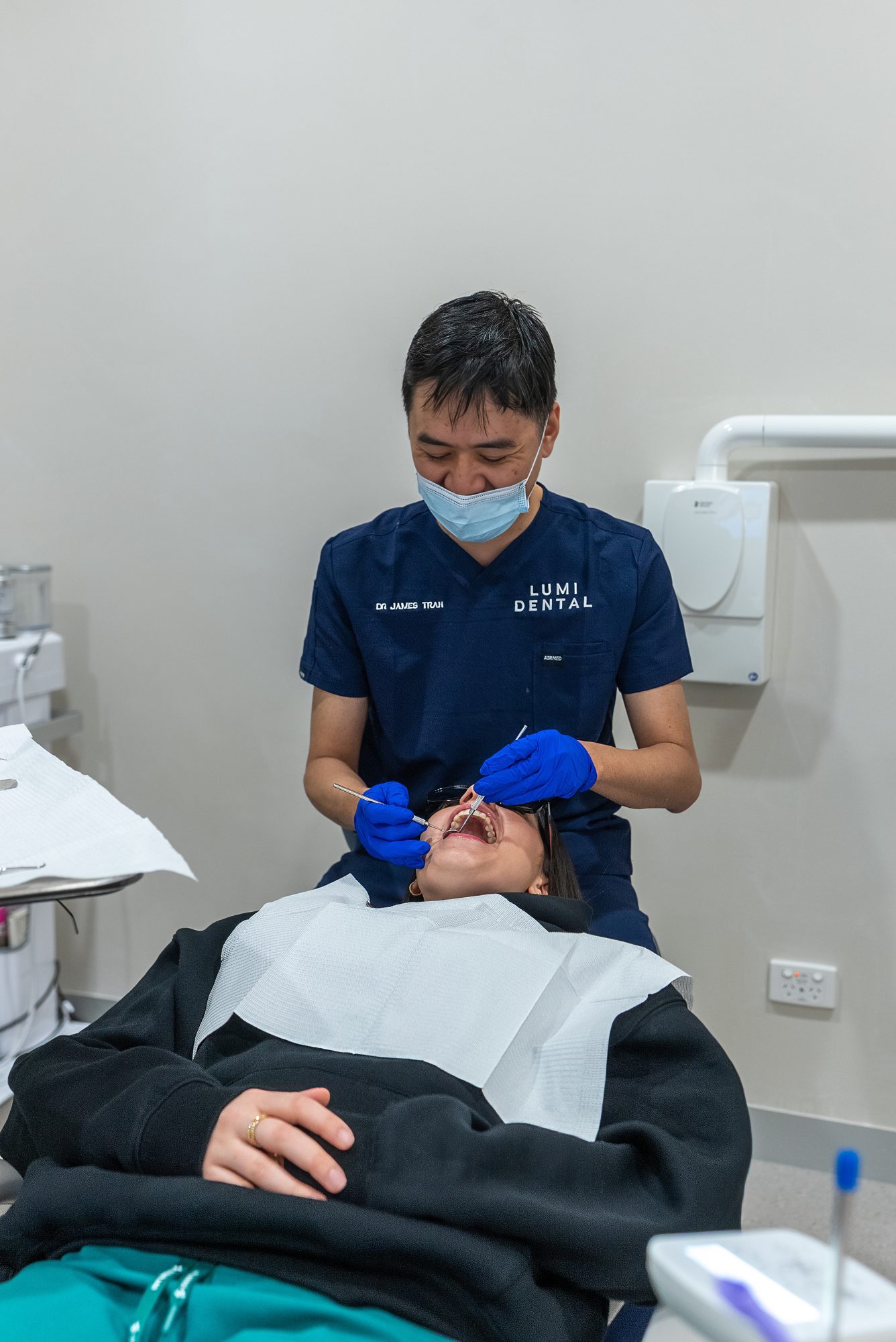
If your child has JIA, start by telling the dental team at booking and again at each check-up, including current medicines and any recent flare. In my experience, a short note listing affected joints, medicines and what makes sitting comfortable helps more than anything else. I usually record mouth opening at each visit so changes are easy to spot, and with your consent the findings can go to the rheumatology team.
Brushing with sore or stiff hands
JIA can affect the hands and wrists, and stiffness is usually worse in the mornings. SickKids suggests different toothbrush handles, electric toothbrushes and floss holders for children who find brushing hard.
- Thicker grip. A brush with a chunky handle, or a foam grip added to it, is easier to hold.
- An electric brush. The head does the movement, so the wrist works less. Our guide on when to start an electric toothbrush for kids covers ages and features.
- Timing. On stiff mornings, brush after breakfast or a warm shower, still twice a day.
- A parent finishes. Your child starts; you finish the back teeth.
Medicines and the mouth
Your child's rheumatology team prescribes and manages JIA medicines. Healthdirect lists pain relief, non-steroidal anti-inflammatory drugs (NSAIDs), corticosteroid injections and disease-modifying antirheumatic drugs (DMARDs) among the treatments. Please do not change or skip a medicine because of a dental visit.
Methotrexate and mouth ulcers
The RCH parent information on methotrexate says some children occasionally develop mouth ulcers, and that families should contact the rheumatologist or rheumatology nurse if they do. It also asks families to tell any doctor or dentist that their child is taking methotrexate. The dentist can check ulcers and suggest gentle care while the rheumatology team decides about the medicine.
Liquid medicines and sugar
Some liquid medicines are sweetened. A study at Great Ormond Street Hospital found no difference in decay between children with JIA and matched controls, and attributed the low decay rate to early preventive dental care combined with sugar-free medicines. Ask the pharmacist whether a sugar-free version exists, and read our article on sugar in children's liquid medicines.
Gums
A systematic review found gum problems and jaw disorders more often in children with JIA than in healthy peers, though most studies were small. If your child takes medicines that act on the immune system or has had a joint replacement, the dentist may check with the rheumatology team before an extraction.

What you might notice, and who to tell
| What you might notice | What may help, or who to tell |
|---|---|
| Pain when chewing, or jaw aches in the morning | Tell the rheumatology team and the dentist; softer foods during a flare |
| Mouth will not open as wide as before | The dentist measures and records it; the rheumatology team decides on imaging |
| Chin looks small or set back | Mention it at the next rheumatology and dental visit; orthodontic assessment may follow |
| Jaw shifts to one side on opening | The dentist checks the bite and passes findings to the rheumatology team |
| Mouth ulcers | Contact the rheumatologist or nurse, especially on methotrexate; the dentist can check them |
| Trouble brushing | Thicker handle, electric brush, a parent finishes; more frequent cleans if needed |
Orthodontics and jaw growth
SickKids notes that an orthodontist can help with splints or braces, and some young people need jaw surgery once growth has finished. For children with JIA affecting the jaw, the dentist usually refers to a registered specialist orthodontist who works with the rheumatology team. Our article on whether orthodontic treatment causes or fixes TMJ problems explains how the jaw joint is assessed before teeth are moved.
Making appointments comfortable
SickKids notes that children with active JIA may find it hard to keep the mouth open, and that more frequent, shorter visits can help. Practical changes include breaks to close and rest the jaw, a small pillow behind the neck or knees, a blanket for stiff joints, and booking later in the morning if early stiffness is worse.
For children who need more extensive treatment than they can manage in the chair, Lumi Dental does not provide general anaesthetic and refers to a paediatric dentist or hospital service where needed. A child with limited opening or neck movement should have this flagged early.
How we approach this at Lumi Dental
At Lumi Dental in Melrose Park, a dentist examines your child's teeth, gums, bite and jaw joint and records mouth opening. Appointments can be kept short with breaks, and the oral health therapists help with brushing advice and gentle cleans. With your consent, findings can be shared with the rheumatology team, and children are referred to a registered specialist where needed. Lumi Dental accepts the Child Dental Benefits Schedule (CDBS) for eligible children. Read more about children's dentistry at Lumi Dental.
Questions patients ask
Can juvenile arthritis affect the jaw?
Yes. The jaw joint can be inflamed in JIA, often without pain. It can affect how the lower jaw grows, so it is worth checking even when your child feels fine.
How do you know if JIA is in the jaw?
The dentist may notice reduced opening, the jaw shifting to one side or bite changes. The rheumatology team confirms it, usually with an MRI rather than a dental X-ray.
Does methotrexate cause mouth ulcers?
It can, occasionally. Contact the rheumatologist or rheumatology nurse if ulcers appear, and tell the dentist your child takes methotrexate. Do not stop or change it yourself.
Should my child with JIA see an orthodontist?
Often, if the jaw joint is involved or the bite is changing. The dentist can refer to a registered specialist orthodontist who works alongside the rheumatology team.
Is my child's check-up covered by Medicare?
Eligible children may be covered under the Child Dental Benefits Schedule. Our article on the CDBS explained covers who qualifies and what it includes.
Book your child's check-up at Lumi Dental, Melrose Park
If your child has JIA, the team at Lumi Dental can check their teeth, gums and jaw, record mouth opening and keep the visit short and comfortable. Read more about children's dental care in Melrose Park or check eligibility for the Child Dental Benefits Schedule. Families visit from Ryde, Parramatta, Ermington and Rydalmere, with on-site parking at Melrose Central.
Sources
- The Royal Children's Hospital Melbourne: Juvenile idiopathic arthritis, for parents
- Arthritis and Rheumatism (Weiss PF and colleagues): High prevalence of temporomandibular joint arthritis at disease onset in children with juvenile idiopathic arthritis (PubMed)
- AboutKidsHealth, The Hospital for Sick Children: Dental care for JIA
- The Royal Children's Hospital Melbourne: Methotrexate, parent information
About the author

Dr James Tran is a general dentist at Lumi Dental in Melrose Park. He holds a BDent from the University of Sydney and a Graduate Diploma in Oral Implants, and is a Member of the International Congress of Oral Implantologists (MICOI).
This article is general information only and is not a substitute for an examination and individual advice from a registered dental practitioner. Suitability for any treatment varies from person to person.







