

If you feel trapped easily, tell the dental team when you book, because most of what triggers claustrophobia in the dental chair can be changed, and an agreed stop signal you can use at any time is the first thing to set up. Lying back, someone leaning over you, a sheet across your mouth or a nose that feels blocked can all set off the same fear of being shut in. The NHS estimates that around 10% of people in the UK are affected by claustrophobia at some point in their lives. This guide covers claustrophobia at the dentist: the usual triggers, what can be adjusted, and where sedation and psychological treatment fit.
Written by Dr James Tran, BDent (University of Sydney), MICOI, GradDip (Oral Implants), general dentist at Lumi Dental in Melrose Park.
The short version
- The single rule: say "I feel trapped easily" at booking, then agree a stop signal before anything goes in your mouth.
- The chair can sit more upright, the team can step back between steps, and breaks can be built in.
- A rubber dam can be made smaller, folded away from the nose or taken off for a break. Our article on why dentists use a rubber dam explains what it does.
- A dental 3D X-ray is not an MRI tunnel. You sit or stand while the arm circles your head.
- Nitrous oxide or IV sedation may help after an assessment. They ease the fear during treatment but do not treat it.
- If claustrophobia stops you getting care, a GP can refer you to a psychologist for therapy that works on the fear itself.
What claustrophobia is, and why the dental chair sets it off
Healthdirect describes claustrophobia as a type of anxiety disorder called a specific phobia: a strong fear of enclosed spaces that is out of proportion to the actual danger. People often describe a fear of being suffocated or trapped. Some feel mildly anxious in a confined space; others have a panic attack.
A dental chair is not an enclosed room, but the NHS lists a choking sensation, shortness of breath and a fear of losing control among the symptoms of claustrophobia, and each has a dental version.
Lying back with someone over you
You are reclined under a light with two people leaning in. For some people that pinned-in feeling, more than anything the dentist does, is the trigger. Our article on adult dental anxiety covers that sense of losing control as part of wider dental fear.
Something over or in the mouth
A rubber dam sheet, putty-filled impression trays and cheek retractors can each make breathing feel harder even when the airway is clear.
A nose that feels blocked
If your nose is congested, or you usually breathe through your mouth, anything that closes the mouth can feel like it is cutting off air. Our guide to mouth breathing in adults explains why some people rely on mouth breathing. A blocked nose on the day is worth mentioning before you start.
The single rule: tell the team at booking, then set up a stop signal
If you feel trapped easily, say so when you book, not when you are already reclined. That gives the team time to plan a longer appointment and explain each step before it happens.
Then agree a stop signal, such as a raised left hand. The rule that goes with it matters as much: when you raise it, everything stops and the chair can come up. In my experience, people who know the signal will be honoured often use it once early on to check, and then rarely need it again.
It also helps to say which part feels worst, because a fear of not breathing leads to a different plan from a dislike of being leant over.
What can change in the chair
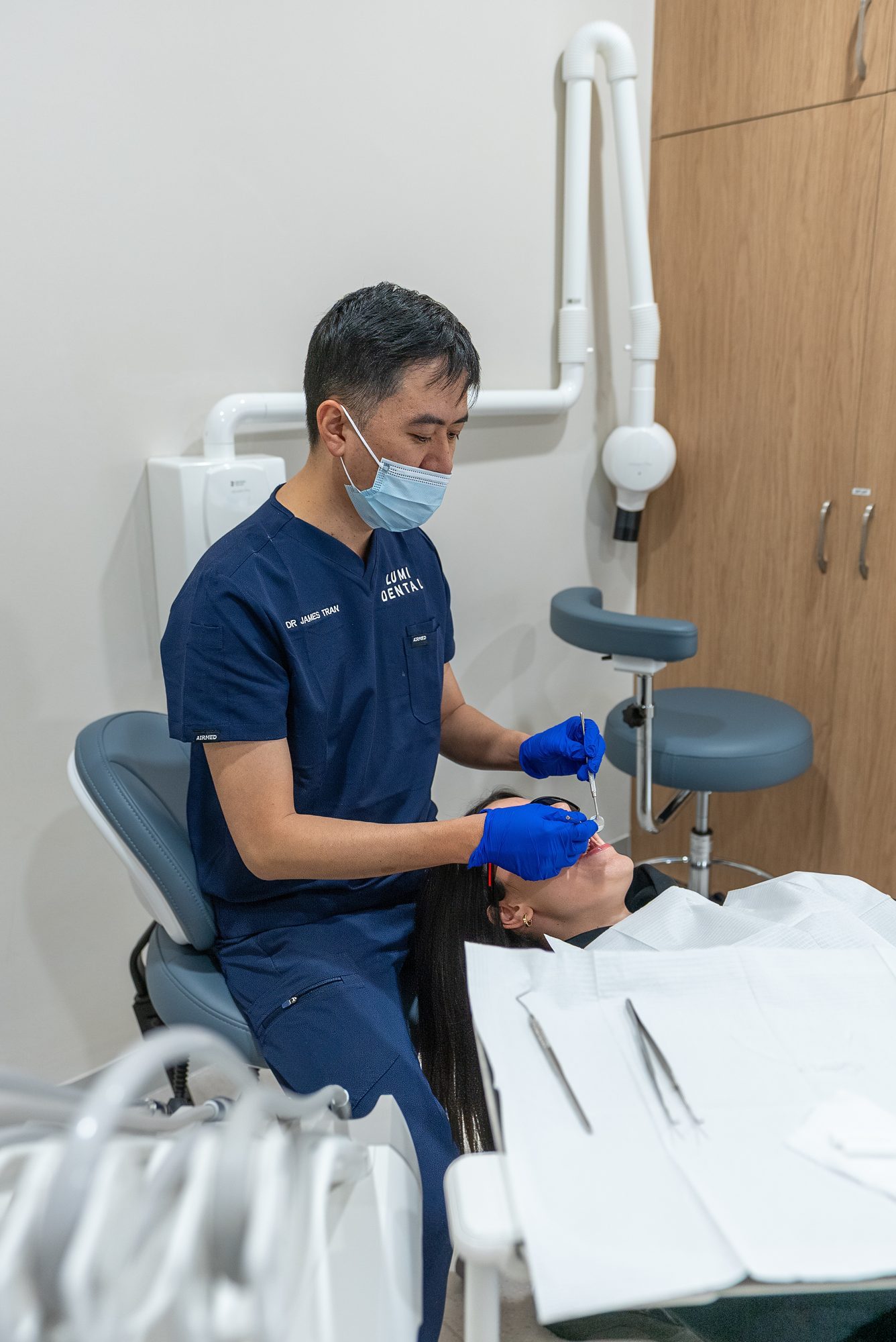
Most dental care has more flexibility than people expect. The light can be angled away from your eyes, you can keep a view of the door, and a support person can sit in the room if that helps. The table sets out common triggers and options the team may be able to offer.
| Trigger | What may help |
|---|---|
| Lying flat | A more upright chair where the treatment allows, reclined in stages with a pause at each |
| Rubber dam | A smaller sheet, the top edge folded down away from the nose, a practice run, and breaks with the dam off |
| Impression trays | A digital scan where it suits the treatment, or a smaller tray with less material and a timer |
| Someone over your face | The team stepping back between steps and telling you before they lean in |
| Blocked nose | Mention it at the start; a nose-breathing check before the mouth is closed off, or rebooking if you are unwell |
| Long appointment | Agreed breaks, or splitting the work into shorter visits |
| 3D X-ray scan | Knowing you sit or stand with nothing over your face, and a countdown before the arm moves |
Rubber dams without the trapped feeling
A rubber dam keeps a tooth dry and protects the throat, but for people with claustrophobia it can be the hardest part of a visit. A study of moderate sedation in three dental school specialty programs in the United States found that claustrophobia with the rubber dam was the reason for sedation in 8% of cases, alongside anxiety in 54% and a severe gag reflex in 8%.
Beyond what the rubber dam post covers, people with claustrophobia often find these help:
- A practice run. The dam goes on for a minute with no treatment, then comes off.
- A smaller sheet, or one folded back. The top edge can often be folded down so nothing sits near the nose.
- A breathing check. A few slow nose breaths with lips closed before the dam goes on. If that is hard, say so.
- Breaks. The dam can come off between stages of a long procedure.
What is possible depends on the tooth and the treatment, so ask the dentist to explain the options.
Impression trays, scanners and 3D X-rays
Impressions and digital scans
Putty-filled impression trays sit in the mouth for a few minutes, which some people find harder than any drill. An intraoral scanner takes the record with a small wand moved around the teeth, and you can usually stop at any point. Our comparison of a digital scan and a dental impression explains when each is used.
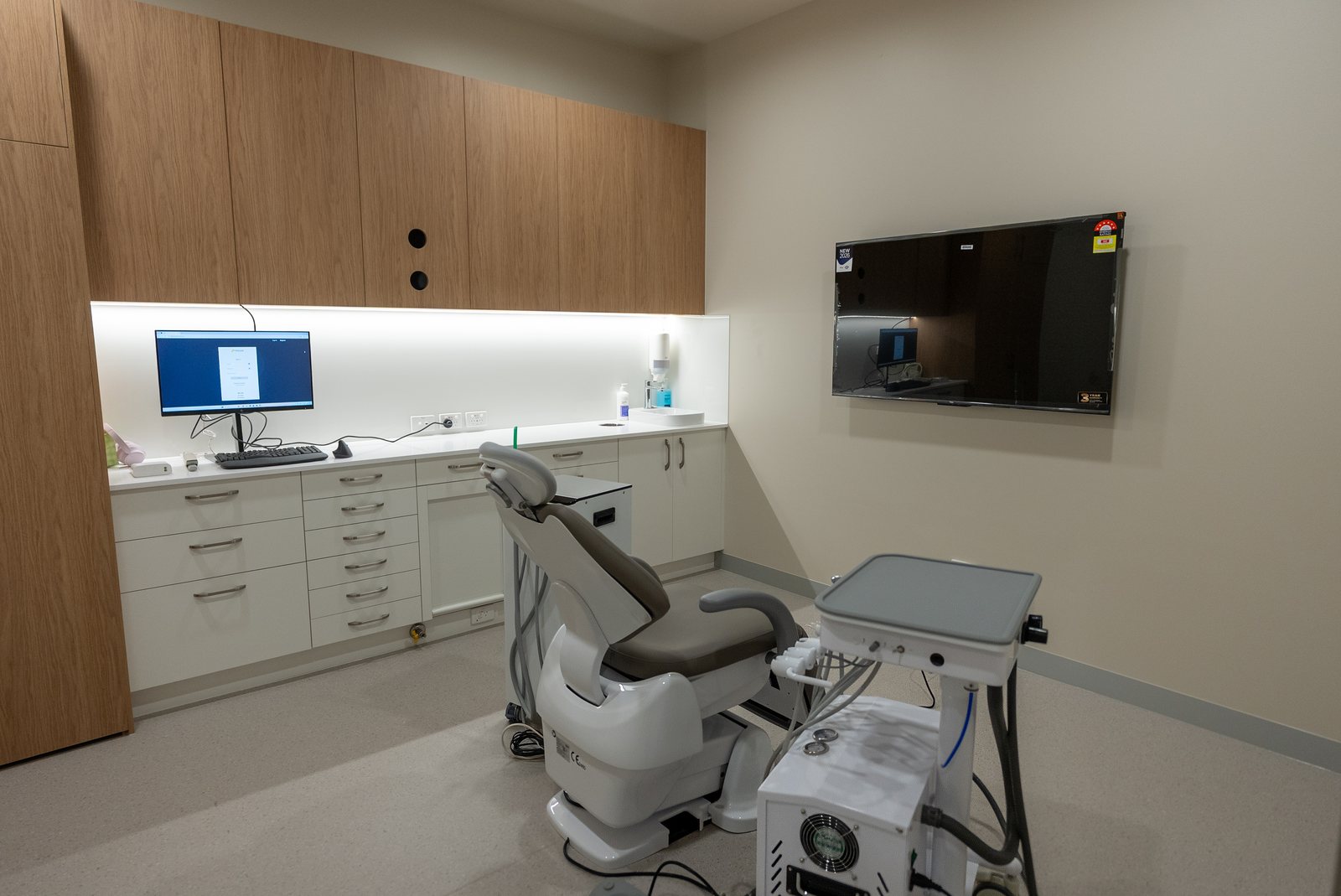
3D X-rays (CBCT)
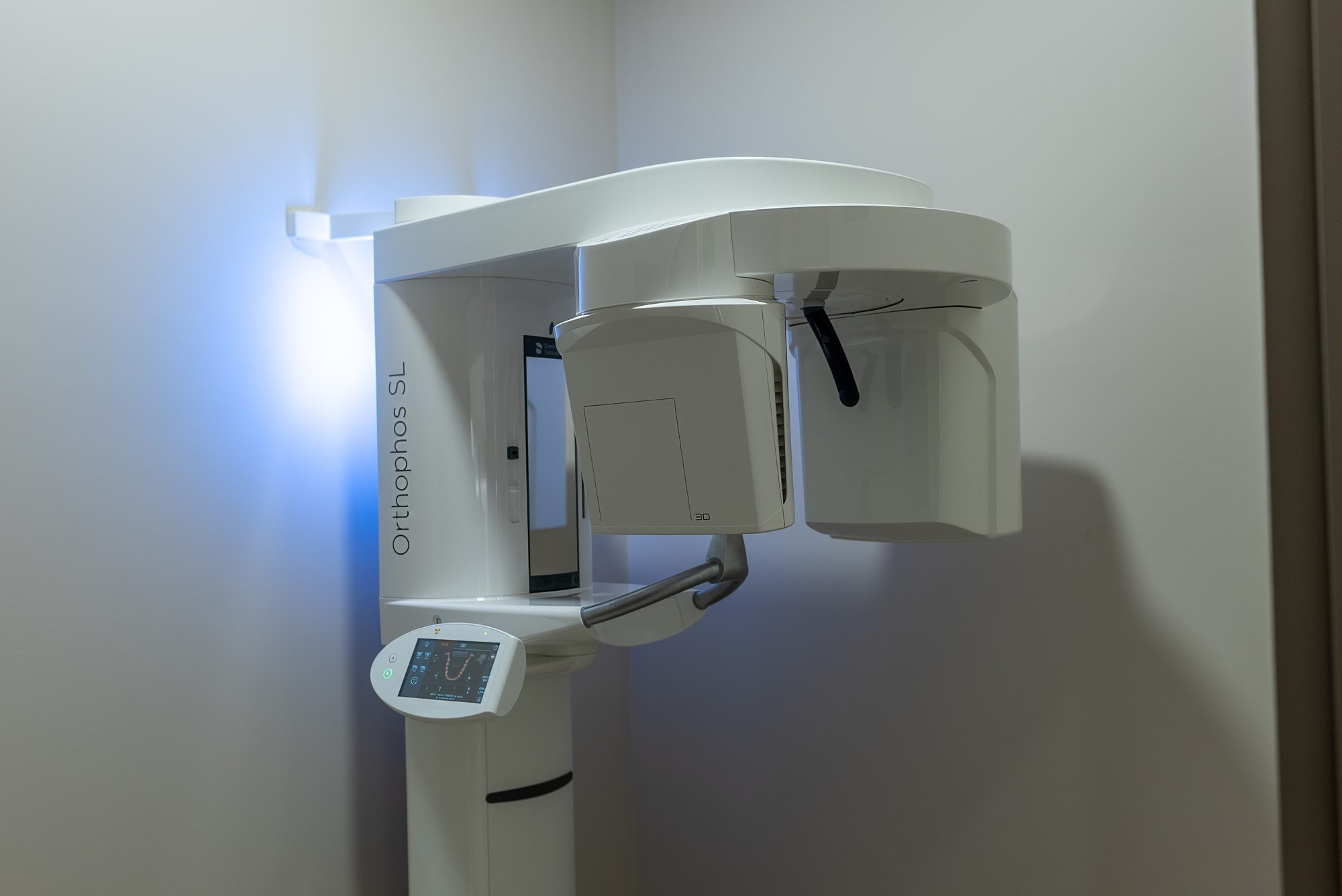
Many people picture a hospital tunnel when they hear "CT scan". A dental cone beam CT is a different machine. A patient leaflet from Guy's and St Thomas' hospitals in London says you sit or stand in the scanner, your head is positioned, the scanner moves around your head in a circle, and each scan takes less than a minute. It also asks people who are claustrophobic to tell the radiographer so they can be supported.
Nothing covers your face. Our article on dental CBCT scans covers when a 3D scan is worth the dose.
If panic starts in the chair
Use the signal. The team stops, clears your mouth and brings the chair up; no explanation needed.
Healthdirect lists controlled breathing and grounding techniques among the coping strategies people can learn for claustrophobia. A simple version in the chair is breathing in slowly through the nose and out for a little longer, while you look at something fixed in the room. The NHS says the symptoms of a panic attack usually peak within 10 minutes, and that it helps to remind yourself the frightening sensations are a sign of panic and will pass.
I usually suggest people practise slow breathing at home before the visit, so it is familiar when they need it.
Sedation, and treating the fear itself
Sedation can make treatment easier when adjustments are not enough. Our guide to nitrous oxide for adults explains happy gas, which is breathed through a small nose piece. If the nose piece itself worries you, try it on first. IV sedation goes deeper and suits longer procedures. Both depend on an assessment of your health and the treatment planned. Lumi Dental does not provide general anaesthetic itself and refers where it is needed, though IV sedation is available at the practice.
Sedation helps with one appointment. It does not change the fear. Healthdirect says claustrophobia can be treated successfully, often by a psychologist using cognitive behavioural therapy or exposure therapy, where you work with a health professional to face feared situations gradually. If claustrophobia is stopping you from getting dental care, a GP can refer you.
How we approach this at Lumi Dental
At Lumi Dental, the dentist asks about anxiety and claustrophobia as part of your history and agrees a stop signal before treatment begins. The team can recline the chair in stages, plan breaks, and use the in-house intraoral scanner where it suits the treatment better than impression trays.
Where more support is needed, the dentist can talk through nitrous oxide or IV sedation at Lumi Dental after an assessment. Let the team know about claustrophobia when you book.
Questions patients ask
Can you be claustrophobic at the dentist?
Yes. Lying back, someone close to your face and things in your mouth can trigger the same fear of being trapped. Tell the team so they can adjust.
Can I breathe with a rubber dam on?
Yes, through your nose, because the dam covers the teeth, not the nose. If your nose is blocked, mention it before the dam goes on so the plan can change.
Can I sit up during dental treatment?
Often partly, yes. Many procedures can be done with the chair more upright, with breaks sitting up.
Is a dental 3D scan like an MRI?
No. You sit or stand while the arm circles your head, nothing covers your face, and each scan usually takes less than a minute.
Can I be sedated if I am claustrophobic?
Often, after an assessment of your health and the treatment planned. Our guide to happy gas for adults explains the mildest option.
Book a check-up at Lumi Dental, Melrose Park
If claustrophobia has kept you away from the dentist, the team at Lumi Dental can start with an unhurried check-up, agree a stop signal and plan each step around how you feel in the chair. See current deals for new patients or read about general dentistry in Melrose Park. Patients visit from Ryde, Parramatta, Ermington and Rydalmere, with on-site parking at Melrose Central.
Sources
- NHS: Claustrophobia
- Healthdirect: Claustrophobia
- Guy's and St Thomas' NHS Foundation Trust: Dental cone beam CT scan (CBCT)
- Journal of Endodontics (Setty and colleagues): An analysis of moderate sedation protocols used in dental specialty programs (PubMed)
About the author

Dr James Tran is a general dentist at Lumi Dental in Melrose Park. He holds a BDent from the University of Sydney and a Graduate Diploma in Oral Implants, and is a Member of the International Congress of Oral Implantologists (MICOI).
This article is general information only and is not a substitute for an examination and individual advice from a registered dental practitioner. Suitability for any treatment varies from person to person.







