

If your clear aligners smell, or your breath seems worse since you started treatment, the usual cause is a film of plaque and food trapped between the trays and your teeth, and cleaning both before the trays go back in usually fixes it. Aligners are typically worn around 22 hours a day, and researchers note that this interrupts the cleansing, buffering and remineralising work of saliva. If bad breath or a dry mouth continues with the trays out, the cause is more likely to be the gums, the tongue or saliva flow, and it is worth having checked.
Written by Dr James Tran, BDent (University of Sydney), MICOI, GradDip (Oral Implants), general dentist at Lumi Dental in Melrose Park.
The short version
- Trays cover the teeth for most of the day, so saliva cannot wash the tooth surfaces underneath them; anything left on the teeth stays there.
- Plaque also builds up on the plastic itself, which is why trays that are only rinsed can start to smell within days.
- Drinking anything other than plain water with trays in feeds the bacteria sealed under the plastic.
- In one study, aligner wearers had less bad breath than people in fixed braces; plaque, tongue coating and low saliva flow mattered most.
- If the smell continues with the trays out, our guide to bad breath causes and treatment covers the wider causes.
- See a dentist for bad breath that lasts a few weeks despite good cleaning, bleeding gums, a bad taste from one tooth, or chalky white spots.
The single rule: trays or mouth?
Take the trays out and smell them, then check your breath a while later with the trays out. If the smell is mainly from the trays, the fix is cleaning the trays and your teeth before they go back in. If bad breath continues with the trays out and your teeth clean, look at your gums, tongue and saliva, and have it checked.
In my experience most aligner odour falls into the first group and settles within a few days of a better routine. The second group is less common, but it matters, because the trays can hide early gum inflammation.
Why trays trap odour
Bad breath mostly comes from bacteria breaking down proteins and releasing volatile sulphur compounds, the gases behind the smell. Those bacteria live in plaque on the teeth, along the gum line and on the back of the tongue.
Saliva normally washes these surfaces, buffers acids and carries food away. A tray changes that. A systematic review in BMC Oral Health noted that patients are advised to wear aligners approximately 22 hours a day, which interrupts the self-cleansing action of the cheeks and tongue, allows plaque to build up under the aligner, and hampers the cleansing, buffering and remineralising properties of saliva.
Night is the hardest time. A review in the Journal of Dental Research reports that resting saliva flow averages around 0.3 to 0.4 mL per minute while awake, but is virtually zero during sleep. Under a tray, at night, very little is moving.
Drinks matter too. Coffee with milk, juice, soft drink or anything sweet taken with the trays in pools against the teeth and soaks into the plastic. Our guide to what you can eat and drink with clear aligners explains which drinks are fine with trays in and which are not.
What research says about aligners and bad breath
Research so far suggests aligners are not usually worse for breath than fixed braces. A cross-sectional study in Dentistry Journal compared 184 people aged 15 to 35: aligner wearers, people in fixed braces and untreated controls. On a clinician's smell test scored from 0 to 5, the average was around 2.2 for aligners, 2.4 for controls and 2.9 for fixed braces. Malodour at a level the authors called clinically relevant was found in about 66 per cent of aligner wearers, 79 per cent of controls and 97 per cent of the braces group.
The more useful finding is what drove the scores. When the researchers adjusted for other factors, more tongue coating, more plaque and low saliva flow were linked to worse breath, while the type of appliance was not independently linked to how people rated their own breath. In other words, the appliance matters mostly because of the plaque it allows to build up. The study was cross-sectional, so it cannot prove cause, and the authors noted possible bias.
The BMC Oral Health review pooled studies comparing aligners with fixed braces and found significantly less plaque with aligners, with moderate-quality evidence. Removable trays make brushing easier. They only help if the brushing happens.
Dry mouth, mouth breathing and night-time
A dry mouth makes bad breath more likely, with or without aligners. Common contributors include mouth breathing at night, a blocked nose, some medicines, not drinking enough water, and alcohol. In my experience some people notice a drier mouth in the first week of aligners while they get used to the plastic, and this often settles.
If you wake with a dry, sticky mouth, the trays are not the whole story. Our article on waking up with a dry mouth explains the night-time causes and what helps. A dry mouth through the day is worth raising with your dentist or GP.
The tongue: the part people forget
A white or yellow coating on the back of the tongue is a common source of odour in anyone, and the Dentistry Journal study found tongue coating was one of the factors most closely linked to worse breath. Our guide to a coated white tongue explains the causes.
| Likely cause | Clue | What helps |
|---|---|---|
| Dirty trays | The trays smell; breath is fine with them out and teeth brushed | Clean trays daily; rinse each time they come out |
| Teeth not cleaned before trays go back | Smell is worse after meals and snacks | Brush and floss, or at least rinse well, before trays go back in |
| Drinks with trays in | Sweet or milky film; trays look cloudy | Plain water only with trays in |
| Dry mouth or mouth breathing | Worse on waking; sticky, dry mouth | Sip water through the day; ask about a blocked nose or medicines |
| Tongue coating | White or yellow coating at the back of the tongue | Clean the tongue gently once a day |
| Gum inflammation | Gums bleed when brushing; puffy edges under the trays | Better cleaning along the gum line and a dental check |
| A problem with one tooth | Bad taste or smell from one spot | Book an examination |

What helps, step by step
- Clean your teeth before the trays go back in. Brush, and floss or use interdental brushes once a day. The NHS advises brushing for 2 minutes at least twice a day with a fluoride toothpaste and cleaning between the teeth at least once a day.
- Clean the trays daily. Brush them gently with cool water, rinse each time they come out, and keep them in the case. Our clear aligner care guide has the full routine.
- Clean the tongue. The NHS suggests cleaning the tongue gently once a day with a tongue scraper or cleaner.
- Sip water. Plain water is the only drink that suits trays left in, and it helps a dry mouth.
- Chew sugar-free gum when the trays are out. Chewing helps saliva flow; take the trays out first.
- Keep sweet and acidic drinks for meal breaks. Then rinse or brush before the trays go back.
- Use mouthwash only as an add-on. It does not replace cleaning; see our comparison of mouthwashes for bad breath.
When to see a dentist
The NHS advises seeing a dentist for bad breath that does not go away after treating it yourself for a few weeks, or for painful, bleeding or swollen gums. With aligners I would add two more: a bad taste or smell that seems to come from one tooth, which can point to decay or a gum pocket, and chalky white spots on the teeth. Those spots are early enamel demineralisation, and the BMC Oral Health review describes them as a known complication of orthodontic treatment when plaque sits on the teeth.

How we approach this at Lumi Dental
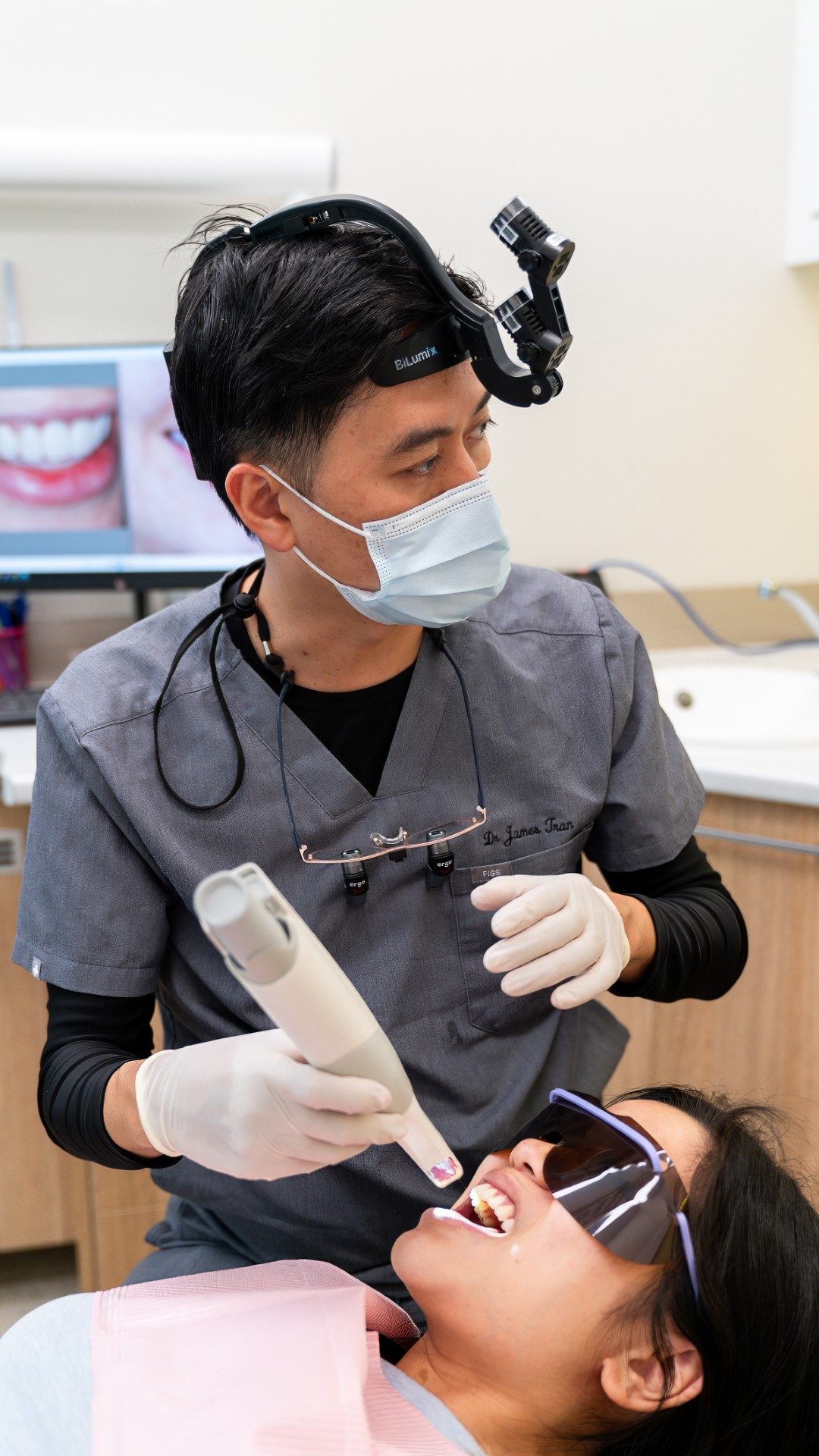
At Lumi Dental, clear aligners are planned by a dentist from a 3D intraoral scan, after an examination of the teeth and gums. If you notice bad breath or a dry mouth during treatment, mention it at your review so the dentist can check the gums, tongue and teeth. Patients in aligner treatment can also see the oral health therapists for cleans and gum checks, and anyone who needs gum therapy usually has it before tooth movement continues. Read more about clear aligners at Lumi Dental.
Questions patients ask
Why do my aligners smell even after I rinse them?
Rinsing removes loose debris but not the plaque film stuck to the plastic. Brush the trays gently with cool water daily.
Can clear aligners cause bad breath?
They can contribute, because the trays hold plaque and food against the teeth and keep saliva out. Research suggests plaque, tongue coating and saliva flow matter more than the appliance itself.
Why is my mouth so dry with aligners?
Some people notice dryness in the first week while they adjust, and saliva flow is very low during sleep anyway. If dryness persists, look at mouth breathing, fluid intake and medicines, and mention it at your next review.
Can I chew gum with my aligners in?
No. Take the trays out first, because gum sticks to the plastic. Sugar-free gum with the trays out can help saliva flow.
Should I use mouthwash with clear aligners?
Mouthwash can freshen breath for a while, but it does not remove plaque from the teeth or trays. Use it as an add-on to brushing, flossing and tray cleaning, and ask your dentist or the general dentistry team which type suits you.
Thinking about clear aligners? Free aligner consultation in Melrose Park
If you are considering clear aligners, or you are already in treatment and worried about your breath, the team at Lumi Dental can check your gums, tongue and teeth and talk through a cleaning routine that fits your wear time. Book a free aligner consultation at Melrose Central in Melrose Park, or read more about clear aligners at Lumi Dental. Patients visit from Ryde, Parramatta, Ermington and Rydalmere, with on-site parking.
Sources
- Dentistry Journal (PMC): Orthodontic appliance type and oral malodor burden, a cross-sectional comparison of clear aligners, fixed braces, and untreated controls
- BMC Oral Health (PMC): White spot lesions, plaque accumulation and salivary caries-associated bacteria in clear aligners compared to fixed orthodontic treatment
- Journal of Dental Research (PMC): Role of saliva and salivary diagnostics in the advancement of oral health
- NHS: Bad breath
About the author

Dr James Tran is a general dentist at Lumi Dental in Melrose Park. He holds a BDent from the University of Sydney and a Graduate Diploma in Oral Implants, and is a Member of the International Congress of Oral Implantologists (MICOI).
This article is general information only and is not a substitute for an examination and individual advice from a registered dental practitioner. Suitability for any treatment varies from person to person.








