

With clear aligners in, the only thing you can safely eat or drink is plain, cool water; everything else, including coffee, means taking the trays out, then rinsing or brushing before they go back in. An aligner is a sealed plastic cover over the teeth, so whatever you sip with it in sits against the enamel until the tray comes out. Orthodontics Australia puts the wear target at 20 to 22 hours a day and calls removing the aligners to eat or drink a must. This guide to what you can eat and drink with clear aligners in goes drink by drink, does the 22-hour maths, and gives a coffee plan for people who sip all morning.
Written by Dr James Tran, BDent (University of Sydney), MICOI, GradDip (Oral Implants), general dentist at Lumi Dental in Melrose Park.
The short version
- Water in, everything else out. Plain cool water is the only drink that goes with aligners in.
- Two things go wrong when you cheat: sugar and acid get trapped under the tray, and heat or pigment damages the plastic.
- Hot drinks can distort the aligner; coffee, tea and soft drink stain it; sparkling water and diet soft drink are acidic even without sugar.
- The 22-hour target leaves about two hours a day out of the mouth: three meals and one or two short drink breaks.
- After anything but water: rinse, brush if you can, reinsert. Our guide to cleaning clear aligners covers the trays themselves.
- Chewing gum is out, sugar-free included, because it sticks to and damages aligners.
The single rule: water in, everything else out
If it is not plain water at room temperature or colder, take the aligners out first. That one rule covers coffee, tea, juice, soft drink, sparkling water, milk, alcohol, every snack and every meal. It ends the daily negotiation ("surely a flat white is fine?") and protects both the enamel under the tray and the fit of the tray. Hot water fails the rule too, because warmth softens the plastic. In my experience the patients who do best settle the rule on day one, which is why it also opens our first week in clear aligners guide.
Why a sip matters: the two things that go wrong
Trapped against the enamel
Saliva normally rinses sugar and acid off the teeth within minutes. An aligner blocks that: whatever you drink seeps under the edge and stays there until the tray comes out. Better Health notes that aligners already make cleaning harder and raise the chance of decay, gum disease and stains. The Australian Dental Association explains the acid side: acids coating the tooth pull minerals out of the enamel and leave it softer, and the softened layer is then worn away. A tray turns a short acid contact into a long one.
The plastic itself
Aligners are medical-grade plastic made to a precise shape. Orthodontics Australia warns that hot drinks can distort them and that drinks with colourants such as tea, coffee and soft drink stain them. A warped tray no longer moves the teeth where the plan says; a stained one is no longer clear. One aligner manufacturer adds that chewing with aligners in can crack them.
Drink by drink: what to do with the aligners
Patients I see rarely ask about meals; they ask about one particular drink, so here are the common ones.
| Drink or food | Aligners in? | Before the trays go back in | Why |
|---|---|---|---|
| Plain water, cool or room temperature | Yes | Nothing needed | No sugar, acid, pigment or heat |
| Flat white, long black, hot tea, herbal tea | No | Rinse with cold water, brush if you can | Heat warps and pigment stains; milk and sugar feed plaque |
| Iced coffee, iced latte | No | Rinse, brush if you can | Cold spares the plastic, but pigment and sugar remain |
| Sparkling water, kombucha, lemon water | No | Rinse with still water | Acidic enough to soften enamel when trapped |
| Soft drink, including diet | No | Rinse, then brush | The ADA notes sugar-free versions are still acidic |
| Juice, cordial, sports and energy drinks | No | Rinse, then brush | Sugar and acid together, listed by the ADA among common causes of erosion |
| Wine, beer, spirits | No | Rinse well, brush before bed | Red wine stains; mixers and beer are sugary or acidic |
| Chewing gum, any kind | No | Use aligner chewies instead | Sticks to and damages aligners |
| Any food, any meal | No | Rinse, brush, reinsert | Chewing can crack the tray and traps food under it |
Cold does not cancel sugar or acid: an iced latte spares the plastic, but the milk and syrup still need to come off the teeth. Our article on sparkling water, kombucha and vinegar drinks explains why "healthy" acidic drinks still erode enamel.
The 22-hour maths: how many breaks fit in a day
Orthodontics Australia and Better Health give the same wear target: 20 to 22 hours a day. Aim for 22 and you have two hours out of the mouth. Three meals at 25 to 30 minutes each, including the rinse and brush, use about an hour and a half. That leaves around half an hour for everything else: the morning coffee, an afternoon snack, a glass of wine outside the dinner window. Enough for a normal life, not enough for grazing. Orthodontics Australia is direct: wear less than the recommended 22 hours and treatment may take longer.
The trick is to attach drinks to meals. A long black with breakfast costs nothing extra in wear time; the same long black at 10:30 is a separate break and a separate brush.
A coffee plan for people who sip all morning
Coffee is the question I hear most often at aligner consults, and the answer is not "give it up". Orthodontics Australia's advice is to remove the aligner, drink the coffee quickly, and at least rinse with cold water if you cannot brush before the trays go back in. Built into a day:
- Have the coffee with breakfast, trays already out, in one sitting rather than over an hour at the desk.
- Rinse with cold water, which also cools the mouth before plastic goes back in. Brush if you are at home.
- Reinsert and switch to cool water for the morning.
- If a second coffee is non-negotiable, make it the afternoon snack break rather than an extra one, and skip sugar and syrups.
Our guide to coffee, tea and teeth staining covers what the tannins do to enamel as well as to plastic.
Food: nothing is off the menu, but the routine is not optional
With braces, hard and sticky foods are restricted to protect the brackets; aligners come out for meals, and Orthodontics Australia lists "you can eat whatever you want" among the benefits. Crusty bread, apples, corn on the cob, steak: all fine with the trays out. A long dinner is the hardest case, because two to three hours out is most of a day's allowance, so reinsert between courses, rinsing first.
Rinse, brush, reinsert
What replaces the food restrictions is a cleaning routine. Orthodontics Australia advises brushing after every meal during aligner treatment, because plaque and food trapped under a tray lead to cavities and bad breath; Better Health says at least twice a day, ideally after every meal, with fluoride toothpaste. A small kit (travel brush, toothpaste, floss picks, the case) lives in the bag. Trays go in their case every time; a tray wrapped in a serviette is the classic way to lose one.
When you cannot brush
Rinse well with plain water, swish it between the teeth, reinsert, and brush at the next chance. One subtlety: the ADA suggests waiting around 60 minutes before brushing after acidic food or drink, because softened enamel wears more easily. With aligners you cannot leave the trays out that long, so the compromise I usually suggest is to rinse thoroughly, reinsert, and brush fully at the next meal.
What happens if you cheat
One sip of coffee through a tray will not ruin treatment. A pattern will. The usual consequences, roughly in order: cloudy or yellowed trays; a tray that no longer snaps on cleanly after hot drinks; sore, bleeding gums where plaque has sat under the edge; chalky white marks around the attachments, the first visible stage of decay, which tend to stay once the aligners are gone; and eventually cavities filled mid-treatment. Our article on aligner attachments and IPR explains why that enamel suffers first.
How we approach this at Lumi Dental
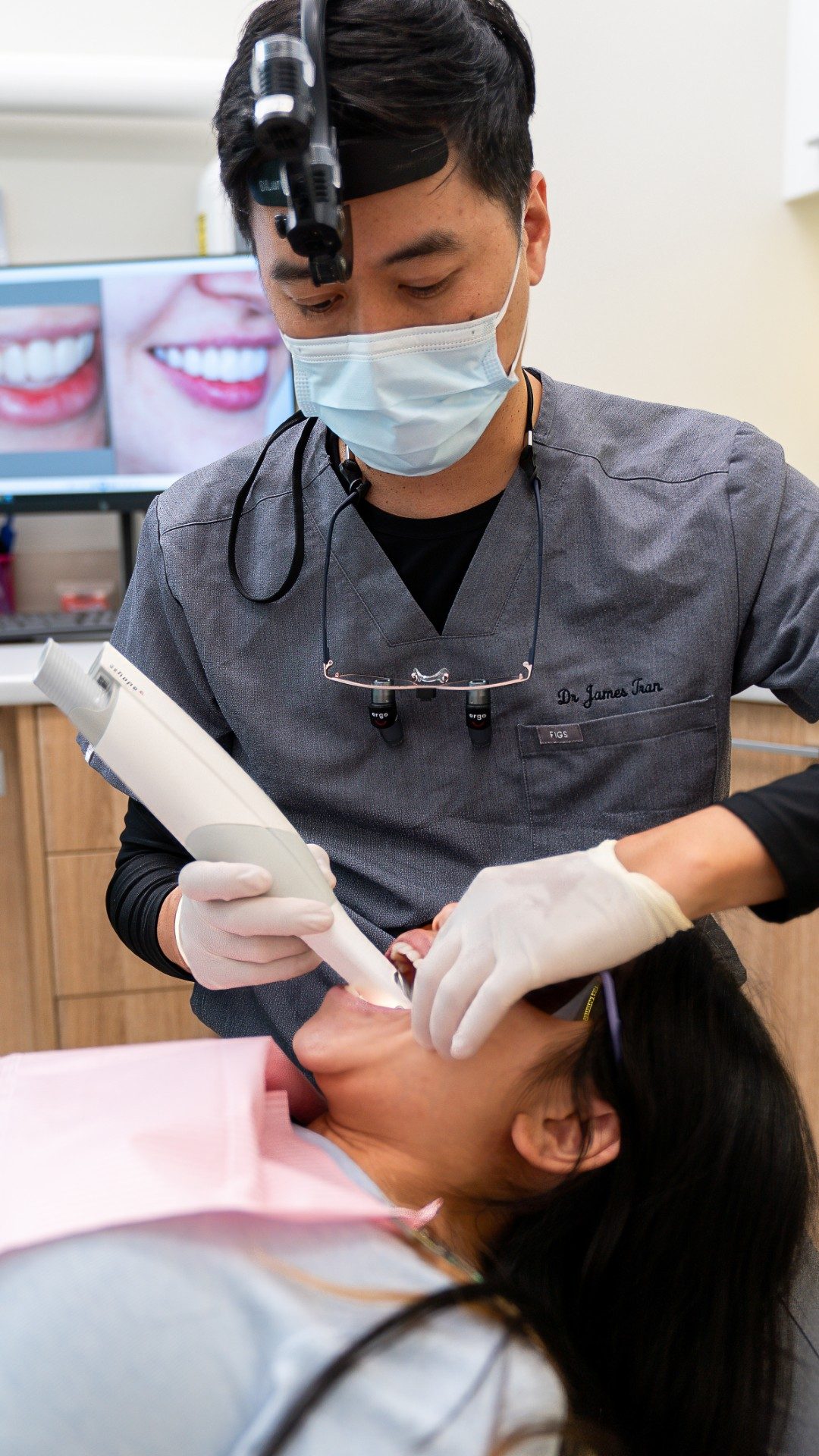
At Lumi Dental in Melrose Park, clear aligner treatment starts with an examination by a dentist, an intraoral 3D scan and photographs, all taken in house. The rules in this article are worth settling before the first trays are fitted, because rules are easier to keep once you know why they exist. The hygiene team of oral health therapists looks after cleans during treatment. Read more about clear aligners at Lumi Dental.
Questions patients ask
Can you drink coffee with aligners in?
No. Hot coffee can distort the plastic, the pigment stains it, and milk or sugar gets trapped against the teeth. Take the trays out, drink it in one sitting, rinse with cold water, then reinsert.
Can you drink water with aligners in?
Yes, plain cool water is the one drink that is fine with aligners in. Hot water is not, because warmth softens the plastic, and flavoured, sparkling or lemon water counts as a drink to take the trays out for.
What happens if I eat with my aligners in?
The tray can crack under chewing forces, and food gets trapped between plastic and teeth where saliva cannot wash it away. Once will not matter much; take the trays out, rinse them and brush before reinserting. As a habit it means stained trays, bad breath and decay.
Can you drink through a straw with aligners in?
No. Liquid still reaches the teeth and seeps under the tray edge, and heat still reaches the plastic. A straw helps with stain-prone drinks once the trays are out, but the trays still come out.
How long after eating can I put my aligners back in?
As soon as the teeth are clean: rinse, brush, reinsert, usually within a few minutes, so the day stays near 22 hours of wear. After an acidic drink, rinse thoroughly, reinsert, and brush at the next meal. Whitening during treatment is a separate question; see our guide to teeth whitening with braces or aligners.
Thinking about clear aligners? Complimentary aligner consult in Melrose Park
If you are weighing up aligners and wondering how they would fit around coffee and work lunches, the team at Lumi Dental in Melrose Park can talk it through at a complimentary aligner consultation. Read more about clear aligners at Lumi Dental. Patients visit from Ryde, Parramatta, Ermington, Rydalmere and nearby suburbs.
Sources
- Orthodontics Australia: Clear aligners (wear time, eating and drinking)
- Better Health Channel: Orthodontic treatment (clear aligners, teeth care during treatment)
- Australian Dental Association, teeth.org.au: Tooth erosion
- Australian Dental Association, teeth.org.au: Sugary drinks
About the author

Dr James Tran is a general dentist at Lumi Dental in Melrose Park. He holds a BDent from the University of Sydney and a Graduate Diploma in Oral Implants, and is a Member of the International Congress of Oral Implantologists (MICOI).
This article is general information only and is not a substitute for an examination and individual advice from a registered dental practitioner. Suitability for any treatment varies from person to person.








