


Clear aligners and a tongue or lip piercing can usually go together, but the gum behind the lower front teeth (for a tongue bar) or in front of them (for a lip stud) should be checked and recorded before the first tray, because that is where piercings most often cause gum recession. A review of oral piercing studies in the American Journal of Dentistry reported gum recession in 19% to 68% of people with oral jewellery, and tooth fractures or wear in 14% to 41%, wide ranges that reflect small and varied studies. Once the gums are recorded, you can decide with the dentist whether to keep, swap or remove the jewellery.
Written by Dr James Tran, BDent (University of Sydney), MICOI, GradDip (Oral Implants), general dentist at Lumi Dental in Melrose Park.
The short version
- A healed oral piercing does not rule out clear aligners. It changes what the dentist checks first.
- Tongue bars tend to affect the gum on the inside of the lower front teeth, and lip studs the gum on the outside.
- Clicking a tongue bar against trays can crack them or wear the small tooth-coloured attachments bonded to the teeth.
- A fresh piercing is best left to heal fully before scans and the first tray.
- Keeping, swapping or removing the jewellery during treatment is your choice to discuss, not a requirement.
- The general dental risks of piercings are covered in our guide to tongue and lip piercing dental risks. This article is only about aligners.
The single rule: record the gum next to the jewellery before the first tray
Aligners move teeth, and some movements, especially of the lower front teeth, can stretch thin gum. A piercing that rubs the same area adds a second source of wear. Recession or thin gum should be measured and photographed before treatment, so any later change can be compared fairly. Then ask whether removing the jewellery, or switching to a shorter, smaller or non-metal piece, suits you. In my experience, most people are happy to talk this through once they see the measurements.
| Situation | What may help during aligner treatment |
|---|---|
| Healed tongue bar | Gum behind the lower front teeth recorded first; ask your piercer about a shorter bar or smaller balls |
| Healed lip stud | Gum in front of the lower front teeth recorded; a small, flat disc that sits flush may rub less |
| Fresh piercing | Scans and the first tray wait until the piercing has fully healed and the swelling has gone |
| Existing gum recession | Assessed before treatment; the movement plan may change, with referral to a periodontist where needed |
| Chipped tooth | Smoothed or repaired before the scan, so trays are made to the final tooth shape |
| Habit of clicking the jewellery | A planned alternative, jewellery out at the times it is most played with, and trays checked at each review |
What research says about piercings, recession and chipped teeth
The evidence comes mostly from small studies, so it shows a pattern rather than a precise risk. A systematic review in the International Journal of Dental Hygiene looked at eight studies covering 408 people with lip or tongue piercings. Teeth next to a tongue piercing showed more gum recession than comparison teeth in all four studies that measured it, and teeth next to a lip piercing showed more recession in three of four. The time since the piercing was placed was linked with more localised gum damage in four of seven studies.
That matters for aligners, because treatment runs for months while the jewellery keeps working on the same spot. Our article on what oral piercings mean for your teeth covers the research in more detail.
Why tooth movement and a piercing can add up
There is little research on aligners and piercings together. What is known is that each one can affect the same small area of gum over the lower front teeth, where the gum and bone are often thin to begin with. Our article on whether clear aligners can cause gum recession explains which tooth movements carry more risk and what the dentist watches for.
If the gum is thin, the plan may limit how far certain teeth move forward, or a periodontist, a registered gum specialist, may be asked to assess it first. Removing the jewellery stops the rubbing, but receded gum does not grow back on its own.

Tongue bars, trays and attachments
Clear aligners are thin plastic, and a metal ball knocked against them hundreds of times a day can wear or crack them. Many treatments also use attachments: small bumps of tooth-coloured filling material bonded to some teeth so the trays can grip and push. Our guide to clear aligner attachments explains what they do and why they matter.
I could not find a study that measured piercing damage to aligners, so this comes from practical experience rather than research. The problems I see most often are:
- a crack or split along the tray edge behind the lower front teeth,
- a chipped or worn attachment, which can loosen the grip of the tray on that tooth,
- a clicking noise,
- a sore spot on the tongue where the ball presses against the tray.
A shorter bar or a smaller ball, fitted by your piercer once any swelling has settled, may reduce contact.
Lip studs and the tray edge
The disc of a lip stud sits on the gum just below where the tray edge usually ends. If it rubs on the edge, it can irritate the lip and gum together, and a small flat-backed stud may be less noticeable. Tell the dentist if a tray edge feels sharp against the lip, because it can usually be smoothed.
A fresh piercing: wait until it has healed
Better Health Channel notes that oral piercings can take up to two months to heal, and that the jewellery should not be removed before the wound has fully healed. It also lists pain and swelling as common, with tongue swelling occasionally severe enough to affect breathing.
A swollen tongue or lip changes the shape of the mouth, makes a 3D scan less accurate and can be pressed on by a new tray. If you are planning a piercing and aligners, it usually works better to get the piercing first and let it heal, or to wait until treatment has finished. If you already have trays, tell the practice before a piercing so it can be planned around a tray change.
Scans, X-rays and appointments
You may be asked to take oral jewellery out for X-rays, because metal blocks part of the image. For a 3D intraoral scan, a tongue bar can get in the way of the scanner tip behind the lower teeth. If the piercing has healed, taking it out for those few minutes is usually easiest.
Better Health also warns that loose jewellery is a choking hazard. Check that the ends are tight each day.
Cleaning trays and the piercing site
Jewellery holds plaque against the gum, and trays hold it against the teeth, so brushing before the trays go back in matters more. Better Health suggests brushing twice a day and rinsing with warm salty water while an oral piercing heals. Clean the jewellery as your piercer advises, and keep tray cleaning separate. Our guide to cleaning clear aligners covers what to use and what to avoid.
Habits, retainers and teenagers
Playing with a tongue bar is a habit much like chewing or clicking trays, and people often do it without noticing, especially when concentrating. I usually suggest asking someone close to point it out, or keeping the bar out at the times you most often play with it.
The habit matters after treatment too. A fixed retainer wire bonded behind the lower front teeth sits exactly where a tongue bar knocks, and repeated contact can loosen it. Our comparison of fixed and removable retainers sets out the trade-offs.
For teenagers, Better Health notes that piercing laws differ between states and territories, and that some piercers ask for parental consent regardless. Wear time is the other factor: Orthodontics Australia says aligners need to be worn for a minimum of 22 hours a day, so a sore new piercing mid-treatment can cost wear time.
How we approach this at Lumi Dental
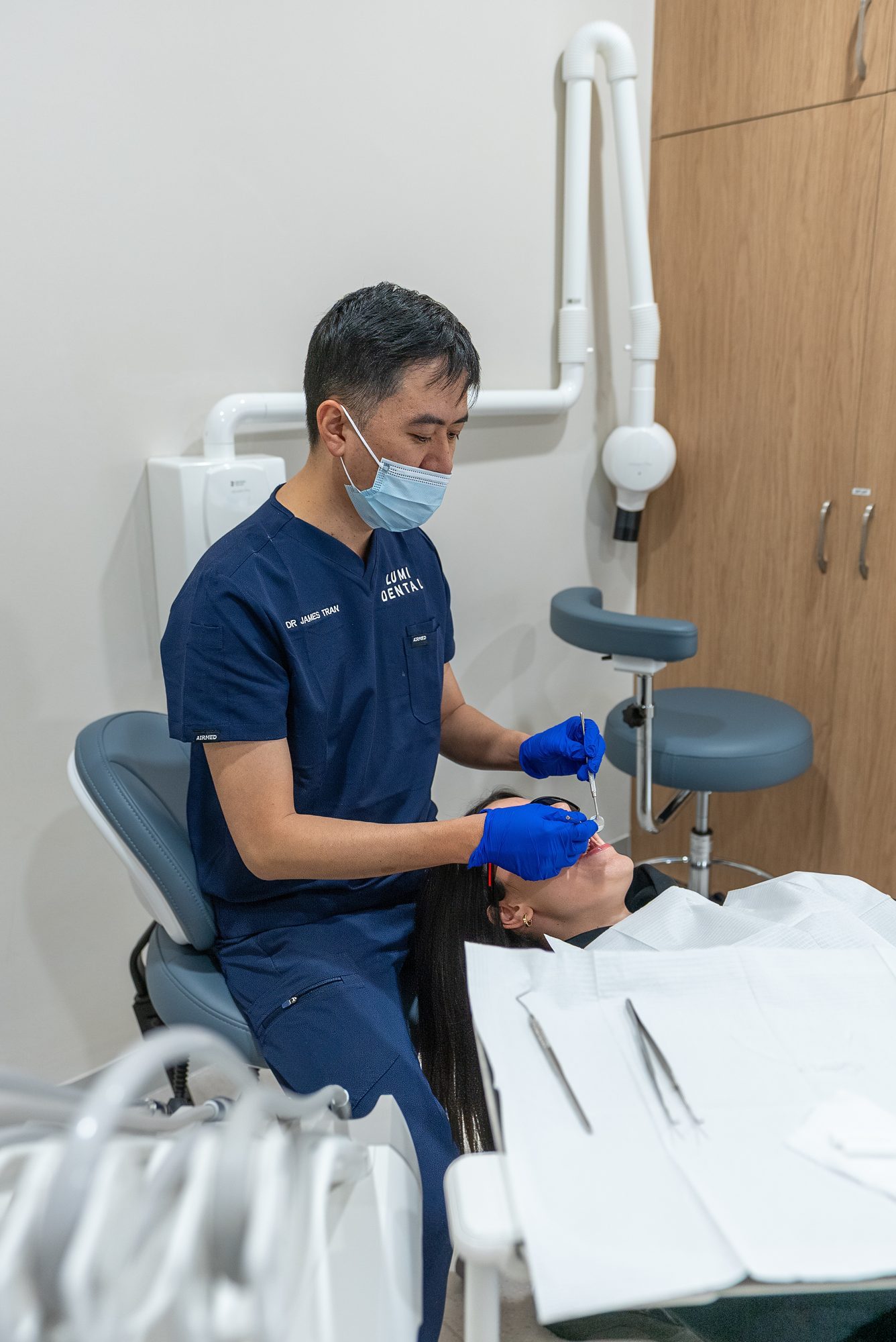
At Lumi Dental, clear aligner treatment starts with an examination by a dentist and a 3D intraoral scan. If you have a piercing, the dentist records the gum level next to it and checks for chips, and the oral health therapists keep an eye on that area at hygiene visits. The aim is to plan around your piercing, not to judge it. Lumi Dental offers clear aligners rather than braces, and complex bites, or gums that need a specialist opinion, are referred to registered specialist orthodontists or periodontists. You can read more on our clear aligners page.
Questions patients ask
Can you get clear aligners with a tongue piercing?
Usually yes, if the piercing has healed. The dentist checks the gum behind the lower front teeth first.
Do I have to take my tongue bar out for clear aligners?
Not necessarily. Some people keep it, some swap to a shorter or smaller piece, and some take it out during treatment. It is a choice to discuss once your gums have been checked.
Can a tongue piercing crack my aligners?
It can, particularly if the bar is clicked against the trays often. Call the practice if a tray splits, because it may not push the teeth properly.
Can I get my lip pierced while wearing aligners?
It is usually better to wait until treatment ends, or to get it done before you start. Swelling while it heals can make trays uncomfortable.
Will my gums grow back if I remove my piercing?
No. Removing it stops further rubbing, but recession that has already happened does not regrow by itself. If you are worried about a spot, ask through the contact page for a check.
Thinking about clear aligners? Free aligner consultation in Melrose Park
If you have a tongue bar or lip stud and are thinking about straightening your teeth, the team at Lumi Dental can check the gums next to the jewellery and help you decide what to do with the piercing during treatment. Book a free aligner consultation at Melrose Central in Melrose Park, or read about clear aligners at Lumi Dental. Patients visit from Ryde, Parramatta, Ermington and Rydalmere, and there is on-site parking.
Sources
- Better Health Channel (Victorian Department of Health): Piercings
- PubMed (American Journal of Dentistry): Oral piercing, complications and side effects
- PubMed (International Journal of Dental Hygiene): Impact of oral piercings on periodontal health, a systematic review
- Orthodontics Australia: Traditional braces vs clear aligners
About the author

Dr James Tran is a general dentist at Lumi Dental in Melrose Park. He holds a BDent from the University of Sydney and a Graduate Diploma in Oral Implants, and is a Member of the International Congress of Oral Implantologists (MICOI).
This article is general information only and is not a substitute for an examination and individual advice from a registered dental practitioner. Suitability for any treatment varies from person to person.







