


If you clench or grind while wearing clear aligners, the trays may wear faster and your jaw may feel sore, but aligners can usually continue: tell your dentist about the wear rather than wearing the trays less. Clear aligners are not designed to act as a night guard. A systematic review of 11 studies covering 818 patients found that most suggested aligners had a neutral effect on bruxism, neither clearly reducing nor clearly increasing it.
Written by Dr James Tran, BDent (University of Sydney), MICOI, GradDip (Oral Implants), general dentist at Lumi Dental in Melrose Park.
The short version
- Clenching and grinding are common. A Leeds Teaching Hospitals NHS leaflet puts sleep grinding at around 1 in 10 people and daytime clenching at up to 1 in 5.
- Research on aligners and bruxism is mixed and mostly small. Aligners cannot yet be called protective or harmful.
- The simple rule: aligners are not a night guard. Holes, cracks, shiny worn patches or a sore jaw on waking are reasons to tell your dentist, not to skip wear time.
- Attachments, the small tooth-coloured bumps on some teeth, wear down over months and can chip off.
- A tight new tray for a day or two is expected. Aching jaw muscles every morning is a different pattern.
- Daytime clenching and night grinding are separate habits. Our guide to jaw clenching and teeth grinding explains the difference.
What research says about aligners and clenching
Some people notice they bite into their trays more, especially early on. The studies on this are small and use different methods.
The systematic review mentioned above found that for sleep grinding, aligners often reduced one type of sustained muscle contraction but had no consistent effect on the overall measure of grinding. Daytime clenching was generally unaffected. Studies that relied on questionnaires were conflicting: some reported less clenching and jaw pain, others more symptoms during treatment. In one questionnaire study it included, about half of the people surveyed said they clenched or ground during aligner treatment. The authors concluded that aligners cannot yet be classed as protective or harmful.
A separate small study of 21 people measured jaw muscle activity during a stressful mental arithmetic task, with and without a passive aligner in place. Wearing the aligner did not change measured clenching or how much people felt they were clenching. Self-reported clenching did not match the measured activity well.
In practice, I read this as: aligners do not seem to create a grinding habit in most people, but they do not switch one off either. If you clenched before treatment, expect to keep doing so.
The simple rule: aligners are not a night guard
Aligners are thin trays shaped to move teeth. They are not built to take hours of grinding the way a night guard is. If your trays show wear holes, cracks or shiny worn patches, or your jaw is sore in the morning, tell your dentist. Do not wear the trays less to protect them.
Wearing them less slows tooth movement and can leave the next tray fitting poorly. A worn tray can often be managed by moving to the next one on schedule, adjusting how long each is worn, or ordering a replacement, and your dentist can decide which suits your plan.
Reading your trays: what wear can look like
Hold each tray up to the light when you take it out to eat.
Shiny or flattened patches
Small polished areas over the back teeth or canines suggest the teeth are sliding against each other through the plastic.
Holes over cusps or attachments
The plastic is thinnest where it stretches over a pointed cusp or a raised attachment, so heavy clenching may wear through there first. A laboratory study that simulated grinding on aligners found the trays thinned about two and a half times more under grinding-type forces than under normal chewing forces. That was a lab model, not people.
Cracks and splits
A cracked tray may still look fine but no longer grip the teeth evenly.
| What you notice | What it may mean | What to do |
|---|---|---|
| Shiny worn patches on the biting surface | Grinding or clenching on the tray | Mention it at your next check and bring the trays |
| A hole over a cusp or attachment | Heavy wear at the thinnest point | Call the practice; the tray may need replacing or the plan adjusting |
| A crack or split in the tray | Wear, removal stress or clenching | Call the practice and keep wearing the tray unless told otherwise |
| An attachment worn flat or missing | Normal wear over months, or knocked off | Call the practice; it may need rebonding |
| Tight tray for a day or two after changing | Expected pressure from tooth movement | Usually settles; seat the tray fully |
| Jaw muscles sore on waking most days | Possible night clenching or grinding | Tell your dentist; the jaw may need assessment |
Attachments that wear down or come off
Attachments give the aligner something to push against, so their shape matters. A small study of 12 adults measured 50 attachments with intraoral scans and found they shrank in every dimension over six months, with width falling from about 2.95 mm to about 2.30 mm on average. Attachments on back teeth and lower teeth lost the most. People who ground their teeth were excluded from that study, so wear in someone who grinds may well be greater.
If an attachment looks flat, feels sharp or has gone, let the practice know rather than waiting for the next review. Our article on clear aligner attachments explains what they do and how they are replaced.
A tight new tray or tired jaw muscles
Each new tray presses on the teeth, and teeth can feel tender or slightly loose for a day or two. Our article on the first week in clear aligners covers that settling period. Muscle soreness feels different: an ache in the cheeks or temples, a tight jaw on waking or headaches, often regardless of where you are in the tray cycle.
Chewies, the soft cylinders used to seat a tray, help the plastic sit flat but are meant for short bites, not long hard clenching. Patients I see sometimes chew them for much longer than needed and then wonder why their jaw aches. Our guide to using aligner chewies sets out a short routine.
Daytime clenching: teeth apart, jaw relaxed
The Leeds leaflet describes daytime clenching as a subconscious habit that can be changed with practice. Its advice is to keep the jaw muscles relaxed and the teeth slightly apart, with the neck straight and shoulders relaxed. Reminders help: phone alarms, small stickers where you work, or asking family to point out when your jaw is clenched. With aligners in, your teeth should still rest slightly apart most of the time; the tray does not need to be bitten into to work.
Sleep grinding is different: the leaflet notes it is driven by brain activity during sleep, so care focuses on protecting the teeth and easing pain.
Night guards during and after aligner treatment
During active treatment the aligners are worn most of the day and night, so a separate night guard is usually not added on top. If grinding is heavy, your dentist may change how the trays are managed or discuss other options. That decision belongs to the dentist who is following your treatment.
After treatment, a retainer holds the teeth and a night guard protects them from grinding; one does not reliably do the other's job. The Leeds leaflet also notes that some people clench or grind more on soft splints, and that hard stabilisation splints tend to last longer. Our article on night guards and retainers explains how the two are planned.
When jaw pain or clicking needs a check
Book an assessment if jaw pain does not settle, your jaw locks or catches, opening becomes limited, a click becomes painful, or headaches on waking are new. Teeth that feel increasingly sore or loose also need a look, since the Leeds leaflet notes gum disease and decay should be ruled out.

How we approach this at Lumi Dental
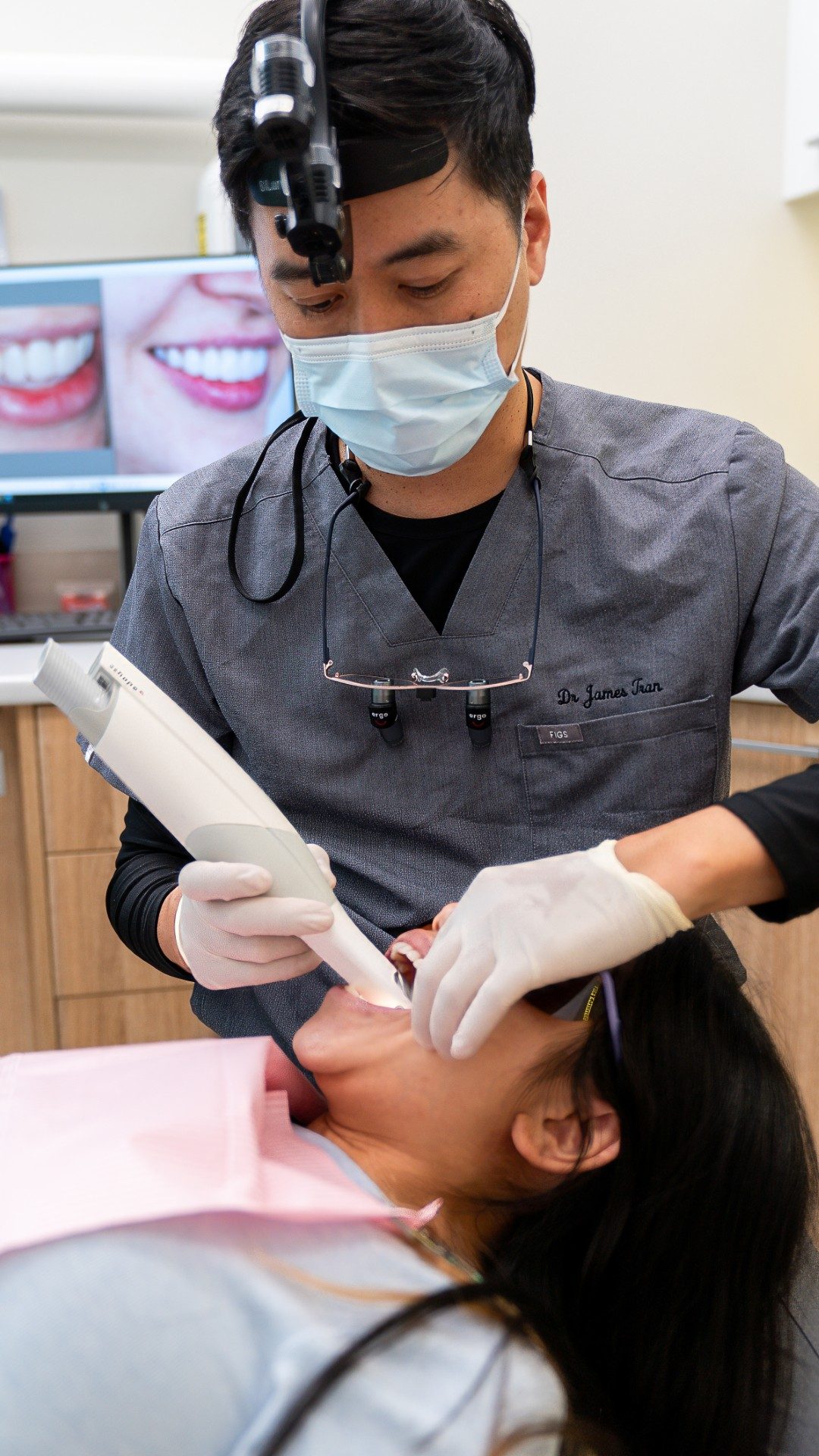
At Lumi Dental the dentist asks about clenching, grinding, jaw pain and headaches before clear aligners are planned, checks the jaw muscles and joints, and looks for wear on the teeth. Aligners are planned from an in-house 3D intraoral scan, and trays and attachments are checked at reviews. Lumi Dental offers clear aligners, not fixed braces, and refers to registered specialists where a case needs one. The oral health therapists look after cleans and gum health during treatment. You can read more about clear aligners at Lumi Dental.
Questions patients ask
Can I get clear aligners if I grind my teeth?
Often, yes. Grinding does not usually rule out aligners, but it is worth mentioning at the start so the dentist can plan for tray wear and check your jaw.
Is it bad to clench on my aligners?
Biting briefly to seat a tray is fine. Clenching for long periods can wear the trays, tire the jaw muscles and wear attachments, so practise keeping your teeth slightly apart.
Can I wear a night guard over my aligners?
Usually not. The aligner is worn most of the day and night, so your dentist decides how grinding is managed during treatment and whether a guard is needed afterwards.
Why does my jaw hurt with aligners?
Pressure from a new tray usually settles in a day or two. Ongoing muscle ache, especially on waking, can point to clenching. Our article on whether orthodontic treatment causes or fixes TMJ problems covers the evidence.
What should I do if my aligner has a hole in it?
Call the practice and keep wearing the tray unless told otherwise. Bring it to your visit, and a free aligner consultation is a good time to ask about grinding if you are still deciding.
Thinking about clear aligners? Free aligner consultation in Melrose Park
If you clench or grind and are considering clear aligners, or you are already in treatment and your trays are wearing, the team at Lumi Dental can check your teeth, jaw and trays. Book a free aligner consultation at Melrose Central in Melrose Park, or read more about clear aligners at Lumi Dental. Patients visit from Ryde, Parramatta, Ermington and Rydalmere, with on-site parking.
Sources
- PMC: Clear Aligners and Bruxism, A Systematic Review
- PMC: The Effect of Clear Aligners on Awareness of Tooth Clenching
- PMC: Three-Dimensional Assessment of Composite Attachment Wear in Clear Aligner Therapy, A Prospective Cohort Study
- Leeds Teaching Hospitals NHS Trust: Clenching and grinding your teeth (bruxism)
About the author

Dr James Tran is a general dentist at Lumi Dental in Melrose Park. He holds a BDent from the University of Sydney and a Graduate Diploma in Oral Implants, and is a Member of the International Congress of Oral Implantologists (MICOI).
This article is general information only and is not a substitute for an examination and individual advice from a registered dental practitioner. Suitability for any treatment varies from person to person.







