

Dark stains on front teeth are most often surface stain from coffee, tea, red wine, smoking or certain bacteria, and this type of stain can usually be removed with a professional clean using air polishing. A smaller number of cases are caused by colour inside the tooth, such as a tooth that has darkened after an injury, and these need a different approach.
Front teeth are where stain shows most, so it is a common reason people book a clean. This guide covers the usual causes, how to tell surface stain from deeper discolouration, and what can be done about each.
Key takeaways
- Most dark staining on front teeth sits on the surface and can be removed professionally.
- Black lines along the gum line in children and some adults are often caused by harmless bacteria and tend to come back over time.
- Coffee, tea, red wine, smoking, iron supplements and chlorhexidine mouthwash are common causes of brown and black surface stain.
- A single front tooth that turns grey is a different problem and should be checked.
- Whitening toothpaste can slow new stain but rarely removes established dark stain.
Common causes of dark stains on front teeth
| Cause | What it looks like | Where it usually sits |
|---|---|---|
| Coffee, tea, red wine, cola | Brown or yellow-brown film | Between teeth and near the gums |
| Smoking and tobacco | Dark brown to black | Back of lower front teeth, between teeth |
| Black stain bacteria | Thin black dotted line | Just above the gum line |
| Chlorhexidine mouthwash | Brown film | Across the tooth surface and tongue |
| Iron supplements | Grey to black | Surface, often near the gums |
| Stained tartar | Hard brown deposit | Back of lower front teeth |
| Old injury to the tooth | Grey or darker whole tooth | Inside the tooth |
Black line stain
Some people develop a fine black line that follows the gum line, often on the front teeth. It is linked to certain bacteria that produce dark iron compounds rather than to poor brushing, and it is more common in children. It is not harmful and is usually associated with lower decay risk, but it can be stubborn and tends to return. Professional cleaning, including air polishing, is the usual way to remove it.
Drinks and smoking
Tannins in tea, coffee and red wine bind to the thin protein film on teeth and darken over time. Tobacco tar does the same and is often heavier. The stain collects most in the small spaces between front teeth, which is why it often looks like dark outlines around each tooth. Our guide to coffee, tea and red wine staining covers ways to limit it.
Mouthwash and supplements
Chlorhexidine mouthwash is useful for gum problems but is well known for causing brown stain with regular use. Our article on why chlorhexidine stains teeth explains this in more detail. Liquid iron supplements can also leave dark surface stain.
Surface stain or something deeper?
A simple rule helps: if the dark colour follows the edges of the teeth, collects between them or sits along the gum line, it is most likely surface stain. If one whole tooth looks darker than its neighbours, the colour is more likely to be inside the tooth.
A tooth that turns grey after a knock may have had damage to the nerve inside. This can happen months or years after the injury and is worth having checked even if it does not hurt. Deeper discolouration from some antibiotics taken in childhood is covered in our guide to tetracycline and intrinsic stains.
How surface stain is removed
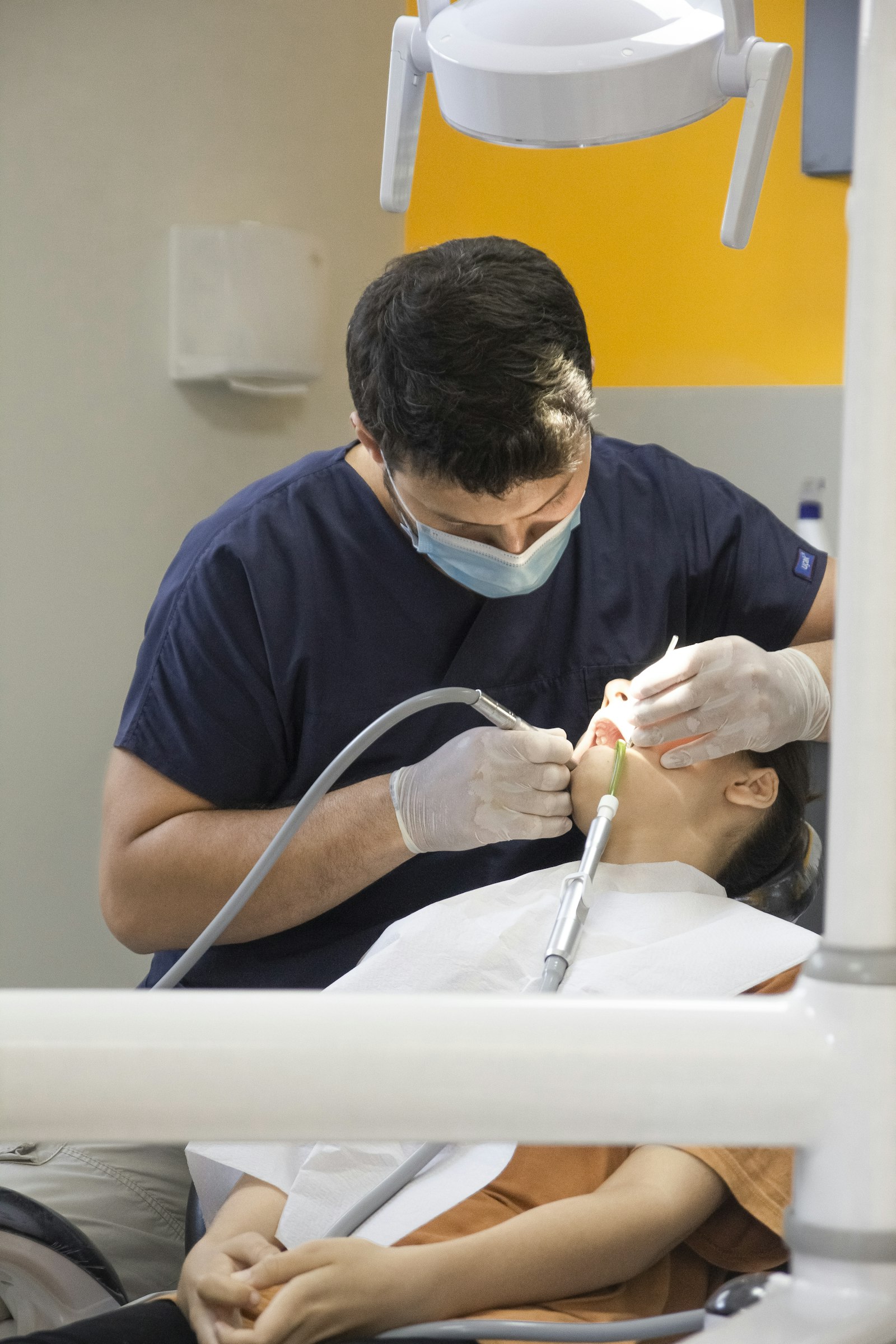
Established dark stain is difficult to shift with a toothbrush. In the clinic, it is usually removed in two parts.
- Air polishing uses a fine spray of air, warm water and powder to lift stain from the surface, including between teeth and along the gum line.
- Ultrasonic scaling removes any hardened tartar that has picked up stain.
At Lumi Dental we use a Woodpecker PT-E unit, which does both and warms the water, which many people find more comfortable on sensitive teeth. Read more about air polishing stain removal at Lumi Dental.
What about whitening toothpaste?
Whitening toothpastes contain mild abrasives or stain-lifting ingredients. They can help keep new stain from building up after a clean, but they rarely remove dark stain that has been there for months. Our guide to whether whitening toothpaste works goes into this further.
Keeping stain from coming back
- Rinse with water after coffee, tea or red wine.
- Brush twice a day with a fluoride toothpaste and clean between your teeth daily.
- Use a straw for iced coffee and other dark drinks where practical.
- Ask your dentist about how often you need a clean if stain builds up quickly.
- If you need chlorhexidine mouthwash, ask how long to use it for.
Frequently asked questions
Why do I have black lines on my front teeth near the gums?
This is often black stain caused by certain bacteria. It is usually harmless and can be removed with a professional clean, although it may come back.
Can dark stains be removed in one visit?
Surface stain is usually removed in a single clean. Very heavy stain or tartar may take longer.
Will removing stain damage my enamel?
When done professionally with a suitable powder, air polishing is gentle on enamel. Your clinician chooses the powder to suit your teeth and any dental work.
Why is one of my front teeth darker than the others?
A single darker tooth may be caused by an old injury or a problem with the nerve. This should be checked by a dentist.
Should I whiten after stain removal?
Many people are happy once surface stain is gone. If you would like a lighter shade, whitening can be considered afterwards. See our teeth whitening page.
Get dark stains checked
The team at Lumi Dental in Melrose Park can check your stain and explain the options at a check-up and clean. New patient information is on the current deals page.
This article is general information and does not replace a personal assessment by your dentist.