After a knocked-out front tooth, the first goal is to save the tooth: put it back in the socket or into milk within minutes and see a dentist the same day, and consider a dental implant only if the tooth cannot be kept, which in teenagers usually means waiting until jaw growth has finished. The Royal Children's Hospital Melbourne notes that a replanted adult tooth does best when it has been out of the mouth and dry for less than 20 minutes.
Written by Dr James Tran, BDent (University of Sydney), MICOI, GradDip (Oral Implants), general dentist at Lumi Dental in Melrose Park.
The short version
- Replant first. A knocked-out adult tooth put back quickly, or kept in milk, has the best chance of surviving. Our knocked-out tooth first aid guide covers the steps.
- Some replanted teeth later fuse to the bone (ankylosis) and, in a growing child, slowly look shorter than their neighbours.
- Many clinicians wait until growth has finished. One review describes implants placed after about 15 in girls and 18 in boys as the most predictable, and growth checks matter more than age.
- While waiting, a bonded bridge, a removable plate or a retainer with a tooth fills the gap.
- Adults can often move to an implant sooner, depending on the bone left after the injury.
The single rule: save the tooth first, plan the implant later
If a teenager knocks out a front tooth, start with the tooth, not the implant. A tooth that survives even a few years holds bone and gum in place while the jaw grows, and that bone is what a future implant needs. An implant in a growing jaw cannot move with the face, so the usual order is: replant, monitor, keep the space, and consider an implant once growth is complete.
The first hour: what decides whether the tooth can be saved
The RCH clinical guideline for dental trauma advises holding the tooth by the crown, not the root, putting it back in the socket if possible and biting gently on gauze to hold it. If it cannot go back, store it in milk as the first choice, or saline, never in water or dry. Baby teeth are never replanted. Our article on storing a knocked-out tooth in milk explains why the liquid matters.
Time out of the mouth is the strongest factor. One study followed 62 replanted permanent teeth for five years: half were still in place and half had been lost to root resorption. Of the teeth replanted within an hour, around 64 per cent remained, and around 71 per cent of the lost teeth had been out of the mouth for more than an hour. That is why the first minutes at the sports ground matter.
Why some replanted teeth fuse to the bone and sink in growing children
When a tooth is knocked out, the thin ligament around the root is damaged. If too few of its cells survive, bone grows straight onto the root. This is ankylosis, usually followed by replacement resorption, where the root is slowly turned into bone. A systematic review explains that in a growing patient the fused tooth stops erupting while the teeth beside it keep moving with the growing jaw. The tooth looks shorter, neighbours tilt into the space, and bone growth at that site stalls.
Decoronation: keeping the bone for later
The International Association of Dental Traumatology recommends decoronation for fused incisors in growing patients. The crown is removed just below the gum and the root is left to be replaced gradually by bone. The same review pooled 23 cases, with an average age of 9 at injury and 12.5 at decoronation, and reported vertical bone gain in all but three, where the bone stayed stable. The evidence is small case reports, but the aim is to reach adulthood with enough bone for an implant. In children this is usually planned with a paediatric dentist or another registered specialist.
Why implants usually wait until growth has finished
A review of implants in adolescents compares an implant to a fused tooth: it is fixed in the bone and does not erupt as the jaw grows. It names the front of the upper jaw as the riskiest site for early implants. It quotes the observation that implants placed after about 15 in girls and 18 in boys have the most predictable outcome, and notes that age alone is not a reliable guide. Growth can be checked by comparing growth X-rays (cephalograms) taken at least six months apart and waiting until no change is seen over a year, or with a hand and wrist X-ray.
Even adults are not completely fixed. A critical review of late facial growth reports that the face keeps remodelling and natural teeth keep erupting slowly through adult life, so some implants end up slightly higher than their neighbours even in mature adults. It found no clear age after which implants are entirely stable. A study of 68 upper front implants placed in adolescents, at an average age of about 16, found a height difference against the matching tooth in around 41 per cent, mostly mild. I take that seriously for a teenager with a high smile line, because an upper front tooth is the one everyone sees.
Options while waiting for an implant
The choice depends on the bite, the neighbouring teeth and whether braces are planned.
- Resin-bonded bridge: a false tooth with a thin wing bonded to the back of a neighbour, with little or no drilling. See our guide to the Maryland resin-bonded bridge.
- Removable plate or clear retainer with a tooth: easy to adjust as the mouth changes.
- Orthodontic space keeping: braces or aligners hold the gap at the right width. The late facial growth review also lists orthodontic space closure or an adhesive bridge as long-term alternatives in selected cases.
Bone, gum and the adult picture
The bone over the front of the upper teeth is thin, and a hard knock can crack it or strip the gum from it. If that outer wall is lost, the ridge narrows as it heals and a bone graft may be needed. Our article on CBCT 3D dental scans explains how a 3D scan maps the remaining bone for implant planning.
For adults, the question is the socket rather than growth. A replanted tooth with a root fracture or progressive resorption may eventually need to come out. With intact socket walls and no infection, an implant can sometimes be placed at the time of extraction. With a damaged or infected wall, the site is usually left to heal, often with a graft, and the implant placed later. In my experience patients are surprised that the slower route is often chosen on purpose, because it tends to give a steadier gum line at the front.
| Age or situation | What usually happens first | Typical interim option | When an implant is usually considered |
|---|---|---|---|
| Child or teen, replanted tooth healing well | Replant, splint, root canal checks, regular reviews | The natural tooth itself | Not needed while the tooth survives |
| Growing child, replanted tooth fused and sinking | Monitoring; decoronation discussed with a paediatric dentist | Removable or bonded tooth over the kept root | After growth has finished |
| Teen, tooth lost or cannot be saved | Healing, space kept, growth checked over time | Resin-bonded bridge, plate or retainer with a tooth | Often from about 15 in girls and 18 in boys, confirmed by growth checks |
| Adult, tooth cannot be saved, socket walls intact | Examination and CBCT | Temporary tooth if needed | Sometimes at the time of extraction |
| Adult, bone wall damaged | Healing, often with a bone graft | Removable tooth or bonded bridge | After the graft has healed |

How we approach this at Lumi Dental
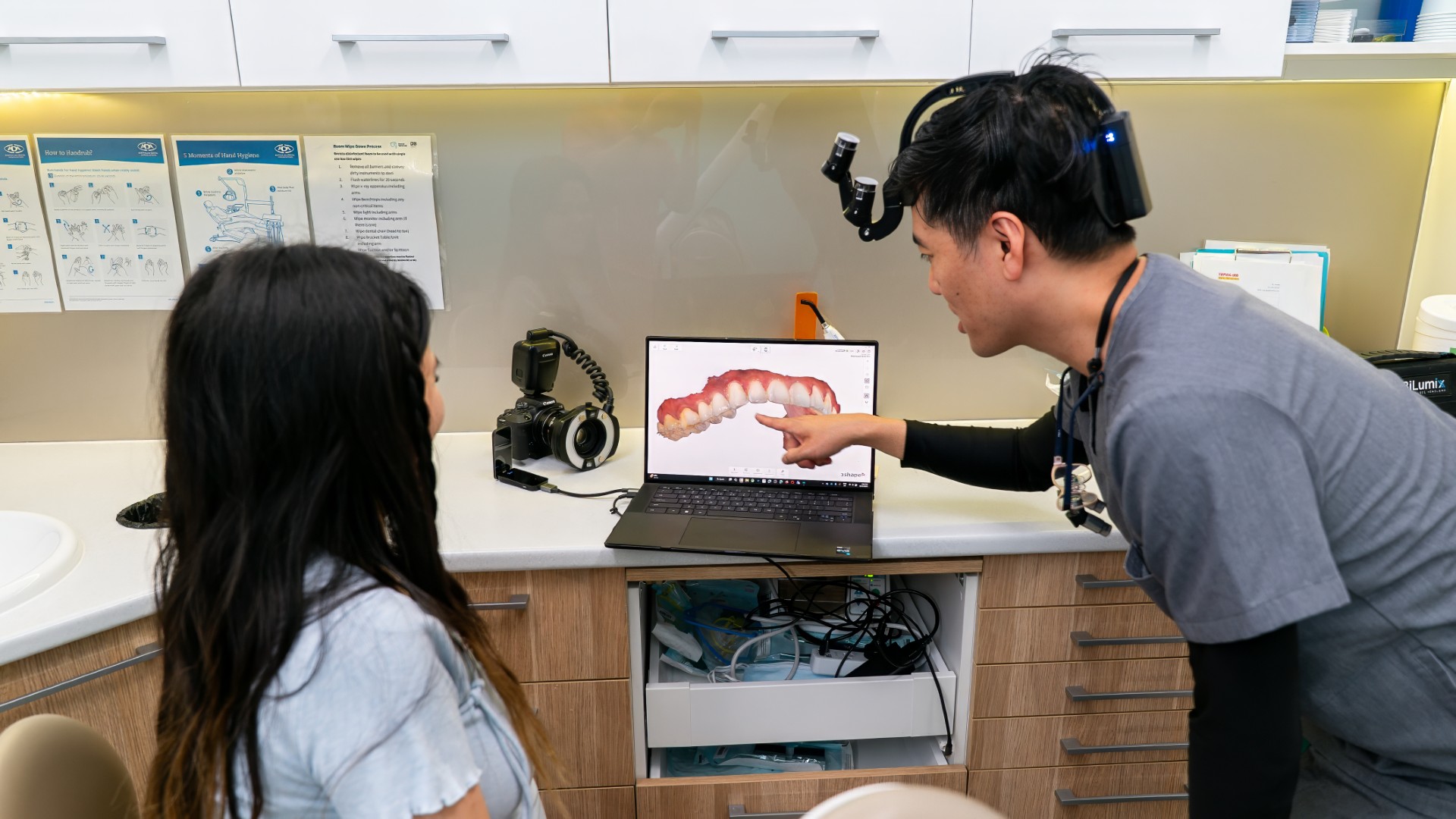
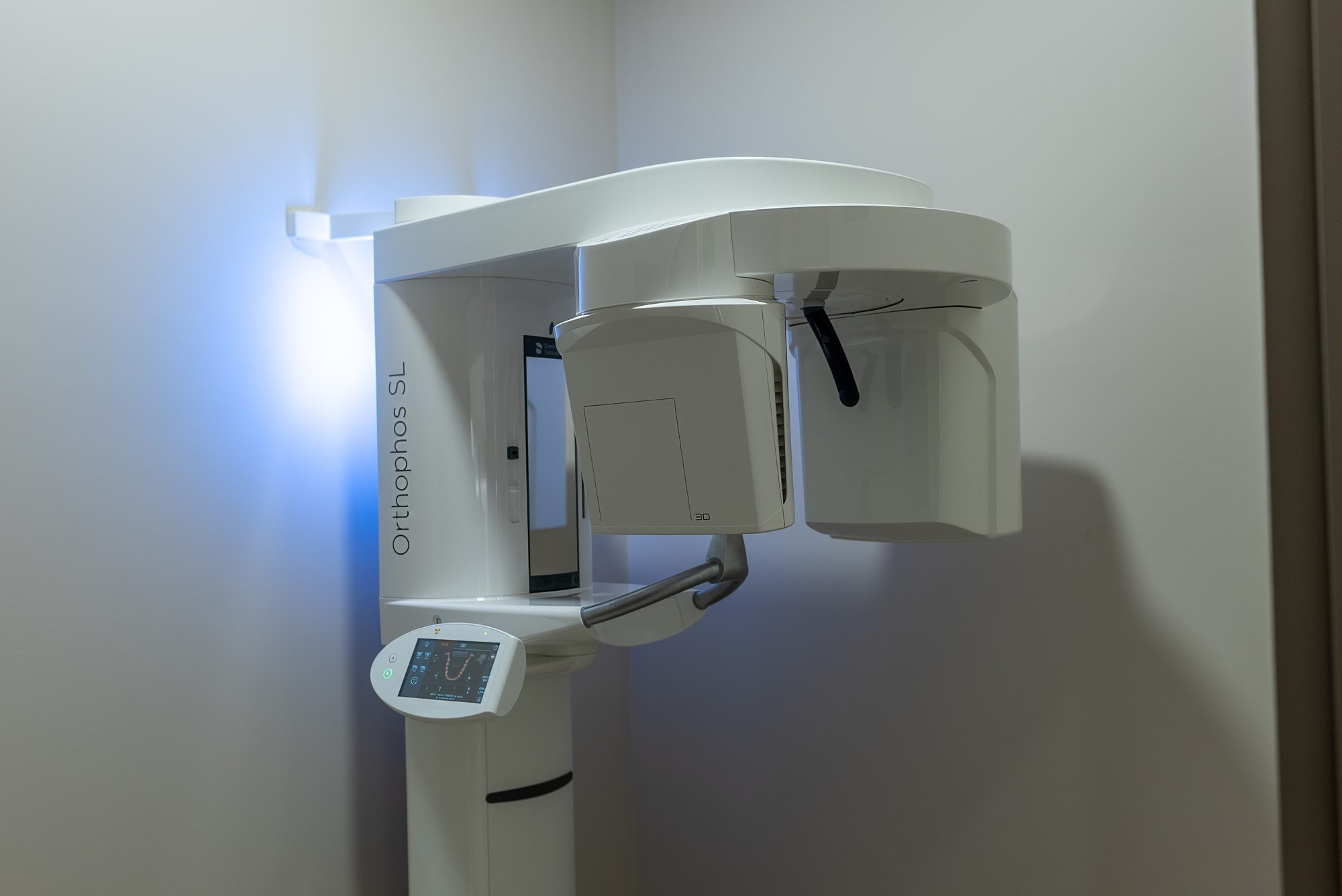
The team at Lumi Dental offers emergency dental appointments for knocked-out and broken teeth, so the first step is getting the tooth back in and checked. The in-house 3D X-ray (CBCT) and 3D scanning help track bone and gum over time. Children and teenagers whose injury needs specialist care, such as decoronation, are referred to a paediatric dentist or another registered specialist. Implant planning for adults is done by Dr James Tran. The RCH guideline notes that a mouthguard during sport can reduce dental trauma, and custom sports mouthguards are available at the practice to protect a replanted tooth, bridge or implant.
Questions patients ask
Can a 16 year old get a dental implant?
Sometimes, but many clinicians prefer to wait until growth has finished, which is often later in boys than in girls. Growth checks over a year are more reliable than age alone. Our article on age limits for dental implants covers both ends of the range.
How long after a tooth is knocked out can you get an implant?
For an adult with intact bone, sometimes when the tooth is removed; with damaged bone, usually after healing and grafting. For a teenager the timing is set by jaw growth rather than by the injury.
Should my child have the tooth put back in if an implant is the long-term plan?
Yes. Even a replanted tooth that lasts only some years holds bone while the jaw grows, making a later implant simpler. Baby teeth are the exception and are never put back.
What is the cheapest way to replace a front tooth while waiting?
A removable plate with a tooth is usually the simplest, and a resin-bonded bridge is the common fixed choice. Our guide to flipper and temporary tooth options compares them.
Will an implant look different from my other front teeth over time?
It can. Because the face keeps changing slowly through adult life, some front implants end up slightly higher than the tooth beside them, more often when placed young.
Considering an implant? Complimentary implant consult in Melrose Park
If you or your teenager has lost a front tooth to an injury and you want to understand the options and timing, the team at Lumi Dental at Melrose Central can examine the area. Contact Lumi Dental to book a complimentary implant consult, or read more about dental implants at Lumi Dental. Families visit from Melrose Park, Ryde, Parramatta, Ermington and Rydalmere, with on-site parking.
Sources
- The Royal Children's Hospital Melbourne, Clinical Practice Guidelines: Dental trauma
- Retrospective analysis of survival of avulsed and replanted permanent teeth according to IADT guidelines (PMC)
- Decoronation as a therapeutic alternative for ankylosis in children and adolescents for vertical bone preservation and growth: a systematic review (PMC)
- Implants in adolescents: a review (PMC)
About the author
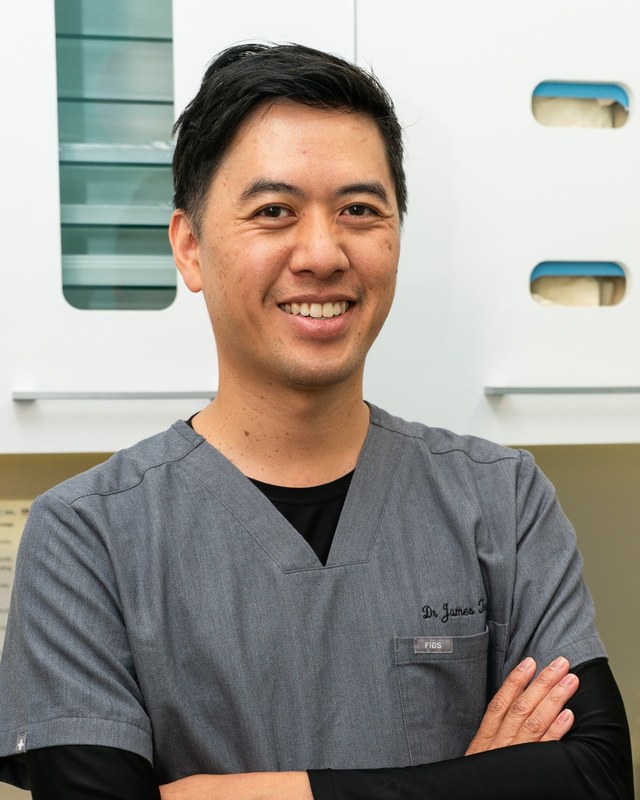
Dr James Tran is a general dentist at Lumi Dental in Melrose Park. He holds a BDent from the University of Sydney and a Graduate Diploma in Oral Implants, and is a Member of the International Congress of Oral Implantologists (MICOI).
This article is general information only and is not a substitute for an examination and individual advice from a registered dental practitioner. Suitability for any treatment varies from person to person.