

Yes, most people taking a GLP-1 weight loss or diabetes medicine such as semaglutide or tirzepatide can have dental implants, but the medicine must be on the table before any IV sedation is booked, because these drugs slow stomach emptying and the Therapeutic Goods Administration (TGA) has required a warning on every product in the class about stomach contents being inhaled during general anaesthetic or deep sedation, even after normal fasting. The Australian and New Zealand College of Anaesthetists (ANZCA) advises that the medicine is continued rather than stopped, with a clear fluid diet for the day before. Nothing here is a reason to change a dose; that decision belongs to the prescriber and the person providing the sedation.
Written by Dr James Tran, BDent (University of Sydney), MICOI, GradDip (Oral Implants), general dentist at Lumi Dental in Melrose Park.
The short version
- GLP-1 medicines (semaglutide, liraglutide, dulaglutide) and the dual GIP/GLP-1 medicine tirzepatide slow the stomach, so a normal overnight fast may leave food behind.
- The TGA has added a class-wide warning about pulmonary aspiration during general anaesthetic or deep sedation and asks patients to tell anaesthetists before any procedure.
- Australian guidance recommends continuing the medicine, with clear fluids only for the day before, then the standard fast. Some overseas protocols hold a dose instead. The prescriber and the sedationist decide.
- Nausea, vomiting, bloating or reflux on the day are reasons to postpone sedation.
- Animal work suggests neutral or favourable bone effects around implants; human data are too thin to change planning. Our guide to GLP-1 medicines and dental health covers the wider mouth.
- The dentist never stops or changes the medicine. The team at Lumi Dental writes to your GP or specialist before planning surgery.
Why a full stomach is the real issue
These medicines copy a gut hormone that tells the pancreas to release insulin, tells the brain you are full, and tells the stomach to hold food back. That last effect is why anaesthetists pay attention: food that would normally have left the stomach by the morning of a procedure can still be there, and a sedated patient with dulled reflexes can inhale it.
The TGA's Medicines Safety Update names the products marketed in Australia, Ozempic, Trulicity, Victoza, Saxenda, Wegovy and Mounjaro, and requires each to carry a precaution stating that pulmonary aspiration has been reported during general anaesthesia or deep sedation despite adherence to fasting instructions. Such reports are few and cannot prove cause, but ANZCA describes aspiration as rare and potentially fatal, which is why the planning happens in advance.
Dental IV sedation is intended to be conscious sedation, lighter than a general anaesthetic, but depth varies between people, so the same fasting rules apply. Our article on IV sedation for implant surgery covers the appointment.
What the Australian guidance says, and where overseas advice differs
ANZCA wrote its recommendations with the national diabetes, gastroenterology and obesity bodies. The headline is that the medicine is continued: it is unclear how long a break would need to be to change stomach emptying, and stopping has real consequences for diabetes and weight. Instead, elective patients take only clear fluids from waking on the day before, then the standard six-hour fast, with water the only drink from six hours before and nothing for the final two hours. The college is frank that no fasting protocol guarantees an empty stomach. Insulin users are referred to their endocrinologist for advice on the fluid day, because most clear fluids are simple sugars.
Multi-society guidance from the United States asks for shared decision-making between patient, proceduralist, anaesthesia team and prescriber. Where a team does hold the medicine, the right duration is unknown and the earlier anaesthesiology society position is used: a daily medicine held on the day, a weekly medicine held for the week before. In my experience the practical message for a patient in Sydney is: expect to keep taking the medicine and change what you eat the day before, unless the prescriber and the sedationist say otherwise.
What to tell the team before sedation is booked
The sedation plan is only as good as the history behind it, and that history has to come from you, ideally at the first consultation. Patients I see are often on more than one medicine, so bring the pen or box if you are unsure of the name.
| What to tell the team | Why it matters |
|---|---|
| The exact medicine, weekly or daily | Weekly medicines act for days after each injection |
| Your dose, and whether it went up in the past month or two | The escalation phase and higher doses bring more stomach side effects |
| Your usual injection day, and when you last injected | Places the appointment within your dosing cycle |
| Nausea, vomiting, bloating, reflux or constipation, now or on the day | Symptoms of a slow stomach; on the day they mean a new date |
| Why you take it, and every other medicine, especially insulin | Insulin users need their prescriber's input on the clear fluid day |
| Other conditions that slow the gut, such as past weight loss surgery | They add to the risk and may change the fasting plan |
Does the medicine affect how the implant heals?
An implant works when bone grows onto its surface, a process called osseointegration. A review of GLP-1 receptor agonists in periodontal and implant practice found that in diabetic rats, local delivery of a GLP-1 type drug around implants improved osseointegration. Human evidence is limited to one retrospective study of peri-implant bone loss in people with type 2 diabetes on different glucose-lowering regimens, which cannot separate the medicine from the reasons it was prescribed. The reviewers called the evidence encouraging but not strong enough to justify any change in implant timing, loading or technique.
That is a different picture from our article on dental implants and antidepressants, where research has reported a higher failure rate. For GLP-1 medicines there is no human failure signal that I am aware of, so the implant is planned as for anyone with the same bone, gums and medical history.
Appetite, protein, dry mouth and the teeth next door
The same review flags nutrition as an overlooked factor: these medicines suppress appetite, and in some patients reduce protein intake or cause dehydration, which can affect healing. Healing bone and gum need protein and fluid, so the week after surgery is a time to eat small, protein-rich meals often rather than skip them. Nausea during a dose increase is common with semaglutide and tirzepatide, and repeated vomiting or reflux bathes the inside of the upper teeth in acid, so rinse with water rather than brushing straight after.
Dry mouth is reported with these medicines, more often for semaglutide, with several likely causes, from less drinking to a possible direct effect on the salivary glands. Less saliva means more plaque around natural teeth and the implant, so saliva support, fluoride and a shorter hygiene recall are sensible. Rapid weight loss also loosens dentures, and a loose denture rubbing a healing implant site is a problem; our guide to dentures that loosen after weight loss explains what a reline does. If the medicine is for type 2 diabetes, glucose control matters in its own right, because diabetes impairs osseointegration.

The single rule: name the medicine at the first consultation, not on the day
If you take a GLP-1 or GIP/GLP-1 medicine, say so before a sedation date is set. Everything else follows: the letter to your prescriber, the fasting plan, and the agreement that a queasy morning means a new date. A single implant under local anaesthetic alone, without sedation, is often reasonable, and the fasting question then falls away.
How we approach this at Lumi Dental
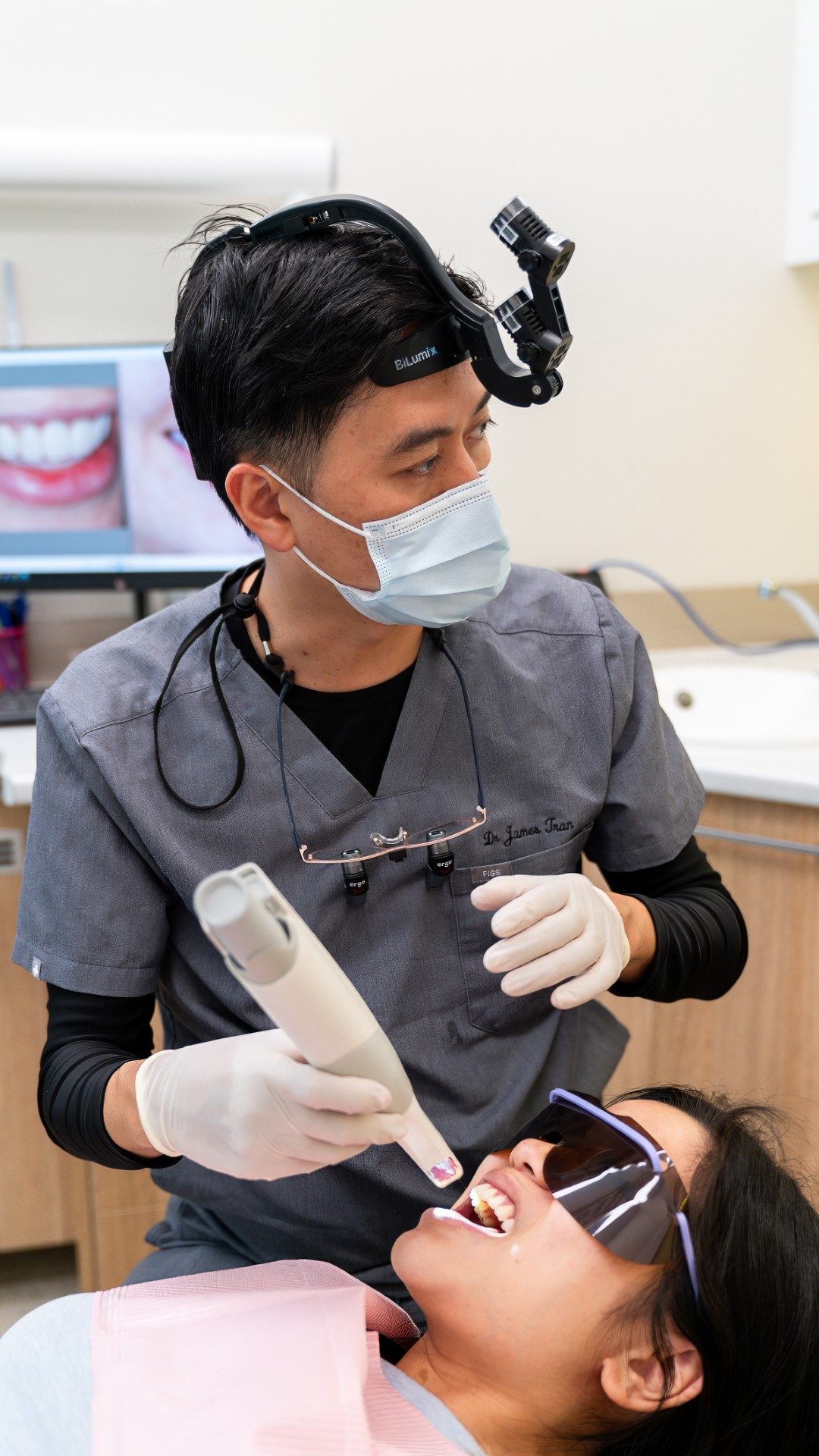
At Lumi Dental in Melrose Park an implant consultation begins with a full medicine history, an examination by a dentist, a 3D intraoral scan and an in-house 3D X-ray (CBCT) to measure the bone. Where a patient takes a GLP-1 medicine, the team at Lumi Dental writes to your GP or specialist before planning surgery, and the sedation and fasting plan is agreed well in advance. IV sedation is available at the practice; Lumi Dental does not provide general anaesthetic itself and refers where it is needed. No dose is ever changed by the dental team.
Questions patients ask
Do I need to stop Ozempic before dental implant surgery?
Not on the dentist's say-so, and in Australia usually not at all. ANZCA recommends continuing the medicine and taking clear fluids only for the day before any sedation or anaesthetic. Your prescriber and the sedationist will tell you if a different plan suits you.
Can I have IV sedation if I take Mounjaro or Wegovy?
Usually, yes, with planning. The team needs the medicine name, dose, injection day and any stomach symptoms in advance, and gives you specific fasting instructions. On the day, nausea or vomiting means the sedation is postponed.
How long should I fast before sedation if I take a GLP-1 medicine?
Follow the instructions given for your own appointment. The Australian guidance describes clear fluids only from waking the day before, then a standard six-hour fast with water allowed until two hours before. Our guide to eating before a dental appointment explains why sedation rules differ.
Do weight loss injections make dental implants fail?
There is no human evidence that they do. Animal studies suggest neutral or possibly helpful effects on bone around implants, and reviewers say the data are not strong enough to change implant planning.
What should I eat after implant surgery if I have no appetite?
Small, frequent, protein-rich soft foods: eggs, yoghurt, soft fish, lentil soups and milk-based smoothies, plus plenty of water. Our implant recovery timeline sets out what to expect week by week.
Considering dental implants? Complimentary implant consult in Melrose Park
If you take a GLP-1 medicine and have been putting off a missing tooth, the team at Lumi Dental in Melrose Park can go through your medicine list, measure the bone and write to your doctor before any sedation is planned. Contact Lumi Dental to book a complimentary implant consult, or read about dental implants at the practice. Patients visit from Ryde, Parramatta, Ermington and Rydalmere, with on-site parking at Melrose Central.
Sources
- Australian and New Zealand College of Anaesthetists: GLP-1 receptor agonists, clinical practice recommendations
- Therapeutic Goods Administration: Medicines containing GLP-1 and dual GIP/GLP-1 receptor agonists, Medicines Safety Update
- PMC: Multi-society clinical practice guidance for the safe use of glucagon-like peptide-1 receptor agonists in the perioperative period
- PMC: GLP-1 receptor agonists in periodontology, mechanisms, clinical evidence and implications for care
About the author

Dr James Tran is a general dentist at Lumi Dental in Melrose Park. He holds a BDent from the University of Sydney and a Graduate Diploma in Oral Implants, and is a Member of the International Congress of Oral Implantologists (MICOI).
This article is general information only and is not a substitute for an examination and individual advice from a registered dental practitioner. Suitability for any treatment varies from person to person.








