
Osteoporosis medicine does not rule out dental implants, but it changes how the surgery is planned, who is involved in the decision and what you should be told about risk before you consent. The medicines in question are the antiresorptives: bisphosphonates such as alendronate, risedronate and zoledronic acid, and the six-monthly denosumab injection sold as Prolia. All have been linked to a rare condition called medication-related osteonecrosis of the jaw (MRONJ), where a patch of jawbone fails to heal after surgery. Healthy Bones Australia puts the reported risk for people taking bisphosphonates for osteoporosis at around 0.02 to 0.04 percent, which is why dental implants and osteoporosis medication can usually be managed together with preparation.
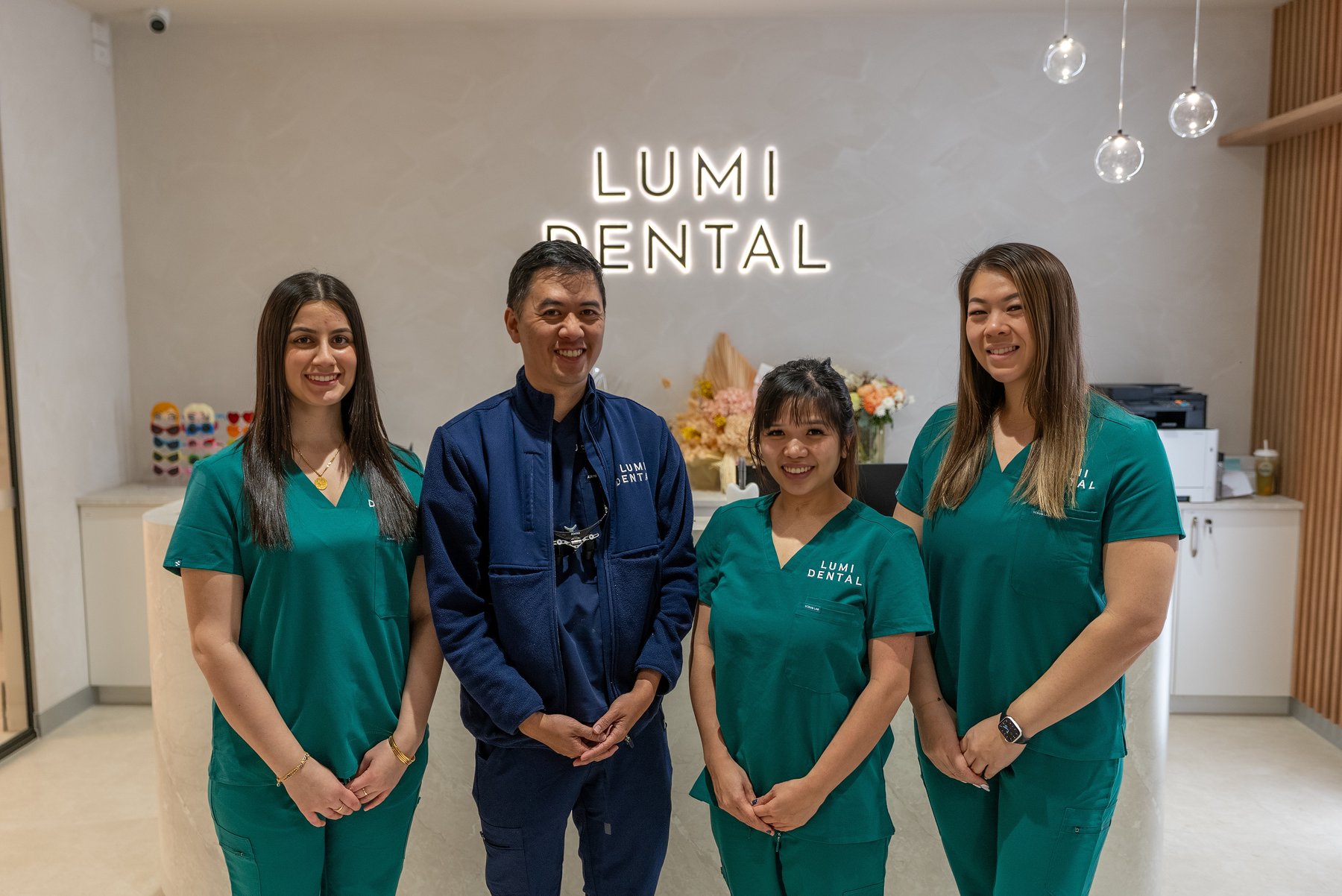
Written by Dr James Tran, BDent (University of Sydney), MICOI, GradDip (Oral Implants), general dentist at Lumi Dental in Melrose Park.
The short version
- Low bone density on its own is rarely the barrier; our guide to bone density and dental implants explains why the jaw is assessed separately from a hip or spine scan.
- The concern is the medicine. Bisphosphonates and denosumab slow the cells that break bone down, which protects the skeleton but can slow jaw healing after surgery.
- MRONJ is uncommon at osteoporosis doses, well under one percent in Australian estimates, and reported to be roughly 100 times more common at cancer doses.
- Risk climbs with time on the medicine (around four years for bisphosphonates), steroids, smoking, poorly controlled diabetes and gum infection.
- Never stop or delay your medicine for dental work on your own. Any change, including a drug holiday, is the prescriber's decision.
- The most useful appointment is the one before the first dose.
Why these medicines matter to implant surgery
Bone is constantly renewed: osteoclasts remove old bone and osteoblasts lay down new bone. According to healthdirect, bisphosphonates and denosumab slow the cells that break bone down, which is what a fragile hip or spine needs.
The jaw is a special case. It remodels faster than most bones, sits under a thin layer of gum and is bathed in bacteria. An implant relies on the surrounding bone remodelling to lock onto the titanium surface, and antiresorptives dampen that process. Most people heal anyway. In a small number, an area of bone stays exposed, which is the definition of MRONJ: exposed bone that has not healed after eight weeks in someone taking one of these medicines.
Australian Prescriber notes that tooth extraction is the identified trigger in 60 to 87 percent of reported cases, with other surgery on the tooth-bearing bone, including implants, also recognised as a risk. Our article on bisphosphonates and the jaw covers how MRONJ is managed.
Which medicine, by which route, for how long: the three questions I ask first
Not all antiresorptives carry the same weight; the differences come down to potency, route and time. The percentages below are population estimates from the sources listed at the end, not predictions for any one person.
| Medicine | How it is taken | Reported MRONJ risk at osteoporosis doses | What it means for implant planning |
|---|---|---|---|
| Oral bisphosphonates (alendronate, risedronate) | Tablet weekly or monthly | Low: around 0.02 to 0.04 percent, rising after about four years | Implants generally reasonable; duration and other risk factors set the level of caution |
| Zoledronic acid for osteoporosis | Infusion once a year | Low at this dosing; much higher at the monthly cancer dose | Treated like other bisphosphonates; confirm indication and dose with the prescriber |
| Denosumab (Prolia) | Injection every six months | Low: around 0.04 to 0.3 percent, partly reflecting earlier bisphosphonate use | Timing against the next dose is discussed with the prescriber; the dose must not be delayed more than a few weeks |
| Any antiresorptive at cancer doses | Intravenous or injection, monthly | Markedly higher; a roughly 100-fold difference is cited | Implants generally avoided; referral to a specialist unit is usual |
One detail matters more than people expect: the clock runs across medicines. Healthy Bones Australia advises counting cumulative time on bisphosphonates and denosumab together, because many patients switch between them. Bring the exact name, dose and start date.
What the evidence says about implants specifically
The reassuring part first. A systematic review published through PubMed Central concluded that dental implants may not be linked to a higher risk of osteonecrosis in people taking low-dose bone-modifying agents, while extraction was. One long-running study in that review reported implant survival of around 94 percent over up to 20 years in patients taking oral antiresorptives, no worse than the healthy comparison group.
The cautious part follows. Follow-up in those studies was modest, and MRONJ linked to oral bisphosphonates tends to appear after several years of use. Healthy Bones Australia lists uncomplicated implant placement as a low-risk procedure, but moves implants in the back of the lower jaw, surgical sites of three or more adjacent teeth, and surgery near bony lumps called tori into the higher-risk column. It also notes that late implant failure can be a sign of MRONJ; our guide to dental implant failure signs explains what to look for.
The single rule: do not stop the medicine, plan around it
Patients sometimes arrive having already skipped a dose on a friend's advice. Please do not. Healthy Bones Australia is direct: people should not be advised to stop osteoporosis therapy before an invasive dental procedure, because fracture risk may be high and there is no evidence that a treatment break reduces MRONJ risk. Bisphosphonates bind into bone for years, so a short pause changes little. Denosumab is the opposite problem: its effect wears off quickly, and delaying a dose beyond four weeks is described as unsafe because bone turnover rebounds and spinal fractures can follow.
What about a drug holiday? Australian Prescriber states that any holiday for an osteoporosis patient should only be instituted after discussion with the treating physician, weighing MRONJ risk against fracture risk. I can raise the question and describe what is happening in the mouth, but the decision belongs to the prescriber.
For denosumab, some guidelines have suggested scheduling surgery two to four weeks before the next injection so the wound can heal first. Healthy Bones Australia notes there is no robust evidence for this and that the next dose should not be unduly delayed, so it is a conversation between dentist and prescriber rather than a rule.
Before the first dose: the appointment most people miss
If you have been told you will be starting one of these medicines and have not yet had the first dose, see a dentist now. Australian Prescriber recommends a comprehensive oral examination before antiresorptive therapy begins, with hopeless teeth removed and decay and gum disease treated so the patient is dentally fit when treatment starts. Healthdirect puts it plainly: keep up regular dental care.
In my experience this is where implants fit best. If a tooth is failing, it is simpler to agree extraction and implant timing with your GP or endocrinologist before the first dose than to work around the medicine later. The same applies to implant-retained overdentures.
What changes on the day of surgery and afterwards
For a patient at low risk, the Healthy Bones Australia matrix says routine extractions and implants can proceed with general precautions. For higher-risk patients the precautions step up: clearing active infection first, an antibacterial mouthwash for about a week either side of surgery, antibiotics where judged worthwhile, gentle technique, careful wound closure and frequent follow-up.
Afterwards, the risks you can partly control are smoking, poorly managed diabetes and gum disease around the implant. Healthy Bones Australia reports robust evidence that good oral hygiene and regular dental review reduce MRONJ risk. Report exposed bone, persistent pain, lip or chin numbness, or a loose implant promptly.

How we approach this at Lumi Dental
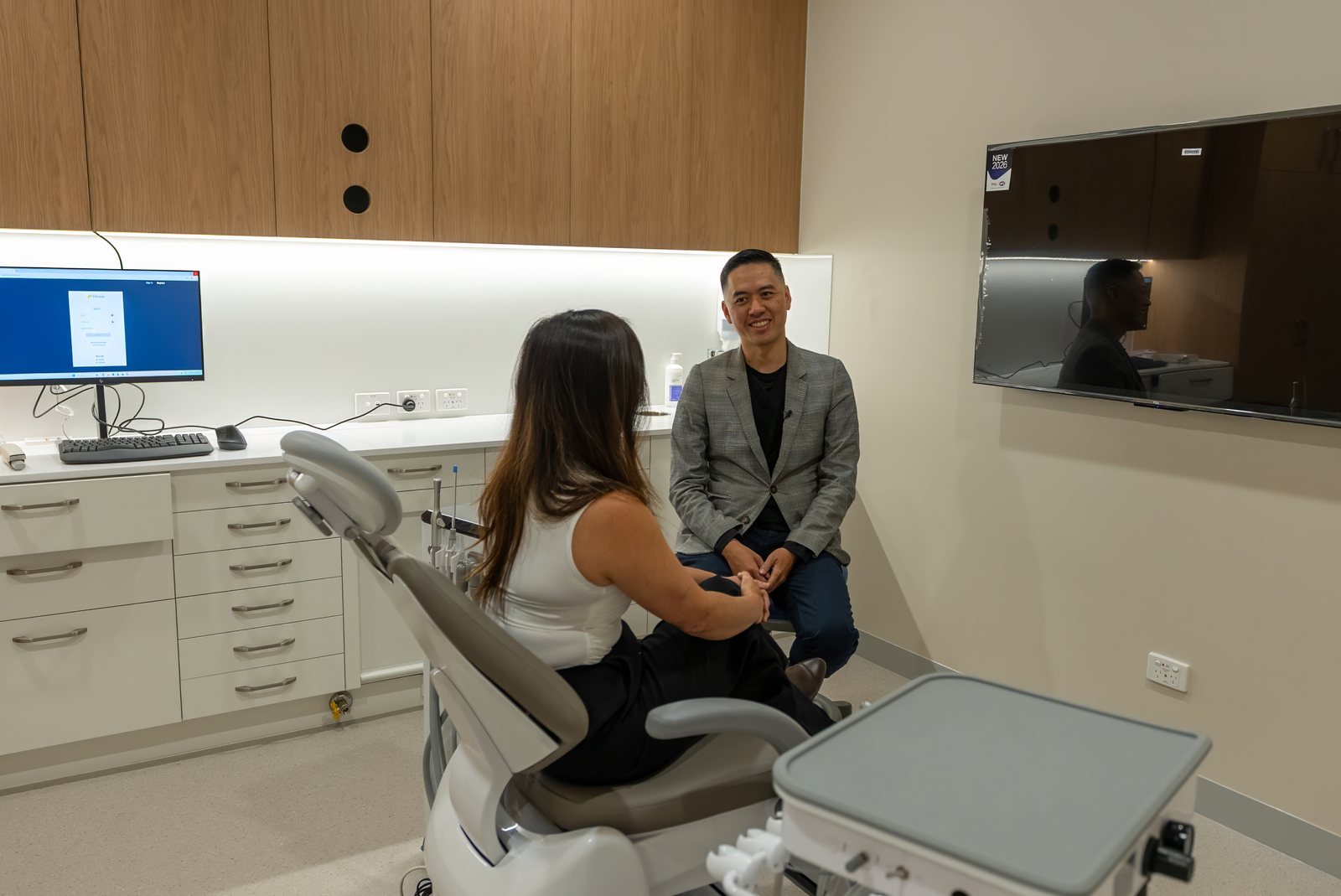
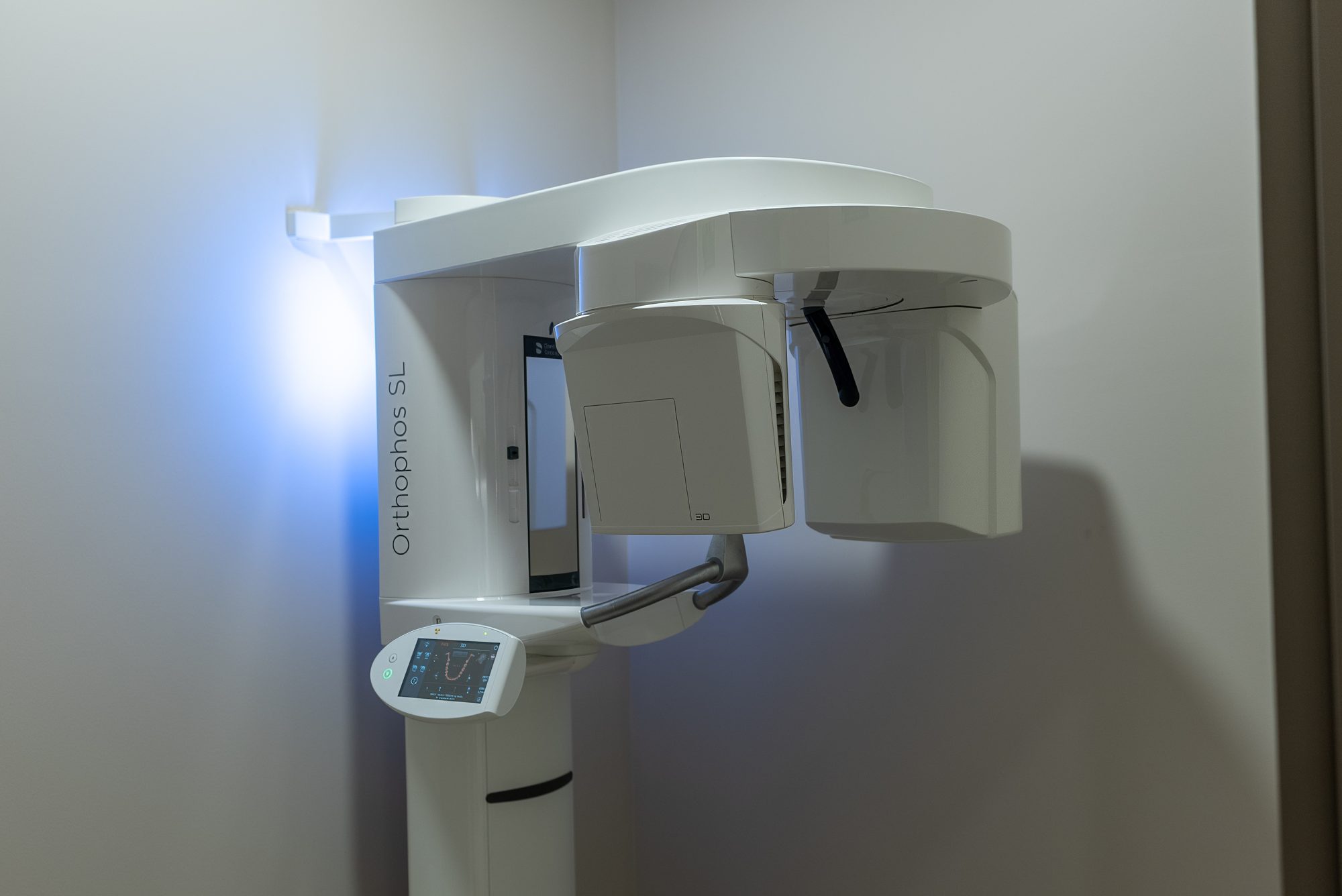
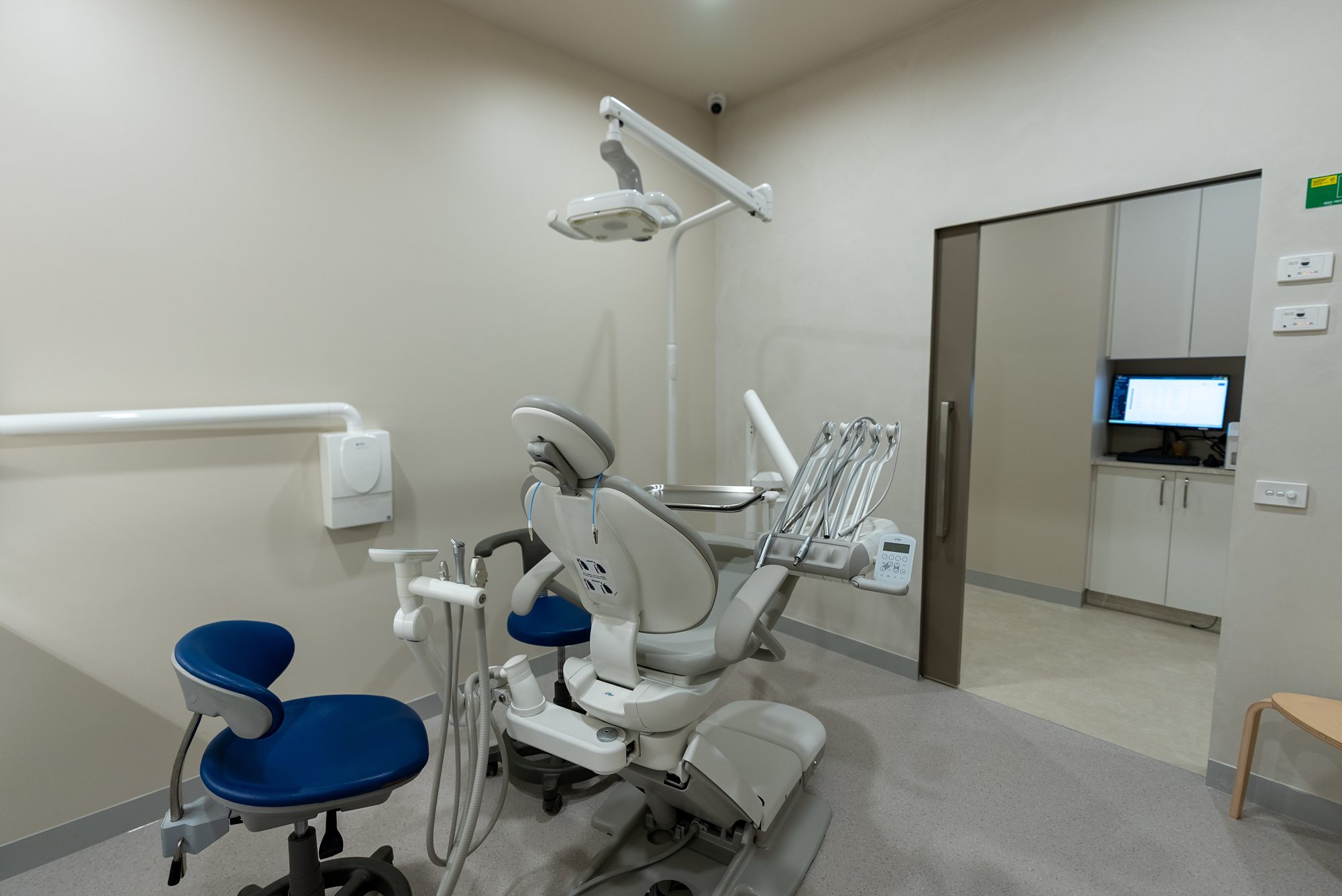
At Lumi Dental in Melrose Park, an implant consultation for anyone on osteoporosis medicine starts with the medication history: which drug, by which route, for how long, and whether you have switched between bisphosphonates and denosumab. With your consent the team writes to your GP or endocrinologist so that timing and any question of a treatment break are decided by the prescriber. A 3D X-ray (OPG and CBCT) is taken in-house, and gum disease is treated with gum therapy before surgery; the equipment is described on our technology page. Single and full-arch implants are placed at the practice with IV sedation available, and high-risk cases, such as cancer-dose medication or extensive lower-jaw surgery, are referred to a registered specialist with restorative care continuing at Lumi Dental.
Questions patients ask
Can you have dental implants if you take alendronate?
Often, yes. At osteoporosis doses the reported MRONJ risk with alendronate is in the order of a few cases per 10,000 patients. Time on the medicine, smoking, steroids and diabetes shift the picture, so the answer comes after an examination and a 3D X-ray.
Do you need to stop Prolia before implant surgery?
No, and a dose should not be delayed without the prescriber's agreement. Healthy Bones Australia describes delaying denosumab beyond four weeks as unsafe because of rebound bone loss. Some clinicians time surgery a few weeks before the next injection; that is arranged with the prescribing doctor.
Does it matter how long you have been on the medicine?
Yes. Australian guidance reports that MRONJ risk rises appreciably after about four years of bisphosphonate therapy, and that time on denosumab also counts. Bring your start dates; our list of questions to ask at an implant consultation covers the rest.
Will osteoporosis itself make implants fail?
Not on its own in most cases. One long-running study reported implant survival in patients taking oral antiresorptives similar to a healthy group over up to 20 years. Jaw bone is assessed directly on the 3D X-ray.
What if implants were placed before the osteoporosis medicine started?
That calls for closer maintenance rather than alarm. Late implant failure can be a sign of MRONJ, so existing implants should be checked and cleaned regularly and any new pain, looseness or exposed bone reported quickly.
On osteoporosis medication and considering implants? Complimentary implant consult in Melrose Park
If you take a bisphosphonate or denosumab and are wondering whether implants are still an option, the team at Lumi Dental in Melrose Park can take a full medication history, arrange a 3D X-ray and liaise with your doctor before anything is scheduled. Contact Lumi Dental to book a complimentary implant consult, or read more about dental implants at Lumi Dental. Patients visit from Ryde, Parramatta, Ermington, Rydalmere and nearby suburbs.
Sources
- Healthy Bones Australia: Consensus Statement, Medication-related Osteonecrosis of the Jaw (MRONJ) and Osteoporosis
- Australian Prescriber (NPS MedicineWise): Osteoporosis treatment and medication-related osteonecrosis of the jaws
- healthdirect: Osteoporosis medicines
- PubMed Central: Dental Implant Survival and Risk of Medication-Related Osteonecrosis in the Jaws in Patients Undergoing Antiresorptive Therapy, a Systematic Review
About the author
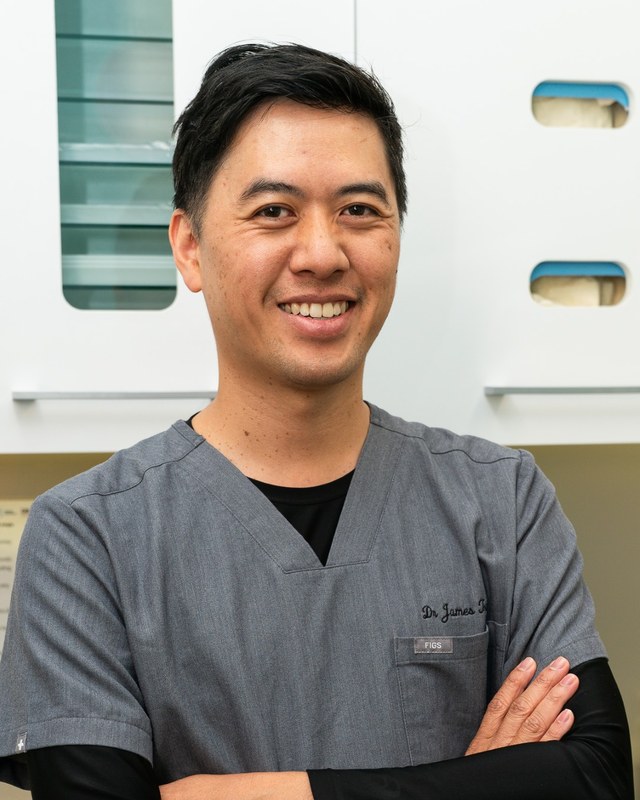
Dr James Tran is a general dentist at Lumi Dental in Melrose Park. He holds a BDent from the University of Sydney and a Graduate Diploma in Oral Implants, and is a Member of the International Congress of Oral Implantologists (MICOI).
This article is general information only and is not a substitute for an examination and individual advice from a registered dental practitioner. Suitability for any treatment varies from person to person.