
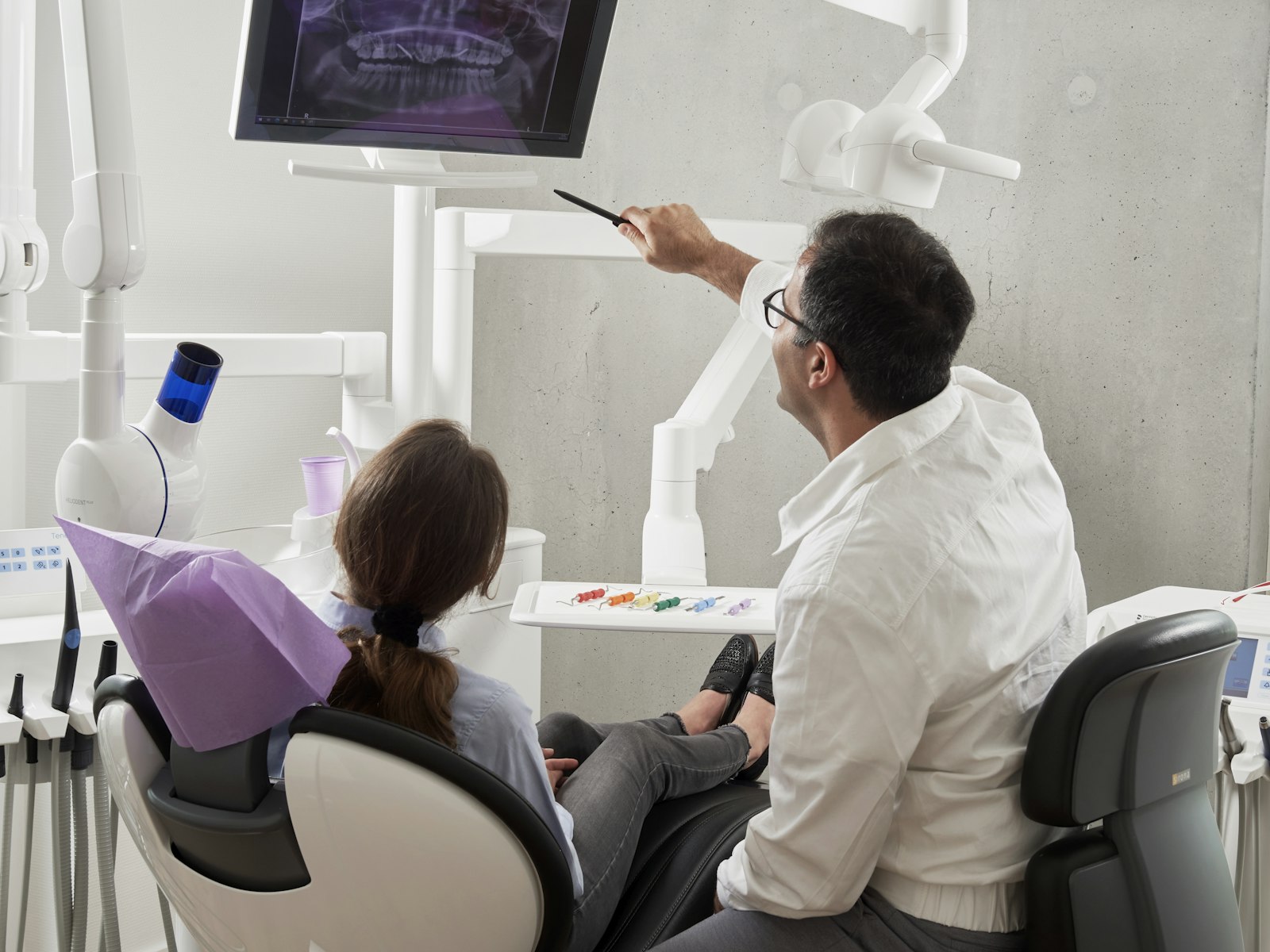

Low bone density does not automatically rule out a dental implant, but it does change how the treatment is planned. When it comes to bone density and dental implants, the dentist is really asking two questions: is there enough bone volume, and is the bone quality good enough to hold the implant steadily while it heals? This guide explains how jawbone is assessed, why it can become thinner or softer, and which options a dentist may consider when bone is limited.
Key Takeaways
- Implants rely on both bone volume (height and width) and bone quality (density) for stability.
- Dentists often describe jawbone in four density classes, commonly called D1 to D4, from dense to soft.
- A 3D dental scan (CBCT) helps the dentist assess volume, nerve and sinus position, and how the bone looks.
- A routine dental scan is not a diagnosis of osteoporosis. Bone density testing for osteoporosis is a GP matter.
- Options for lower density bone can include longer healing, adjusted technique, grafting, a sinus lift, staged treatment or an alternative such as a bridge or denture.
- Never stop, skip or change a prescribed medicine without speaking to your doctor or pharmacist first.
Why Bone Matters for a Dental Implant
A dental implant is a small titanium post that sits in the jaw in place of a tooth root. To stay stable, it needs to be surrounded by enough healthy bone, and over the following weeks and months that bone needs to bond to the implant surface. You can read more about that bonding process in our guide to how dental implants fuse to bone.
Dentists usually think about bone in two ways. Volume is the height and width of bone available. Density, or quality, describes how hard or soft that bone is. A jaw can have good volume but softer bone, or dense bone that is too thin, and each situation is planned a little differently.
How Jawbone Density Is Described
Dentists often group jawbone into four classes, commonly called D1 to D4. D1 is dense, mostly cortical bone, while D4 is soft bone with a thin outer layer. These classes are a planning guide, not a score that decides whether treatment is possible.
Different parts of the jaw tend to behave differently. The upper back jaw tends to have softer bone, while the lower front jaw is usually denser. This is one reason a back upper implant may be planned with more care around healing time than a lower front one.
| Class | General description | Where it is commonly found |
|---|---|---|
| D1 | Dense cortical bone | More often the lower front jaw |
| D2 | Thick dense outer layer with a coarser inner bone | Common in the lower jaw and upper front |
| D3 | Thinner outer layer with finer inner bone | Common in the upper jaw and lower back |
| D4 | Soft bone with a very thin outer layer | More often the upper back jaw |
How Bone Is Assessed Before Implants
A standard dental X-ray shows a flat picture. For implant planning, many dentists use a 3D dental scan called CBCT, which lets them look at the jaw from several angles. It helps show the height and width of the bone, the appearance of the bone, and the position of nerves and sinuses. Our guide to the 3D dental scan (CBCT) explains what to expect on the day.
It is worth being clear about one point. A dental scan used for implant planning is not a diagnosis of osteoporosis. Testing for osteoporosis is done through your GP, often with a DEXA scan. If you have concerns about your general bone health, speak to your GP first, and read about osteoporosis and jaw bone health for the dental side of the picture.
Why Jawbone Can Become Thinner or Softer
Bone in the jaw is kept in shape partly by the presence of tooth roots. When a tooth is lost, the bone in that area can gradually shrink over time. The longer a space has been empty, the more change there may be.
- Long-term tooth loss: bone resorbs without tooth roots to support it.
- Gum disease: infection around the teeth can break down supporting bone.
- Trauma: injury to the jaw or a tooth can damage bone.
- Smoking: it can affect blood supply and healing in the mouth.
- Some conditions and medicines: certain health conditions and medicines can affect bone, including some used for osteoporosis.
If you take a medicine that affects bone, our guide to bisphosphonates and the jaw explains why your dentist will want to know. Please never stop, skip or change a prescribed medicine without speaking to your doctor or pharmacist first. Your dentist and doctor can work together on the safest plan.
Options When Bone Density Is Lower
Lower density bone does not mean implants are off the table. In my experience, the plan is usually adjusted rather than abandoned. Depending on the scan and your health, a dentist may consider:
- Longer healing time before the implant is asked to carry a tooth.
- Adjusted drilling technique, so the implant is placed to make the most of the bone available.
- Implant design chosen for the bone, such as length, width and thread pattern.
- Bone grafting or a sinus lift to add volume where it is needed.
- Staged treatment, where grafting heals first and the implant follows.
- Guided surgery to place the implant precisely along a digital plan.
- Avoiding immediate loading, which means not fitting a tooth on the implant straight away.
Each of these has a different role. You can read about bone grafts and sinus lifts for dental implants and how guided implant surgery supports accurate placement.
What the Dentist May Consider for Each Bone Situation
| Bone situation | What the dentist may consider |
|---|---|
| Good volume and good density | Standard planning, with healing time based on the jaw and the case |
| Good volume, softer bone | Longer healing, adjusted drilling, implant design chosen for soft bone, and avoiding immediate loading |
| Thin bone (reduced width) | Bone grafting before or with implant placement, or a narrower implant where suitable |
| Low bone height in the upper back jaw | A sinus lift with grafting, often staged, or a different tooth replacement option |
| Bone loss from gum disease | Treating the gum disease first, then reassessing bone for implants |
| Very limited bone and a wish to avoid grafting | Discussing alternatives such as a bridge or denture, and whether smaller implants are suitable |
Smaller Implants, Candidacy and Alternatives
Some people ask whether smaller implants are a way around low bone. They can suit certain situations, but they are not a replacement for good planning, and they behave differently from standard implants. Our guide to mini dental implants covers where they may and may not fit.
Not everyone is a suitable candidate for implants, and bone is only one factor. General health, gum health, habits and expectations all matter, as described in our guide to who may not be suitable for dental implants. Where implants are not the best fit, a bridge or denture can be a sound option.
Studies have reported high implant survival rates over ten years in suitable patients, including those with lower density bone when the treatment is planned with care. This is a general finding, not a promise for any one person, and your own result depends on your bone, your health and how well the implant is looked after.
What the Process Looks Like
Once bone has been assessed, treatment follows a series of steps: planning, any needed grafting, implant placement, healing, and then the final tooth. If you would like to understand the whole sequence, see how dental implants work step by step. Healing times vary and are set by the dentist for your case.
Many patients also ask about cost. The answer depends on whether grafting or extra planning is needed, so a written quote after an assessment is the most reliable guide. Our dental implant cost guide explains what influences the total, and current offers are listed on our current deals page.
Common Questions
Can you get dental implants with low bone density?
Often yes, but the plan may change. A dentist may allow longer healing, choose a different implant design, add bone grafting, or suggest an alternative, depending on your scan and health.
How do dentists check bone density for implants?
Most use a combination of an examination, X-rays and a 3D dental scan (CBCT). The scan helps the dentist assess bone volume, how the bone looks, and where nerves and sinuses sit.
Does a dental scan diagnose osteoporosis?
No, a dental scan is not a diagnosis of osteoporosis. If you are worried about general bone health, your GP can arrange appropriate testing such as a DEXA scan.
What is the softest type of jawbone?
Dentists commonly describe D4 as the softest class, with a very thin outer layer. It is more often seen in the upper back jaw.
Will I need a bone graft for a dental implant?
Not always. Grafting is considered when there is not enough bone height or width, and your dentist will explain whether it applies to you after a scan.
Can I keep taking my medicines before implant treatment?
Do not stop, skip or change any prescribed medicine without speaking to your doctor or pharmacist. Tell your dentist about everything you take so the treatment can be planned safely.
Book a Complimentary Implant Consultation
If you have been told you may have low bone, or you are simply unsure whether implants could suit you, a conversation is the best first step. The team at Lumi Dental in Melrose Park can talk through your scan, your health and your options, and explain what each choice involves. Learn more about dental implants in Melrose Park, then contact the team to arrange a complimentary consultation and a written quote. Where a specialist is better placed to help, the team can arrange a referral.


