

Dental implants can work for some adults with Down syndrome, but the health of the gums and a daily cleaning plan that holds up in real life decide more than the implant itself. Gum disease tends to start earlier in Down syndrome, and a scoping review of the implant studies found that most failures happened while the implant was still bonding to the bone. This guide to dental implants for adults with Down syndrome is written for the adult and for the family and support workers who help with care decisions.
Written by Dr James Tran, BDent (University of Sydney), MICOI, GradDip (Oral Implants), general dentist at Lumi Dental in Melrose Park.
The short version
- Down syndrome does not rule out implants, but the small studies available report more implant losses than in the general population.
- The single rule: settle the gums first and test the daily cleaning routine for some months before anything is placed.
- Gum disease often begins early in Down syndrome. Our article on Down syndrome and oral health explains why the gums matter from childhood.
- The adult makes their own decision wherever they can, with support. In NSW, a "person responsible" gives consent only when the adult cannot.
- IV sedation is considered only after a medical review that looks at the heart, breathing and neck. Lumi Dental does not provide general anaesthetic.
Why gum health comes first
A systematic review in PLOS ONE on gum care in Down syndrome notes that gum disease has been reported in almost all people with Down syndrome under the age of 30, and that it tends to be generalised and to progress quickly. The authors point out that brushing habits alone may not explain it: differences in the immune system, including less protective antibody in saliva and white cells that are slower to respond, are thought to play a part.
The gum and bone around an implant can become inflamed in much the same way as around a tooth. That condition, peri-implantitis, is easier to prevent than to treat. Our article on dental implants after gum disease explains why an implant should not go into inflamed gums.
What helps the gums most
The same review linked the best gum results with frequent visits for care and with parents, carers or support staff taking part in daily cleaning. In my experience, the adults whose gums improve most have a short, predictable routine and someone who checks the back teeth.
Missing and small teeth: why gaps appear
Some adults with Down syndrome have teeth that never formed, or small, differently shaped teeth. Others have lost teeth to gum disease. The scoping review lists missing teeth, grinding, reduced saliva and low muscle tone among the features that make replacing teeth more complex. Gaps from teeth that never formed are covered in our guide to hypodontia and missing teeth.
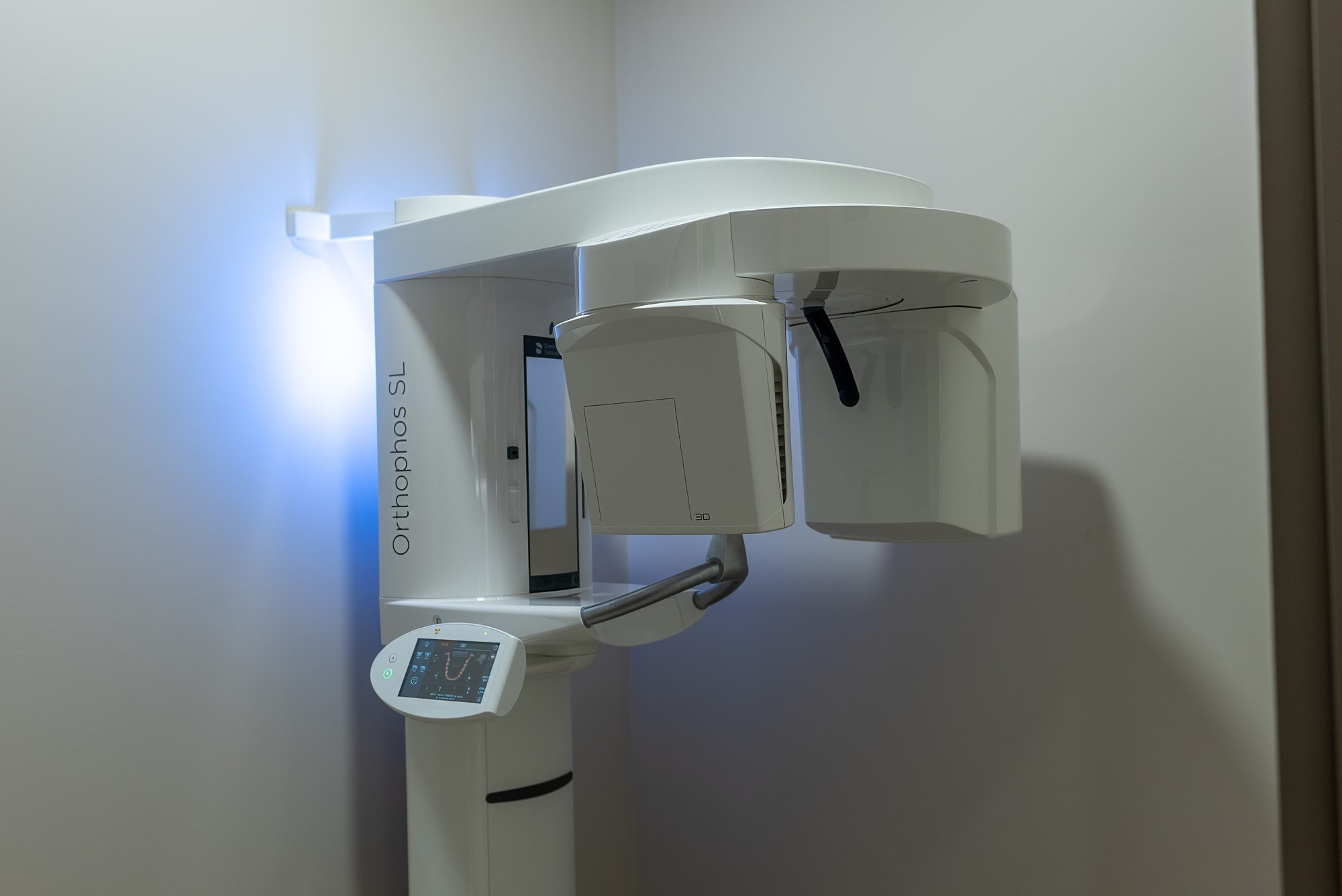
Where a tooth never formed, the bone can be thin, so a 3D X-ray measures it first. Where teeth were lost to gum disease, that has to be under control, or the same process can affect the implant.
What the implant research reports
The evidence is small. A scoping review in Medicina Oral found only seven studies, covering 179 implants in people with Down syndrome, mostly case reports and small case series. Its main findings:
- A systematic review it quotes reported a 26% implant failure rate at six years in people with Down syndrome, compared with about 96% success at ten years in the general population.
- Most failures happened before the implant had bonded to the bone.
- Waiting 3 to 12 months before attaching teeth gave better results; every immediately loaded implant in the reviewed studies failed.
- Overdentures on clip or bar attachments were easier to maintain than fixed bridges, which needed strict hygiene.
The authors still describe implants as a viable option. These are small studies, though, and one person's result depends more on their own gums, bone and routine than on an average.
The single rule: stabilise the gums, then test the routine
If an implant is being considered, start with the gums and the cleaning plan, not the implant. That usually means:
- gum therapy with the hygiene team, then regular reviews until the gums stay stable;
- a cleaning routine the person can do, with help where needed, practised for some months;
- only then, a 3D X-ray and an implant plan, with a longer healing time before teeth are attached.
If the gums will not settle, a bridge or denture may be the safer choice for now, and it keeps the options open.
Comparing the options
| Situation | What to check first |
|---|---|
| Gums stable, cleaning routine working | Bone volume on a 3D X-ray, grinding, and fixed or removable design. |
| Active gum disease | Gum therapy and reviews first. No implant until the gums are stable. |
| Missing teeth since childhood | Bone width where teeth never formed, and the bite. Some cases are referred to a registered specialist. |
| Needs help to clean | Who helps, how often, and whether a removable overdenture would be easier to keep clean. |
| Anxious with long visits | Short visits, a familiar support person, and whether local anaesthetic alone is enough. |
| Heart condition | A letter to the cardiologist or GP before surgery, and any precautions they advise. |
A denture avoids surgery, but the scoping review notes that many people with Down syndrome find dentures hard to manage because of low muscle tone, tongue pressure and a dry mouth. An overdenture that clips onto implants is a middle path: steadier than a denture, and it comes out for cleaning, which helps if the person who assists with cleaning changes. Our guide to implant-retained overdentures explains how they work.

Decisions and consent: the adult comes first
The Better Health Channel advises that people with Down syndrome be active participants in all discussions, with supported decision making, and that professionals speak directly to the person. I usually explain the plan in small steps, with models and photos, across more than one visit.
In NSW, government guidance says that if a patient aged 16 or over cannot understand the nature, effect and risks of a treatment, the dentist must seek consent from their "person responsible". The NCAT fact sheet sets the order: a guardian with authority over medical and dental treatment, then a spouse or partner, then an unpaid carer, then a close relative or friend.
NCAT classes treatment involving sedation or general anaesthetic as major treatment, which needs consent in writing, and a person responsible cannot consent to treatment the person objects to. Capacity can differ between decisions: the NSW Government gives the example of a man with an intellectual disability who consented to a tooth removal himself, with support, but could not understand the risks of a general anaesthetic. Enduring guardianship is covered in our article on implants and dentures when memory loss is a concern. This is general information, not legal advice; NCAT and NSW Trustee and Guardian can help with specifics.
Planning visits that work
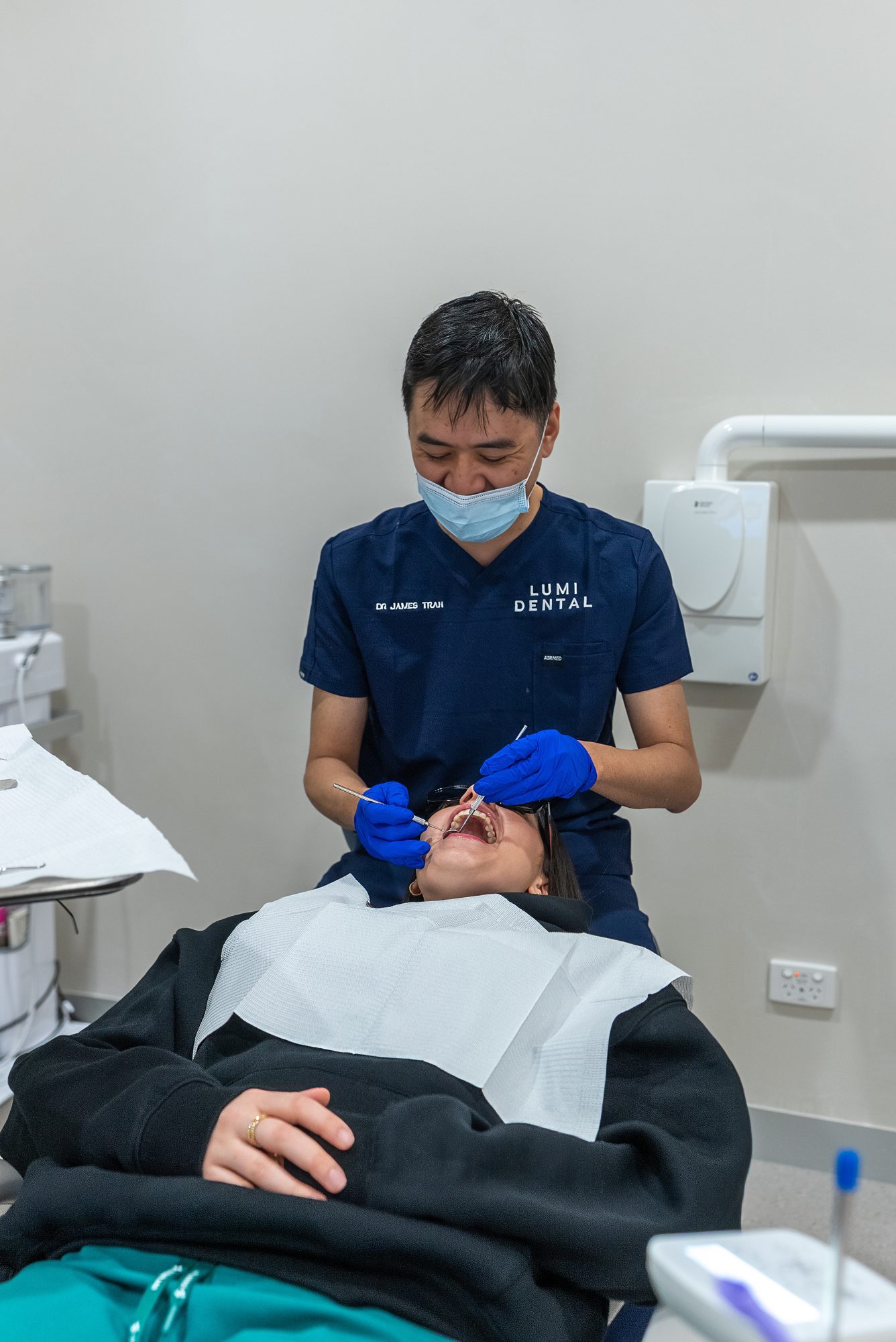
The scoping review describes approaches that helped: consistent routines, explaining each step, and letting the person see and touch materials such as impression trays first. Short visits, the same clinician and a trusted support person in the room often help too. Some ideas from our article on autism-friendly dental visits carry over to adults.
The Better Health Channel notes that people with Down syndrome may not localise pain well, so after surgery the team agrees with the support person which signs to watch for, such as increasing swelling, bleeding that will not settle, or a change in eating or behaviour.
Sedation, the heart and other health conditions
The scoping review advises treatment awake with local anaesthetic whenever possible. It also notes that people with Down syndrome are more likely to have oxygen drops with IV sedation, linked to sleep apnoea and a narrower airway, so monitoring has to be close.
The Better Health Channel lists other conditions the GP may be managing: congenital heart defects, an under-active thyroid, coeliac disease, sleep apnoea and, in a small minority, instability at the top of the neck. The team at Lumi Dental writes to your GP or specialist before planning surgery, and IV sedation is offered only after that medical review. Lumi Dental does not provide general anaesthetic itself and refers where it is needed, though IV sedation is available at the practice.
How we approach this at Lumi Dental
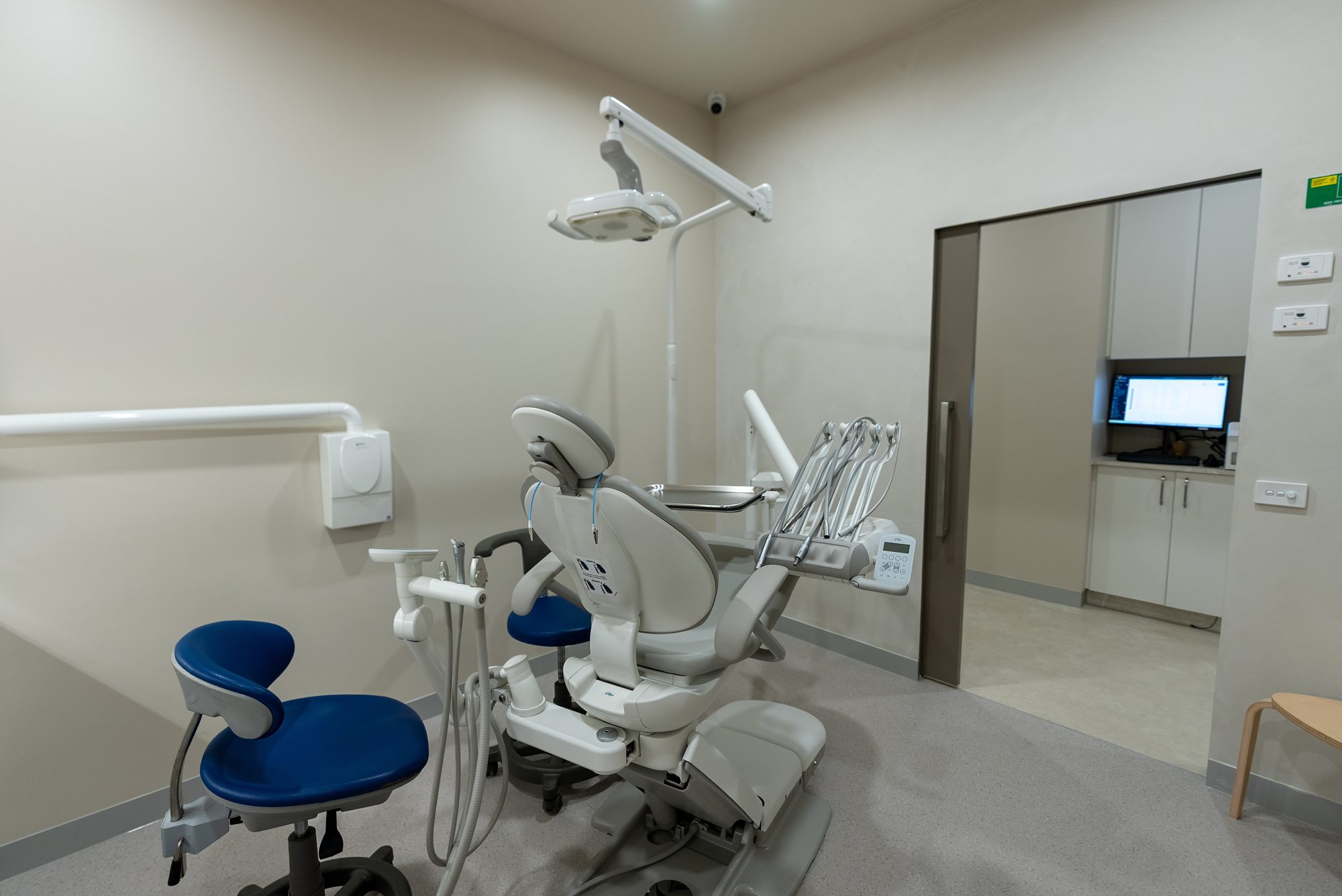
At Lumi Dental, a dentist examines the teeth and gums, takes a 3D X-ray in house where an implant is being considered, and talks through the options with the adult and, with their agreement, the person who helps at home. The hygiene team (OHTs) provides gum therapy and can show both of them how to clean around an implant or overdenture.
Complex cases may be referred to a registered specialist or a hospital service. Read more about dental implants at Lumi Dental.
Questions patients ask
Can someone with Down syndrome get dental implants?
Yes, some adults can. Small studies report more implant losses than in the general population, mostly during healing, so stable gums and a reliable cleaning routine come first.
Are implants or dentures better for an adult with Down syndrome?
It depends on the gums, the bone and who helps with cleaning. An overdenture held by implants is a middle option that still comes out for cleaning.
Who can consent to dental treatment for an adult with Down syndrome in NSW?
The adult, wherever they can understand the treatment, with support. If they cannot, the dentist asks their person responsible, in writing where sedation is involved.
Can implant surgery be done under sedation for someone with Down syndrome?
Sometimes, after a medical review of the heart, breathing and neck. General anaesthetic is arranged by referral where it is needed.
How often are check-ups needed after an implant?
There is no set number. Research links more frequent visits with better gum results in Down syndrome; our article on implants after gum disease explains the long-term care.
Considering an implant? Complimentary implant consult in Melrose Park
If you, or an adult you support, are thinking about replacing missing teeth, the team at Lumi Dental can check the gums, take 3D scans and talk through the options at a pace that suits. Contact Lumi Dental to book a complimentary implant consult, and bring a support person if that helps. You can also read more about dental implants in Melrose Park. Patients visit from Ryde, Parramatta, Ermington and Rydalmere, with on-site parking at Melrose Central.
Sources
- Better Health Channel: Down syndrome and health
- NSW Civil and Administrative Tribunal: Person Responsible fact sheet
- Medicina Oral: Implants in patients with Down syndrome, a scoping review (PMC)
- PLOS ONE: Prevention and periodontal treatment in Down syndrome patients (PMC)
About the author

Dr James Tran is a general dentist at Lumi Dental in Melrose Park. He holds a BDent from the University of Sydney and a Graduate Diploma in Oral Implants, and is a Member of the International Congress of Oral Implantologists (MICOI).
This article is general information only and is not a substitute for an examination and individual advice from a registered dental practitioner. Suitability for any treatment varies from person to person.







