

Limited mouth opening does not automatically rule out a dental implant, but it changes the plan, because a back-tooth implant needs room above the tooth for the drill, the handpiece and the parts that go on top. In a clinical study of 90 adults, average maximum opening was about 46 mm at the front teeth but only about 31 mm at the molars, and the opening needed for fully guided drilling at the molars was met in as few as 30% of older patients. That is why mouth opening is measured at the consult, before an implant system or technique is chosen.
Written by Dr James Tran, BDent (University of Sydney), MICOI, GradDip (Oral Implants), general dentist at Lumi Dental in Melrose Park.
The short version
- Opening is usually measured between the front teeth, but the space at the molars is smaller, and that is where most implants go.
- Implant systems differ widely in how much vertical room their drills and guides need.
- Fully guided surgery is accurate but needs the most room; our article on guided implant surgery explains how guides work.
- The cause matters: short-term stiffness after dental work is handled differently from scarring, radiotherapy or scleroderma.
- When access is not possible, a bridge, a removable option or simply leaving the gap can be reasonable.
What counts as limited opening
StatPearls, a clinical reference on trismus (restricted jaw opening), describes normal opening as roughly 40 to 60 mm, or two to three finger breadths, and notes that many authors treat an opening of less than 35 mm as trismus. It also stresses that normal opening varies from person to person, and that men generally open wider than women.
A quick check at home is to see how many of your own fingers, stacked flat, fit between your upper and lower front teeth. At the consult the dentist measures in millimetres with a ruler, and for a back-tooth implant also looks at how much room there is at the site itself.
Why back teeth are the hardest
The lower jaw hinges at the joint in front of the ear, so the space between the upper and lower teeth narrows towards the back. The study of 90 adults by Gargallo-Albiol and colleagues measured maximum passive opening at three places: about 46 mm at the incisors, 37 mm at the premolars and 31 mm at the molars. Each extra year of age was linked with a small average reduction.
Compared with what four implant systems needed for fully guided drilling, almost everyone had enough room at the front teeth (98.9%), but at the molars the minimum was least likely to be met, particularly in older patients. The authors concluded that mouth opening remains a major limitation in fully guided surgery, especially at the back of the mouth.
The single rule: measure first, then build the plan around it
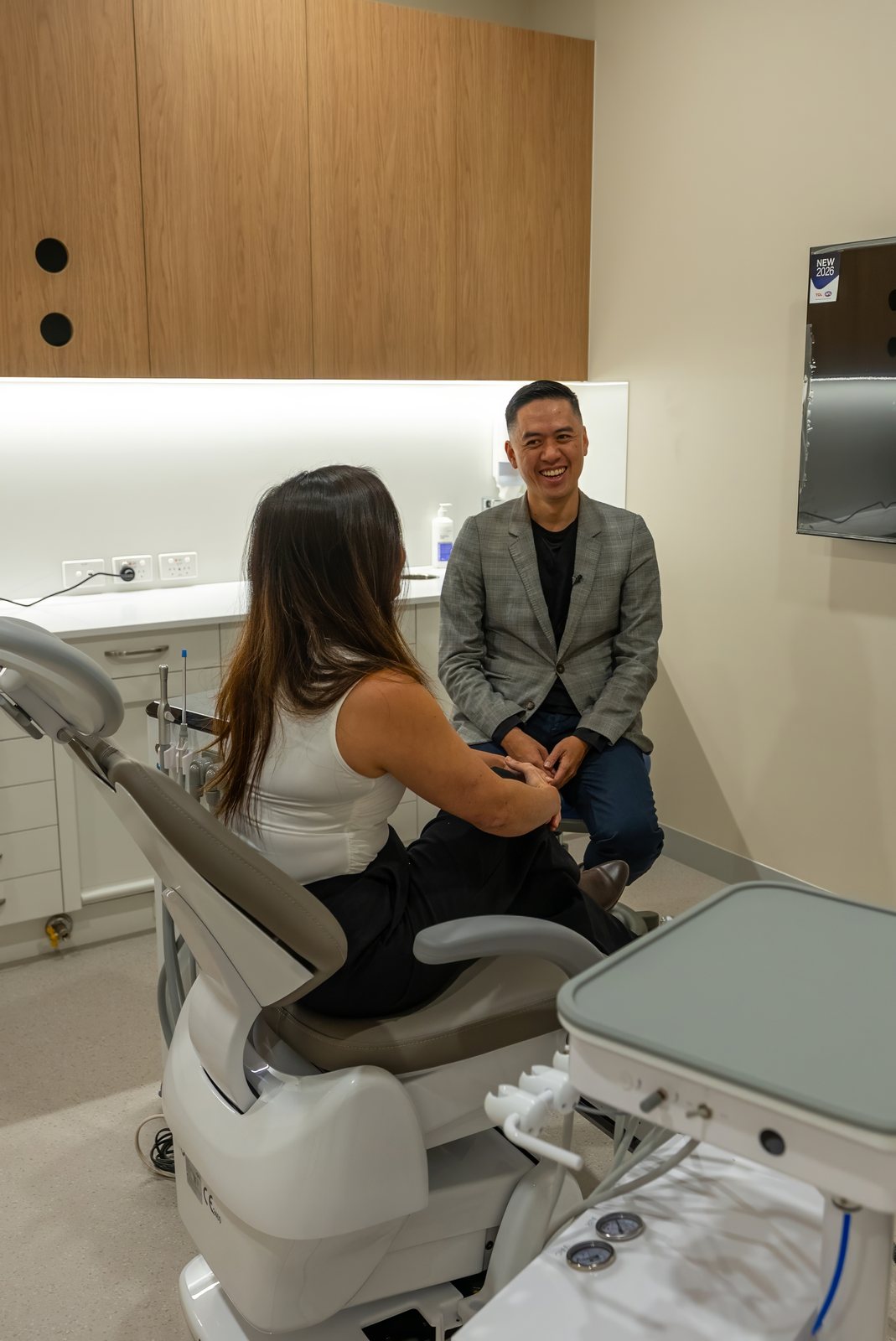
If you know you cannot open wide, say so at the first visit, and expect the dentist to measure it rather than guess. Every later choice depends on that number and on the space at the implant site: which implant system, whether a surgical guide fits, how long the appointment should be and whether an implant is the right answer at all.
In my experience, people with limited opening have often had years of difficult appointments and assume they will be turned away. More often the conversation is about which approach fits, and occasionally about a better alternative to an implant.
How implant treatment can be adapted
Choosing the system and technique
A laboratory analysis of 14 implant systems by Limmeechokchai and colleagues found that drills fitted into the handpiece measured from 30.0 to 49.5 mm, and that the total vertical space needed for a fully guided template ranged from 30.0 to 58.5 mm depending on the system. So two systems can differ by more than 2 cm in the room they need. The authors advised that a patient's opening be determined during planning, before the system and placement technique are chosen, and noted that limited opening can cause difficulty in both guided and freehand surgery.
Depending on the measurements, the plan may use a system with shorter drills, a guide only for the first drill, or freehand placement checked against the 3D plan.
The parts above the implant
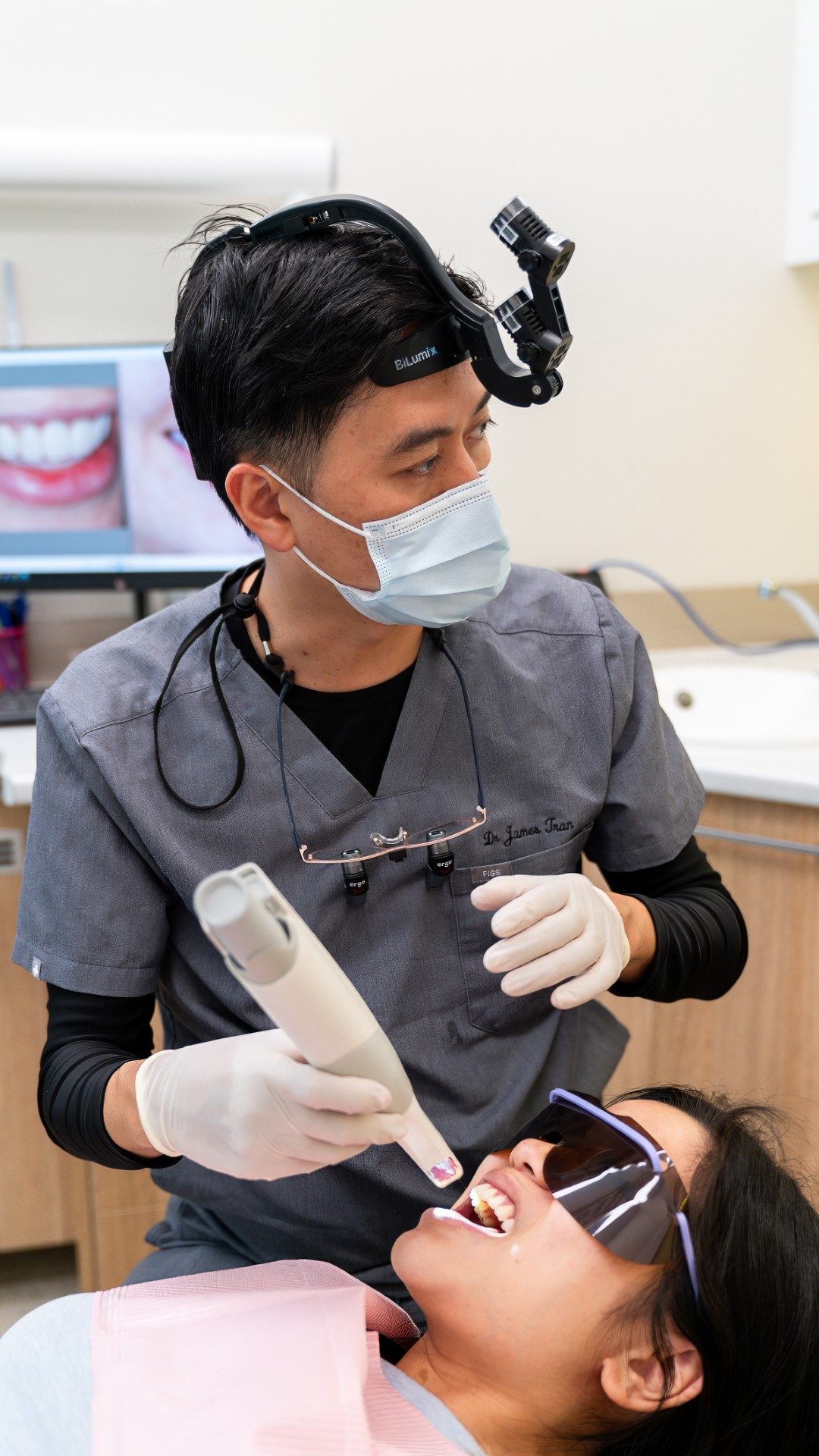
Room is needed again later. A crown is fitted to the implant with a small connecting piece, and a screw-retained crown is tightened with a driver through its biting surface. The choice between screw and cement retention is partly about access, which our article on screw-retained and cement-retained implant crowns explains. Records are easier too: a slim intraoral scanner wand often reaches where a full impression tray will not.
Positioning and breaks
Holding the mouth open for a long time is tiring for anyone and harder with a stiff jaw. A soft bite block to rest on, short planned breaks and splitting work into shorter appointments can all help. If your jaw tends to flare, mention it.
Jaw exercises before treatment
StatPearls notes that stretching exercises may be indicated for trismus that persists after the acute phase, and that opening devices are usually prescribed by a specialist or physiotherapist. If a doctor, specialist or physiotherapist has advised exercises, keeping them up before implant treatment may make a real difference to access. If you are not already under care for the stiffness, I may suggest an assessment first.
The cause changes the plan
| Cause of limited opening | What it means for implant treatment | What may help |
|---|---|---|
| Stiffness after an extraction or injection | Usually temporary; StatPearls notes most trismus settles within about two weeks | Wait until it settles before implant surgery |
| Jaw joint or muscle disorder (TMD) | Opening may vary from day to day; long visits can flare symptoms | Assessment and management first; shorter visits with breaks |
| Head and neck radiotherapy | Fibrosis can make stiffness long-lasting; bone healing needs separate planning | Liaison with the treating team; exercises as advised; specialist referral where needed |
| Scleroderma (systemic sclerosis) | Tight lips and cheeks, dry mouth and harder home care | Individual risk assessment, scanning, short implants or angled parts considered, close maintenance |
| Scarring after surgery or injury | Tissue may not stretch, and access can be uneven | Careful measurement at the site; specialist referral where needed |
| A naturally small mouth | Less room at the molars, even with normal joint movement | System and technique chosen to suit the measured space |
Stiffness that follows dental work is covered in our article on a jaw that will not open after dental work. StatPearls reports trismus in about 38% to 42% of people treated for head and neck cancer, and our article on dental implants after head and neck radiotherapy explains the separate bone and healing questions.
Scleroderma
A systematic review of implant treatment in systemic sclerosis gathered 37 patients with 153 implants, mostly from case reports and small case series. It reported that the condition had no discernible effect on implant survival, but stressed a thorough risk assessment first. The review describes progressive narrowing of the mouth opening, tray access problems and harder daily cleaning, and mentions short implants or angled abutments where standard placement is not possible.
When an implant is not the best fit
Sometimes the measurements show that a molar implant cannot be placed safely, or that cleaning it afterwards would be too hard. Alternatives include a bridge, a removable partial denture or, for a last molar with a good opposing tooth, leaving the gap, an approach often called a shortened dental arch. Each has trade-offs, set out in our comparison of an implant, bridge or denture. I usually explain these options alongside the implant plan so the choice is made with all of them in view.
Think about home care too. An implant at the very back needs daily cleaning with interdental brushes or a single-tuft brush, and if the opening is tight that should be tested before treatment rather than discovered afterwards.
How we approach this at Lumi Dental
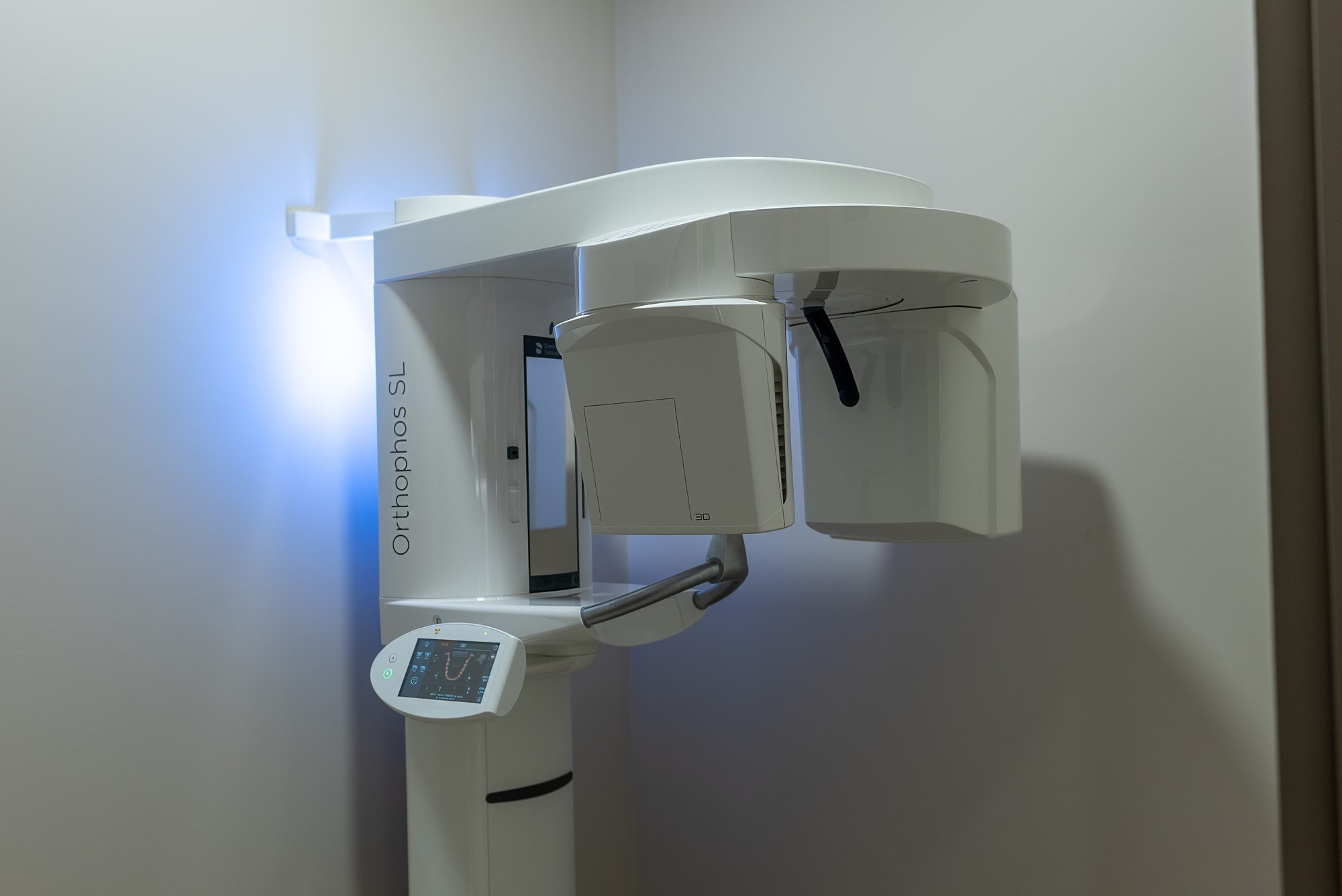
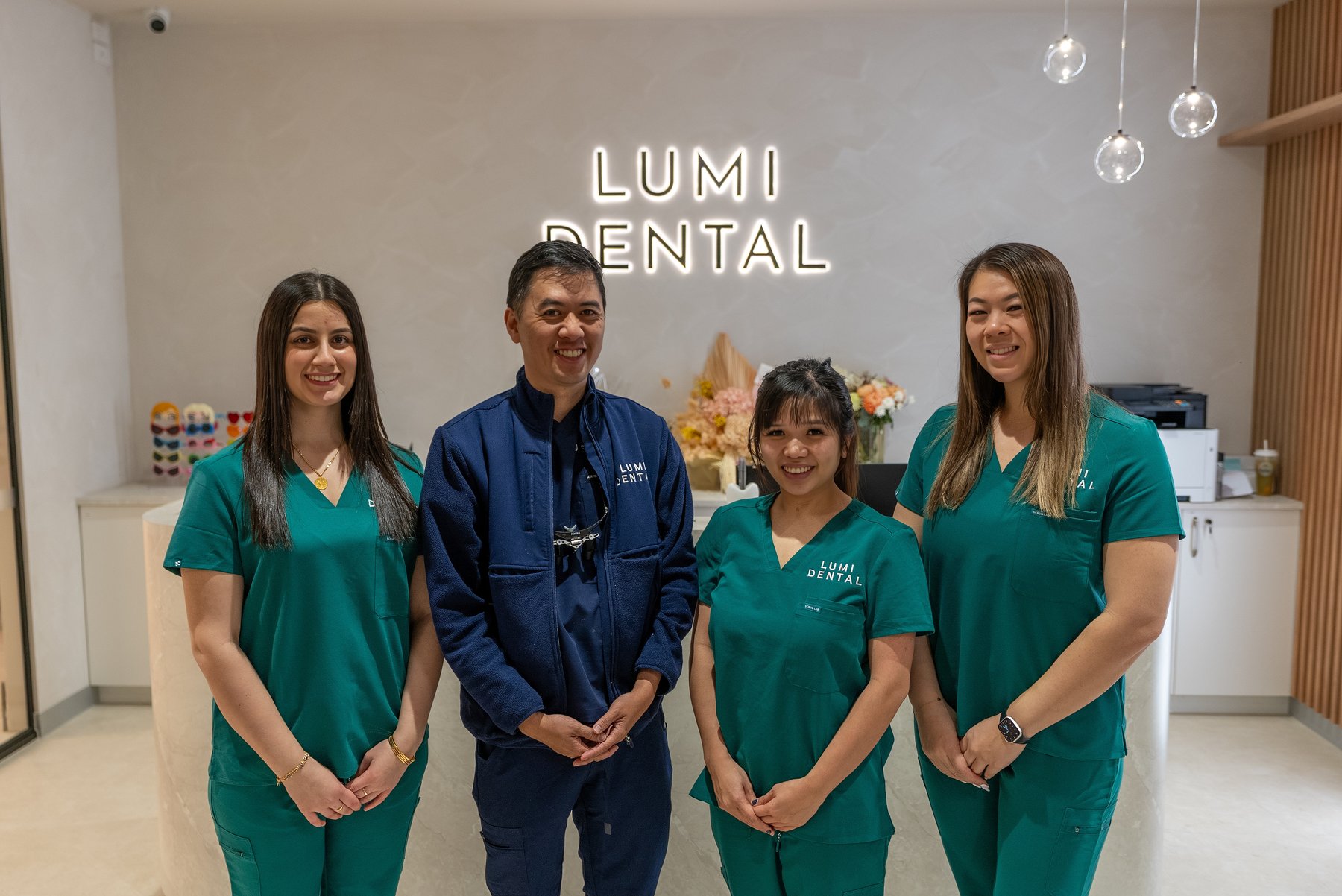
At Lumi Dental in Melrose Park, a dentist measures your opening and examines the implant site, and where it is needed for planning, takes a 3D X-ray in house. Records are taken with a 3D intraoral scanner where possible, and the plan, including the system and whether a guide is used, is built around the measured space. Where the cause needs medical input, or the case is better suited to a registered specialist, the team at Lumi Dental refers you or writes to your GP or specialist before planning surgery. You can read about the 3D imaging and scanning used for planning.
Questions patients ask
Can you get a dental implant if you can't open your mouth wide?
Often, yes, but it depends on the measured space at the implant site. Front teeth are usually easier than molars, and sometimes a bridge or removable option suits better.
How wide do you need to open for a back tooth implant?
There is no single number, because implant systems and techniques differ by more than 2 cm in the room they need. The dentist measures your opening and the space at the site, then chooses a technique to suit.
Can jaw exercises help before an implant?
They can for some people, particularly when stiffness has a muscle or scarring cause. Exercises are best done under the guidance of a physiotherapist, doctor or specialist.
Does TMJ pain stop you from getting implants?
Not usually, but symptoms are best managed first and appointments kept shorter. Our guide to TMJ and jaw pain covers causes and treatment.
Is a short implant an option with limited opening?
Sometimes. Short implants and angled parts are mentioned in the research as alternatives where standard placement is difficult, but suitability depends on your bone and bite.
Considering an implant? Complimentary implant consult in Melrose Park
If limited opening has made you unsure about replacing a back tooth, the team at Lumi Dental can measure the space, take a 3D scan where it is needed and talk you through each option. Contact Lumi Dental to book a complimentary implant consult, or read more about dental implants in Melrose Park. Patients visit from Ryde, Parramatta, Ermington and Rydalmere, with on-site parking at Melrose Central.
Sources
- StatPearls (NCBI Bookshelf): Trismus
- International Journal of Oral and Maxillofacial Surgery (Gargallo-Albiol and colleagues): Mouth opening limitation and influence of age and surgical location for static fully guided dental implant placement (PubMed)
- International Journal of Oral and Maxillofacial Implants (Limmeechokchai and colleagues): Vertical Mouth Opening Requirements for CAD/CAM Fully Guided Implant Surgery (PubMed)
- Immunity, Inflammation and Disease: Oral rehabilitation with dental implants in patients with systemic sclerosis, a systematic review (PMC)
About the author

Dr James Tran is a general dentist at Lumi Dental in Melrose Park. He holds a BDent from the University of Sydney and a Graduate Diploma in Oral Implants, and is a Member of the International Congress of Oral Implantologists (MICOI).
This article is general information only and is not a substitute for an examination and individual advice from a registered dental practitioner. Suitability for any treatment varies from person to person.








