
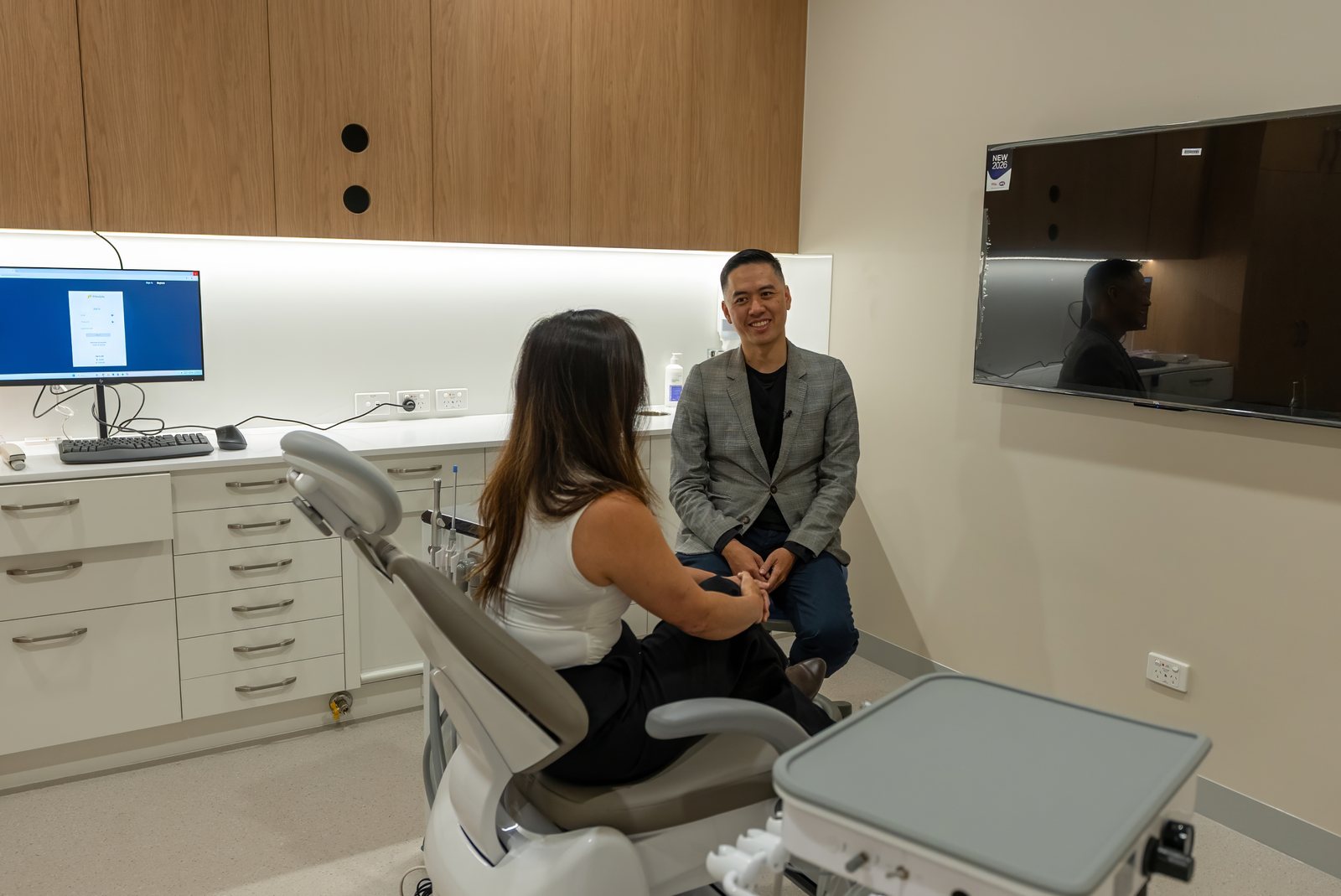

Most people with a stent, a pacemaker or a past bypass can have a dental implant once their heart is stable. What the heart condition changes is the preparation: whether an antibiotic is needed beforehand, how blood thinners are handled, and how long to wait after a heart event or heart surgery. Those answers depend on the exact condition and your medicines, which is why your cardiologist's letter matters as much as the X-ray.
Written by Dr James Tran, BDent (University of Sydney), MICOI, GradDip (Oral Implants), general dentist at Lumi Dental in Melrose Park.
Two groups of heart conditions, two different concerns
It helps to sort heart conditions by what they mean for dental surgery rather than by how serious they feel.
The first group is about infection. Infective endocarditis is an infection of the inner lining or valves of the heart. Bacteria need a surface to settle on, so the risk is concentrated in people with artificial or repaired valves, a previous episode of endocarditis and some forms of congenital heart disease. For these people, guidelines recommend an antibiotic before procedures that disturb the gums, and implant surgery is one of them.
The second group is about medicines and timing. Coronary stents, bypass grafts, pacemakers and implantable defibrillators (ICDs) do not create that kind of surface. A 2024 review in Dentistry Journal states that antibiotic cover is not necessary after bypass surgery, coronary stents, pacemakers or defibrillators. For these patients, the planning centres on blood thinners and on giving the heart enough recovery time.
Where common heart conditions sit
| Condition | Antibiotic before implant surgery | Main thing to plan around |
|---|---|---|
| Coronary stent | Not recommended | Antiplatelet medicines continued; timing set with the cardiologist |
| Bypass graft | Not recommended | Recovery after surgery; long-term antiplatelet medicine |
| Pacemaker or ICD | Not recommended | Device details recorded; care with some electrical equipment |
| Artificial heart valve, including TAVI | Recommended by AHA and ESC guidance | Often also on an anticoagulant |
| Valve repaired with prosthetic material | Recommended | As for an artificial valve |
| Previous infective endocarditis | Recommended | Gum health and antibiotic cover are both priorities |
| Certain congenital heart conditions | Recommended for specific subgroups | The cardiologist confirms which subgroup applies |
| Atrial fibrillation on an anticoagulant | Not recommended for the AF itself | Bleeding control without stopping the medicine |
A heart murmur or valve disease without any prosthetic material is not usually in the high-risk group under current guidance, but the cardiologist's letter should confirm the diagnosis rather than leaving it to memory.
When antibiotics are given, and why the evidence is debated
A 2026 scoping review by Aliu and colleagues in the International Journal of Immunopathology and Pharmacology summarises the main guidelines. The American Heart Association and the European Society of Cardiology recommend antibiotic cover for high-risk heart patients having procedures that involve the gums, the tissue around the tooth root or a break in the lining of the mouth. The UK's NICE guidance does not recommend routine cover but supports an individual decision with informed consent.
The same review notes that the link between dental procedures and endocarditis is strongest for extractions and oral surgery in high-risk patients. It cites estimates that about 71 oral surgery procedures in that group would need antibiotic cover to prevent one case of endocarditis, and stresses that the evidence is largely observational. When cover is used, guidelines describe a single dose of an antibiotic such as amoxicillin taken 30 to 60 minutes beforehand, with alternatives for people allergic to penicillin. Your dentist decides this with your cardiologist. If you do not have a heart condition, see our article on whether antibiotics are needed for implant surgery.
The review also points out that everyday activities such as brushing and chewing release small numbers of bacteria into the blood, more so when the gums are inflamed. That is why treating gum disease and keeping up regular care matters for heart patients, whether or not an implant is planned. Our article on gum disease and heart health explains the link.
Blood thinners stay in place
After a coronary stent, most people take two antiplatelet medicines for a period. The Scottish Dental Clinical Effectiveness Programme (SDCEP) guidance says this dual therapy is prescribed for up to 12 months after a stent and must not be stopped or interrupted without written advice from the cardiologist, because of the risk of serious clotting events. Dental treatment goes ahead without stopping it. Never stop, skip or delay a dose on your own; your dentist will confirm the plan with your GP or cardiologist.
Bleeding may last longer, up to about an hour according to SDCEP, so the dentist limits the first area treated, staggers larger work over separate visits and strongly considers stitches and packing. A 2022 review in Reviews in Cardiovascular Medicine lists placement of multiple implants among higher bleeding-risk dental procedures, so a single implant may proceed as planned while a larger case is split into stages. For warfarin and the newer anticoagulants, see our guide to dental implants and blood thinners.
Waiting after a heart attack, stent or heart surgery
An implant is planned treatment, so there is no reason to fit it into a recovery period. The Reviews in Cardiovascular Medicine paper notes that older American Heart Association advice was to avoid dental surgery for six months after a heart attack, while more recent evidence supports avoiding elective dental care for at least the first 30 days. After a stent, the period of dual antiplatelet therapy is a practical reference point. In every case the cardiologist decides when elective surgery is reasonable.
If heart surgery is coming up, the better order is usually to have a dental check first, so any infection is dealt with beforehand. Our article on dental checks before heart surgery covers this.
Blood pressure, anaesthetic and staying calm on the day
Blood pressure is checked before surgery begins. The same cardiovascular review summarises American Dental Association advice: if a repeated reading is confirmed above 160/100, elective dental treatment is postponed and the patient is referred to their doctor.
Local anaesthetic with a small amount of adrenaline is generally acceptable for people with stable heart disease. The review describes up to 0.04 mg of adrenaline, about one or two standard cartridges at 1:100,000, as safe for people with controlled high blood pressure or coronary disease, and notes it should be used with care in people with some rhythm problems or implanted devices. Short appointments and good anxiety control also help, because stress releases the body's own adrenaline. Sedation can make a longer appointment more comfortable, but with a heart condition it needs a medical review first. Lumi offers happy gas, inhaled pain relief, oral sedation and IV sedation, and which, if any, suits you is decided after that review.
What to bring to your consultation
Bringing these saves a second visit: your cardiologist's latest letter, a full list of medicines and doses, the dates of any stent, heart attack or heart surgery, the type of heart valve if you have one, your pacemaker or ICD card, any history of endocarditis, details of any penicillin allergy, and recent blood pressure readings if you take them at home.
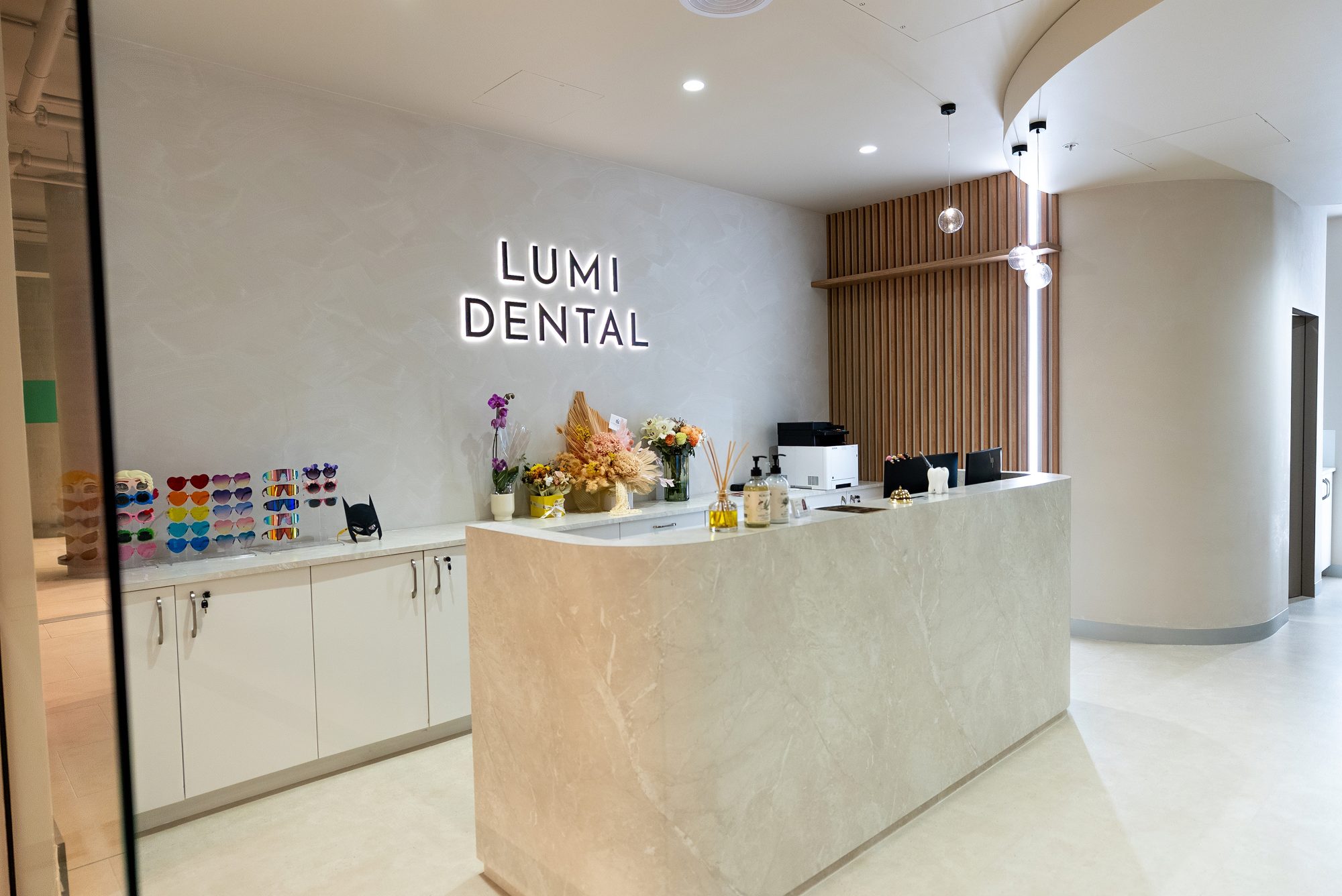
At Lumi Dental, implant planning begins with an examination, a full medical and medicine history, and our in-house 3D X-ray and intraoral scan. For anyone with a stent, valve, pacemaker, ICD or a past heart event, we write to your GP or cardiologist before planning surgery, and the dentist does not stop or change your heart medicines. Where the gums need attention first, our oral health therapists can help with that before surgery. More information is on our dental implants page, and our guide to pacemakers, ICDs and dental treatment covers device-specific points.
Questions we are often asked
Do I need antibiotics before an implant if I have a stent?
Not because of the stent. Guidelines place coronary stents, bypass grafts, pacemakers and ICDs outside the high-risk group for endocarditis. The main question with a stent is the blood thinner, which is managed with local measures, not by stopping it.
Can I have an implant if I have a mechanical heart valve?
Often, yes, with extra planning: an antibiotic before surgery, as AHA and ESC guidance recommend for artificial valves, and a plan for the anticoagulant, usually warfarin, that most people with a mechanical valve take. The dentist does not stop it, and the plan is confirmed with your GP or cardiologist.
How long after a heart attack should I wait?
Your cardiologist sets the date. Recent evidence supports at least 30 days before elective dental care, and many people wait longer while their treatment settles.
Planning an implant with a heart condition
If you have a stent, a valve, a pacemaker or a past heart event, we can assess the implant site, take a 3D X-ray and write to your cardiologist before anything is booked. Free consults are available for implant treatment; see current offers or contact Lumi Dental in Melrose Park.
Sources
- Aliu F, et al. Beyond antibiotic prophylaxis: a scoping review of infective endocarditis prevention in the device era. International Journal of Immunopathology and Pharmacology, 2026
- Antibiotic prophylaxis prior to dental procedures. Dentistry Journal, 2024
- Scottish Dental Clinical Effectiveness Programme: Antiplatelet drugs, treatment recommendations
- Dental management considerations for patients with cardiovascular disease: a narrative review. Reviews in Cardiovascular Medicine, 2022
About the author

Dr James Tran is a general dentist at Lumi Dental in Melrose Park. He holds a BDent from the University of Sydney and a Graduate Diploma in Oral Implants, and is a Master of the International Congress of Oral Implantologists (MICOI).
This article is general information only and is not a substitute for an examination and individual advice from a registered dental practitioner. Suitability for any treatment varies from person to person.








