
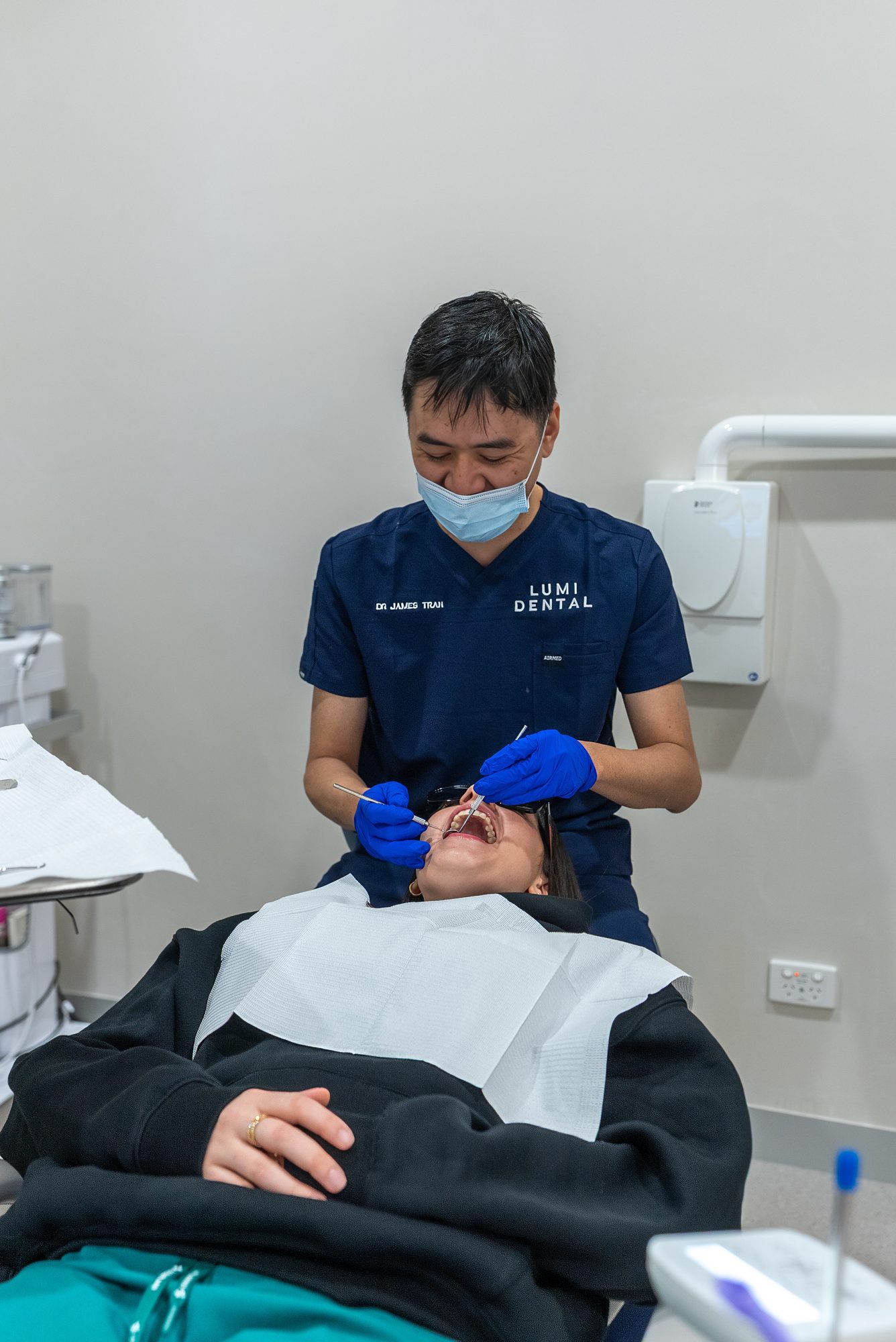

Most people who take a blood thinner can have dental implants without stopping their medicine, because the surgery is planned around the medicine rather than without it. Dental implants and blood thinners are a planning question, not a yes or no question. The Scottish Dental Clinical Effectiveness Programme (SDCEP), whose guidance is widely used by dental teams, lists dental implant surgery among the procedures with a higher risk of bleeding afterwards, and still advises treating most patients without interrupting their anticoagulant or antiplatelet drug. What changes is the preparation: a letter to your doctor, sometimes a blood test, a timed morning dose, and extra steps in the chair.
Written by Dr James Tran, BDent (University of Sydney), MICOI, GradDip (Oral Implants), general dentist at Lumi Dental in Melrose Park.
The short version
- Never stop or skip a blood thinner for a dental appointment on your own. Any change is the prescriber's decision.
- Implant surgery sits in the higher bleeding risk group, so it is planned early in the day, a limited area at a time, with sutures and packing.
- On a DOAC such as apixaban or rivaroxaban, you may be asked to miss or delay the morning dose. On warfarin, an INR check close to the appointment decides whether surgery goes ahead.
- Aspirin and clopidogrel are usually continued, with longer bleeding expected.
- Research has reported that bleeding after implants in people on these medicines was managed with local measures in every case studied.
- Our guide to blood thinners and tooth extraction covers the simpler case.
The rule: plan around the medicine, never without it
A blood thinner is prescribed to stop a clot forming somewhere that matters: a stent, an artificial heart valve, a fibrillating heart, a leg vein that has clotted before. Healthdirect's advice is blunt: do not stop it or change the way you take it without talking to your doctor first. SDCEP names the groups whose therapy must not be interrupted at all: people with prosthetic metal heart valves or coronary stents, people who have had a pulmonary embolism or deep vein thrombosis in the last three months, and people anticoagulated for cardioversion. In my experience the patients most at risk are not the ones who bleed a little longer. They are the ones who quietly stopped their tablets for three days because they assumed the dentist would want that.
Which blood thinners we are talking about
Healthdirect divides blood thinners into anticoagulants, which slow the production of clotting factors, and antiplatelet medicines, which stop platelets sticking together. SDCEP treats each group differently; the brand names below are those in its patient leaflet.
| Group | Examples | What usually happens before implant surgery |
|---|---|---|
| Direct oral anticoagulants (DOACs) | apixaban (Eliquis), rivaroxaban (Xarelto), dabigatran (Pradaxa), edoxaban (Lixiana) | Continued. For higher bleeding risk surgery you may be asked to miss or delay the morning dose, with the next dose timed after bleeding has stopped |
| Vitamin K antagonists | warfarin (Marevan and other brands) | INR checked, ideally within 24 hours of surgery, up to 72 hours if stable. Surgery proceeds without interrupting warfarin if the INR is below 4; at 4 or above it is delayed |
| Injectable anticoagulants | enoxaparin (Clexane), dalteparin | Low preventive dose: continued. Higher treatment dose: the prescriber is consulted first |
| Antiplatelet drugs | aspirin, clopidogrel (Plavix), ticagrelor, prasugrel, dipyridamole | Continued, single or dual. Longer bleeding is expected and managed with local measures |
| Combinations | an anticoagulant plus an antiplatelet | The prescriber is consulted to weigh the combined bleeding risk |
The dentist needs the exact name and dose, and whether the course is lifelong or time-limited, because SDCEP advises delaying non-urgent surgery where the medicine will finish soon anyway. The dentist also needs to know what else you take: the SDCEP patient leaflet asks about over-the-counter anti-inflammatories, herbal medicines, and any kidney, liver or blood condition, because these add to bleeding.
Why implant surgery counts as a higher bleeding risk procedure
SDCEP sorts dental procedures into three groups: unlikely to cause bleeding, low risk of post-operative bleeding, and higher risk. Simple extraction of one to three teeth sits in the low risk group. Implant surgery sits in the higher group with other procedures that raise a flap of gum, because the gum is opened, bone is prepared and the wound is larger than a socket. The medicine is not stopped; the plan changes: treat early in the day and week, limit the area treated at first, consider staging a large case over several visits, and strongly consider sutures and packing.
Within that group there is a spectrum. A single implant through a small flap is a different proposition from several implants with grafting or a sinus lift. For bigger cases I usually suggest staging, which keeps each wound small, and the letter to your doctor says exactly what is planned.
What the research says about bleeding after implants on blood thinners
A peer-reviewed systematic review and meta-analysis pooled 15 observational studies covering 3,101 people and around 2,300 implants in patients on warfarin-type drugs, DOACs or antiplatelet agents. The headline analysis found more post-operative bleeding in the treated group, but when only the four studies at low risk of bias were kept, the difference was no longer statistically significant. Reported bleeding rates ranged from under 1% to 27.5% depending on drug class and how invasive the surgery was, with warfarin and full-arch procedures carrying the most. Every bleeding episode was controlled with local measures and no life-threatening events were reported. The authors concluded that continuing these medicines is generally safe when local haemostatic protocols are followed, with an individual risk assessment for each patient.

Before surgery: what the dentist needs from you and your doctor
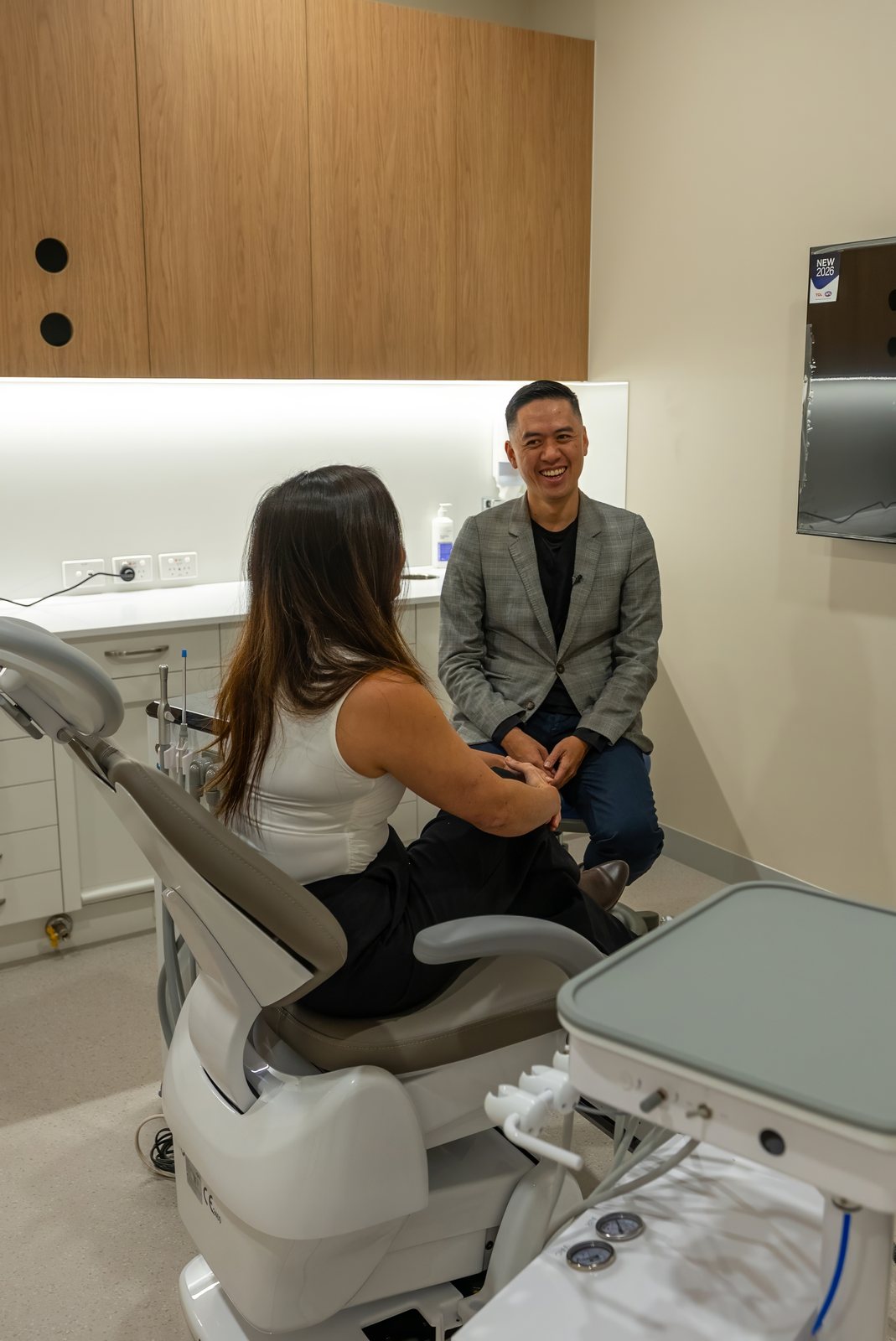
Bring a current medicine list, including anything bought without a prescription, your INR record if you take warfarin, and a note of any past bleeding problems. The dentist works out which bleeding risk category the surgery falls into, checks for anything else that adds risk, and writes to your GP or specialist before planning surgery. For a DOAC and a higher risk procedure, SDCEP sets out a dose schedule: a twice-daily medicine such as apixaban or dabigatran is missed that morning and taken at the usual time in the evening, while a once-daily morning medicine such as rivaroxaban is delayed until four hours after bleeding has stopped. For antiplatelet drugs, nothing is skipped and extra time is booked for haemostasis. Our guide to who is and is not suitable for dental implants covers the other medical questions that come up at this stage.
On the day and the week after
Surgery is kept gentle and the wound small. The site is sutured, packed with a haemostatic dressing where needed, and you bite on gauze until bleeding has clearly stopped; SDCEP advises that these patients are only discharged once haemostasis has been achieved. You leave with written after-care and an emergency number.
The after-care follows the SDCEP patient advice. Rest for two to three hours while the clot forms. Do not rinse until the next day, then rinse gently with warm salt water a few times a day for about five days, and avoid hot drinks and hard food on the first day. For pain, use paracetamol if you can take it, and avoid anti-inflammatories such as aspirin or ibuprofen, because they add to bleeding. If bleeding restarts at home, bite firmly on folded, clean, damp gauze for a full 30 minutes. Our article on how to stop bleeding after a tooth extraction walks through the technique.
Call the dentist if bleeding has not settled after that 30 minutes, if blood keeps filling the mouth, or if there is swelling under the tongue. Bruising a day or two later is common and usually harmless; our guide to bruising after extraction or implant surgery explains what is normal.

How we approach this at Lumi Dental
At Lumi Dental in Melrose Park, implant planning for anyone on a blood thinner starts with a full medical history and an examination by a dentist, with an in-house 3D X-ray (CBCT) and intraoral scan to plan the surgery and keep the surgical area small. The team at Lumi Dental writes to your GP or specialist before planning surgery, and no medicine is stopped or changed by the dentist. Surgery is booked early in the day, the site is sutured and packed, larger cases are staged, and you leave with written after-care. More on the imaging and planning tools is on the Lumi Dental technology page.
Questions patients ask
Do I need to stop blood thinners before dental implant surgery?
Usually no. SDCEP advises continuing warfarin, antiplatelet drugs and most anticoagulants, with a DOAC dose sometimes missed or delayed on the morning of higher-risk surgery. Any change is decided with your prescriber, never improvised at home.
Can you get dental implants if you take warfarin?
Yes, with an INR check close to the appointment. SDCEP advises proceeding without interrupting warfarin when the INR is below 4 and delaying at 4 or above. Expect sutures, packing and a slightly longer appointment.
What about aspirin or clopidogrel after a stent?
These are continued, including dual therapy, and stents are named by SDCEP as a reason never to interrupt treatment. Bleeding lasts longer and is managed with pressure, sutures and packing. If the stent, stroke or clot is recent, the cardiologist's view on timing comes first and elective surgery usually waits. Our list of questions to ask at a dental implant consultation includes the ones about medicines.
How long will I bleed after implant surgery on a blood thinner?
Oozing for the first few hours is normal and lasts a little longer than for other patients. Bleeding that restarts at home usually settles with 30 minutes of firm pressure on gauze; if it does not, call the same day.
What painkillers can I take after implant surgery if I am on a blood thinner?
Paracetamol first, as directed on the pack, unless you have been told not to take it. Avoid aspirin, ibuprofen and other anti-inflammatories because they increase bleeding. Our guide to the dental implant recovery timeline covers what to expect day by day.
On a blood thinner and thinking about implants? Complimentary implant consult in Melrose Park
If you take warfarin, a DOAC or an antiplatelet medicine and have been told implants are off the table, it is worth a second look. The team at Lumi Dental in Melrose Park can review your medicines, take the imaging and write to your doctor before anything is booked. Contact Lumi Dental to arrange a complimentary implant consult, or read more about dental implants at Lumi Dental. Patients visit from Ryde, Parramatta, Ermington, Rydalmere and nearby suburbs.
Sources
- Scottish Dental Clinical Effectiveness Programme: Management of dental patients taking anticoagulants or antiplatelet drugs
- SDCEP: Anticoagulants and antiplatelets quick reference guide (PDF)
- healthdirect: Blood thinners
- PMC: Postoperative bleeding complications associated with dental implant placement in patients receiving antithrombotic therapy, a systematic review and meta-analysis
About the author

Dr James Tran is a general dentist at Lumi Dental in Melrose Park. He holds a BDent from the University of Sydney and a Graduate Diploma in Oral Implants, and is a Member of the International Congress of Oral Implantologists (MICOI).
This article is general information only and is not a substitute for an examination and individual advice from a registered dental practitioner. Suitability for any treatment varies from person to person.








