
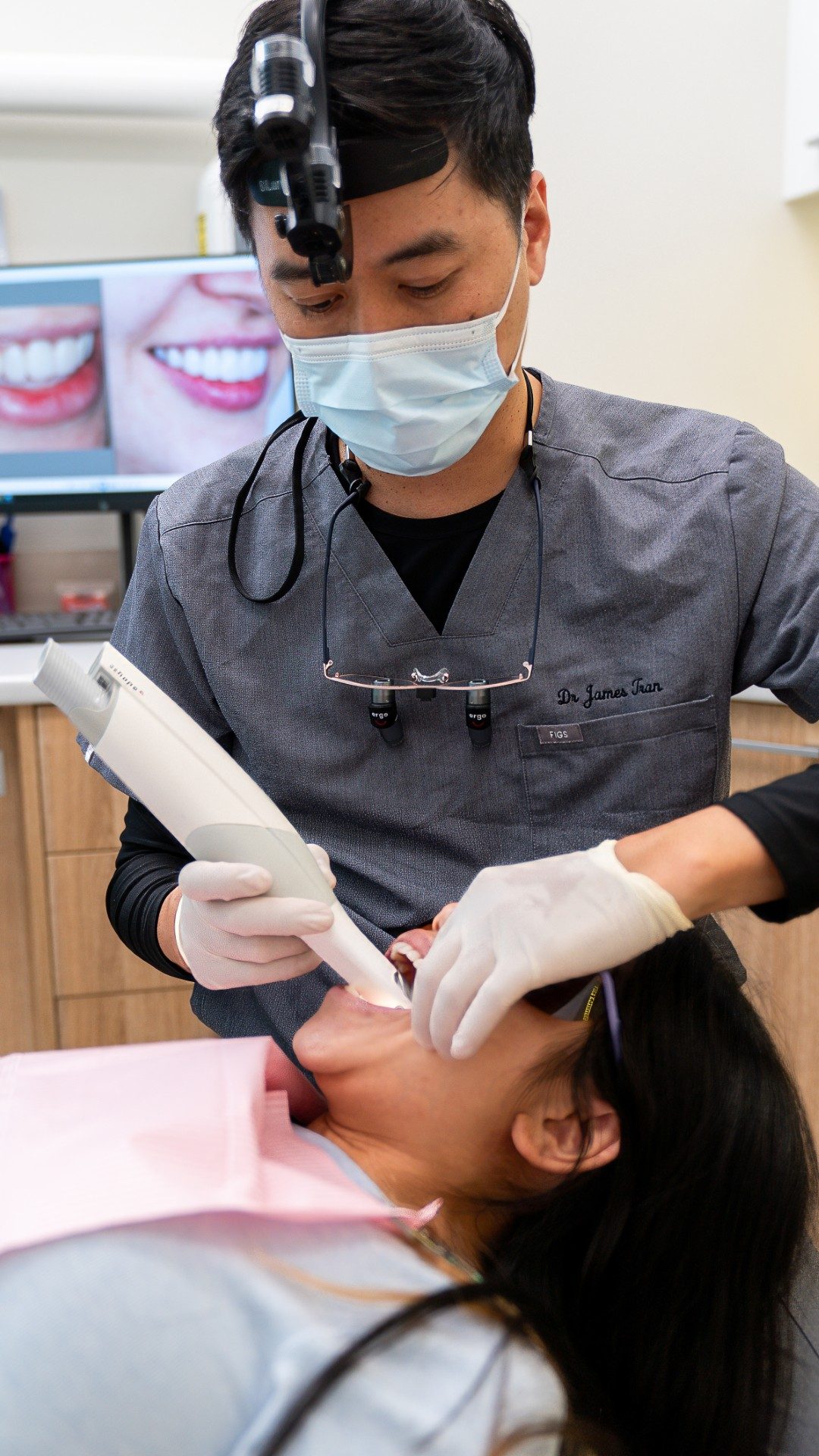

A strong gag reflex rarely rules out a dental implant, because almost every step can be adapted: a digital scan in place of impression putty, an X-ray taken from outside the mouth, shorter visits, a more upright chair and, for surgery, IV sedation. A Cochrane review of gag reflex management cites a self-reported study that put gagging at about 8.2% of dental patients, and notes that gagging problems have been linked to around 20% of dental avoidance. If you gag easily, the most useful thing you can do for your implant treatment is say so at the first visit.
Written by Dr James Tran, BDent (University of Sydney), MICOI, GradDip (Oral Implants), general dentist at Lumi Dental in Melrose Park.
The short version
- Back-tooth implants sit closest to the areas that trigger gagging, so they usually need the most planning.
- Panoramic and 3D X-rays are taken with the machine outside your mouth.
- Research in implant patients links digital scanning with significantly less nausea than impression material.
- Surgery can be done sitting more upright, in short stages, with a stop signal and, where suitable, IV sedation.
- Our guide to managing a gag reflex at the dentist covers self-help techniques; this article follows the implant process step by step.
Why implant treatment can set off the reflex
The Cochrane review lists five main trigger zones: the base of the tongue, the arches at the back of the mouth, the palate, the uvula and the back wall of the throat. Touch is the obvious trigger, but the review also lists taste and smell of materials, the sound of instruments, the sight of equipment and anxiety.
Implant treatment can touch several of these at once. Molars sit close to the tongue base and soft palate, water from the drill collects at the back, and trays, X-ray sensors and crown try-ins all reach towards the same area. The review notes that gagging can start just from imagining an unpleasant experience, which is why someone who gagged badly in the past may feel it in the waiting room. It also notes that the reflex can be partly controlled by distraction.
The single rule: tell the team at the consult
If you gag easily, mention it when you book and again at the consult, before any record is taken. Nearly every stage of implant treatment has an alternative or an adjustment, but most have to be planned rather than improvised once you are already gagging in the chair.
In my experience, patients often apologise for their gag reflex as if it were a weakness. It is a protective reflex, and knowing about it early lets the dentist choose a scan over a tray, book shorter appointments and discuss sedation. It also helps to say what has set it off before: a tray, an X-ray sensor, lying flat, a taste, or worry.
What happens at each step, and what helps
Consultation and 3D X-ray
A panoramic X-ray (OPG) captures the whole mouth with the detector inside the machine rather than in your mouth. RadiologyInfo notes that your head is positioned with chin, forehead and side rests, you may bite on a small bite blocker, and the image takes about 12 to 20 seconds. It adds that a panoramic X-ray may be recommended over intraoral X-rays for people with a sensitive gag reflex.
A cone beam CT (CBCT) gives the 3D view used to measure bone for an implant. A patient guide from Guy's and St Thomas' NHS Foundation Trust explains that you sit or stand in the scanner and keep still while it moves around your head, with each scan taking less than a minute.
Records: a digital scan instead of impression material
Impression material fills a tray, can run towards the palate and has a taste. An intraoral scanner records the teeth a section at a time and can come out the moment you signal. A systematic review and meta-analysis of patients having implant-supported fixed teeth pooled ten studies and found nausea was reported significantly less often with digital impressions, along with better comfort and less anxiety. It found no consistent difference in pain, and the studies varied a lot, so treat this as a strong lean rather than a promise. Our comparison of a digital scan and a dental impression covers cases where a tray is still needed.
Surgery day
Implant surgery is done under local anaesthetic, and unlike some fillings and root canal treatment it is not done under a rubber dam. The main triggers are water spray from the drill, instruments near the back teeth and the length of the appointment. Things that often help:
- sitting more upright, with the chin slightly down so fluid moves forward;
- suction kept close to the site throughout;
- slow breathing through the nose, practised beforehand;
- an agreed hand signal and short planned breaks;
- music or another simple distraction.
If the reflex or anxiety makes this too hard, IV sedation may help. You keep breathing on your own and are monitored throughout, but you are deeply relaxed. Our guide to IV sedation for implant surgery explains the day. Lumi Dental does not provide general anaesthetic itself and refers where it is needed, though IV sedation is available at the practice.
Healing and the second stage
While the implant heals, it may sit under the gum or have a small healing cap showing. A buried implant is uncovered later in a short visit that needs little work at the back of the mouth.
Fitting the crown
To record the implant position, a small post called a scan body is attached and scanned, which is far quicker than a full tray. At fitting, the dentist checks contacts and bite with thin marking paper and tightens the screw; a screw-retained crown has a small access hole on the biting surface that is sealed with a filling. An X-ray usually confirms the crown is seated, and the sensor and technique can be chosen to suit you.
Cleaning around a back implant at home
Back implants are the ones people with a strong reflex tend to rush or skip. A small-headed brush, a single-tuft brush, the right interdental brush and sitting forward can all help. Short, frequent sessions beat one long attempt that ends in gagging.

Each step at a glance
| Step | What can trigger gagging | What may help |
|---|---|---|
| Consultation | Instruments near the back teeth; worry | Mention the reflex early; examine the back teeth last |
| Panoramic X-ray and CBCT | Little; at most a small bite block at the front | Standing or seated positioning; nothing at the back of the mouth |
| Planning records | Impression material spreading to the palate; taste | Intraoral scanning, with the back areas scanned last |
| Implant surgery | Water spray, instruments, appointment length | Upright chair, close suction, nose breathing, breaks, IV sedation where suitable |
| Crown fitting | Try-in, bite checks, an X-ray sensor | Scan body instead of a tray; sensor chosen to suit you |
| Home care | Reaching the last tooth | Small-headed, single-tuft and interdental brushes; sitting forward |
What the evidence says about gag-control techniques
The research is thinner than the advice online suggests. The Cochrane review found only four small trials, all of acupuncture, acupressure or laser at a point on the inner forearm, and rated the evidence very low certainty. It found no trials of other interventions.
That does not mean nothing works. It means the sensible plan combines low-risk measures: changing the procedure, positioning, breathing, distraction and gradual practice at home. I usually suggest people rehearse one or two techniques before surgery rather than trying everything on the day. Where those are not enough, sedation is the next step.
If an upper denture is the real problem
Some people come to implants because they cannot tolerate a denture covering the palate. The options, from trimming the denture to a palateless design held by implants, are in our article on dentures and a strong gag reflex.
How we approach this at Lumi Dental
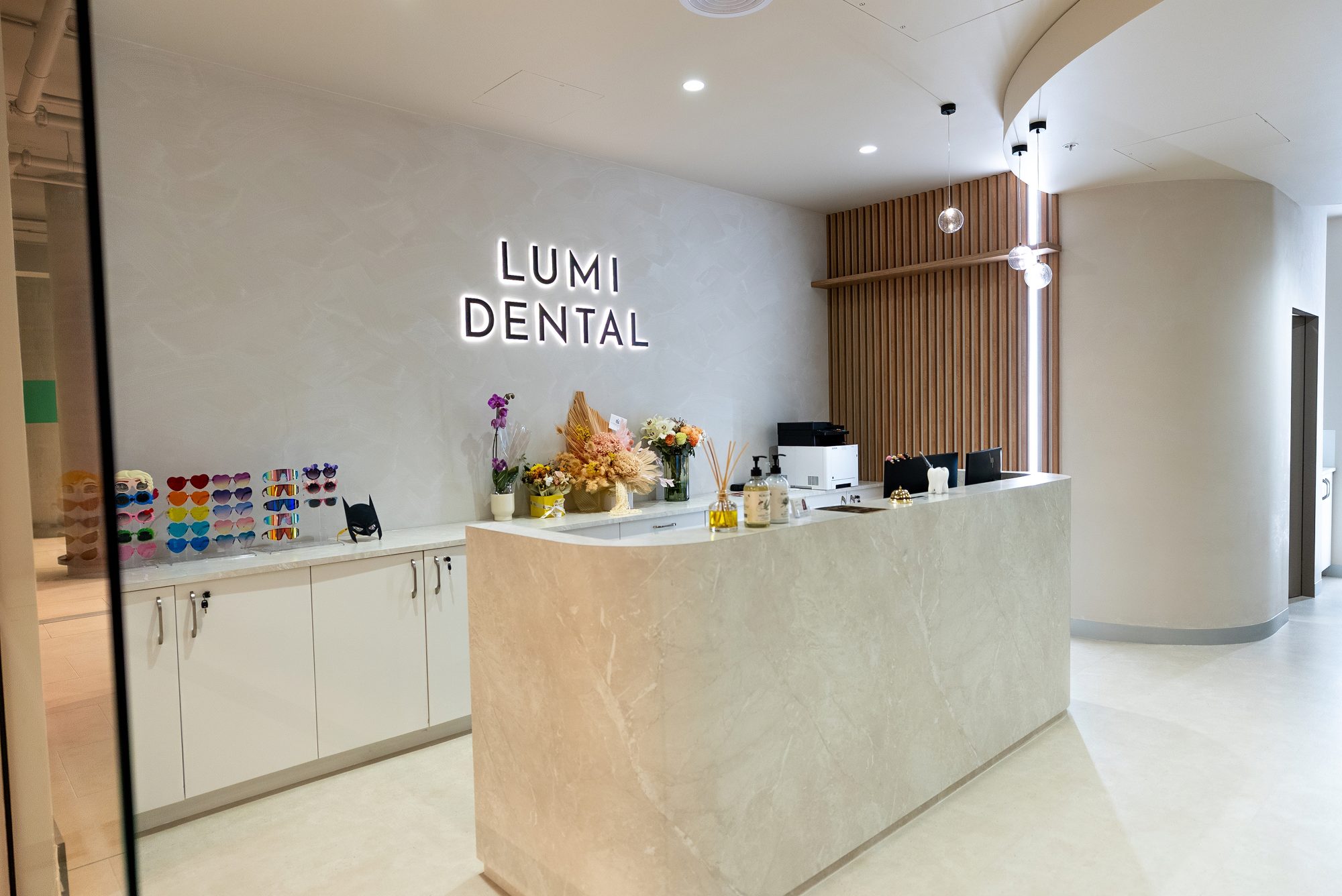
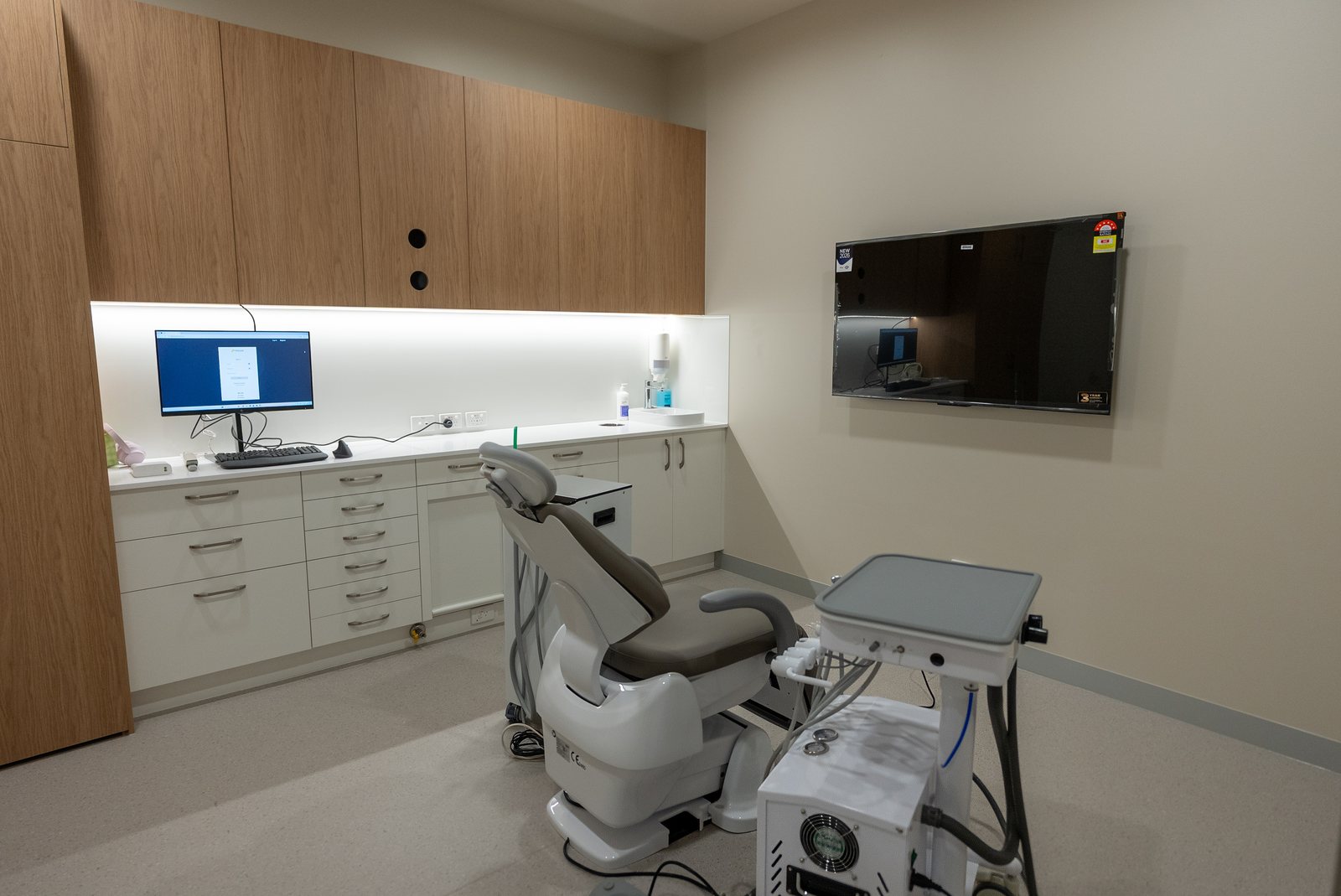
At Lumi Dental in Melrose Park, a dentist examines you and, where it is needed for planning, takes a 3D X-ray in house. Records are taken with a 3D intraoral scanner wherever possible, so most people never need a tray of impression material. Tell the team about your gag reflex when you book, and appointments can be planned with extra time, breaks and positioning that suits you. For surgery, IV sedation at Lumi Dental is available, and the oral health therapists can help you find cleaning tools that reach a back implant comfortably.
Questions patients ask
Can you get dental implants with a bad gag reflex?
Yes, most people can. Impressions, X-ray sensors and long appointments can usually be replaced or shortened, and sedation is an option for the surgery.
Will the 3D scan for implants make me gag?
Usually not. A CBCT or panoramic X-ray is taken with the machine outside your mouth, and at most you hold a small bite block at the front.
Do implant impressions still need a tray?
Often they do not. Many implant crowns can be made from a digital scan of a scan body, though some complex cases still need a conventional impression.
Does IV sedation stop gagging during implant surgery?
It can reduce it a great deal for many people, because you are deeply relaxed. You still breathe on your own and are monitored. Our overview of how dental implants work shows where surgery fits in.
Is a back implant harder to clean if you gag?
It can be, so the right tools matter. A small-headed or single-tuft brush and an interdental brush, used sitting forward, make it easier, and the hygiene team can show you how.
Considering an implant? Complimentary implant consult in Melrose Park
If a strong gag reflex has put you off replacing a missing tooth, the team at Lumi Dental can talk you through each step, show you the scanner and plan appointments around you. Contact Lumi Dental to book a complimentary implant consult, or read more about dental implants in Melrose Park. Patients visit from Ryde, Parramatta, Ermington and Rydalmere, with on-site parking at Melrose Central.
Sources
- Cochrane Database of Systematic Reviews (Eachempati and colleagues): Management of gag reflex for patients undergoing dental treatment (PMC)
- Journal of Personalized Medicine: Patient-Reported Outcomes of Digital Versus Conventional Impressions for Implant-Supported Fixed Dental Prostheses, a Systematic Review and Meta-Analysis (PMC)
- RadiologyInfo.org (RSNA and ACR): Panoramic Dental X-ray
- Guy's and St Thomas' NHS Foundation Trust: Dental cone beam CT scan (CBCT)
About the author

Dr James Tran is a general dentist at Lumi Dental in Melrose Park. He holds a BDent from the University of Sydney and a Graduate Diploma in Oral Implants, and is a Member of the International Congress of Oral Implantologists (MICOI).
This article is general information only and is not a substitute for an examination and individual advice from a registered dental practitioner. Suitability for any treatment varies from person to person.








